



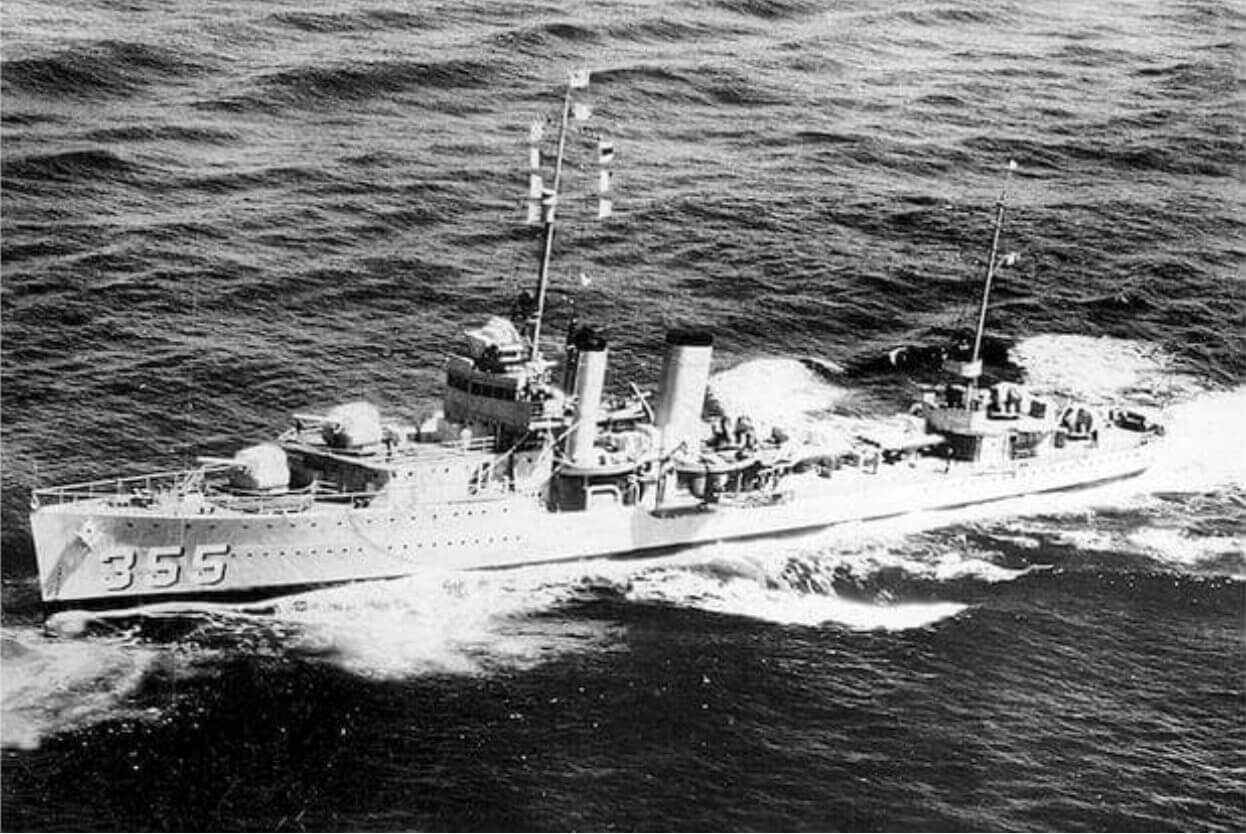

Pearl Harbor dropped a half-crewed destroyer into bloody chaos, and a young Ensign with just eight months of active-duty experience answered by taking command, getting USS Aylwin into the fight, and driving her out to sea. Stanley Caplan was no comic-book superhero. He was something rarer, a very young American officer who performed magnificently when the world caught fire.
Second Lieutenants, Naval Captains, and the Strange Math of Rank
Serving on active duty as a Second Lieutenant is a fairly surreal enterprise. Nobody who matters takes you seriously. Military service is rightfully driven by experience, and Second Lieutenants just don’t have any. However, this phase in a young officer’s career invariably forms the foundation for whatever great things might yet come later.
The Navy has its own rank structure. I always enjoyed TDY service on Naval bases, because I could make my reservations at the BOQs (Bachelor Officers’ Quarters) as Captain Dabbs. In the Navy, a Captain is an O-6, the equivalent of an Army Colonel. In the Air Force, Army, and Marines, a Captain is an O-3. As soon as I arrived in the flesh, it became clear that the BOQ staff never should have taken me so seriously.
Meet Ensign Stanley Caplan, the Young Officer Aboard USS Aylwin
The Navy equivalent of an Army Second Lieutenant is an Ensign. On the morning of 7 December 1941, Ensign Stanley Caplan was serving aboard the USS Aylwin, a Farragut-class destroyer originally launched at the Philadelphia Naval Yard in 1934. Commissioned in 1935, the Aylwin had served honorably for several years before being assigned to Pearl Harbor in 1941.
Stanley Caplan was born in July 1915 in Elmira, New York. He attended the University of Michigan at Ann Arbor and graduated in June of 1939. Caplan joined the US Navy Reserve in the summer of 1940. That put him directly in the path of the coming Second World War.
Midshipman Caplan served aboard the USS Illinois in a training capacity for the next three months before being commissioned as an Ensign. He reported for duty aboard the USS Aylwin in April of 1941. By the morning of 7 December, he had found his sea legs.
7 December 1941 was a Sunday. Only about half of Aylwin’s crew was present aboard the ship. Everyone else, to include the skipper, was on the mainland, preoccupied with other stuff. There was a total of four officers present on the vessel. By time in service, Ensign Caplan was the most senior of the four. He had been on active duty for all of eight months.
Pearl Harbor Explodes at 0755, and USS Aylwin Is Caught Cold
The ship was cold. The boilers were shut down, and the few men who remained were not focused on combat tasks. It was peacetime and a Sunday. Nobody expected any mischief. Then, at 0755, clouds of Japanese combat aircraft appeared unexpectedly in the skies above the harbor. Before anyone could react, Japanese bombs and torpedoes were slamming into American warships. The result was bloody, unfettered chaos.
Young officers are the result of a fairly intense training program designed to cultivate the capacity to make sound decisions under pressure. In my day, that included physical challenges, sleep deprivation, and ever-increasing levels of responsibility. Sometimes that takes, and a young Lieutenant starts to season into something greater. In others, these kids will crash and burn. Ensign Caplan apparently took that stuff to heart.
Imagine the scene. We know how it all ultimately turned out. These guys did not. All they knew was that their world was exploding and on fire. Under those circumstances, it would have been awfully easy to just freeze or run away. Ensign Caplan, by contrast, assumed command and got busy.
Getting USS Aylwin’s Guns Hot While Pearl Harbor Burned
The first order of business was to get the weapons online. The Aylwin’s five-inch guns went to work in an anti-aircraft capacity, while the ship’s crew began exercising and feeding her various deck-mounted machine guns. Before the day was out, the Aylwin was credited with three downed Japanese aircraft.
At the same time, Caplan directed what was left of the ship’s engineering department to bring the boilers online. This is typically a fairly laborious process. However, an hour later, two of the ship’s four Yarrow-type boilers were operational and ready to rock. Now the Aylwin could sail.
Given the inevitable fog of war, the details were still fuzzy. Nobody was exactly sure what was happening. However, it became obvious that this attack was the real freaking deal. Massive battleships had been hit and set ablaze. The only thing that saved Aylwin during the opening phases of the attack was that she was relatively small. However, the Japanese planes were now turning their attention to lesser ships. If the Aylwin was to survive, she had to get out of the harbor and into open water. It was time for some initiative.
Running the Channel, Bombs Falling, Death Beckoning
One of the other Ensigns, a young officer named Burdick Brittin, later said, “From then until we had cleared the channel I was nearer to death and yet lived than any other person I have ever spoken with…The channel ahead of us was a mass of bomb explosions from high flying bombs, and at the time all the officers aboard were certain we would never get through…How we succeeded in clearing the channel I will never know, but we did get outside and the marrow in our bones turned to water as we looked back on the smoke and flames that once was Pearl.”
These guys were living history in real time. It was simply that they were too terrified to appreciate it. That’s perfectly understandable.
Leaving the Harbor Under Fire, Even With the Skipper Left Behind
The actual skipper of the Aylwin was Lieutenant Commander Robert Rogers. As soon as the bombs began falling, Rogers commandeered a motor whaleboat and, along with the rest of Aylwin’s senior officer complement, struck out in hot pursuit. However, a destroyer is fast.
Caplan recognized his boss in the pursuing boat. However, the destroyer squadron commander had ordered all ships capable of doing so to leave the harbor for open water. With his boss waving madly for him to stop, Ensign Caplan tore out of the harbor and into the Pacific. Rogers and company eventually gave up and boarded the USS Chew, a nearby Wickes-class destroyer.
Ensign Brittin further described, “The opportunity is rare indeed for an Ensign to refuse his Captain’s request to come aboard, and further to sail off with his ship. We did just that.”
Thirty-Six Hours of War, and Then the Search for Japan’s Carriers
Once Caplan got his ship clear of the carnage, there was still a war to fight. He joined Vice Admiral William “Bull” Halsey’s carrier task force that orbited around the USS Enterprise. With only half his allotted crew and still under the combat command of an Ensign with just eight months’ worth of experience, the Aylwin actively hunted for Japanese aircraft carriers. The following day, the Aylwin returned to Pearl where Ensign Caplan turned command of the vessel back over to his boss, LT CDR Rogers. Stanley Caplan had commanded the warship in combat with minimal external guidance for 36 hours.
Rogers was not particularly offended by Caplan’s leaving him behind at Pearl. In the immediate aftermath of the attack, he wrote, “The conduct of Ensign S. Caplan, who has been at sea a total of eight months in superbly taking command for 36 hours during war operations of the severest type is a most amazing and outstanding achievement.”
USS Aylwin and Ensign Stanley Caplan Quick Facts
| Ship | USS Aylwin |
|---|---|
| Class | Farragut-class destroyer |
| Launched | 1934 |
| Commissioned | 1935 |
| Assigned to Pearl Harbor | 1941 |
| Attack Began | 0755 |
| Senior Officer Aboard | Ensign Stanley Caplan |
| Caplan’s Active-Duty Experience | eight months |
| Crew Present | about half |
| Boilers Online | two of four |
| Combat Command Duration | 36 hours |
What Happened to Stanley Caplan After Pearl Harbor
Ensign Caplan continued to serve aboard the Aylwin after the Pearl Harbor attack. He was promoted to Lieutenant (Junior Grade) in June of 1942 and then to Lieutenant six months after that. In early 1943, Caplan left the Aylwin for assignment at the Bath Iron Works. There, he helped fit out the USS Erben, a brand new Fletcher-class destroyer, and served operationally as her Executive Officer. The Erben rescued numerous downed aviators in the Pacific. In May of 1944, Caplan took command of the USS Long.
On 2 January 1945, with LT Caplan in command, the USS Long was struck on her port side just below the bridge by a Japanese kamikaze aircraft. The vessel lost power, and fires spread precipitously. LT Caplan ordered his crew to abandon ship. However, the Long remained afloat.
Caplan gathered his crew and prepared to return to his vessel, but the continued air attack hampered his salvage attempts. Later that day, a second kamikaze struck the ship in essentially the same spot, breaking her back. The Long capsized and sank five days later. Caplan’s skillful leadership in the face of overwhelming odds nonetheless still saved most of his crew.
Hidden Treasure, the Veterans Who Were Once Everywhere
When I was a kid, my world was littered with such men as these. My Senior Math teacher humped a BAR across Europe during World War 2. The guy who taught me Physics in High School had been a Navy officer in the Pacific throughout the war.
Whenever we hit a lull in class, we would ask Gene Barbour for war stories. He was only too happy to oblige. At the time, I just thought it was a great way to get out of Physics class. With the crystalline clarity of hindsight, I now appreciate what a precious gift that was. If I had it to do all over again, I would have pestered those old guys relentlessly for anecdotes.
The Engine of History, and Why Stanley Caplan Still Matters
These men had lived history, and they were everywhere in American society, right up until they weren’t. We just turned around twice and then found that those once-ubiquitous WW2 vets were all gone. Stephen Ambrose, Tom Hanks, and Stephen Spielberg did a fine job of reminding us how awesome they all were, and many of their stories were preserved as a result. While I loved Jaws, Forrest Gump, and Band of Brothers for their raw entertainment value, what those three guys really did was open our eyes to the historical riches that had been all around us.
Stanley Caplan was not a superhero. He was just a young American who found himself in some dire circumstances. Like so many other brave young Americans, he responded magnificently, seizing the initiative and serving his country in the face of violent, gory death. His bravery and personal example should serve to inspire us all. He was the very best of us.
Read the full article here
