



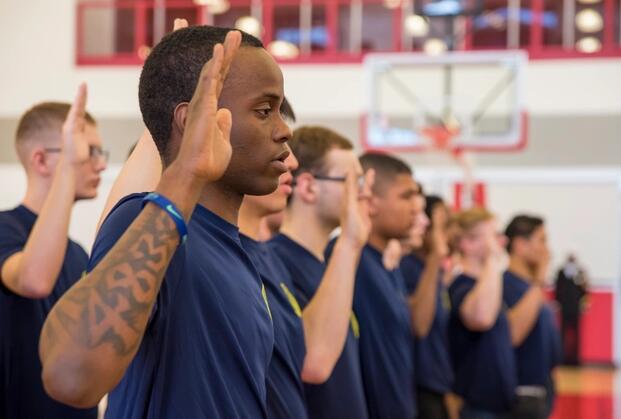

As tensions rise overseas and U.S. forces remain engaged in multiple regions, a topic many Americans thought belonged to history is suddenly back in the national conversation: the military draft.
Speculation about conscription has surged in recent weeks following comments from political leaders and widespread discussion across social media. The renewed attention has focused on the Selective Service System, the federal agency responsible for maintaining the infrastructure needed to conduct a draft if Congress ever reinstates one.
For now, the United States continues to rely on an all-volunteer military, a system that has been in place since 1973. But the machinery for conscription has never disappeared. In fact, recent policy discussions in Washington are quietly modernizing how the system would work if a draft were ever required.
Comments From the White House Fuel Draft Debate
The latest wave of public discussion began after remarks from White House press secretary Karoline Leavitt during an interview about potential military escalation overseas.
Leavitt said a draft is not currently part of the administration’s plans, but she noted that President Donald Trump has not ruled out future options.
“It’s not part of the current plan right now, but the president again wisely keeps his options on the table.”
The White House later clarified that there are no immediate plans to reinstate conscription, but the comments reignited public curiosity about how the draft system actually works.
Trump has also spoken bluntly about the realities of conflict.
Trump acknowledged the risks of escalation in an interview with Time, saying:
“Like I said, some people will die. When you go to war, some people will die.”

Who Would Be Called First in a Draft?
If the United States reinstated conscription, the Selective Service System would likely use a national lottery based on birthdates, similar to the system used during the Vietnam War.
Birthdays would be randomly drawn to determine the order in which individuals are called for evaluation and potential induction.
The order of induction would typically prioritize:
1. 20-year-olds first
2. 21-year-olds
3. 22–25-year-olds
4. 18- and 19-year-olds
Those selected would first report for medical and administrative screening before any induction into military service.
The Draft System Never Disappeared
Although the United States has not drafted troops in more than five decades, the Selective Service System remains active. Federal law requires male citizens and male immigrants ages 18 to 25 to register with the agency.
Millions of men are currently listed in the national database, ensuring the government could quickly identify potential candidates if Congress authorized conscription.
If a draft were activated, those selected through the lottery would first undergo medical, physical and administrative evaluations to determine eligibility.
A Leadership Gap at the Agency
One little-noticed detail about the Selective Service System today is that the agency currently operates without a Senate-confirmed director.
Instead, the organization is led by Acting Director Craig T. Brown, who oversees the agency’s readiness planning and operations.
The lack of a permanent director has received relatively little public attention, but it raises questions about leadership continuity in the event that the draft system ever needed to be activated.
The Hidden Infrastructure: Local Draft Boards
Another often overlooked part of the draft system involves the thousands of civilian volunteers who serve on local draft boards across the country.
These boards would play a critical role if conscription were reinstated.
Members review requests for deferments, exemptions and hardship claims from individuals selected through the lottery.
According to the Selective Service System, the United States maintains more than 2,000 local draft boards nationwide, staffed by civilian volunteers who live in the communities they serve.
Automatic Registration Could Change the System
Another policy debate in Washington involves how Americans are registered for the Selective Service.
Currently, young men must register themselves within 30 days of turning 18. Failure to register can affect eligibility for federal student aid, government employment and certain benefits.
However, compliance is not universal. To address this, lawmakers have discussed implementing automatic registration, which would enroll eligible individuals through existing government databases such as Social Security or state driver’s license systems.
Supporters say automatic registration would modernize the system and ensure nearly universal compliance.
Critics argue it could make activating a draft easier by removing a logistical barrier.
Would There Be Enough Americans to Draft?
Even if the United States reinstated conscription tomorrow, another major question remains: how many Americans would actually qualify for military service?
The answer may be fewer than many people expect.
According to Department of Defense estimates, only about 23% of Americans ages 17 to 24 meet the basic eligibility standards for military service without needing waivers.
The most common disqualifying factors include:
- Obesity and other health conditions
- Criminal records
- Lack of educational credentials
- Drug use or behavioral issues
These trends have already contributed to the military’s ongoing recruiting challenges.
The Debate Over Women and the Draft
Another major question surrounding the draft is whether women should be required to register for Selective Service. Currently, only men must register.
That policy stems from the Supreme Court’s 1981 decision in Rostker v. Goldberg, which upheld male-only registration largely because women were barred from combat roles at the time.
But the military has changed significantly since then. In 2015, the Pentagon opened all combat roles to women, including infantry and special operations positions.
After the Pentagon opened all combat roles to women in 2015, a federal court ruled in 2019 that the male-only draft registration system was unconstitutional. The decision was later overturned on appeal, and the Supreme Court declined to review the case in 2021, leaving the current law unchanged.
A Modern Draft Would Look Different
A modern draft would likely look very different from the one many Americans associate with World War II or Vietnam.
Today’s military relies heavily on cyber specialists, drone operators, intelligence analysts and other technical roles.
While ground combat units would still require personnel, defense experts say any large-scale mobilization in the 21st century would likely prioritize individuals with technical skills alongside traditional combat roles.
The All-Volunteer Force Remains the Goal
Despite renewed public discussion about conscription, military leaders continue to emphasize that the United States remains committed to maintaining an all-volunteer military.
Since the end of the draft in 1973, the volunteer force has evolved into one of the most professional and technologically advanced militaries in the world.
For now, the Selective Service system exists primarily as a contingency plan — a mechanism designed to rapidly expand the armed forces in the event of a national emergency.
The draft may feel like a relic of history, but the system built to activate it still exists—ready, if the nation ever needs it.
Read the full article here
