



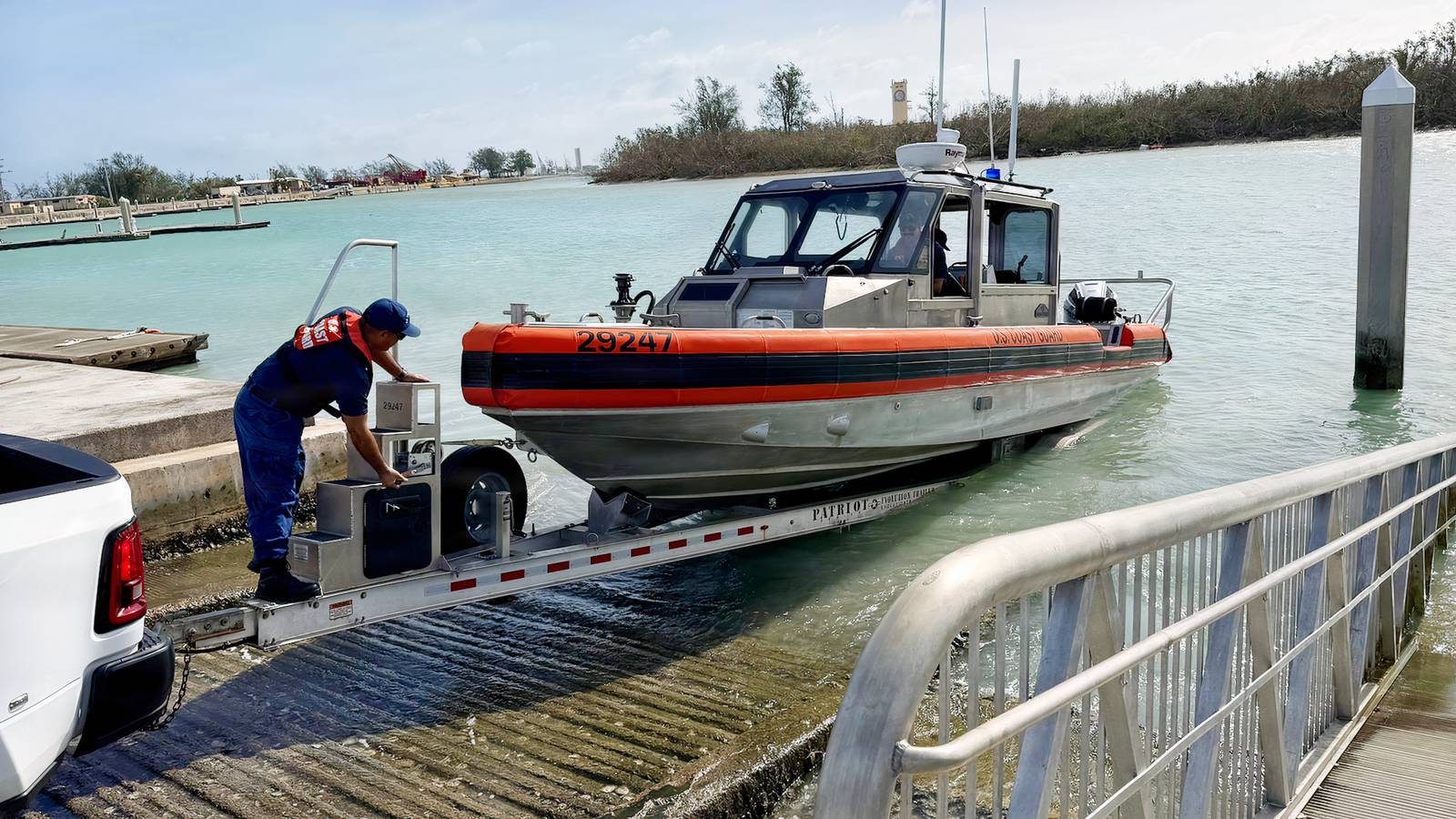

U.S. Coast Guard crews are still assessing ports and waterways across Guam and the Northern Mariana Islands following Super Typhoon Bavi, as commercial traffic remains shut down while officials check for damaged navigation markers, hazardous seas and debris.
U.S. Coast Guard Forces Micronesia/Sector Guam said Tuesday that the ports of the Marianas remain under Port Heavy Weather Condition ZULU, meaning they are closed to commercial traffic until crews complete post-storm assessments and resolve safety issues.
The port closures affect a region that is central to the U.S. military’s posture in the Pacific. Guam is home to Naval Base Guam, Andersen Air Force Base and other major military facilities, while the surrounding maritime routes support military operations, commercial shipping and local supply chains across the island territory and the Commonwealth of the Northern Mariana Islands.
Military.com reached out to the Coast Guard and Navy Region Guam for additional comment about the port closures and whether they have affected military logistics, fuel delivery, commissary supply chains or other base support operations. No responses were received before publication.
Navigation Hazards Found in Apra Harbor
During assessments in Guam’s Apra Harbor, Coast Guard crews found that Buoy 2 at the harbor entrance was off station and sitting in the middle of the channel, creating a hazard for maritime traffic.
Coast Guard personnel are working with partners on a plan to move the buoy out of the channel to ensure ships can safely pass through the harbor, according to the service. Several range day boards, which help mariners visually line up for safe passage through channels, were also damaged during the storm.
The Coast Guard has issued a Broadcast Notice to Mariners listing all known discrepancies in Apra Harbor.
“My team is on the water and in the air methodically checking our waterways before we lift restrictions,” Capt. Jessica Worst, commander of U.S. Coast Guard Forces Micronesia/Sector Guam and captain of the port for Guam and the Northern Mariana Islands, said in a statement. “A displaced buoy in the middle of a channel and missing day boards are exactly the hazards we have to clear first.”
Worst said the service would reopen the ports deliberately.
“We will reopen these ports deliberately, one assessment at a time, because getting it right is what prevents longer delays and keeps people and our ports safe,” she added.
Crews Assess Saipan, Tinian and Rota
In Saipan, Coast Guard Marine Safety Unit personnel are working with CNMI Customs and Biosecurity to assess local aids to navigation.
Full assessments for Tinian and Rota are also underway, though the Coast Guard said access to those islands is more challenging.
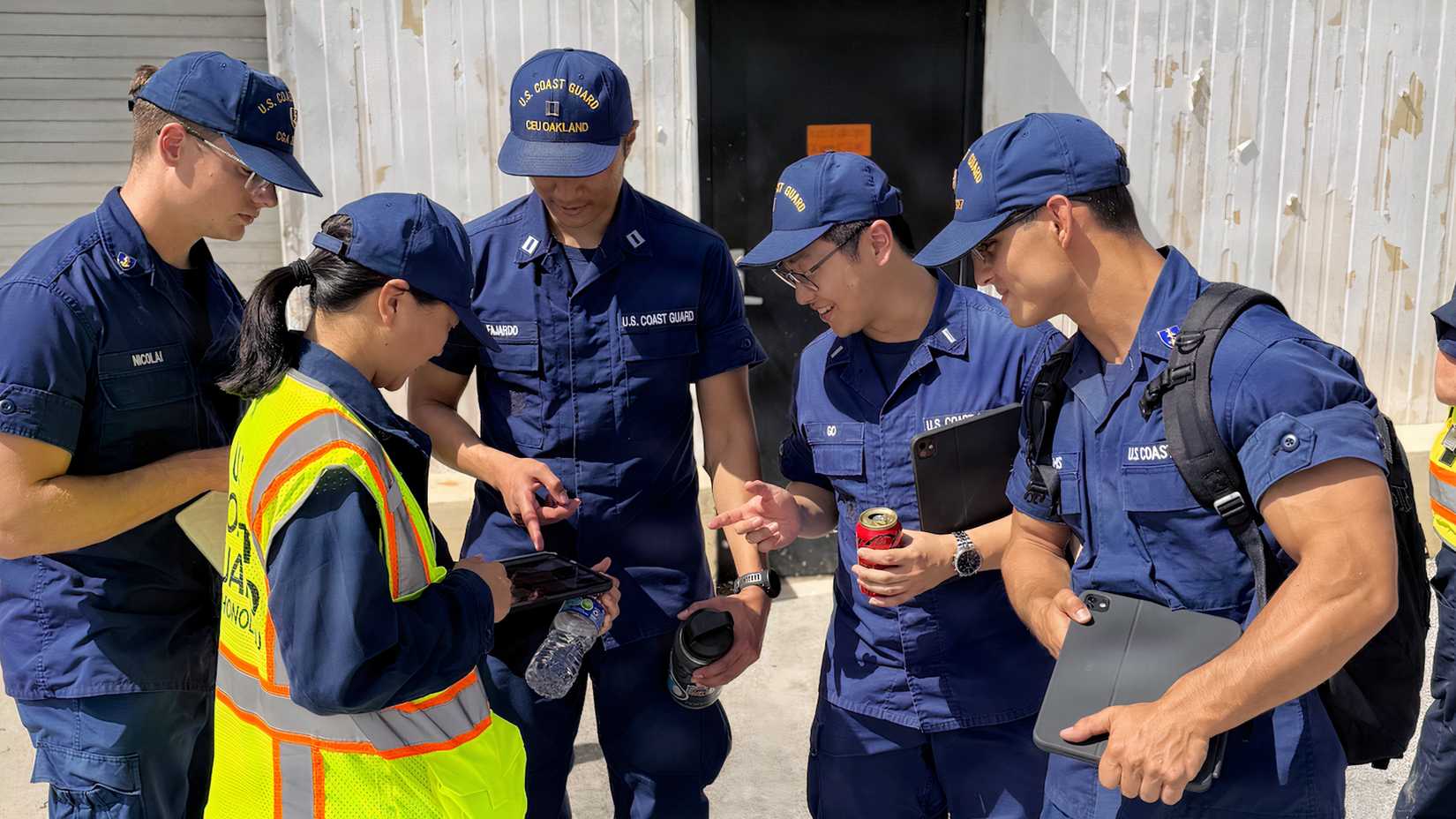
Crews are also conducting aerial assessments of islands and ports using Coast Guard HC-130J Hercules aircraft that were pre-staged in Pohnpei from Hawaii ahead of the storm. Coast Guard personnel are also flying aboard an MH-60S Knighthawk helicopter from Helicopter Sea Combat Squadron 25, a Navy unit based in Guam.
The Coast Guard said the captain of the port intends to lift restrictions on commercial maritime traffic as soon as feasible.
Even as Bavi moves away, officials warned that dangerous ocean conditions remain across Guam, Rota, Tinian and Saipan.
Coast Guard Warns Public to Stay Out of Water
The National Weather Service in Tiyan, Guam, had a high surf warning in effect until 4 p.m. Thursday for Guam, Rota, Tinian and Saipan, with dangerously large breaking waves that could reach up to 20 feet before decreasing to 10 to 15 feet. The warning was especially focused on west- and south-facing shores.
A coastal flood advisory was also in effect until 6 a.m. Wednesday, while a hazardous sea warning for Marianas coastal waters remained in effect until 5 a.m. Thursday. Seas were forecast at 16 to 20 feet, conditions the Coast Guard said could capsize or damage vessels.
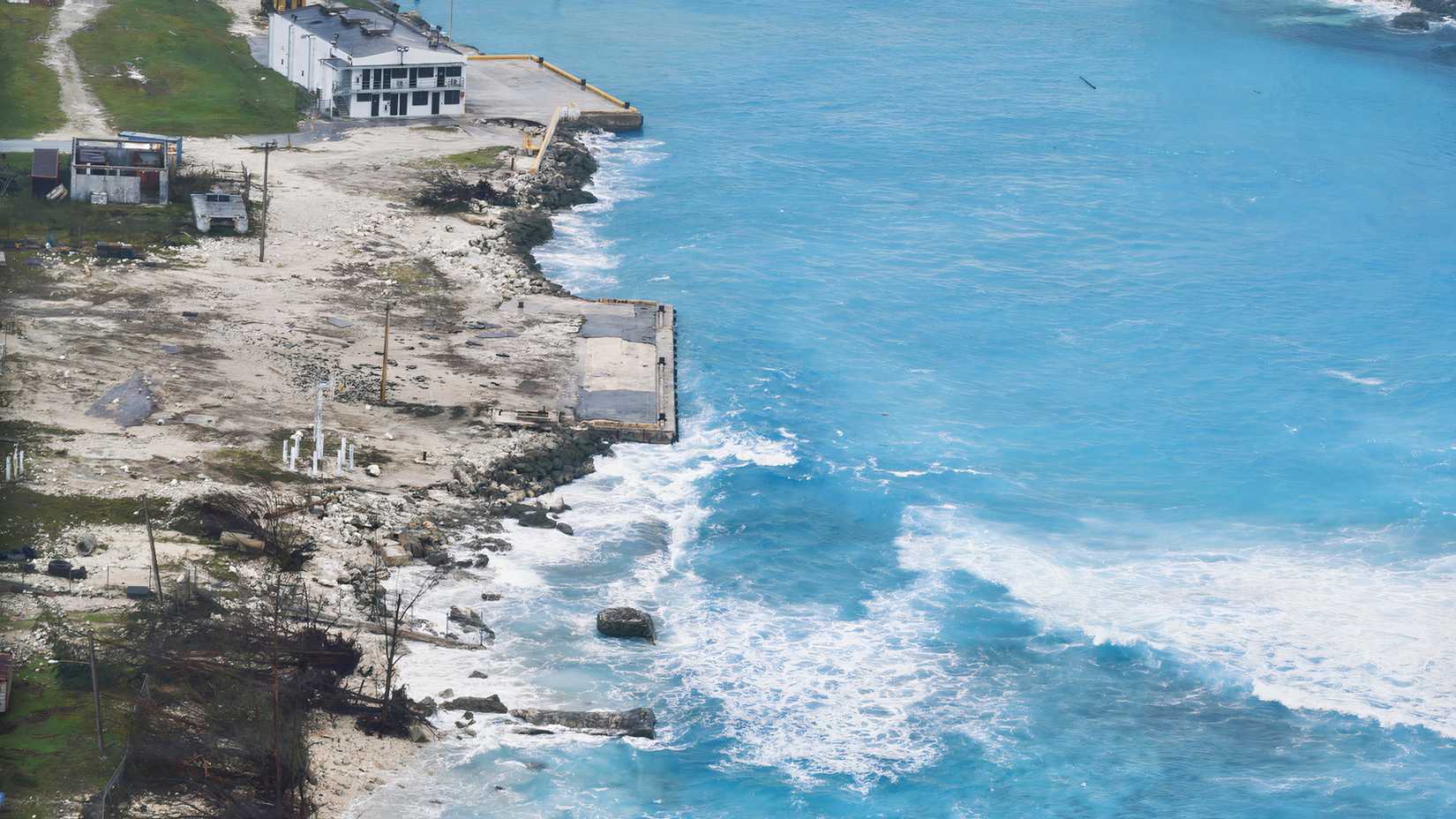
The Coast Guard urged residents and mariners to stay out of the water and away from jetties, piers, docks and other waterfront infrastructure. Breaking waves can sweep people into dangerous seas, the service warned.
Mariners were also asked to delay nonessential operations until seas subside.
The Coast Guard said anyone in maritime distress should dial for help immediately on VHF Channel 16 or call 911. Social media should not be used to report emergencies, the service said, noting that widespread VHF outages continue and some distress calls may need to be relayed through partner agencies or other mariners.
The service also cautioned the public about Invest 97W, a weather disturbance circulating on weather apps and social media.
The National Weather Service Guam said the system is not a typhoon, is not expected to develop in the coming days, and may never develop at all.
Officials urged residents to focus on water safety, recovery and official weather updates as crews continue working to reopen the region’s ports.
Read the full article here
