




I’m always leery about technology that seems like it could potentially be turned into a mass surveillance apparatus. Flock cameras get all the press these days–including five officers from my town using them for unauthorized uses, apparently–but ShotSpotter has generated its own fair share of headlines. I’ve been skeptical of the technology myself, but a lot of my worry seemed unfounded.
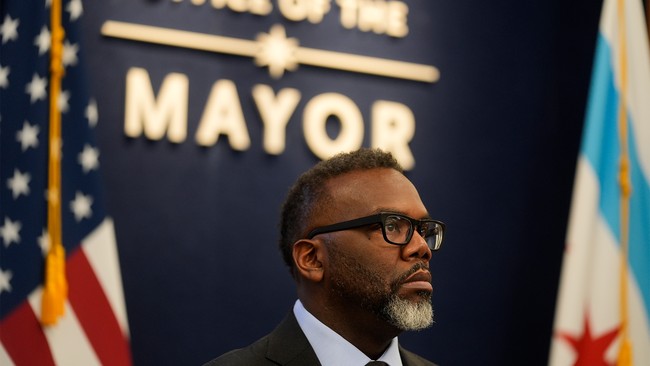
Then Chicago Mayor Brandon Johnson cancelled the city’s contract with the company, which uses acoustic detection technology to notify police of shots being fired. Much of the time, there was nothing to see, but that’s to be expected. It’s not like criminals wait around for the cops after the shots are fired, and there’s a limit to how quickly any department can respond.
Nearly two years after canceling the contract, Johnson cited a University of Chicago study as evidence he was right to do so.
Now, questions are being asked about that study.
But experts say the report does not validate his position, namely, because it does not look at gunshot response times, which is the purpose of ShotSpotter. The post-ShotSpotter period also looked at lower crime fall months compared to the higher crime summer months. (A seasonally adjusted analysis did show a difference in one minute of response times).
In an email to The Fix, Robert VerBruggen made the distinction that “the main purpose of ShotSpotter is to improve response to gunfire.”
“Research shows it does that — police learn about gunshot incidents even when no one calls 911, they get to the scene faster, and they recover more evidence,” the Manhattan Institute scholar said. “The study does not address this issue and indeed removes gunshot calls from the data,” he wrote.
However, VerBruggen noted “in responding to more gunshot calls—many of which don’t produce any physical evidence—police by definition lose time they could have spent on other priorities, and response times to other calls might suffer. That’s the focus of the UChicago study, and it’s a fair issue to raise even if it’s not the only important one.”
In regard to the Justice Project study, VerBruggen noted that Professor Vargas from the study explicitly said it is “not causal.”
In other words, Professor Robert Vargas, whose team conducted the UChicago study, looked at the data and outright said that the increase in response times was not because ShotSpotter had been removed.
That27s important since that27s something Johnson has most definitely implied with his citation. with his citation.
What we need to understand is that violent crime is dropping throughout the country, which means there are probably fewer calls for Chicago police to respond to. They’re more likely to be available to respond when a call comes in, thus dropping the response time. It’s not difficult to figure out, at least when it comes to considering a reason why this might be the case.
And there’s something else to consider when discussing the efficacy of ShotSpotter, and that’s in lives saved.
A separate think tank, the Chicago Crime Lab, calculated that 85 lives were saved per year from the technology, as police were able to locate bodies that otherwise may have been left for dead.
Crime Lab Director Jens Ludwig also did not respond to emails and phone calls about the Justice Project’s methodology.
That’s not some reach to justify the technology, either. We know this because a case from over the weekend in the Windy City has some asking hard questions about when Johnson was going to get around to replacing the system.
Passersby found a gunshot victim lying near a Chicago Lawn intersection overnight, marking another case of a delayed emergency response after nobody called 911 to report gunfire in a neighborhood that was once monitored by the city’s gunfire detection network. Mayor Brandon Johnson disconnected the ShotSpotter system in September 2024 despite strong objections from a supermajority of the City Council, his handpicked police superintendent, and, according to one poll, 70% of Chicago residents.
At about 2:10 a.m., someone walked into the Chicago Lawn (8th) District police station and reported that a man was lying on the ground near the intersection of 64th Street and Troy Street, according to CPD radio transmissions. Moments later, the Chicago Fire Department requested police assistance at 64th Street and Kedzie Avenue after paramedics found a man who had been shot.
The victim has, as of that story, survived, but was listed as being in critical condition. How much of that was because no one knew he’d been shot in the first place? ShotSpotter would have notified authorities immediately, and they may have found him much sooner and gotten him treatment right away.
Johnson claimed the system itself was racist when he cancelled the contract. This is, to put it mildly, a nebulous assertion at best.
Yet, even if there is some kind of bias built into the system, I find it interesting that the “if it saves one life” crowd doesn’t seem to care about the 85 lives per year that were saved by the technology in question. Many of those were black people. Black lives, if you will, that we’ve been told matter.
Johnson’s remarks about the study, though, illustrate how a poor understanding of scientific research shapes policy, justifies other policies, and is often misinterpreted all in the name of political expediency. I leave it to you to decide if the misinterpretation is a case of malice or ignorance. I know which side of things I fall on, particularly where Johnson is concerned.
Especially as the same people, including Johnson, try to use poorly constructed studies as justification to trample on constitutionally protected rights.
Editor’s Note: The radical Left will stop at nothing to enact their radical gun control agenda and strip us of our Second Amendment rights.
Help us continue to report on and expose the Democrats’ gun control policies and schemes. Join Bearing Arms VIP and use promo code FIGHT to receive 60% off your membership.
Read the full article here
