



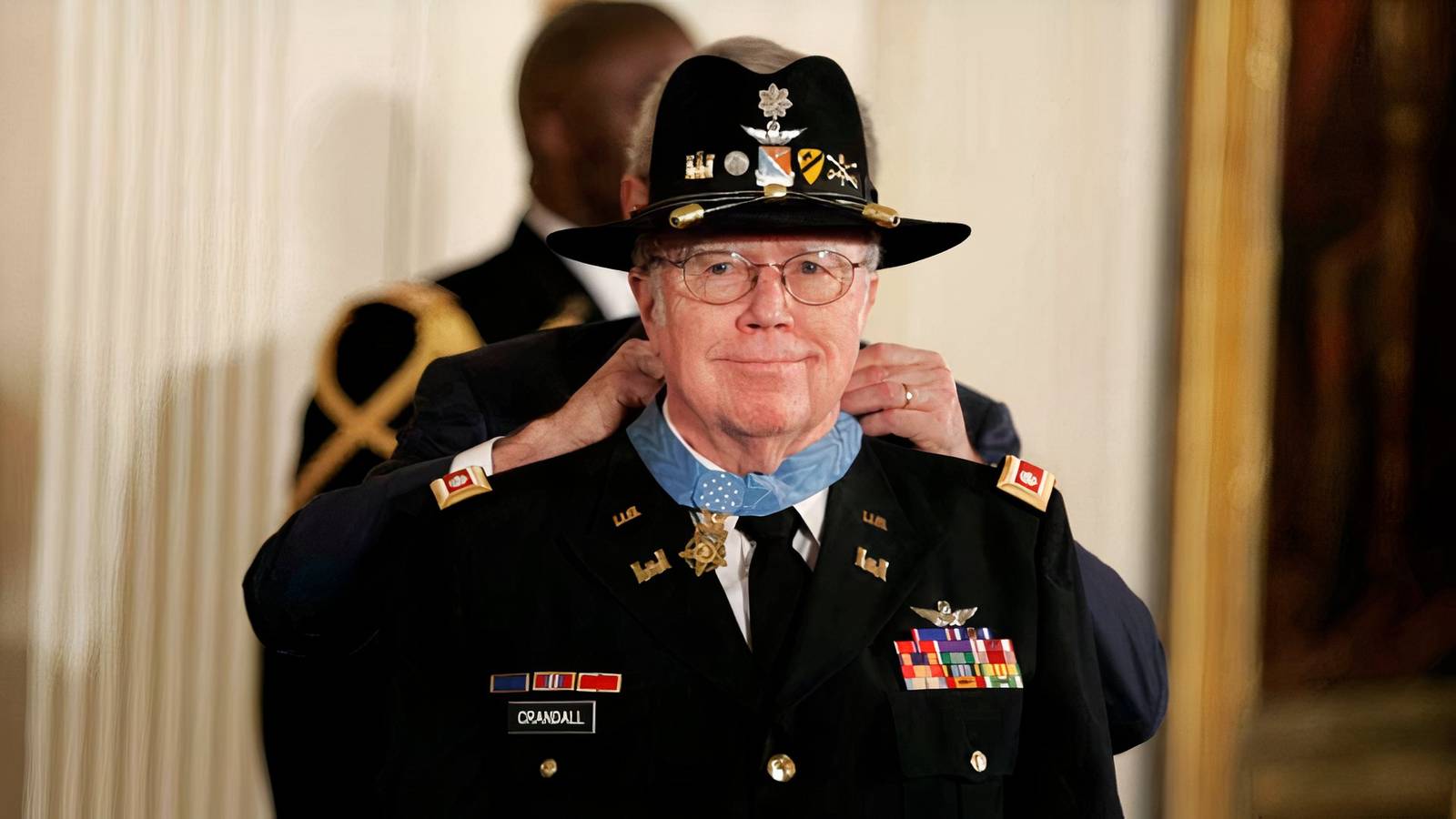

Retired Army Col. Bruce P. Crandall, who flew an unarmed helicopter through heavy fire into the Ia Drang Valley repeatedly to bring out the wounded, died at his Tempe, Ariz., home on May 31. He was 93.
The Congressional Medal of Honor Society announced his death. Crandall received the nation’s highest award for valor for what he did on Nov. 14, 1965, when American and North Vietnamese regular forces met in their first major battle.
By the end of that day, then-Maj. Crandall had flown into Landing Zone X-Ray 22 times, going back long after the ground commander had closed the field to other aircraft and the medical evacuation crews had stopped flying. His helicopters carried out roughly 70 wounded troopers and brought in the ammunition the embattled battalion needed to hold its ground.
The Battle of Ia Drang
Crandall grew up in Olympia, Wash., an All-American high school baseball player who went on to the University of Washington and dreamed of reaching the New York Yankees. He had joined the Army National Guard at just 15. The regular Army eventually drafted him in 1953, commissioned him the next year and trained him to fly both fixed-wing aircraft and helicopters.
During the early years of his career, the Army sent him to map terrain in Alaska, to fly survey runs over the North African desert from a base in Libya and to chart unmapped stretches of Central and South America.
By 1965, Major Crandall commanded Company A of the 229th Assault Helicopter Battalion in the 1st Cavalry Division, the Army’s new airmobile division. He deployed with the unit to Vietnam later that year. That November, the unit began carrying soldiers of the 1st Battalion, 7th Cavalry Regiment into the Ia Drang Valley.
On Nov. 14, Crandall led 16 helicopters into Landing Zone X-Ray, where the soldiers they dropped off were soon pinned by a North Vietnamese assault. As other aircraft turned back, Crandall and his wingman, Capt. Ed “Too Tall” Freeman, kept flying into the zone in unarmed Hueys, carrying ammunition in and getting the wounded out. Crandall flew under the call sign Ancient Serpent 6, which his crews turned into the nickname “Old Snake.”
Crandall never counted himself a hero for it.
“There was never a consideration that we would not go into those landing zones,” he said. “They were my people down there, and they trusted in me to come and get them.”
Ia Drang was not his last such rescue. During Operation Masher in January 1966, with nothing but a flashlight to find his way and enemy fire all around him, Crandall brought his Huey down through the jungle twice to lift out a dozen wounded men, work that won him a national award for helicopter heroism.
Across two tours, he flew more than 900 combat missions and came away with the Distinguished Flying Cross, the Bronze Star, the Purple Heart and 24 Air Medals. He was severely wounded during another rescue attempt in 1968. He retired from the Army in 1977 as a lieutenant colonel.
His actions at Ia Drang first earned him the Distinguished Service Cross, the same award Freeman received. Decades later, both were upgraded to the Medal of Honor.
Crandall’s Later Years
Crandall accepted the Medal of Honor from President George W. Bush in the East Room of the White House on Feb. 26, 2007, 41 years after Ia Drang.
Bush spoke of Crandall and the soldiers who fought beside him.
“In men like Bruce Crandall, we really see the best of America,” President Bush said. “He and his fellow soldiers were brave, brave folks. They were as noble and selfless as any who have ever worn our nation’s uniform.”
The medal might have reached Crandall sooner. Once he learned he was being considered alongside Freeman, he stepped aside and pushed for his wingman to be recognized first. Freeman was honored in 2001 and died in 2008. Crandall’s own ceremony came six years after his friend’s.
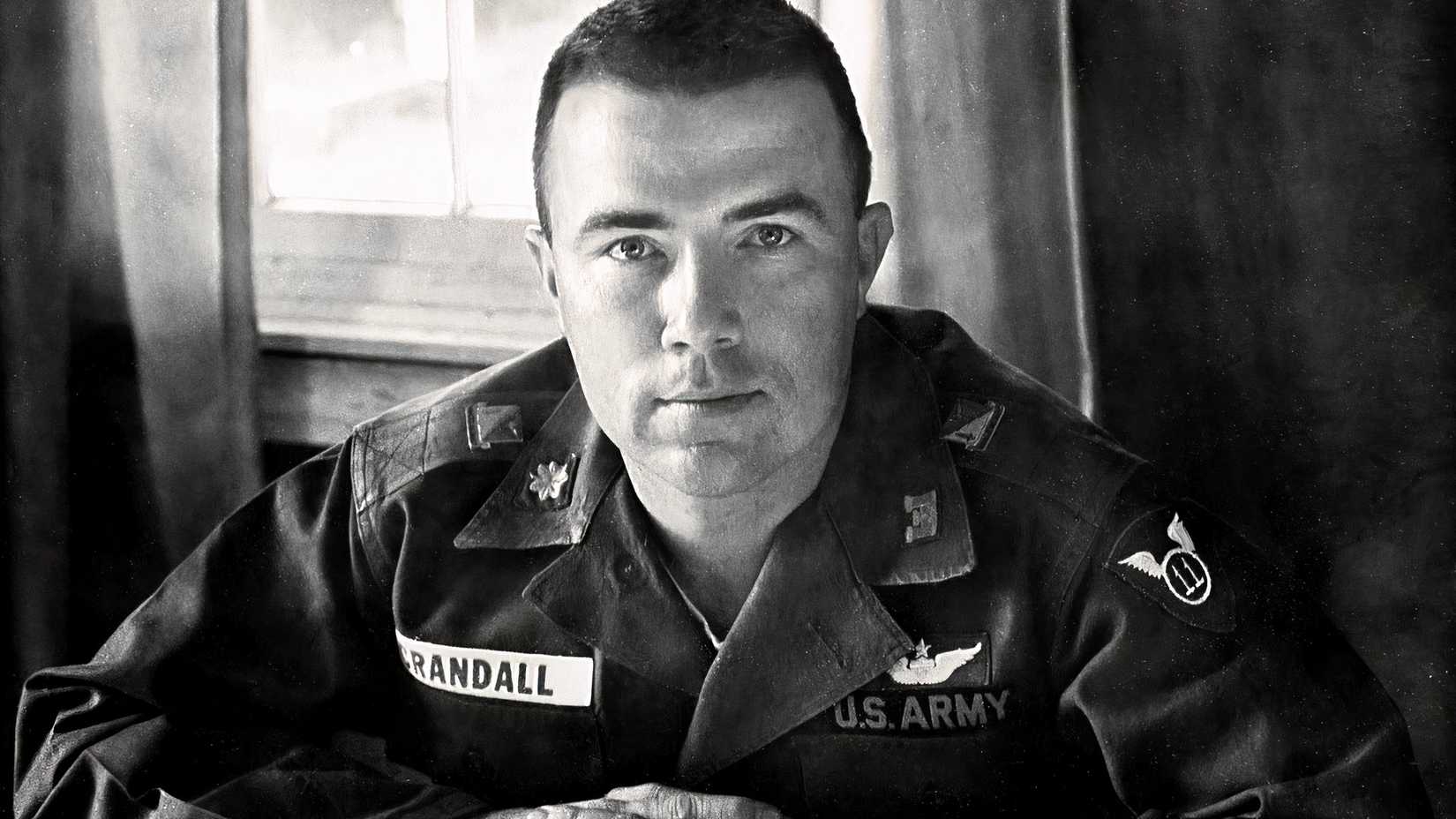
The Army Aviation Hall of Fame inducted Crandall in 2004. In 2010, the Army promoted him to colonel, more than three decades after he had retired.
The story reached a far wider audience through “We Were Soldiers Once … and Young,” the bestselling account by Lt. Gen. Hal Moore and the war correspondent Joseph Galloway. The 2002 film drawn from it, “We Were Soldiers,” cast Greg Kinnear as Crandall.
His wife, Arlene, whom he married in 1956, was at the White House for the ceremony and died in 2010. Crandall is survived by three sons, four grandchildren and two great-grandchildren.
His death leaves just 62 living recipients of the Medal of Honor.
Read the full article here
