



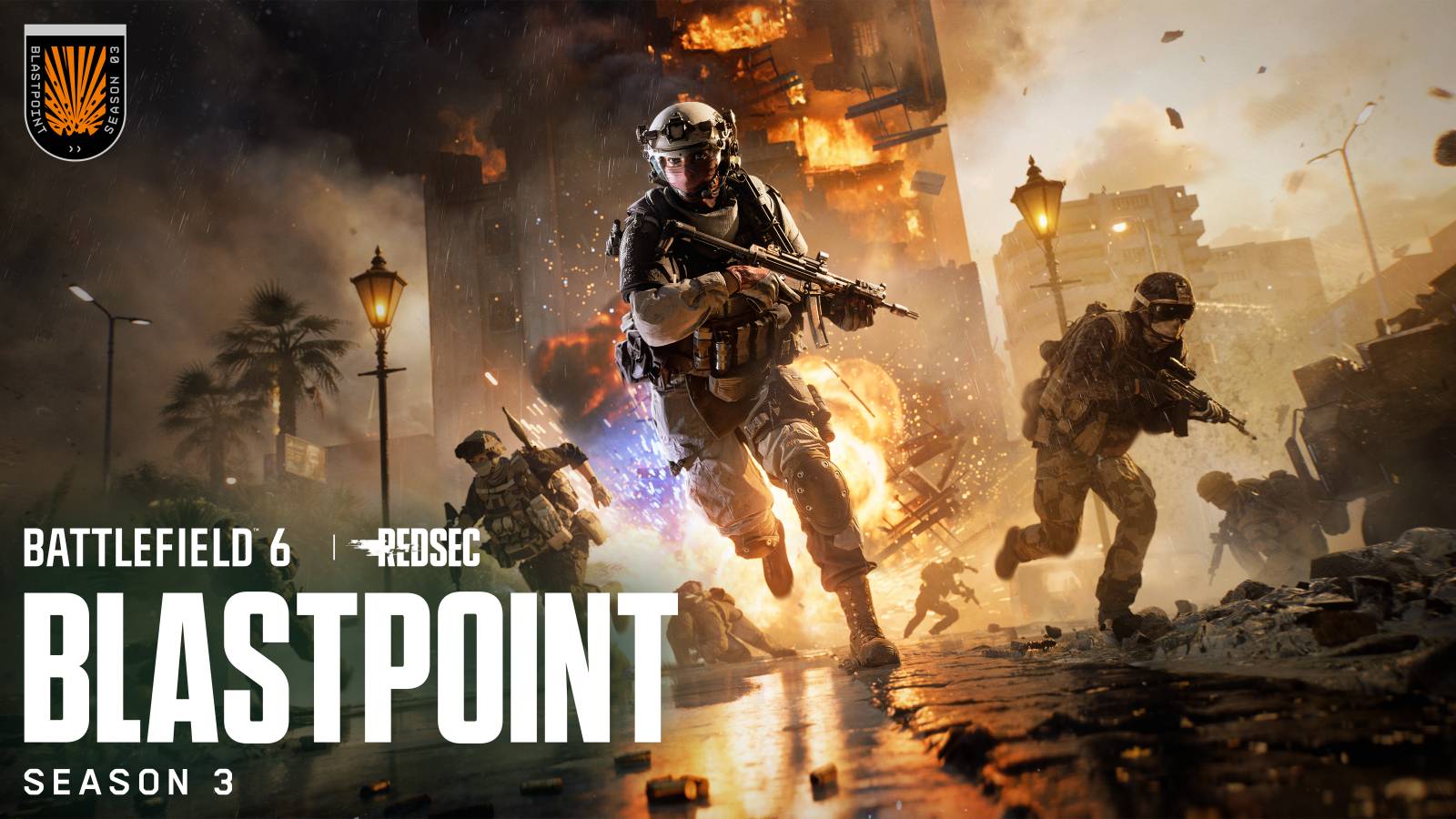

Battlefield 6 spent the opening act of Season 3 making a very loud argument about scale. Railway to Golmud, the season’s first major map, reset expectations for the game’s largest environments as an enormous, vehicle-saturated reimagining of the beloved Battlefield 4 original, with more airspace and flanking routes for flavor. But Blastpoint, Season 3’s second update, arrived with the return of the Obliteration mode and Cairo Bazaar, Battlefield 6‘s take on fan-favorite map Grand Bazaar from Battlefield 3, trading one sense of scale for a different focus — tight, infantry-focused shootouts across arms-length alleys.
Yet as Battlefield 6 pivots to one of the franchise’s most beloved infantry maps, Blastpoint’s pairing of Cairo Bazaar and Obliteration manages to keep Battlefield 6 Season 3 feeling like a distinctly singular package. To explore why that is, GameRant sat down with Ariel Giovannetti, Seasonal and Competitive Creative Lead at Motive and Battlefield Studios, to talk about Blastpoint’s biggest pillars. That included the translation of Cairo Bazaar, the return of Obliteration mode, and, more than anything, how deeply Season 3 is built around Battlefield‘s idea of “emotional truth:” finding what made players’ memories worth having in the first place, and building something even better from there.
Cairo Bazaar and the Many Memories of A Map
In terms of distinguishing Cairo Bazaar from its predecessor, the philosophical principle Giovannetti leads with is deceptively simple: the team’s ambition, stated plainly, was to make a Battlefield 6 version of the map — but as it turns out, that distinction carries a lot of weight. The process began with community research; identifying where the fun had come from in the original, where the vivid memories lived, and what feelings the map reliably produced. Giovannetti is deliberate about framing those questions in terms of feelings rather than mechanics, and that framing shaped everything that followed.
Battlefield 6 has a greatly expanded toolkit — richer destruction, denser cover, new flanking paths created by buildings that can now actually fall. The challenge was finding how to apply that in ways that stayed true to what made Grand Bazaar worth remembering in the first place. What players see, feel, and recognize on Cairo Bazaar is intended to land differently than a direct copy would, even if many of the bones are familiar.
“We look at our kit, we look at Battlefield 6, we look at what Battlefield 6 brings to the table that wasn’t in previous iterations, and we find ways to apply that to a map that is emotionally true to the original. Yes, some things will change. There’s more density of assets, there’s more cover, there’s destruction that now allows for paths that didn’t exist in the older titles, but the emotional truth of the map is still there.”
Playtesting the Limits of Destruction
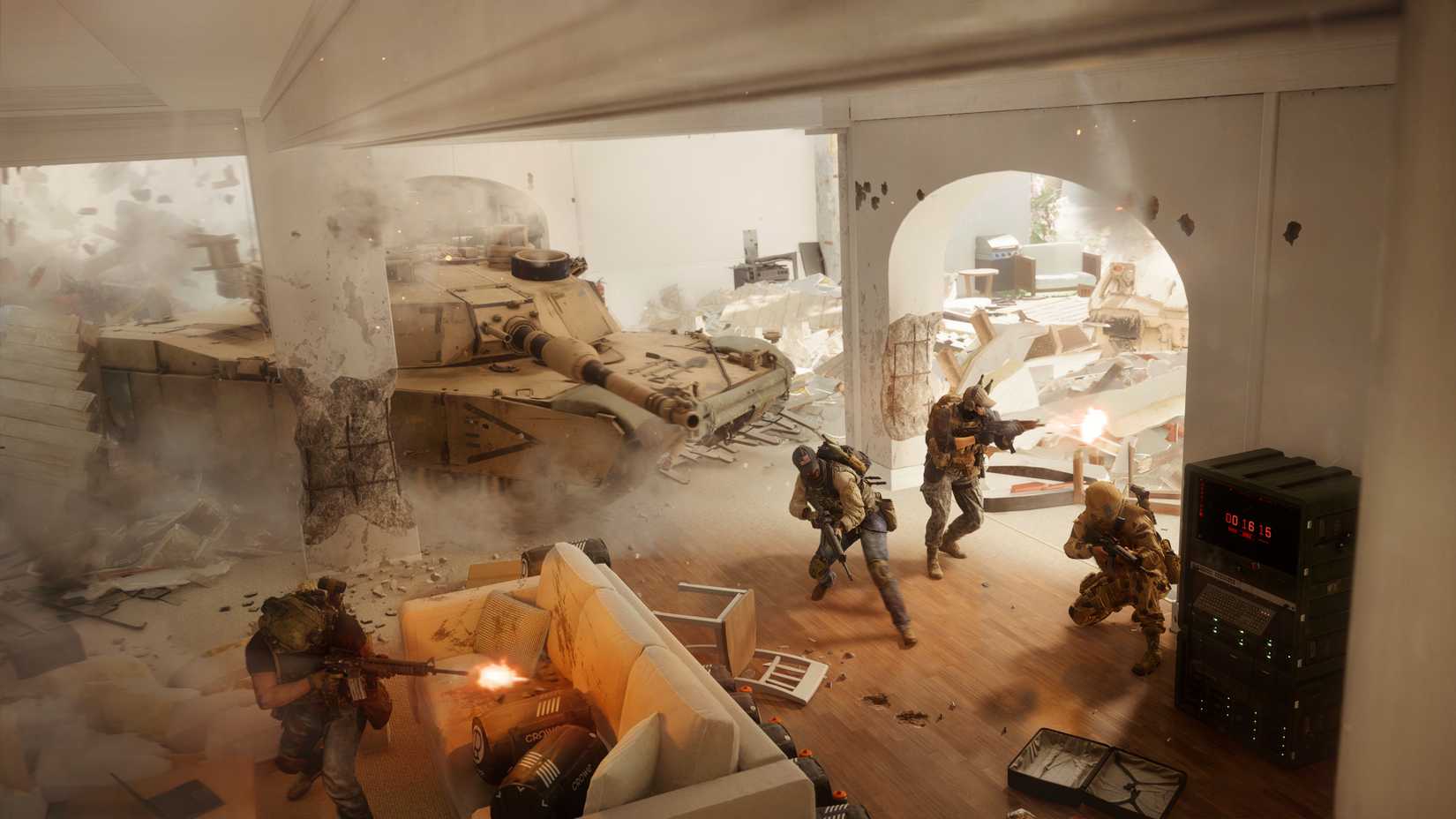
Developing Cairo Bazaar’s destructibility is, as Giovannetti describes it, one of the more methodical parts of the design process. Teams typically start playtesting with maps in states they know are going to fail: destroying things as aggressively as possible to find the natural limits of what works. The goal is to identify which structural elements need to hold their shape, so the layout stays legible, and which ones breaking open creates exciting new dynamics rather than just breaking the map.
“We want to identify the specific parts that are going to keep the identity of the map, keep the layout challenging, and if we do some larger destruction, [identify] the phases of [how] the map plays: “this way before it gets destroyed, and after this gets destroyed, the dynamics of play are going to change… But 1782252614 they are changing to something exciting… They’re not changing to what I just described: ‘oh, there’s no more cover now, like, what do we do?’”
It’s a moving target, and the sandbox nature of Battlefield makes it a particularly tricky one, as creative players will always find strategies the testers missed, but the subversive quality of some destruction choices can be part of what keeps returning players from feeling like they already know every angle. As Giovannetti puts it, “sometimes it’s fun to subvert the expectation. ‘Oh, that wall in the old maps was always there. Oh, now it’s destroyed.'” The challenge is knowing precisely where that stops being fun and starts becoming a problem.
“Sometimes they find strategies that are so overpowered that it starts to affect the experience. The only way that we can keep that in check and keep this sandbox very healthy is by playtesting, by working with the community, by updating the maps over time. It’s a challenge, but it’s also the greatest pleasure of Battlefield. It’s such an integral part of the DNA of our franchise that we don’t want to move away from it. We want to be proud, we want to be unapologetically Battlefield in that sense.”
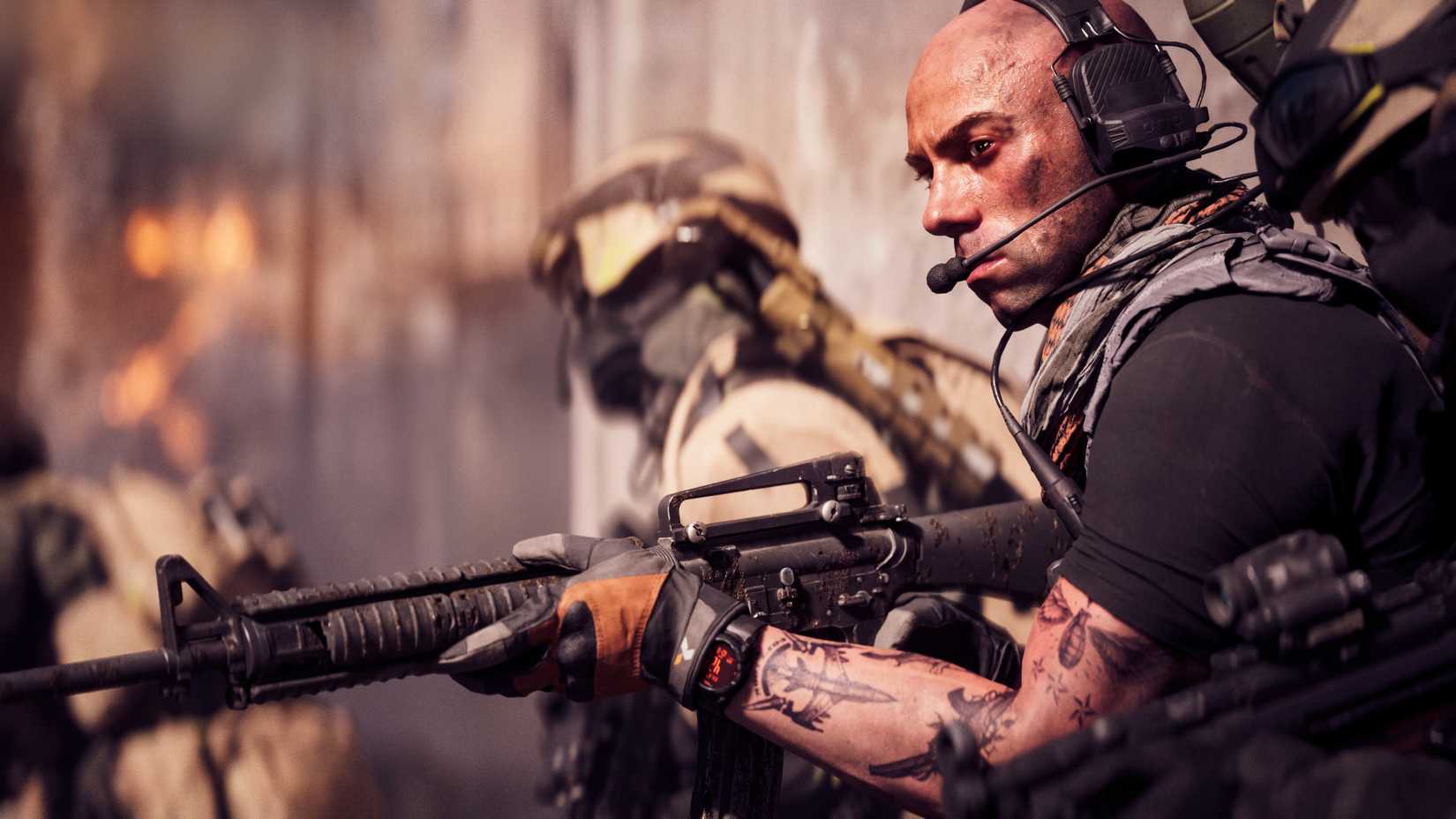
Given the effort dialed in on Cairo Bazaar, it would be easy to understate how well Obliteration (Battlefield’s latest limited time mode) works. 32 players chasing a single bomb carrier — the most visible target on a map that offers no truly safe passage — should feel like mayhem. But in practice, matches tend to land on exactly the right side of the line between chaotic and overwhelming, and Giovannetti explains that’s the product of an extraordinary amount of iteration, as well —particularly on the UI. Ensuring everyone in the lobby knows where the bomb is and what the match state looks like became a design priority in its own right.
According to Giovannetti, Principle Game Director Greg Black’s characterized the mode as “American football in Battlefield,” and that captures the pull of Obliteration perfectly. And Golmud’s pitch perfect sense of scale, with its vehicle-heavy terrain and vast sightlines, is the perfect stage for the larger expression of that experience. Giovannetti makes clear the earliest prototypes of the mode were, frankly, unhinged (in the best way possible).
“We have very early prototypes when our lead designer was bringing [the bomb] with a tank through a town, just to get as close as possible with two choppers, just shooting at it. We recorded that video, and then we shared that video to the whole team, and were like: ‘this, this is what we’re aiming to get.'”
Giovannetti also spoke to the fact that Tactical Obliteration — an 8v8 format planned for the season’s third leg— plays to a completely different feeling, despite being built on the same basic ruleset. Where the 32v32 version centers on momentum and spectacle, Tactical Obliteration is built around deliberate positioning, careful timing, and consequences that weigh harder for each individual error. He frames the two versions as separate registers; distinct in scale, but together in intent.
“It’s emotional, right? Like, in Obliteration, your emotions are [centered on] this chaos, these big moments. Then, in Tactical Obliteration, you’re thinking ahead, and it’s a completely different way to enjoy that.”
Read the full article on GameRant
This article originally appeared on GameRant and is republished here with permission.
Read the full article here
