




What’s a service member to do once they leave the U.S. military and re-enter civilian life? Many miss the structure, the responsibility and the ability to serve something greater than themselves.
For 43-year-old retired U.S. Army Sgt. Major Taamir Ransome, his to-do list involved getting a service dog and training it to be his companion for life. Then, the unexpected.
His personal project morphed into a passion project, a free service that secures and trains other service animals for veterans like him, in need of a canine best friend.
“I’ve just had a love for dogs for my entire life. I grew up breeding Rottweilers, and once I went into the military and became an EOD explosive ordnance disposal operator, I worked alongside our working dogs,” Ransome said in an interview with Military.com. “But after retiring, being paired with my service dog, Dimos, changed everything.”
Veterans Can Find Post-Military Life Challenging
Admittedly, Ransome said he felt lost outside of the Army, which he joined at 18 years old, right after the 9/11 terror attacks. He said he became a highly decorated, history-making service member, the first Black tier-one EOD operator in the country.
“On paper, I looked like a model soldier. I retired out of the Army with two master’s degrees, and I’ve always had a job,” he said. “But I didn’t realize how much the military meant to me as far as the identity it gave me. Once I left, my tribe was gone, the purpose I felt was gone, and I didn’t have anything driving me to continue to do the stuff that I was used to.”
Ransome said his 22-year military career was intense. Right after 9/11, he was deployed with the 82nd Airborne Division, then moved into Explosive Ordnance Disposal and the 75th Ranger Regiment before earning his place in the National Mission Force. He served on six continents, with deployments to Iraq, Afghanistan, and Syria.
But his EOD experience may have been the most dangerous. EOD is one of the most perilous jobs in all of special operations, with soldiers who run toward bombs when everyone else is running away.
Ransome said he lived on the edge for two decades, deployed repeatedly, surviving blasts and crashes, and carrying the physical and invisible weight of a long career in special operations. The job took a toll on him, until he medically retired in 2021 after surgery to rebuild an injured foot.
Still, Ransome said he mourned his military life.
“My transition was pretty rough. I lost my purpose, and I didn’t know who I was. I lost my identity,” he said. “So I started looking around for a service dog, and was given one through the Wounded Warrior Foundation. Once I realized how much that dog changed my life, I knew there had to be other veterans out there who couldn’t get service dogs, but needed one.”
Training Service Dogs As Veteran Companions
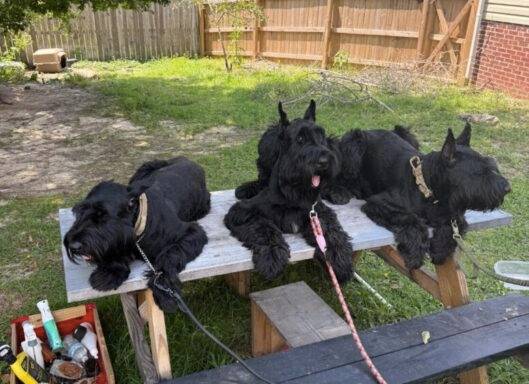
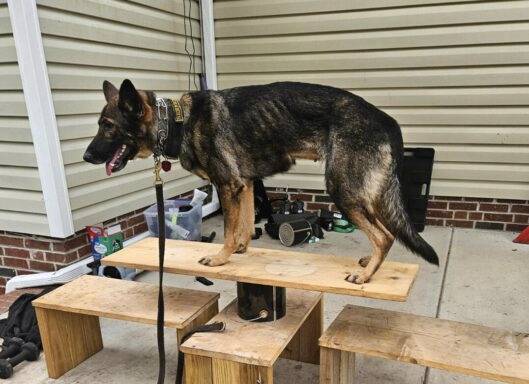
Today, Ransome and his son Mario work together to train German Shepherds, giant Schnauzers, and other breeds. They teach obedience, stability, and readiness for veterans who need a companion at home and in public spaces.
The work has become a source of therapy and connection for Ransome and his son year-round, but especially during the month of September and around September 20th, which is known as National Service Dog Awareness Day, as part of National Service Dog Month.
“It’s kind of word of mouth,” Ransome said. “But whenever somebody comes to me and says they need a service dog, I’ll usually re-home a dog and train that dog to the same level that my dog is trained.”
Ransome said his overall goal is simple: to deliver dependable canine partners to veterans who can rise to protect and bring calm at the same time.
That kind of service dog has been life-changing for Ransome, who said having his companion, Dimos, has helped him have fewer nightmares and a reason to get up and keep a routine, while forging stronger ties with his son as they train dogs that go on to serve other veterans.
“I started the program about 18 months ago,” he said. “Personally, I have eight dogs now. But we probably rescue a new dog about once a quarter. In the last 18 months, I would say I’ve trained more than 20 dogs.”
As if that wasn’t enough, Ransome has been busy with other endeavors in his post-military life. He earned dual master’s degrees in data science and analytics, and now works in veteran advocacy and technology. He also wrote a book titled “Mind of a Soldier” to offer insight and a path forward for those transitioning out of the military.
“My goal is just to be of service to others. Just because I hung up my boots and my rifle doesn’t mean that I have to stop serving,” Ransome said. “I now have a new purpose. I serve veterans by training service dogs and through my book.”
Read the full article here
