



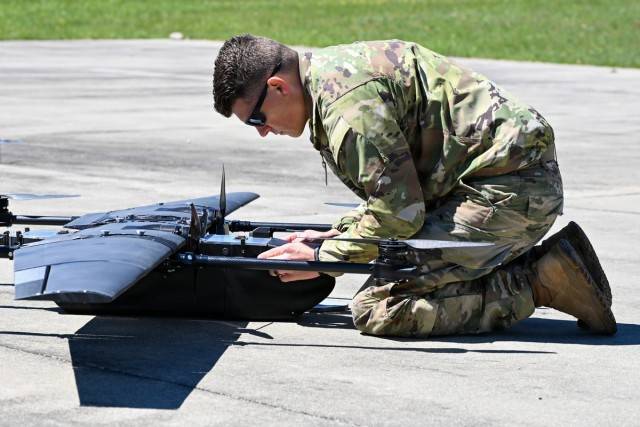

The Army is opening some of its most advanced test ranges to private companies, giving these organizations the opportunity to battle-test their most advanced technology before going into the prototype phase.
The ranges that are being opened are mostly in the United States, with one being in Morocco. Companies can use the ranges for the research, development, and processing of emerging technology for the betterment of troops. No weapons contract with the U.S. government is required for access.
The Army has stated that the effort is to bolster drone technology, counter-drone technology, long- and short-range missile systems, and a variety of other battlefield tech deemed important for the success of the military.
Private Industry Is Welcomed
The participating locations are Dugway Proving Ground in Utah; the West Cibola Range, which is part of Yuma Proving Ground in Arizona; Camp Shelby Joint Forces Training Center in Mississippi; Camp Grayling Joint Maneuver Training Center in Michigan; and the Multidomain Training Area range complex in Morocco.
Private companies usually face obstacles that have prevented them from using these kinds of ranges. In a bid to reduce these kinds of barriers, the Army has given companies one gateway through which they can request access.
“A company with a good idea shouldn’t need a team of lawyers and a program of record just to prove their equipment works,” Army Secretary Dan Driscoll said in an Army announcement.
This access point is the Army Test Range Access Portal. It allows companies to sign up for range time, and each applicant will get a point of contact that goes along with their request.
Just because a company submits a request does not mean they will receive access or be able to choose which range they are able to test on. Their liaison will help them find a suitable replacement location.
Testing at Battlefield Scale
While these companies can test commercial facilities, sometimes proper valuations of this advanced military tech need to be done in military space and land. These ranges give a better sense of conditions that would be difficult to produce in other facilities.
For example, few ranges can simulate drone warfare like Army ones can.
“At Dugway Proving Ground and West Cibola Range, we are providing industry partners with unparalleled access to massive land and airspace that is perfect for the ‘fly, fail, fix, fly’ process necessary to mature emerging drone and long-range fires capabilities,” Maj. Gen. Pat Gaydon, commanding general of Army Test and Evaluation Command, said in the announcement.
With access to the range and under these conditions, technology is advanced much faster. Corrections and identifying flaws can be done at a much better rate and allow for this technology to be adopted more quickly for the battlefield.
Recreating Electronic Warfare Conditions
These ranges also give the developers the chance to test their inventions in the kind of scenarios where their systems would be jammed or delayed, such as electronic disruptions.
Camp Grayling will host an event that allows private companies the chance to test their equipment under electronic warfare conditions like those in Ukraine. The service repeats these events quarterly, in an attempt to help stimulate growth under realistic battlefield scenarios.
Moving Technology into Soldiers’ Hands
The use of these ranges does not mean that every prototype will be used in the Army. Companies still need to show that their technology is effective and useful in the field, and relevant for troops to deploy with. The program could, however, allow the Army to broaden its technological horizons, if you will.
Giving more companies, not just the big conglomerate defense contractors, the opportunity to have access to military ranges allows for the advancement of more technology, especially as these smaller companies may not have access to this kind of broadband testing scenarios.
By lowering the initial barrier to range access, the Army is betting that more frequent experimentation and study will allow for much quicker advancements in battlefield technology that can keep the United States at the top of its game.
This allows all companies the chance to see design flaws and correct negativity in their technology. Ultimately, the delivery of weapons and new defensive technology will get into troops’ hands faster, making the battlefield a safer one.
Read the full article here
