



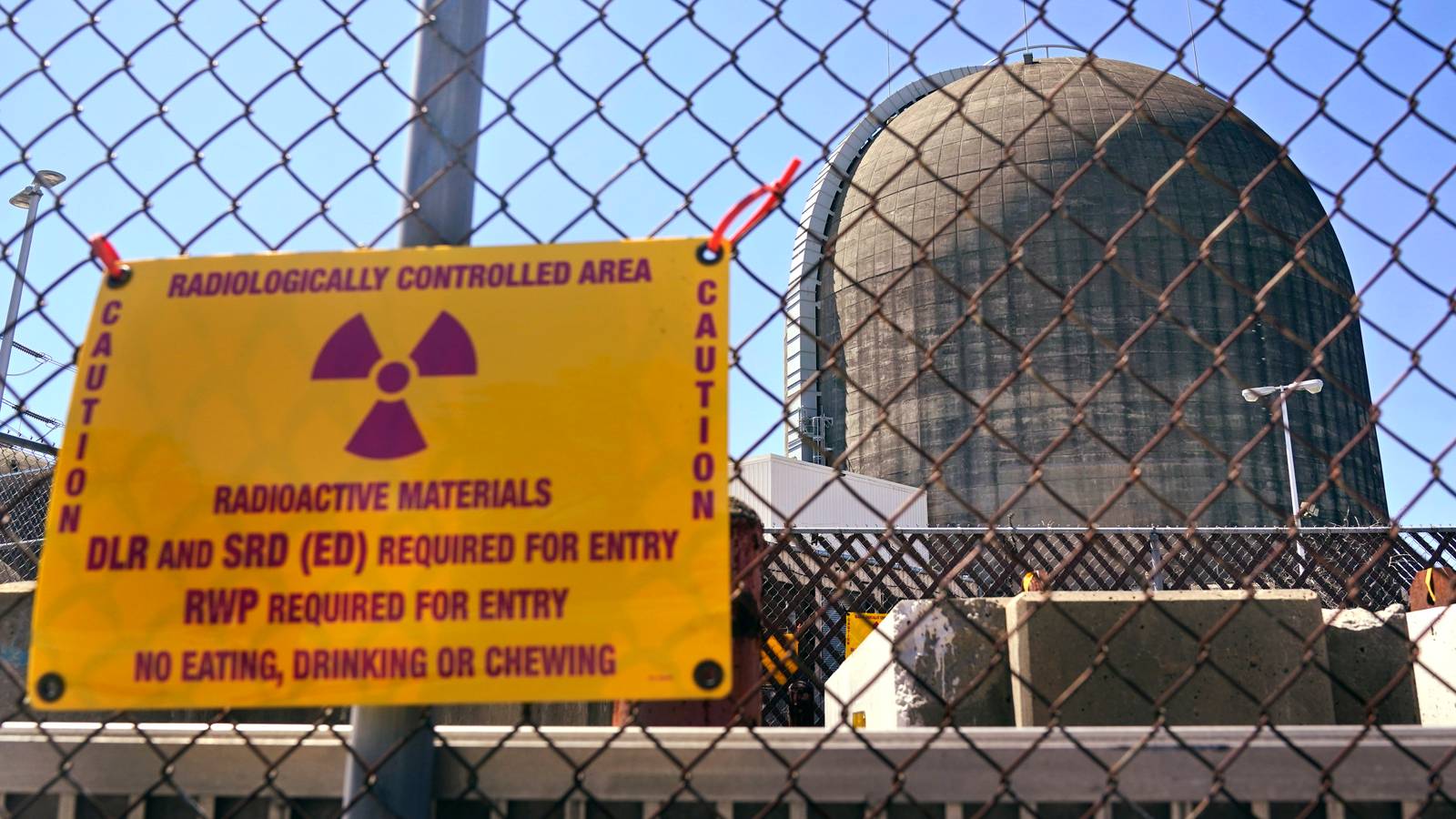

The Army and the Department of Defense (DOD) have announced $2.2 billion in contracts for the construction of five nuclear energy vendors.
Recipients of the combined $2.2 billion will construct and operate nuclear microreactors, which are reactors sized for specific needs rather than grid-scale power, to prove nuclear power in five locations for the army. President Donald Trump, in an executive order, set September 2028 as a deadline for the first operational reactor at a military installation.
The contracts come as part of the Army’s Janus Program, which aims to deploy advanced nuclear microreactors for installation energy resilience.
“The Janus Program is grabbing the baton from Project Pele and the [Department of Energy’s] Reactor Pilot Program,” said Dr. Jeff Waksman, principal deputy assistant secretary of the Army for Installations, Energy and Environment, in a statement. “We are seeking not just reactors capable of turning on for a brief demonstration, but rather systems able to deliver power with high-capacity factors for years of operation.
“The Janus Program will be a complete success when and only when we have assisted multiple nuclear companies in developing truly reliable and affordable nuclear microreactors which they can sell to other buyers beyond just the military.”
The vendors and their instillations are found at the following locations:
- Antares Nuclear, Inc. – Fort Bragg, N.C.
- BWXT Advanced Technologies, LLC – Fort Campbell, Ky.
- General Atomics Electromagnetic Systems – Fort Hood, Texas
- Radiant Industries, Inc. – Fort Benning, Ga.
- Westinghouse Government Services – Fort Drum, N.Y.
Use of Nuclear Reactors in the US
Currently, there are 94 operable nuclear reactors in the U.S. that generate about 19% of the country’s electricity, according to the U.S. Energy Information Administration.
That’s down from 104 reactors in 2013 and includes two new commercial reactors in Georgia that were the nation’s first large reactors in a generation to be built from scratch.
Their opponents like microreactors because they can operate for years on a single fuel load, require limited onsite staffing once running, and tolerate extreme weather. These traits reduce logistics demands compared with diesel generators or reliance on vulnerable commercial lines.

A panel of nuclear and technical experts from the Department of Energy and national laboratories decided which vendors to award the contracts to for the new microreactors.
The vendors will only receive government funding when they hit specific technical goals, which the Army did not provide further information about.
“Since launching the Janus Program, our mandate from President Trump and Secretary [Pete] Hegseth has been clear: secure the power our war fighters need to train, deploy, and win,” said Dan Driscoll, Secretary of the Army, in a statement. “Awarding these contracts accelerates our ability to deliver safe, reliable baseload power directly to our installations. We are building the energy resilience necessary to project combat power globally, without relying on potentially vulnerable external grids.”
Overall, the Army aims to build more than 20 total nuclear microreactors across DOD installations.
Read the full article here
