



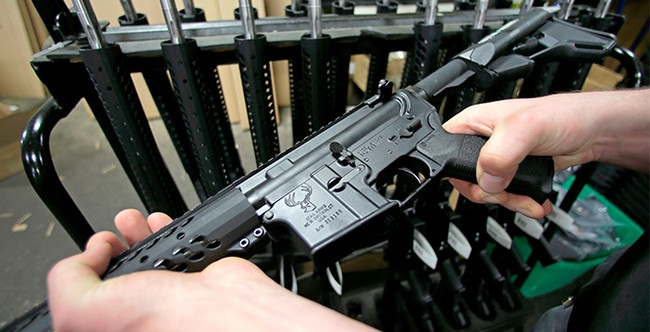

The first time I went to a gun show with my father, I was pretty young but already fascinated with firearms, and there they were. Thousands of them, of all shapes and sizes. Dad was mostly looking at the handguns and, perhaps, the odd hunting rifle. He grew up in the woods, shooting game, and helping put food on the table to supplement my grandfather’s meager salary as a Freewill Baptist minister. Plus, it was fun, so it wasn’t a burden at all.
Still, there we were, and I saw my first AR-15.
“Those are legal?” I asked, shocked, because I didn’t know squat at the time.
“Yep,” he replied, and left it there.
That was well before the 1996 Assault Weapon Ban, of course, but I knew what gun I wanted more than anything that day, and it was a firearm I’m happy to say I’ve bought a couple of over the years, and will probably buy a few thousand more if I have the means.
Now, though, I understand the gun even better. I know how it operates, sure, but I also understand its place in the United States of America.
250 years ago, the Kentucky Long Rifle became the symbol of America. It was the gun that many a minuteman took off the wall over the fireplace of his home, then marched toward the call of freedom. Rifled, making it more accurate than the British Brown Bess musket, Americans could target officers at will, throwing the British lines into turmoil, and it became a symbol for generations to come.
It was a symbol of why the armed American was free then, and would remain free in the future.
Today, the long rifle is little more than a symbol for most people. It’s fun to shoot, of course, and it can still take down plenty of larger game–at least as we define “larger” game here in the US–but it’s not an effective tool to fend off liberty.
What I saw at that gun show in the local Shriners Temple, though, is what replaced it.
The AR-15 is the modern musket. It’s the tool that will keep us free, and it will stay that way until something better comes along. Oh, there are other firearms that sort of look like the AR-15 and fill the same role, but aren’t quite the same thing, but in the vernacular sense, they’re all in one big tub for most people who neither know nor care about the differences.
And that’s fine. They don’t need to know the functional differences between them. What they need to know is that they’re available and they allow an armed population to keep their government in check, while also being something would-be foreign invaders have to account for.
Admiral Yamamoto has erroneously been quoted as saying that the problem with invading mainland America is “there will be a rifle behind every blade of grass.” There’s no documentation of him saying it, but considering how he understood us better than most of his fellow flag officers in the Imperial military at the time, it’s entirely possible he said something like this, because it was true.
But back then, your average hunting rifle and the standard battle rifle throughout the world weren’t that different. Today, things have changed, and the AR-style rifles are the tool that fills that role.
We are free.
We will continue to be free just as long as we maintain not just the right to keep and bear arms, but the right to keep and bear arms with a military application, even if it makes certain shrieking violents nervous.
Editor’s Note: It’s America’s 250th birthday! Help Bearing Arms celebrate the greatest nation in history by honoring its past, defending its present, and preserving its future with reporting you can trust.
Join Bearing Arms VIP and use promo code AMERICA250 to receive 74% off your membership.
Read the full article here
