





On Oct. 30, 2025, President Donald Trump ordered the United States to resume nuclear weapons testing for the first time since the early 1990s, arguing the move was necessary to keep pace with Russia and China. The announcement initially left unclear whether he meant explosive tests or broader weapons-system testing.
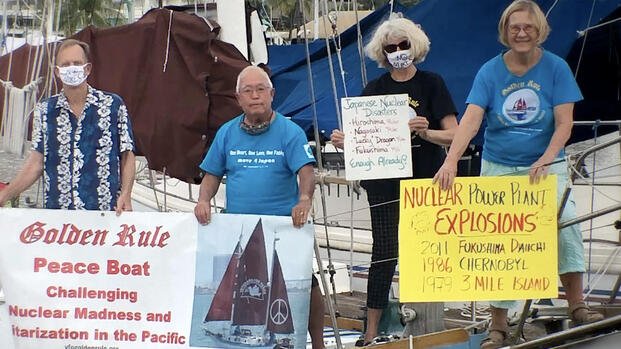
That order is why Golden Rule: Journey for Peace, available to stream online through the film’s official channels, including YouTube, lands less like a history lesson and more like a warning flare. The documentary, directed by filmmaker Nolan Anderson and produced in partnership with Veterans For Peace, revisits the veteran-linked 1958 voyage of the Golden Rule — a 30-foot wooden sailboat widely considered America’s first anti-nuclear protest boat — and traces the vessel’s modern revival as a platform for disarmament, reconciliation with impacted communities, and nuclear accountability.
Anderson said the timing of the film’s release against the backdrop of renewed testing talk has been hard to ignore. “It’s pretty alarming,” he told Military.com, describing the strange whiplash of spending years immersed in nuclear history and policy only to see modern flashpoints and political rhetoric make those Cold War fears feel newly immediate.
“It’s pretty alarming…”
A Veteran-Led Origin Story With Cold War Stakes
The Golden Rule’s story doesn’t begin with a protest movement — it starts with a veteran’s conscience. Albert Bigelow, a World War II Navy commander, emerged from the early atomic era convinced the country was racing toward a future it couldn’t ethically or safely control. Anderson said Bigelow experienced “an incredible kind of turn of conscience,” ultimately resigning his commission and dedicating his life to opposing the use and development of nuclear weapons.
In 1958, Bigelow and three fellow activists aimed a small wooden sailboat at the U.S. nuclear test zone in the Marshall Islands, a civilian-sized act of defiance that helped set the template for maritime protest that would follow. “Out of desperation,” Anderson said, Bigelow and his collaborators launched the boat into the test zone, a gambit that sparked a political uproar. The crew was jailed, but the action helped push the national conversation toward the early logic of test limits and restraint.
After its first life, the Golden Rule eventually sank and spent decades underwater before being recovered in Northern California. Anderson said the boat’s second chance nearly didn’t happen — the man who found it had “used to joke about having a big bonfire” and burning the derelict hull on the beach. But a Veterans For Peace leader recognized what it was and launched a fundraising push to restore it.
“They spent a few years rebuilding that whole thing from the ground back up,” Anderson said.
Anderson told Military.com he stumbled onto the project almost by accident while traveling in Hawai‘i after COVID restrictions began to lift. He met someone repairing a beautiful old wooden sailboat, learned about the Golden Rule’s history, and became fascinated. From there, he cold-pitched the story, assembled a team quickly, and soon found himself on the Golden Rule for a 2021 Pacific crossing from Hawai‘i to San Francisco that became the spine of the finished film.

Veterans For Peace and the Credibility of Lived Experience
In the film and in conversation, Anderson stresses that the Golden Rule’s modern mission is inseparable from the veterans who rebuilt it.
Veterans For Peace is a nonprofit led primarily by veterans who have concluded that the post–World War II trajectory of militarization and escalation is unsustainable in a nuclear age. Anderson described the group as veterans whose experiences have led them to believe that in a nuclear era, “we can’t afford the two steps back anymore.” Their anti-nuclear work is one of the organization’s central pillars, and the Golden Rule is its most visible symbol.
Golden Rule: The Journey for Peace | Full Documentary
As Anderson put it, veterans bring an extra layer of credibility to public conversations that can otherwise feel abstract or hopelessly partisan.
If the Golden Rule was a moral spark in 1958, today’s renewed testing talk is the reason that spark still matters.
Why Nuclear Testing Still Hits a Nerve
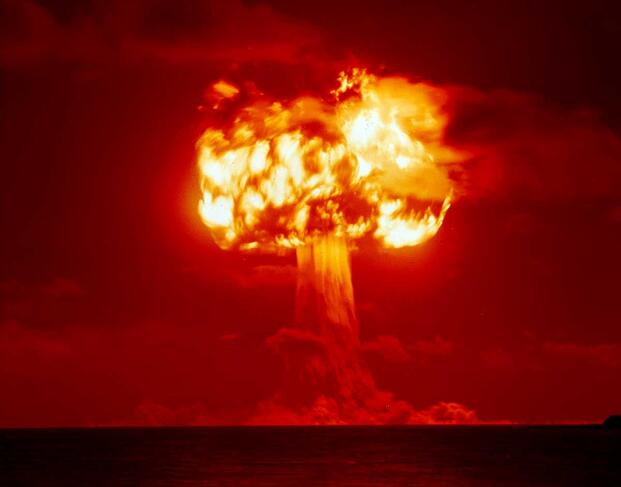
The United States last conducted a nuclear explosive test in 1992. Since then, Washington has observed a unilateral moratorium — alongside a global norm shaped by the Comprehensive Nuclear-Test-Ban Treaty (CTBT), a treaty the U.S. signed but has never ratified.
The CTBT has not formally entered into force because several key states have not ratified it, though the treaty’s norms still exert real pressure on international behavior.
Arms-control experts warn that a U.S. return to explosive testing could invite reciprocal moves by rivals and potentially accelerate a new arms race.
Anderson’s own skepticism centers on the logic that has kept the arsenal politically durable for decades. The people who advocate for nuclear spending and modernization, he said, often:
“…really buy into the nuclear deterrence” argument — but “I just don’t think the receipts are there.”
In his view, the close calls and the evolving landscape of tactical warheads make the risk feel less theoretical than policymakers often acknowledge.
At the same time, some officials and analysts have suggested that what the administration might pursue could range from subcritical experiments to other non-explosive activity that would not necessarily violate the treaty’s zero-yield standard—a distinction that has fueled debate and uncertainty.

The Human Cost the Film Refuses to Sidestep
One of the documentary’s most sobering threads highlights the people who lived with the consequences of Cold War-era testing — including Marshallese communities displaced by radiation risks and long-term health impacts.
Anderson told Military.com that speaking with survivors and refugees was among the most emotionally heavy parts of the project. “That’s a crazy scar on history,” he said, describing the lingering damage felt by communities that were told they could return home after tests ended, only to face catastrophic health outcomes and displacement.
He also noted the resilience many survivors still carry — including a belief that the next generation can do better than the last.

A Short Film With a Simple Call to Action
Anderson’s ask is practical and straightforward.
“A big call to action is really just… talking with people about nuclear proliferation,” he said, adding that the next step is bringing those conversations to local representatives because the issue rarely rises to the top of public debate until a crisis forces it there.
- Talk about nuclear risk in everyday settings.
- Connect the issue to your region — whether that’s nearby bases, nuclear infrastructure, or policy impacts.
- Bring it to elected officials, especially because nukes rarely rise to the top of public debate until a crisis forces the issue.
He also frames nuclear stewardship as a bipartisan civic responsibility. As Anderson put it, regardless of party, Americans should consider who they trust with the ultimate authority:
“Think about who it is you’re putting those nuclear codes in their lap. What president do you want woken up at four o’clock in the morning with three minutes to make a decision?”
Why This Story Is Important Now
For Military.com readers, the Golden Rule story lives at the intersection of:
- Service and ethics.
- National security and accountability.
- History and the weight of moral consequence.
The film doesn’t argue that veterans should be a monolith on nuclear policy. Instead, it shows how some veterans have used their experience to build a different kind of authority — one rooted in prevention, restraint, and memory.
In 1958, a former Navy commander and three fellow activists climbed aboard a small wooden boat and demanded that the country confront the fallout of its own power. In 2025, that same boat is sailing again — through a political moment that suddenly makes history feel less like a museum and more like a warning flare.
Story Continues
Read the full article here
