



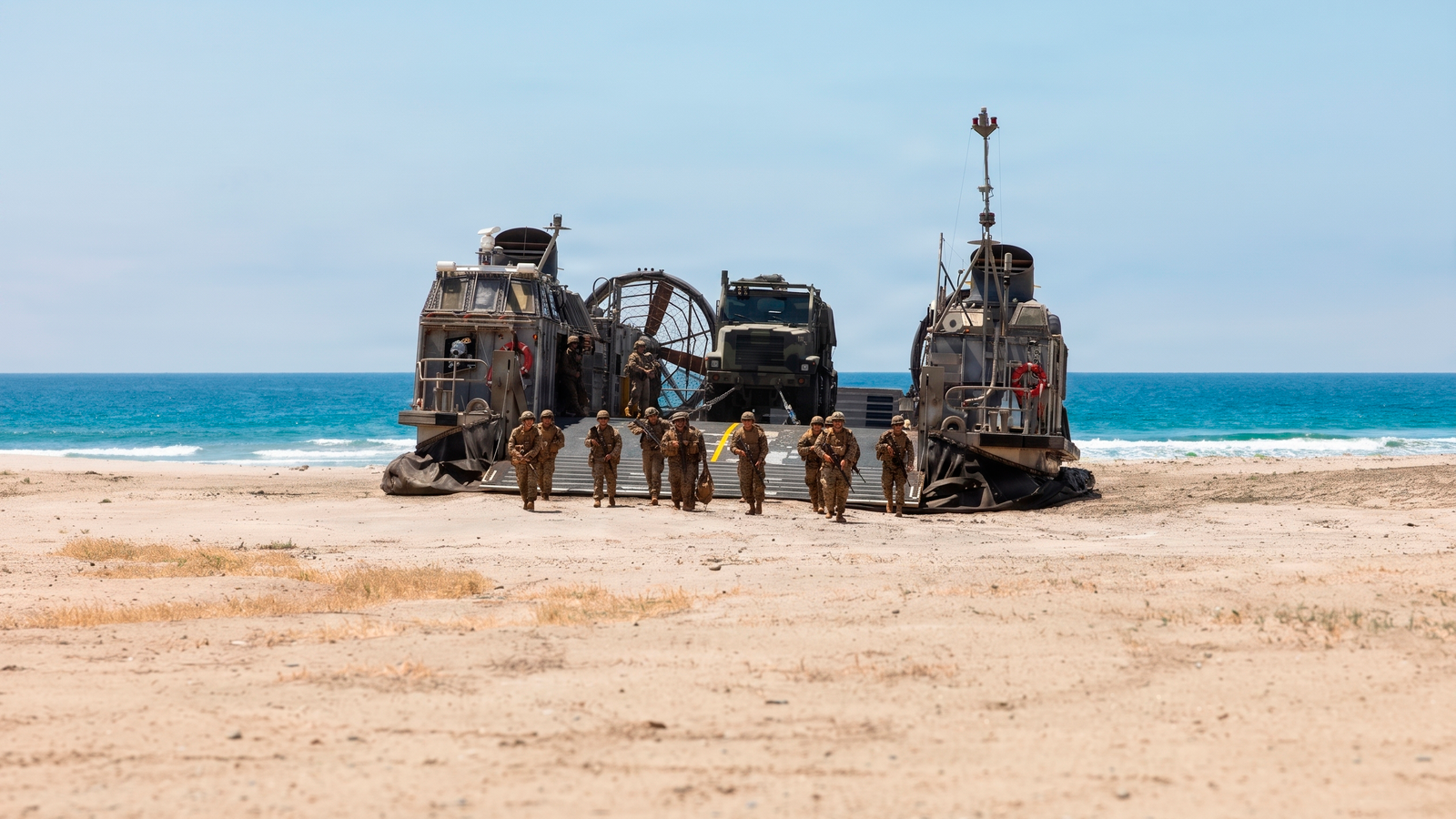

The U.S. Marine Corps Installations and Logistics Enterprise (MCILE) 2026 plan outlines the strategic vision to sustain the force in an era of persistent global competition, including a “3-1-5” framework that bolsters wartime posture.
The recently released plan, titled “The Reference A for Marine Corps Installations and Logistics,” consists of a 27-page document detailing how the Corps will generate, deploy and sustain combat-credible forces to meet the challenges of a rapidly evolving security environment.
It is described by officials as serving as a “Reference A” for installations and logistics, providing a single, authoritative description of the current state, ongoing modernization efforts, and capability gaps across the MCILE.
Modernization is the name of the game. Combating evolving threats including strategic competition, peer threats, contested operations, geographic distance, diverse climates, and rapidly advancing technologies are admitted challenges that require adaptation. That’s where the 3-1-5 framework comes into play.
It is viewed by the Marine Corps as an ideology of sorts, in which “the side that can project and sustain its forces most effectively ultimately prevails.” It’s a method to provide support for Marine forces in contested, protracted fights with peer threats and relies on three vital characteristics to either prevail or deter actions: capability, presence, and endurance.
“Capability includes morale, combat power, and proficiency. Presence relates to location and reach relative to an enemy or objective. Endurance preserves combat power over time,” the MCILE reads.
Intricacies of the 3-1-5 Framework
The 3-1-5 framework is based on the three principal moves of force projection, the operational imperative of littoral mobility, and the five sustainment imperatives.
The ‘3’ portion focuses on mobilization and deployment, closure of a combat-credible force, and force sustainment. It’s broken down as follows:
Mobilization and Deployment
Mobilization and deployment relates to being able to organize and depart home ports and airfields while under cyber and kinetic siege, which officials say prioritizes the survival of the force and the evacuation of dependents over administrative efficiency.
Rapid Closure of a Combat-Credible Force
Closure in this instance refers to being able to rapidly close the force in the face of persistent interdiction, with closure coined as the term for placing forces in locations from which they can achieve operational objectives in the face of persistent interdiction.
The plan states that the ability to rapidly close a capable and large enough force provides leaders with perhaps their most valuable commodity—time. Officials say that new defenses and capabilities, like autonomous connectors, are part of that modern warfare and necessary to facilitate rapid force closure.
Sustainment of the Force
Sustainment refers to continuity, a flow of sorts that allows prolonged maintenance and operational endurance in a case of protracted conflict. It accounts for periods without traditional air or maritime superiority, “in which traditional resupply is unachievable.” It also involves planning ahead, ensuring that supply stocks are increased before conflicts while using pulsed resupply to sustain forces under enemy observation and fire.
Other MCILE Areas of Focus
The MCILE’s other major areas of focus include multi-domain positional advantage, network resilience, resource discipline, and MCILE integration.
On a more granular level, the plan shifts from a traditional tactical-based sustainment to generating and exploiting positional advantages. That strategic effort requires forward posture enhancement, developing mobility capabilities, building operational endurance, and preparing for protracted operations with joint partners.
“We have a fundamental responsibility to deliver Marine forces that optimize the effectiveness and capabilities of the combatant commands,” said Lt. Gen. Stephen D. Sklenka, deputy commandant for Installations and Logistics in a statement. “This plan is our commitment to ensuring the Marine Corps can fight and win tonight, while preparing for the demands of tomorrow.”
A force is not combat credible if it cannot get to the fight and endure. MCILE 26 describes how we are building the installations and logistics enterprise required to project and sustain our forces against any threat.
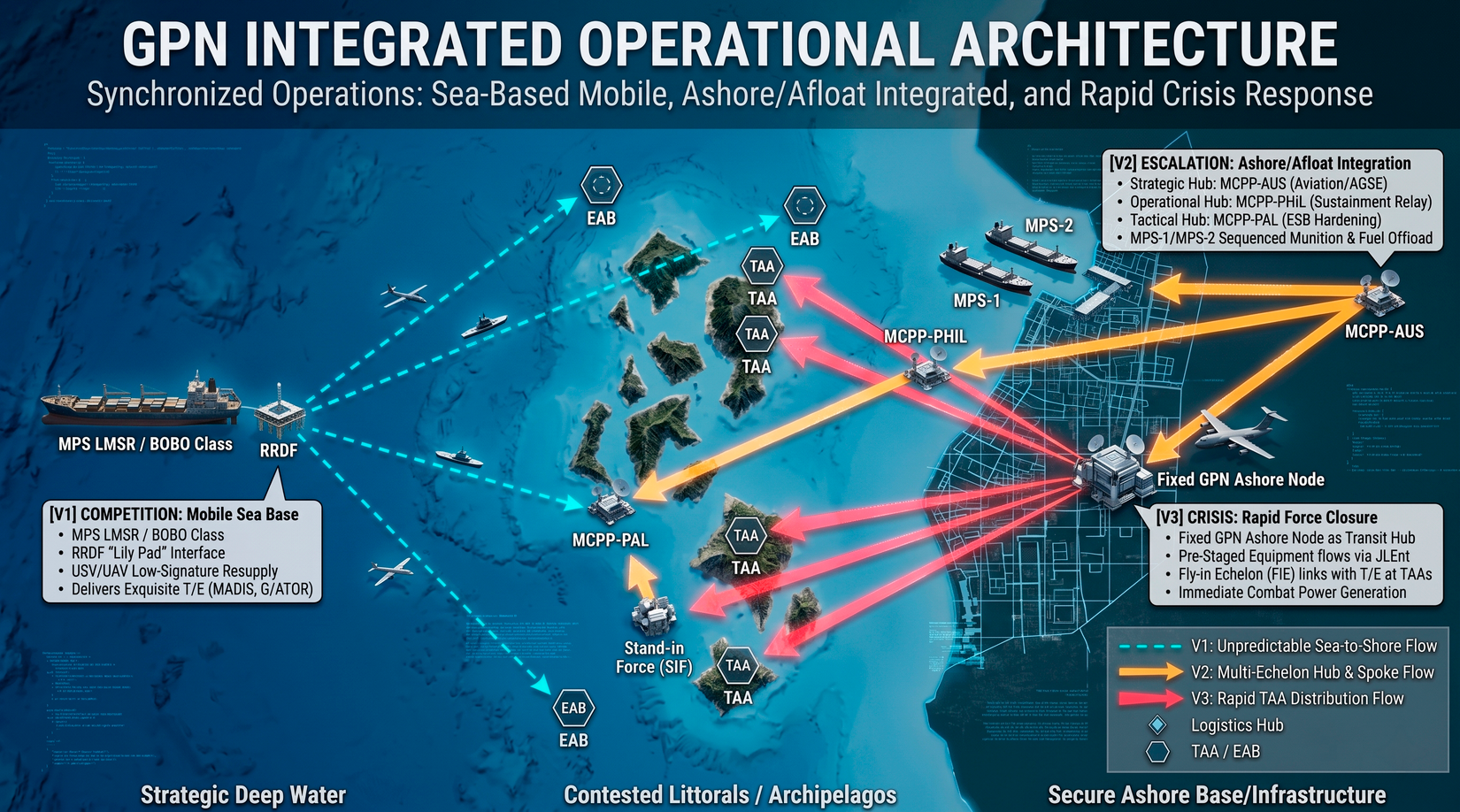
Achieving such success relies on what the Corps describes as “major initiatives currently underway,” notably the Global Positioning Network (GPN), Regional Sustainment Framework, and Logistics Assumption Assessment.
GPN
The GPN refers to the Marine Corps’ forward prepositioning equipment and supplies. Within it is a three-pronged system of prepositioned material afloat, ashore, and contracted to enable rapid force closure for campaigning, global crisis response, and ultimately conflict.
That vision, according to the MCILE, requires investment in Maritime Prepositioning Force (MPF) and Maritime Prepositioning Ships (MPS), ashore sites, supply and distribution nodes, medical capabilities, logistics information technology, and increased acquisition objectives.
The GPN includes the USMC equipment MPF, or sustainment stocks loaded aboard ships in the Maritime Prepositioning Squadrons (MPSRONs), as well as three ships stationed in the Indian Ocean at Naval Support Facility Diego Garcia, four ships stationed in the Western Pacific Ocean, and two additional ships in a reduced operating status. Ashore-based stores such as the Marine Corps Prepositioning Program in Norway are part of the GPN, too.
The Corps is currently expanding the GPN by establishing new ashore sites in the Pacific and contracting capabilities, while also pursuing new MPS options by conducting experimentation to improve global responsiveness.
Regional Sustainment Framework
The Regional Sustainment Framework is a Department of Defense initiative with a goal of creating a globally connected and resilient defense ecosystem through collaborative regional sustainment strategies.
That framework leverages the strengths of allies, partners and the Defense Industrial Base, with intentions “to move away from returning materiel to the U.S. for repairs by establishing distributed maintenance and repair facilities closer to the point of need, capitalizing on the capabilities of partner nations.”

Officials said such an approach is purposeful to enhance military readiness, strengthen regional partnerships, and provide more agile and resilient sustainment. The Marine Corps is participating by using secondary repairables, depot maintenance forward, advanced manufacturing (AdvM), public-private partnerships, and industry integration-leveraging allies.
Logistics Assumption Assessment
Marines are reevaluating planning factors and stockage levels to understand the current requirements needed to sustain operational endurance for protected operations, as well as reassessing planning assumptions and techniques to account for current threats, equipment, operating methods and force posture.
Such efforts entail “a revalidation” of days of supply to be prepared should a conflict or emerging threat come to light.
Read the full article here
