



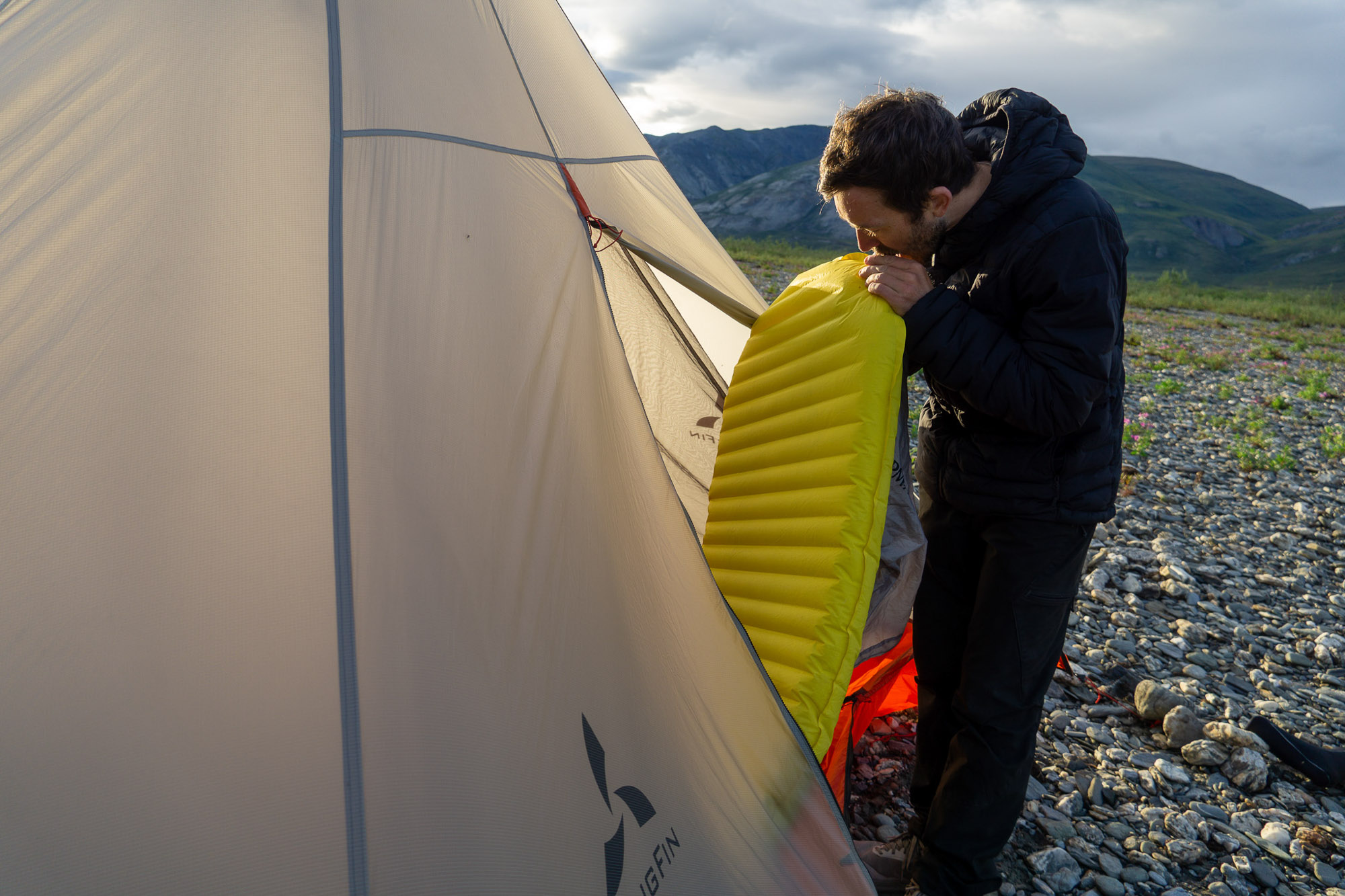

Backcountry sleep comfort starts from the ground up, and the best backpacking sleeping pads ensure that your nights under the stars are restful, not restless. We’ve pulled together the most solid backcountry pad options in 2026, along with our trail-worn opinions on each.
We left no stone unturned in our effort to uncover the most deserving pads for this guide. The Therm-a-Rest NeoAir XLite NXT proved to be our favorite combination of warmth and packability, and the Klymit Static V emerged as a great budget compromise.
To merit inclusion in this guide, every pad had to demonstrate outstanding durability, comfort, and insulation. We paid special attention to pack size, warmth-to-weight ratios, and ease of inflation. Rest assured, we trust every product in this roundup for our backcountry beauty sleep.
Editor’s Note: We updated our Backpacking Sleeping Pads guide on March 16, 2026, to add new direct product comparisons between similar sleeping pads, as well as our ‘Quick & Dirty’ take on each sleeping pad.
The Best Backpacking Sleeping Pads of 2026
Best Overall Backpacking Sleeping Pad
9.7/10 Rating
Best Budget Backpacking Sleeping Pad
6.5/10 Rating
Best Ultralight Backpacking Sleeping Pad
8.4/10 Rating
Most Comfortable Backpacking Sleeping Pad
8.4/10 Rating
Best Sleeping Pad For Cold Weather
8.5/10 Rating
Best Self-Inflating Sleeping Pad
7.9/10 Rating
Most Durable Backpacking Sleeping Pad
6.1/10 Rating
See more picks
-
Super light for its high R-value -
Comfortable and sturdy -
Durable enough for 2,000+ mile thru-hikes -
Update is 6 times quieter than previous model
-
Update adds 1 oz. (but is thicker and warmer) -
Still has some crinkle to it
NEMO Tensor Trail Ultralight: A Slightly Comfier (and Cheaper) Pick
Compared to the XLite NXT, the Tensor Trail Ultralight makes a compelling case for itself. It’s 3.5″ thick, making it a slightly deeper cushion than the 3″ on the Therm-a-Rest. The gridded baffle structure on the NEMO is also preferable to those who sleep on their side or toss and turn. The Therm-a-Rest is, however, more insulative with an R-value of 4.5 to the 2.8 provided by the Trail Ultralight. Both weigh the same in the mummy size, so choose the Tensor Trail as a solid alternative if you don’t camp in the shoulder seasons as much.
Exped Ultra 6.5R: Warmer, Slightly Inferior Valves
The new Exped Ultra 6.5R is a solid alternative to the XLite NXT if you need a bit more warmth. The 6.9 R-value on the Swiss pad is a very impressive warmth-to-weight ratio score of 0.54, which is a good bit better than the average 0.34 the Seattle mattress packs on (at an R-value of 4.5). Both mummy shapes are just about the same weight at around 13 ounces, but differ when it comes to baffle construction: the XLite NXT uses a horizontal baffle structure (good for most), while the Ultra 6.5R uses vertical (good for some, especially side sleepers).
-
Packs compactly -
Affordable price -
Inflates fairly quickly -
Quiet
-
Not very thick -
Lacking insulation with a low R-value -
Long-term durability concerns
NEMO Switchback: The Trusty Foam Alternative
You’ll pay the same amount for the Klymit Static V Base as you will for the NEMO Switchback, with the notable difference between the air and foam constructions. The foam will have the edge in long-term durability and ease of repair, while the air pad has the nose in comfort. Weight between the two has you saving 4 ounces by going with the Switchback, but in bulk the Klymit is certainly more. Our take: you’re still saving money by buying both and using them together.
Sea to Summit Pursuit: A Bump Up to Self-Inflation
The Sea to Summit Pursuit is a budget-minded pad that offers the upgrade to some air support. The Static V Base is technically thicker at 2.5″ (to the 2″ of the Pursuit), but the structure uses more empty space, which negates the added thickness. Packed size certainly goes to the Static as well, which is a snug 3″ x 8″ compared to the 5.5″ x 11.4″ Pursuit rolled up. The Pursuit however has double the R-value at 3, making it the choice when you need more warmth.
-
The lightest inflatable sleeping pad available -
Impressive durability -
Comfortable 3-inch thickness -
Relatively quiet -
Effective included pump sack
-
Slightly slippery face fabric -
2.4 R-value limits four-season use
NEMO Tensor Trail Ultralight: An All-Around Cousin
The NEMO Tensor Trail Ultralight is, despite the name, actually heavier than the Tensor Elite at 13 ounces in the most compact mummy size (compared to the Elite’s 8.5 ounces). It’s best thought of as a 0.5″ thicker version with more durable materials that is also available in rectangular shapes (and a long option). The 20D top and 40D nylon used in the Ultralight version won’t need the kid gloves that the 10D CORDURA of the Elite warrants. Consider the Trail Ultralight if you need something a little more even-keeled for your backpacking; you’ll also save $60.
Sea to Summit Ultralight XR Insulated: $100 Saved, Similar Results
The Ultralight XR Insulated does a lot of what the Tensor Elite does, just for a good bit less in price. The welter-weight champ is still the Elite at 8.5 ounces, while the Ultralight XR is a little under double that at 14.6 ounces. But both pads are about the same thickness (3″ to 2.6″), and both provide a stable grid-style baffle structure, with similar R-values of 2.4 to 3.6 — both ideal for warmer nights overall. The 30/40D nylon used in the Ultralight XR will be significantly more durable than the 10D CORDURA in the Tensor Elite, however, making it a tougher alternative to the ultralight champ.
-
4.6” of soft loft -
4.7 R-value for year-round comfort -
Quiet -
Very soft and stretchy fabric -
TwinLock valves are easy to use
-
Rolling off this sleeping pad hits different -
Heavier than most backpacking pads -
No short size offered
Exped Mega Mat Ultra: Another solid comfort camping option
Both the Mega Mat Ultra and NeoLoft sport vertical sidewalls, making them equal in maximizing sleeping area. Insulation ability, too, is matched at ~4.5 R-value, but the way these pads retain heat differs: the NeoLoft uses aluminized layers to reflect heat, while the Mega Mat Ultra uses synthetic fill. This comes out to the Exped pad weighing 2 pounds to the Therm-a-Rest’s 1 pound 9 ounces, making it slightly less ideal for backpacking.
NEMO Tensor Trail Ultralight: A more backpack-able alternative
The rectangular cut of the Tensor Trail Ultralight provides a slightly smaller sleeping area (72″ vs. 73″ long, and 20″ to 22″ wide), but a good bit of weight savings, making it a solid alternative if you want to backpack further with lighter gear. Half a pound is saved by losing the 1.5″ difference in height, but you’ll certainly notice the difference in the amount of cushion. For $50 less, the Tensor Trail Ultralight is the choice if you’re running shy of space in your pack.
-
Impressive 7.3 R-value warmth -
WingLock valve is one of the best we’ve used -
Rugged 70D bottom textile -
Solid pump sack included -
MAX version is ideal for longterm basecamps in cold places
-
Not the absolute warmest pad out there -
Still some crinkle noise while sleeping
NEMO Tensor Extreme Conditions: Warmer, But Not Quite Best
The Tensor Extreme Conditions is a very competitive pad compared to the XTherm NXT, and in fact, it’s more insulating overall, with an R-value of 8.5 compared to the XTherm’s 7.3. It’s also more comfortable at 3.5″ thick to the XTherm’s 3″, and that’s laid out in a less trim mummy shape as well. The XTherm’s durability is time-tested, however, and the 70D floor and 30D top materials will outlast the 40D/20D split used on the Tensor. The WingLock valve design is also more dependable, making the XTherm the choice when durability matters, and the Extreme Conditions the option for pure heat.
Sea To Summit Ether Lite XR Pro: More Comfort For Side Sleepers
With a functionally similar ~7.4 R-value, the Sea to Summit Ether Lite XR Pro differentiates itself from the XTherm in its baffle design and thickness. The Air Spring Cells of the Ether Lite distribute weight for side and stomach sleepers better, while the vertical baffles on the XTherm sleep nicer for back sleepers. For weight-matters trips, the lighter XTherm still takes the ride more (as it’s ~4.5 ounces lighter), but the Ether Lite XR Pro would work well for anyone who needs warmth, no matter the weight.
-
Comfortable -
Quiet -
Self-inflating -
Durable
-
Only self inflates to ~65-75% -
Doesn’t pack away very small -
Is on heavy end for backpacking sleeping pads
Big Agnes Rapide SL: $20 and Much More Comfort
The $170 you’ll pay for the Rapide SL is well worth the extra $20 spend, considering it’s a true air pad that’s more than double the thickness at 4.25.” You’ll also save a few ounces (1 pound, 7 ounces in the regular wide size compared to 1 pound, 12 ounces in the similarly sized Pursuit). Insulation warmth, too, is better in the Rapide at an all-season 4.8. If you don’t mind blowing your pad up entirely every night, the Rapide SL might be a better spend.
NEMO Flyer: Another Solid Self-Inflating Option
The Flyer is the NEMO cousin of the Pursuit, and meets it head-on in several metrics. The cored foam design is nearly the same, along with the soft-touch top textiles, and the R-value is only 0.3 apart (with the Flyer being slightly warmer). The Pursuit, however, is offered in a few rectangular sizes, while the Flyer is exclusively mummy-patterned. The valves decide our recommendation: the XPEL valve on the Pursuit can be reversed to capture progress while rolling — essential for self-inflating pads.
-
Dual-density foam offers plush comfort while still being supportive -
Taller nodes and smaller pack size than other models -
Indestructible
-
Not as comfortable as inflatable pads -
Bulky pack size
Therm-a-Rest Z Lite Sol: Pretty Much The Same Thing
There’s little separating the Z Lite Sol from the Switchback, save for the foam grid pattern. On the NEMO pad, the alternating dimples rise higher compared to the Therm-a-Rest, giving it ever-so-slightly more cushion. In practice, it’s negligible. The dual-density foam on the Switchback is what wins it our award here, but the Z Lite Sol is slightly lighter (at half an ounce).
Gossamer Gear Thinlite: The UL Alternative
The Thinlite pad is lighter, more compact, and costs less than the Switchback, while covering a lot of the same camp uses. The overall cushion is the biggest difference (1/8″ to just under 1″), but if you aren’t sleeping on the Switchback, the Thinlite is a lot easier to wrangle in a backpacking pack, especially the rolled version. Durability is what dings the Gossamer Gear foam, and plan to replace the Thinlite twice as fast as the Switchback.
Other Trail-Worthy Pads We Tested
While the following pads aren’t our editors’ absolute favorites, they’re all good options depending on your specific needs. If none of our award-winning picks pique your interest, check out these field-tested pads.
-
Quick inflation -
Comfortable -
Quiet -
Tough (for a lightweight sleeping pad)
-
Heavier compared to a few pads on our list with a similar R-value
Therm-a-Rest NeoAir XTherm: The Proven Category Winner
The NeoAir XTherm looms large over winter-ready sleeping pads, and while the Ether Lite Pro is competitive, it’s not quite a better pad. The noise is the most notable edge that the Ether Lite Pro has over the XTherm, but otherwise, the Therm-a-Rest is more durable with a 70D bottom textile and has more trustworthy valves that can even be field-repaired. The XTherm is also lighter across all size ranges (due to it being 1″ less cushioned — a consideration). For dependability, go Therm-a-Rest; for added comfort, go Sea to Summit.
Sea to Summit Ether Lite XR Insulated: More Well-Rounded, Less Expensive
The Ether Lite XR Insulated is one step down in the Sea to Summit lineup, and is likely a better pad if you don’t plan on winter camping. The 4.1 R-value is perfect for three-seasons, with the pad still the same thickness at 3.9″, and using the same 30D/40D nylon material. You’ll save around $30 by going this route, and about 3 ounces. The high 7.3 R-value of the Pro version does make it a more versatile all-year pad, however.
-
Ultralight and packable -
Incredibly versatile uses -
Budget price -
Rolled and folder versions available
-
No back support -
Lacking in true comfort -
Can be worn down eventually
Mountain Laurel Designs Goodnight EVA: Near-Identical, But Available in Double Width & Longer Length
The Goodnight EVA pad is a very similar 1/8″ closed-cell foam, but available in a few larger sizes that include a 40″ tent floor pad. The regular-sized version is 20″ x 80″, which is longer than the 59″ you get in the rolled Thinlite (or even 74″ in the folded version). Stock for the Goodnight pad can be a bit tricky sometimes, so we recommend going for the Thinlite for better consistency of stock if you don’t need the extra space.
NEMO Switchback: The Category-Winning Foam Pad
The Switchback is the more classic take on a foam sleeping pad, which still attempts to be comfortable for occasional sleeping (or frequent if you’re tough). As a backup option to an air pad failing, it’s going to be a much more comfortable night on the NEMO. Durability, too, is in the Switchback’s corner, and while both pads will degrade over time, the Thinlite will tear sooner than the thicker pad. The price is about double to jump up to the Switchback, but it will also likely last twice as long.
-
Best warmth-to-weight ratio on the market -
Small pack size -
Durable construction despite light weight -
Quick inflation time -
Quiet
-
Extremely difficult to fit into stuff sack -
Slippery material -
Not our favorite valve construction
Rab Hypersphere Ultra 7.5: A Down-Filled and Quiet Alternative
Using 800 fill-power down instead of the aluminized layers in the Tensor Extreme, the Hypersphere Ultra 7.5 is a more luxe version offered at the same price. The overall R-value winner is still the Tensor, and it’s also a half-inch thicker. The valves on the Hypersphere aren’t as nice to use as the Tensor, however, and the vertical baffle design on the Rab pad won’t work for everyone (save for side sleepers), while the grid-style baffles on the Tensor are more accommodating. Unless you need the down fill, go for the Tensor EC.
Exped Ultra 7R: Slightly Less Warmth, But Also Less Expensive
The Ultra 7R is another down-filled option that uses 700 fill-power down, but it also isn’t quite as warm as the 8.5 R-value of the Tensor Extreme Conditions. The 20D ripstop polyester used in the 7R is also a little lighter than the 40D nylon on the bottom of the Tensor, meaning it also isn’t winning the durability race. $40 seperates the two currently in 2026, but we think the smart spend is to stick with the NEMO pad.
-
Comfortable -
Great warmth-to-weight ratio -
Compact and easy to carry
REI Co-op Traverse Insulated Air Pad: A New Comfort-First Backpacking Option
New in 2026, the Traverse Insulated Air Pad is REI’s approach to popular comfort-backpacking scene, and squares up well with the Rapide SL. We haven’t tested the pad long enough yet to provide any solid findings, but a line comparision of specs lends some insight: The Rapide SL is going to be better than the Traverse is most metrics, including R-value (4.8 vs. 4.3), thickness (3.5″ vs. 3″), and weight (1 pound, 2 ounces vs. 1 pound 5 ounces). While the new REI pad is still unproven, we think the Rapide is the safer choice for now.
Therm-a-Rest NeoAir XLite: Category-Leading Backpacking Upgrade
For a bit more spend, you can get the NeoAir XLite which sports just about the same R-value (at 4.5), and is 5 ounces lighter, making it a better backpacking choice. The WingLock valves on the XLite are also more trustworthy in our experience, and the horizontal baffle structure more comfortable for most backpackers. The Rapide SL is a bit thicker at 3.5″ to the XLite’s 3″, but the ultimate choice between these pads will come down to baffle preference. The XLite is a savvy upgrade if it works for you.
-
Very comfortable -
Remains quiet when rolling around -
Stable yet plush
-
Not the warmest at 2.8 R-value
Therm-a-Rest NeoAir XLite NXT: Better All-Around Pad, But It’s Close
The NeoAir XLite NXT is pretty similar to the Tensor Trail Ultralight, but a few differences in metrics seperate them. Weight isn’t one of them, however, and both pads weigh 13 ounces in the regular mummy shapes. Overall dimensions are also fairly similar, but the Trail Ultralight is half and inch thicker overall. The R-value difference is bigger, and the 4.5 on the XLite makes it a three-season pad, while the 2.8 on the Trail Ultralight will be a bit less insulative. The Therm-a-Rest valves are more robust, but you will pay ~$20 more for them across the offered sizes. Most backpackers should stick with the XLite, unless the horizontal baffles don’t work for you. Then: Tensor Trail Ultralight.
NEMO Tensor Extreme Conditions: A Much Warmer Version For Winter Campers
The Extreme Conditions version of the Tensor differs from this one by adding three more layers of metalized film into the build, and jumps to an R-value of 8.5 because of it. There will be a weight ding of about 7 ounces in the regular mummy shape, but if you’re a fan of the ‘Apex’ gridded baffle design and need an all-season option, the pivot to the Extreme Conditions would make sense. The $70 difference to upgrade doesn’t make the choice easy, however, so ensure you need the insulation power before switching.
-
Easy to pack away -
Comfortable on rocky surfaces -
Down-filled warmth -
Quiet with no internal reflective layers
-
Heavier than other similar pads
Therm-a-Rest NeoAir XTherm NXT: Winter Efficiency vs. Winter Comfort
The down insulation of the Hypersphere makes it a notably quieter pad than the NeoAir XTherm NXT, which uses aluminized internal layers for insulation. There’s a weight penalty for the privledge, and that almost doubles the weight to 1 pound, 13.6 ounces in the regular size. The XTherm remains the top pick for cold weather because of its efficiency on winter trips, but if you’re not as worried about weight (such as on a boat trip), the added comfort could be worth the added bulk.
Rab Hypersphere 9.5: An Even Warmer Version
The 9.5 is the warmest version of the Hypersphere pad, and while the fill-power is lesser at 650, there’s 2.5 more ounces of it compared to the Ultra 7.5. The 9.5 R-value is one of the highest we’ve seen in backpacking pads, and the 4″ thickness will keep you a bit higher off the snow compared to the Ultra 7.5. The expedition-worthy 9.5 version is worth it for deep expeditions to very cold places, and it’s even the same price as the 7.5. It may be far too warm, however, for summer use, making this a single season sleeping pad.
Backpacking Sleeping Pad Comparison Chart
| Backpacking Sleeping Pad | Price | Weight | Warmth-to-Weight Ratio | Thickness | Who It’s For |
|---|---|---|---|---|---|
| Therm-a-Rest NeoAir XLite |
$200-240 | 13 oz. | 0.34 (Three season) | 3″ | All-season backpackers who need an option to cover most weekends but winter |
| Klymit Static V | $50 | 1 lb., 2.6 oz. | 0.06 (Summer only) | 2.5″ | Beginner or budget campers |
| NEMO Tensor Elite | $250 | 8.3 oz. | 0.28 (Summer only) | 3″ | Ultralight backpackers or thru hikers who need to watch their pack weight, and are willing to compromise on durability |
| Therm-a-Rest NeoLoft | $240 | 1 lb., 9 oz. | 0.18 (Summer only) | 4.6″ | Comfort campers who aren’t going out long, but for fun |
| Therm-a-Rest NeoAir XTherm | $240 | 15.5 oz. | 0.47 (All season) | 3″ | Winter campers and climbers who need maximum winter sleeping pad efficiency |
| Sea to Summit Pursuit | $149 | 1 lb., 5.3 oz. | 0.14 (Summer only) | 2″ | Camping cot sleepers and river users |
| NEMO Switchback | $50-60 | 14.5 oz. | 0.13 (Summer only) | 0.9″ | Anyone wanting to add a backup pad to their sleep system, or hardy backpackers with young backs |
| Sea To Summit Ether Lite XR Pro | $229 | 1 lb., 3.8 oz. | 0.37 (All season) | 3.9” | All-season backpackers who need an option to cover most weekends but not winter |
| Gossamer Gear Thinlite | $22-32 | 3 oz. | 0.16 (Summer only) | 1/8″ | Any and every backpacker looking for a multi-use item that adds protection and warmth to a sleep system |
| NEMO Tensor E.C. | $250 | 1 lb., 1 oz. | 0.50 (All season, top overall ratio) | 3.5″ | Side sleepers who camp in the snow |
| Big Agnes Rapide SL | $159 | 1 lb., 2 oz. | 0.26 (Three season) | 3.5″ | Bargain-hunters who want a lot of pad for less than comparable options |
| NEMO Tensor Trail | $180 | 13.9 oz. | 0.20 (Three season) | 3″ | Side sleepers who don’t camp in the snow |
| Rab Hypersphere Ultra 7.5 | $250 | 1 lb., 5.5 oz. | 0.33 (All season) | 3″ | Expedition backpackers who sleep softly |
How We Tested the Best Backpacking Sleeping Pads
At GearJunkie, we utilize a combination of season-long field testing and in-house bench comparisons to obtain a comprehensive understanding of these sleeping pads before recommending them to you.

Our Testing Process and Testing Grounds
- Field testing: Time in the backcountry is premium in our testing, and we weigh it the heaviest in our considerations. We aim to use these pads for a full season before a verdict. Testing in the field provides a comprehensive view of how each pad feels and performs as we unpack, inflate, sleep, deflate, and repack it. However, taking these pads inside, weighing them, counting breaths to inflate, and comparing them side by side is what helps us distinguish the best from the rest.
- Relative warmth testing: We don’t have fancy R-value testing equipment, but we do have a few temperature data loggers that we use to compare pad ratings night to night.
- Packed and in-use size measurement: Space is at a premium when backpacking, and we measure critical dimensions on these pads to compare them side to side, such as cushion height, packed size, and sleeping space.
- Durability monitoring: Across all of our testing, we look for leaking valves, pinholes, and even burst baffles (we’ve seen it happen before).
- Our sleeping pad ratings explained:
- Comfort: 30% weighted. When considering air pads, we look for at least 3″ of cushion to rate highly, with that number dropping to 2″ for self-inflating pads. Foam pads, generally, don’t rate very highly in this attribute.
- Warmth: 30% weighted. For summer use, we look for an R-value of at least 3 to rate highly, with a value of at least 5 being required for winter camping.
- Packed Size: 20% weighted. Generally, the smaller a pad packs, the higher the rating we assign. Often, the most ultralight pads will rate highly here, but trade some performance in comfort and durability for it.
- Durability: 20% weighted. Before rating these pads, we consider their season-long durability. We look for material damage to the shell, the operation of the valves, and the durability of any stuff sacks.

Our Expert Testers
The GearJunkie team is made up of avid backpackers, from weekend warriors to fast and light thru-hikers. We’ve spent hundreds of hours blowing air into sleeping pad nozzles and repeatedly experienced the sadness of a mysterious midnight deflation.
Contributors Mallory Paige and Austin Beck-Doss led the charge in creating this guide in May 2021, selecting our initial 10 sleeping pads. Seasoned pros in the backpacking realm, both authors have paid their dues on rough backcountry trails, and are intimately familiar with the necessity of sound sleep on any demanding adventure.
Senior Editor Chris Carter now leads testing on this guide and has significant experience sleeping atop various inflatables, having thru-hiked the Pacific Crest Trail, the Continental Divide Trail, and the Appalachian Trail. He knows the importance of consistent Zs on trail and is meticulously choosy about the portable beds he picks for the wild.

Buyer’s Guide: The Best Backpacking Sleeping Pads
Because there are numerous great pads on the market, it can be challenging to make a selection. In this guide, we break down some of the most important considerations for purchasing the perfect sleeping pad.
Inflatable Vs. Foam Pads
There are three types of backpacking sleeping pads: air pads, foam pads, and self-inflating pads. Each category has its own list of pros and cons, and it’s important to understand the differences between them.
Air Pads
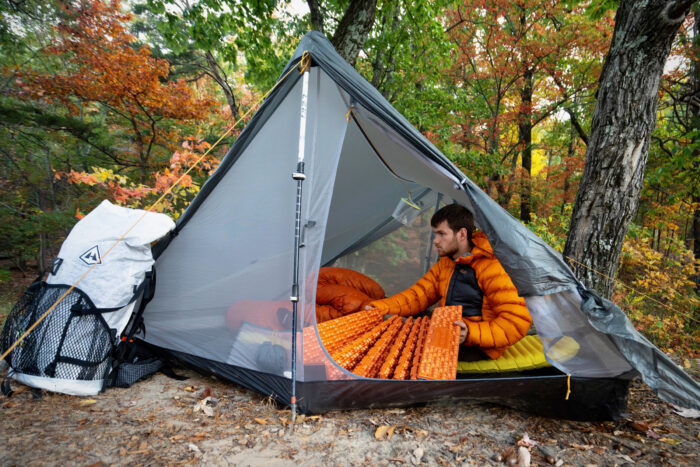
Air pads are the lightest and most compact type of sleeping pad. When not in use, they can be deflated and packed into a small stuff sack about the size of a water bottle. Because most of their insulation is trapped in air, they can become quite thick without excess weight or bulk.
Compared to other categories, air pads are the most vulnerable to punctures and air valve issues. Punctures are usually fixable with the proper supplies, but some people avoid air pads due to the puncture risk.
Most pads come with repair kits for punctures or tears, but our testers have had good luck with trusty Tenacious Tape in a pinch or even super glue for fixing issues around the valve.
Self-Inflating Pads
Self-inflating pads have been around for many decades. Most pads in this category combine inflation with open-cell foam to decrease puncture risk and increase durability.
However, self-inflating pads do not pack down as small as air pads, and they tend to be a bit heavier. If these pads do puncture or deflate, you’ll still have some padding between you and the ground, but it won’t be a super comfortable night’s sleep.
Foam Pads
Closed-cell foam pads are the original backpacking sleep system technology. Although these tend to be the least comfortable pad style, they are extremely reliable and can last for decades if treated with care.
On a foam pad, you can sleep soundly without worrying about punctures. Usually, foam pads fold or roll to pack away, but they take up far more space in your pack than other types of pads and often have to be strapped to the outside.
Warmth-to-Weight Ratio

The warmth-to-weight ratio is likely the single most important metric to consider when comparing sleeping pads for backpacking, where weight is important to keep low, and warmth is needed for unexpected weather changes. We’ve run the numbers and come up with three categories to split our recommendations into:
Pad Thickness And Sleeping Position
Back Sleeper?
On uneven or rocky ground, a thin pad will feel only slightly better than lying on the bare earth. As a general rule, thicker pads are more comfortable. However, thickness does add weight and bulk, so we suggest you aim to find a happy medium. Pads that are around 2.5-3″ thick are ideal for back sleepers.
Side Sleeper?
Side sleepers tend to project deeper into their sleeping pads with hip bones and shoulders, meaning you should aim for a thicker option of 3.5″, and preferably find a pad like the NEMO Tensor Trail Ultralight that uses a grid baffle structure, or the Big Agnes Rapide SL Insulated, which has vertical baffles.
Rotisserie Sleeper?
Do you move a lot when sleeping? Pads that sport vertical sidewalls and are thicker than 4″ tend to accommodate the added motion better. The 4.6″ thick Therm-a-Rest NeoLoft uses triangular baffles to steady the pad and blunt the transfer of motion.
How Should You Size a Sleeping Pad?
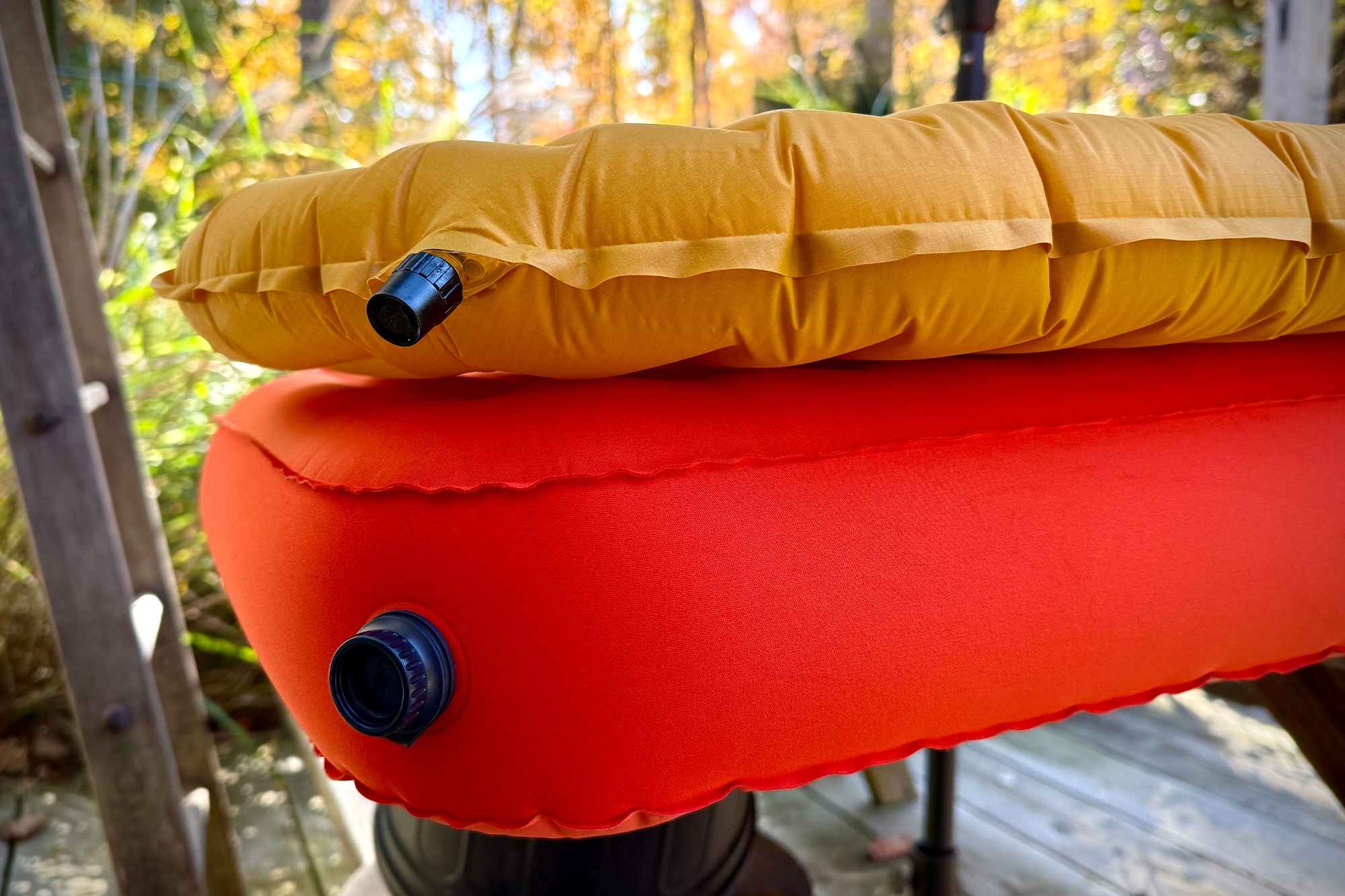
Sleeping pads typically come in various sizes, and users can choose the option that best suits their body and preferences. Common sizes include regular, which is usually around 6 feet long, and large, which tends to be closer to 80 inches.
Most backpacking pads are semi-rectangular in shape, and some taper down and become narrower toward the feet. Two-person sleeping pads are also available, but they’re quite cumbersome and generally not ideal for backpacking.
If you are consistently hiking with a partner, however, it can be a feasible, streamlined option if one partner carries most of the weight of your two-person tent, and the other carries the two-person pad. Whatever pad you decide to go with, make sure it fits comfortably inside your backpacking tent.
Choosing Width (20″ vs. 25″)
Most sleeping pads today are offered in two main widths: a standard of 20″, and what’s often called a wide of 25″. Standard-width pads are comfortable for many, but those with broad shoulders or hips will often find a wider width a better sleeping experience.
Also know that the shape of your mattress dictates just how much of it is at the stated width. Mummy-shaped options will only be 20″ wide at the shoulders of the mattress, while the foot end can taper down to around 12.”
Your backpacking tent choice may also impact your sleeping pad options! Some trim tents have floor space for only standard-width pads, so consult your specifications before making a purchase.
R-Value Explained
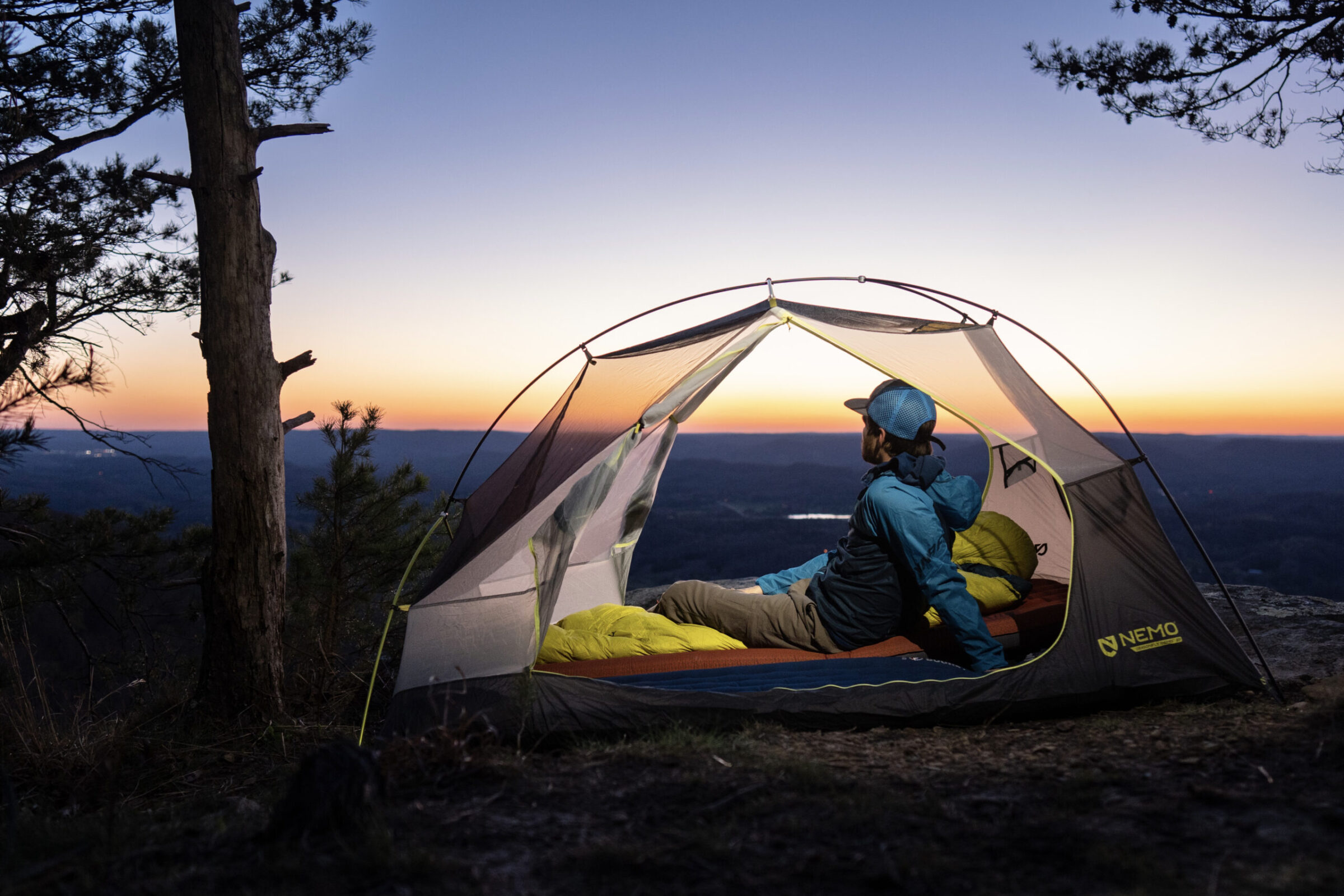
The R-value of a pad describes the amount of insulation between the user and the ground. Insulation prevents your body heat from escaping into the earth below. Without a well-insulated pad, sleeping on the ground is very chilly, even when the air temperature is reasonably warm.
In warmer conditions, a sleeping pad with an R-value of less than 3 should be sufficient. However, if you plan to backpack in the shoulder seasons, you’ll be better off with a higher rating (between 3 and 5). For winter camping or mountaineering, an R-value of at least 5 (like the Exped Ultra 7R at 7.1) is the way to go.
Higher R-values are attained in various ways depending on the design, but they generally involve suspending various layers of reflective film within the pad on vertical “trusses” (flexible supports within the pad). These sheets reflect body heat back at the user and guard against radiant heat loss — all while deflecting cold seeping in from the ground.
As insulation technology develops, manufacturers are able to attain better and better warmth-to-weight ratios and dial in on impressively high R-values while keeping weight to a minimum. NEMO’s new Tensor Extreme Conditions is a prime example of this.
Boasting an absurdly high 8.5 R-value, it has a modest minimum trail weight of 17 ounces. Similarly, the Exped Dura 8R has a high R-value of 7.8. Models like these allow backpackers to maintain an ultralight loadout while adventuring in truly arctic conditions.
While most backpackers won’t need such high R-values for their backpacking trips, it can be nice to have for the occasional winter excursion, or stretches of chilly, high-altitude trail on longer journeys like thru-hikes.
Packed Size
A pad’s packed size depends on construction, materials, and the amount of insulation. Air pads with minimal additional built-in insulation tend to pack down smaller than all other types of pads. Most air pads fit easily into a backpacking pack — some are no larger than a football.
Packed size can be an issue for foam and self-inflating pads. Once fully rolled, these pads can be quite cumbersome, and they often have to be carried on the outside of your backpacking backpack.

Inflation and Deflation
While foam pads do not require inflation to use, all other pad types are built with an integrated air valve. Historically, valves have been the weak point of sleeping pads, and they can be difficult to replace once broken.
But now, high-quality backpacking pads come with reliable valves that are airtight and offer quick and easy inflation and deflation.
Most air pads have flat valves, which include an internal flap that prevents air from escaping in between inflation breaths. These valves are simple and durable, and most pads with flat valves can be inflated with somewhere between 10 and 25 breaths.
These types of valves will also often include the ability to make micro-adjustments to the amount of air in your pad, even while fully weighted. This can be nice if you decide you want a bit of a cushier feel mid-sleep.
Self-inflating pads are designed to fill up on their own once the valve is open, but they usually need some regular inflation breaths to fully pump up and become firm.

Durability
With proper maintenance, a good backpacking pad can last for many years with regular use. Foam pads can take lots of abuse and last forever, but inflatable pads are fragile and must be handled with care.
Punctures are the main threat to air pads. As with all outdoor gear, abrasion resistance, and fabric thickness are measured with a denier rating. Thick fabric is more resistant to punctures. Air pad denier ratings vary widely, from around 15-denier to 80-denier.
As a rule, always clear away any potentially sharp objects from underneath your sleeping surface before setting up your tent. When sleeping on your pad, the use of a tent footprint creates an extra barrier between your pad and the ground. It’s also wise to keep your pad away from fires that may spit sparks and bits of hot ash.
As the standard has moved toward lightweight backpacking pads, many companies are using thin and potentially vulnerable materials. As with all ultralight gear, durability is not the priority. The lifespan of a lightweight pad will depend on how well it is cared for, and the precautions you take when setting up camp.

Caring For and Storing Sleeping Pads
Best practices for storing a pad depend on the type of pad you own. Self-inflating pads should be stored unrolled with the valve open to maintain their loft and insulation. Air pads can be stored rolled up, but always keep them in a stuff sack and make sure they are fully deflated.
For foam pad storage, avoid leaving heavy items on top of the pad. Also, if you store a foam pad rolled up, it may be difficult to get it to lay flat in the future, though the z-pad design prevents this.
While you are rolling your pad up in the morning, make sure to wipe any leaves, twigs, or dirt off your pad. Storing a tightly rolled pad with debris in it could cause small abrasions in the face fabric, and even holes in extreme cases, as the pad jostles around inside your backpack or car.
Also, using a pump sack to inflate your pad will help prolong its life, by reducing the amount of moisture buildup in the pad from your breath. If you can, try and use the often included pump sack to inflate your pad each night instead of your mouth.
Pump Sacks: Do They Work?
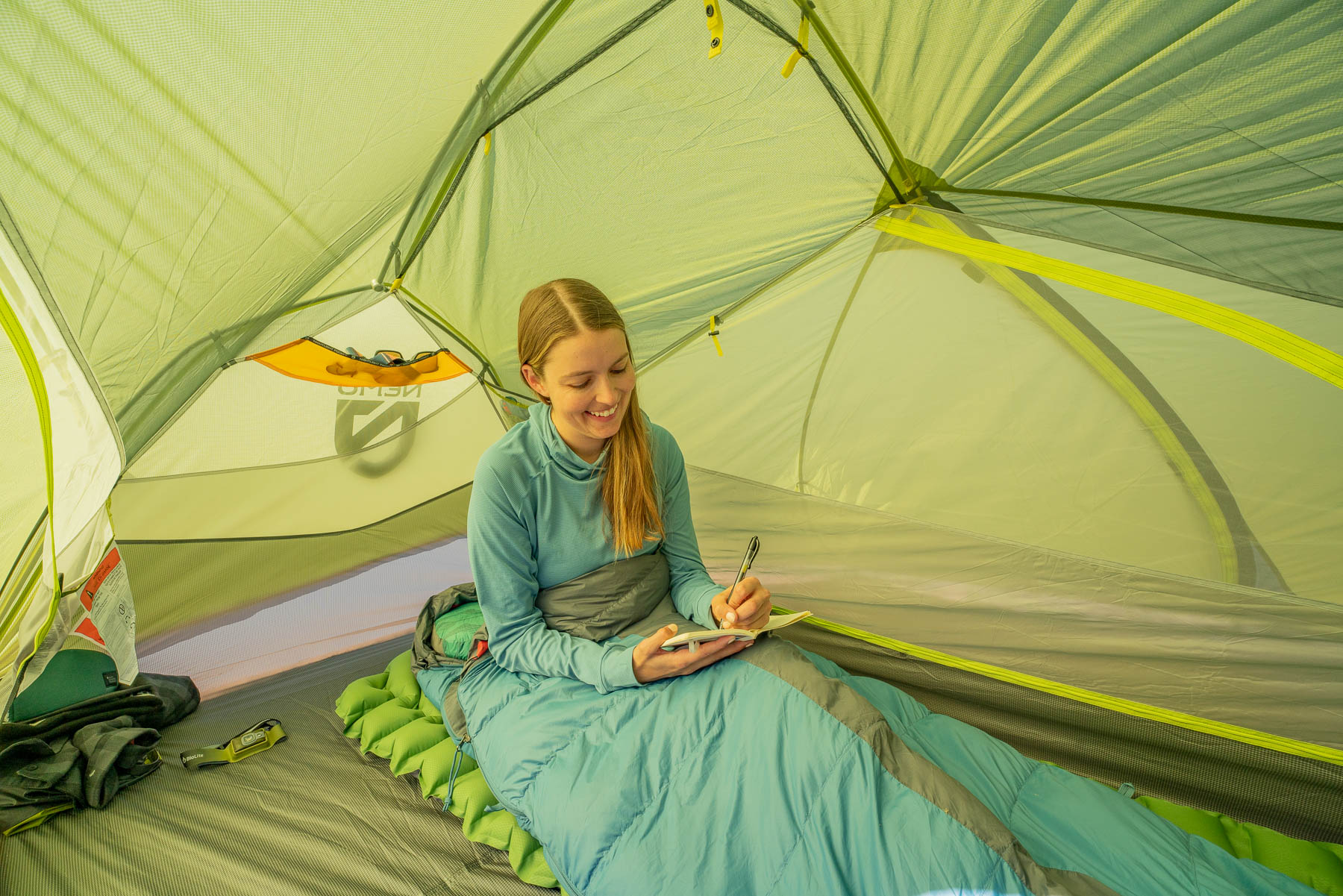
Some air pads come with pump sacks that allow you to inflate your pad without having to breathe into a valve. Pump sacks decrease inflation time and prevent breath moisture from getting inside your pad (which can lead to a variety of problems). It also helps you avoid getting lightheaded by having to blow it up with your mouth after a long, hot day in the sun.
Additionally, many pump sacks also serve as stuff sacks, and they typically don’t add significant weight to your setup. Some of our testers like to fill them with spare clothes and use them as makeshift pillows.
Pump sacks come in all different shapes and sizes, and some are better than others. During testing, we found the sacks that come with the Sea to Summit Ether Light and NEMO Tensor Extreme Conditions to be the most efficient, easiest-to-use models for swiftly inflating your pad.
However, many backpackers feel pump sacks have solved a problem that didn’t exist in the first place. While some people swear by them, they are not a necessary item in most instances. You can prolong the life of your pad by using a pump sack, though, particularly with pads like the Exped Ultra 7R and the Dura 8R, which have a down filling that could be damaged by excessive moisture buildup.

Price & Value
What’s the price of a good night’s sleep? The answer takes us back to good old supply and demand. Some of us could sleep like a baby on a $40 closed-cell foam pad (or just in the dirt) in our 20s. Now, older, wiser, and nursing a lifetime of aches and pains, we’re willing to cough up a bit more for a thicker, more comfortable inflatable pad.
A few of us are even willing to carry a little more weight for comfort. When considering how much you’d like to spend, keep in mind that sleeping well means you’ll be more alert and adept at whatever you’re trying to accomplish out there, be it crushing miles, summiting peaks, or making powder turns.
Budget
The simplest, cheapest pads available are made with closed-cell foam. The venerable Therm-a-Rest Z Lite Sol and the slightly thicker NEMO Switchback ($50) are trail staples that can be used alone or combined with an inflatable pad for more insulation and protection from the ground. They’re also pretty much indestructible.
While we’ve seen critters snack on the edges of foam pads, they can’t pop since they’re not inflatable. You’ll never have to worry about waking up in the middle of the night with just a deflated pad between you and the hard, cold ground.
Inflatable pads are undeniably more comfortable, and the Klymit Static V ($65) is a solid budget choice that’s thicker and more packable than foam pads. It has a pretty low R-value of 1.3 and weighs just over a pound. You’ll need to spend quite a bit more for a lighter, warmer pad, but if most of your outdoor recreating happens in the warmer months, the Static V will do the trick.
Mid-Tier
Spending $100-200 will get you an inflatable pad with substantially more insulative properties and better comfort. These pads often include some type of synthetic insulation lightly spread throughout, puncture and tear-resistant fabrics, and sometimes a pump sack. While not considered “ultra light,” they’re still very packable and most weigh around a pound to a pound and a half.
At the upper end of this tier is the Sea to Summit Ether Light XT ($189). Weighing just under a pound with an R-value of 3.8, it’s much more versatile than the budget pads and will allow you to stretch your season a little longer into the fall.
It also has a pump sack so you can inflate the pad without blowing moisture in. The NEMO Flyer ($140) also sits in this tier and uses a combination of air and foam for a plush feel. Unpack it, and the expanding foam will draw in air, making it nearly self-inflatable.
Premium
Pay more, and you’ll compromise less when it comes to weight, warmth, and comfort. At $200 and above, the premium pads employ the latest technical fabrics, insulation, and designs.
The Therm-a-Rest NeoAir XLite NXT ($200) is our top choice for sleeping pads due to its excellent balance of warmth and weight, weighing a scant 13 ounces with an R-value of 4.5. At the end of the warmth scale is the winter-ready NEMO Tensor Extreme Conditions ($250) with an R-value of 8.5 while only weighing 15 ounces.
Using lighter fabrics also allows you to go bigger while keeping the weight down, and the largest rectangular version of the NEMO Tensor Trail weighs around a pound. If you tend to toss and turn at night, this pad has room to sprawl.

Frequently Asked Questions
Different backpackers have different comfort preferences. The most comfortable pad is the one that allows you to sleep soundly after a full day of hiking. Before you purchase a pad, make sure that it meets your criteria for size, thickness, materials, price, and above all else, comfort.
On the low end, lightweight air pads can be as little as 8 ounces. Heavy foam pads may weigh well over a pound. A four-season pad will contain more material and insulation, and a total weight between 12 and 18 ounces is normal.

Side sleepers will want a thicker pad than back sleepers. If you consistently sleep on your side, consider purchasing an air pad that is at least 3 inches thick. The Therma-a-Rest NeoLoft scored high marks from our side sleepers.
For cold-weather or winter camping, you’ll want a sleeping pad with an R-value of at least 5. The Sea to Summit Comfort Plus Insulated or Exped Ultra 7R pads fit the bill.

We’ve found the best backpacking sleeping bags for every environment and budget, with top picks from Therm-a-Rest, Mountain Hardwear, NEMO, and more.
Head into the backcountry with the best backpacking backpacks of 2025. From budget-friendly options to ultra-comfortable picks, we’ve got you covered.
Read the full article here
