





Home gyms tend to run into the same problems. They take up too much space, they feel incomplete, or they just end up holding laundry.
That’s the appeal of a machine like the Speediance Gym Monster 2. It promises a full gym in one compact setup, without the usual spread of racks, benches, dumbbells, and cable attachments that can take over a room while still leaving gaps in your training.
I spent several months training with the Gym Monster 2 to see whether it could really deliver on that all-in-one home gym promise. I had really high hopes, to be honest.
In short: The Speediance Gym Monster 2 ($3,600-4,900, depending on package) is compact, intuitive, and versatile, but a few tech issues keep it from being my favorite new piece of gym equipment.
Speediance Gym Monster 2 Review
Resistance
Up to 220 lbs. total
Display
21.5″ touchscreen
Connectivity
Wi-Fi and Bluetooth
Form factor
Freestanding and foldable
Training
Digital resistance with guided workouts and performance tracking
Pros
- Extremely easy setup and install
- Compact footprint
- Intuitive interface
- Smooth resistance
Cons
- Frequent connectivity issues
- Onscreen upgrade and sales prompts
- 220-lb. resistance ceiling
All the Gadgets and Gizmos on One Machine

The feature list is broader than the compact footprint suggests. A 21.5-inch touchscreen sits between the uprights and tilts so it stays visible whether you’re standing, rowing, or using the bench. You can even flip the screen upside down if you’re lying on the bench facing it during your set.
Built-in speakers handle workout audio through a stereo setup with full-range speakers and a subwoofer. The fold-down platform makes the storage pitch work, giving you a full lifting surface during workouts and folding up when you’re done.
Unfolded, the Gym Monster 2 measures roughly 48 x 27 x 73 inches and covers about 9 square feet of floor space. Folded up, it shrinks to about 14.5 x 27 x 73 inches, which drops the footprint to roughly 2.7 square feet.
The machine also includes accessories (depending on the package you choose), such as an adjustable barbell, handles, rope attachments, ankle straps, a bench, rowing components, and a Bluetooth ring for changing resistance without touching the screen. There are a ton of additional accessories, too. Speediance packed a lot into this one unit.
First Impressions, Setup, and Install
I installed it myself, and I’m a far smaller-than-average human. It took me about 5 minutes to get it out of the box and maybe 15 minutes total to have it up and running. That’s a very big deal in this space, because a lot of home gym equipment talks a big game about convenience, but getting the equipment set up to use is a bigger dang workout than the workout itself.
This was not the case here.
Once set up, the interface made sense right away, and I didn’t have to fight with the machine to get moving. The screen was higher quality than I expected, and the sound was the same. I was wildly impressed from the start.
The Gym Monster 2 just popped out of the box, essentially assembled, and was ready to roll.
The accessories all feel pretty high-quality, and there are a bunch included. I did end up buying a wall-mounted rack to store them all. Speediance offers one, but I like the one I snagged better.
Testing the Gym Monster 2
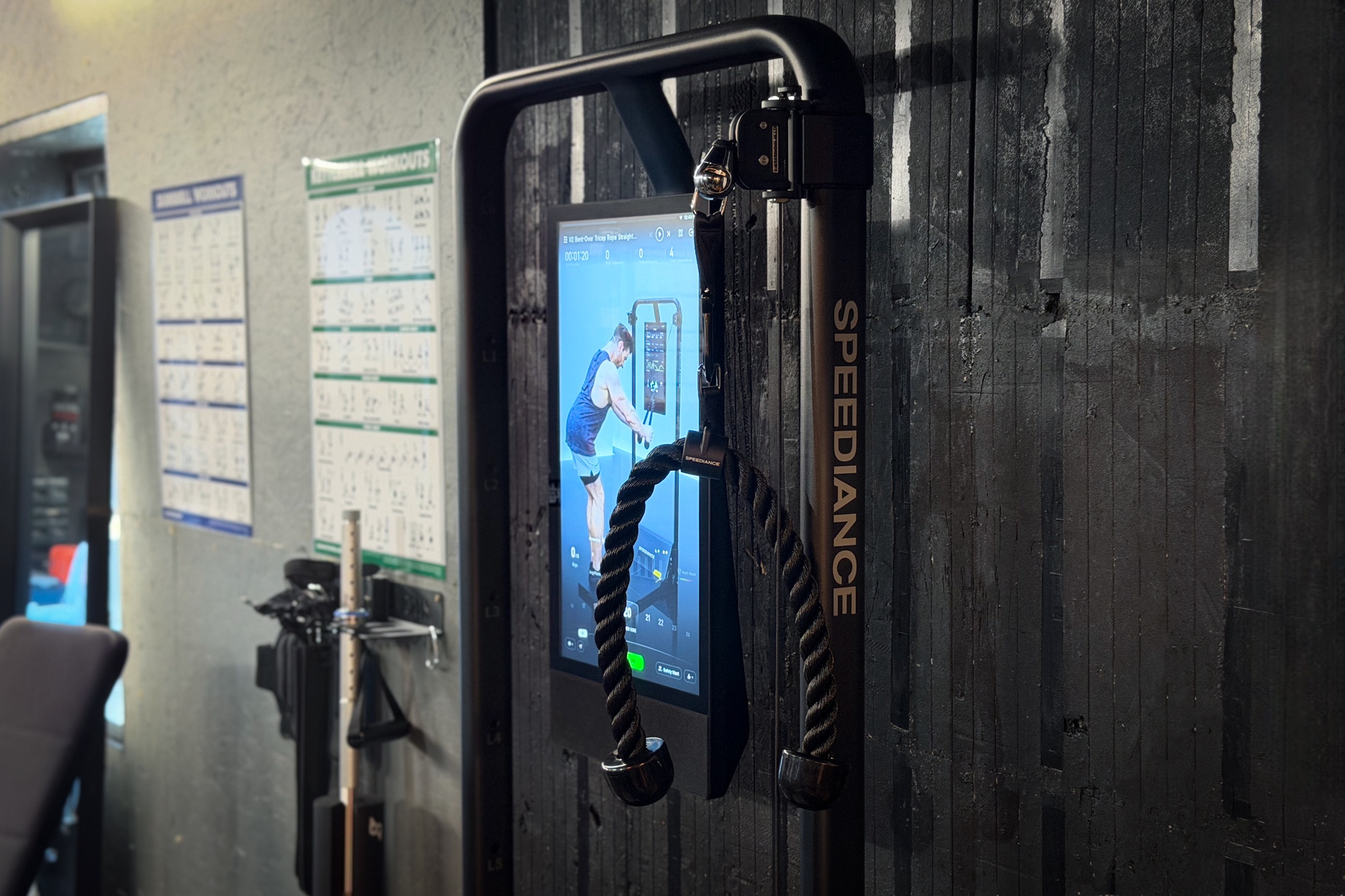
Once I got into actual workouts, the machine made a good first case for itself, though there is still a learning curve.
The interface is intuitive, the resistance adjusts quickly, and switching between exercises is easy. If the point of a machine like this is to remove some of the usual barriers to getting a workout in, it does that well. Once you figure out how to choose a workout or a plan, putting together a full workout is a breeze.
I also liked how compact everything stayed. The machine doesn’t sprawl, which is good since my basement gym is running out of space. It gives you a lot of functionality without turning the room into a dedicated weight room, and that’s the whole reason a lot of people will be interested in it. Yes, I have mine in a dedicated gym space, but you can easily put this thing in just about any room in your house that has the wall space.
Now, the more time I spent training on it, the more the machine started separating into two categories. There was the part that felt smart, useful, and efficient. Then there was the part that reminded me I was still dealing with a piece of connected fitness tech that wasn’t always as “connected” as I’d like.
Convenient? Yes. Somehow also inconvenient? Well, yes. More on that later.
The App and Fitness Plans
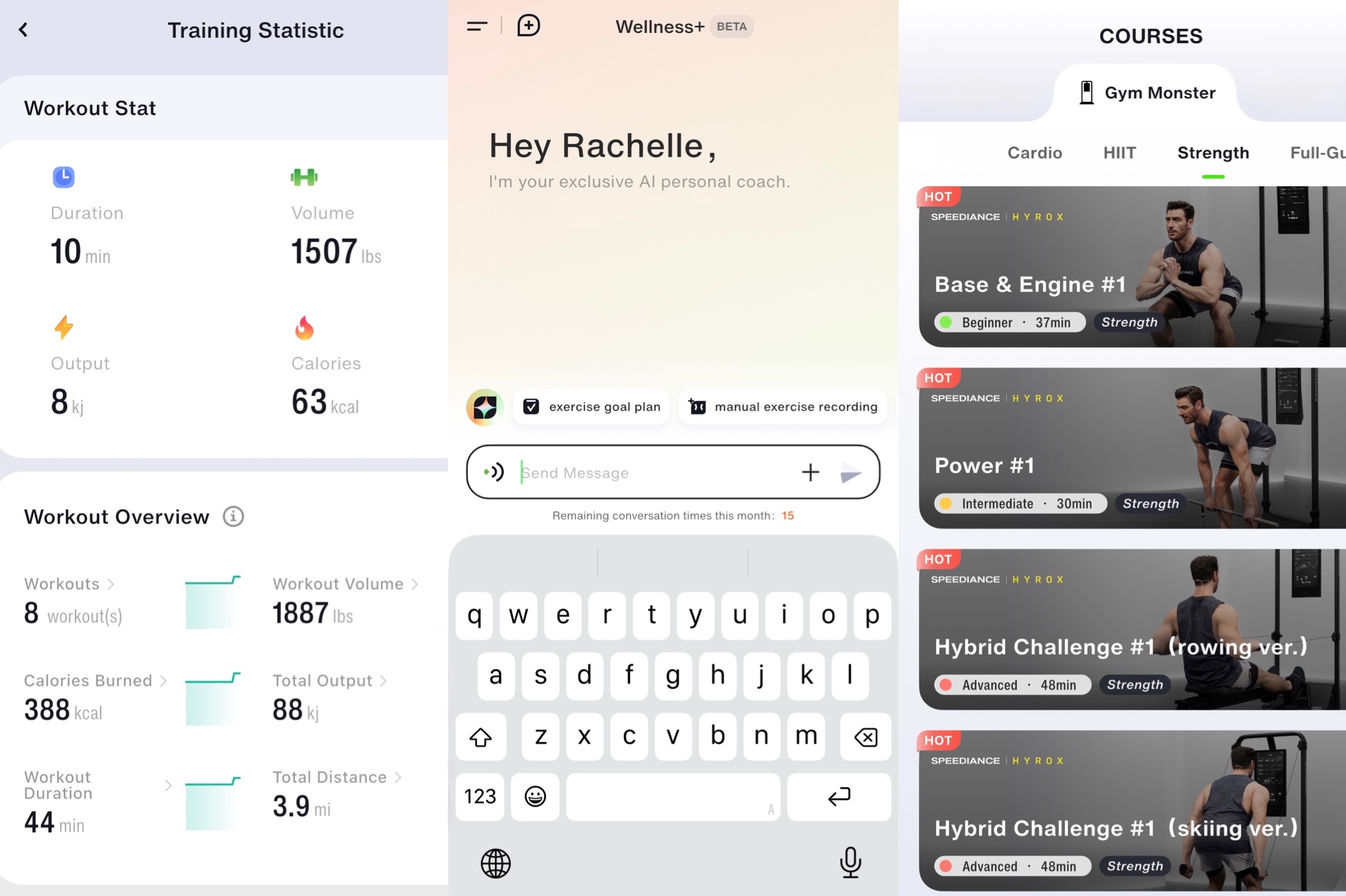
Through the touchscreen interface and companion app, the machine guides you through workout planning before, during, and after training. Before a session, the system can assess strength, help set fitness goals, and recommend workout types based on what you are trying to accomplish. I didn’t meddle with pre-training much, but it’s all there and seemingly easy to use.
For actual training, the platform offers personalized free lifting options, more than 60 scheduled fitness plans (paid), and over 370 coach-curated workouts (also paid). During lifts, the system provides real-time one-rep max updates, immediate feedback, and imbalance correction.
I found the imbalance correction the most fascinating. I tend to lean to my left, powering through things with my right side. Seeing the real-time charting of that made me immediately correct and balance out my efforts.
After workouts, the software tracks training data like output, workout intensity, muscle group readiness, and cumulative results over time. The whole platform is built around making the machine feel less like standalone equipment and more like a connected training system.
A Minor Machining Issue

I did have to wait for new parts. One of the connection pieces seemed to have been machined just a bit off and wouldn’t, well, connect. Not a huge deal, but worth noting.
How It Feels to Use
The digital resistance feels smooth. That’s one of the first things you notice.
Weight changes happen fast, transitions are easy, and the machine makes solo training efficient in a way that traditional setups sometimes don’t. The Bluetooth ring ended up being more useful than I expected, because once you’re already set up for a movement, being able to make quick resistance changes without reaching back to the screen is genuinely helpful.
Still, this doesn’t feel like a barbell. It’s very much a cable machine. It works well for what it is, but it doesn’t recreate the feel of moving iron. For a cable setup, though, it’s smoother than most.
The Bluetooth Ring
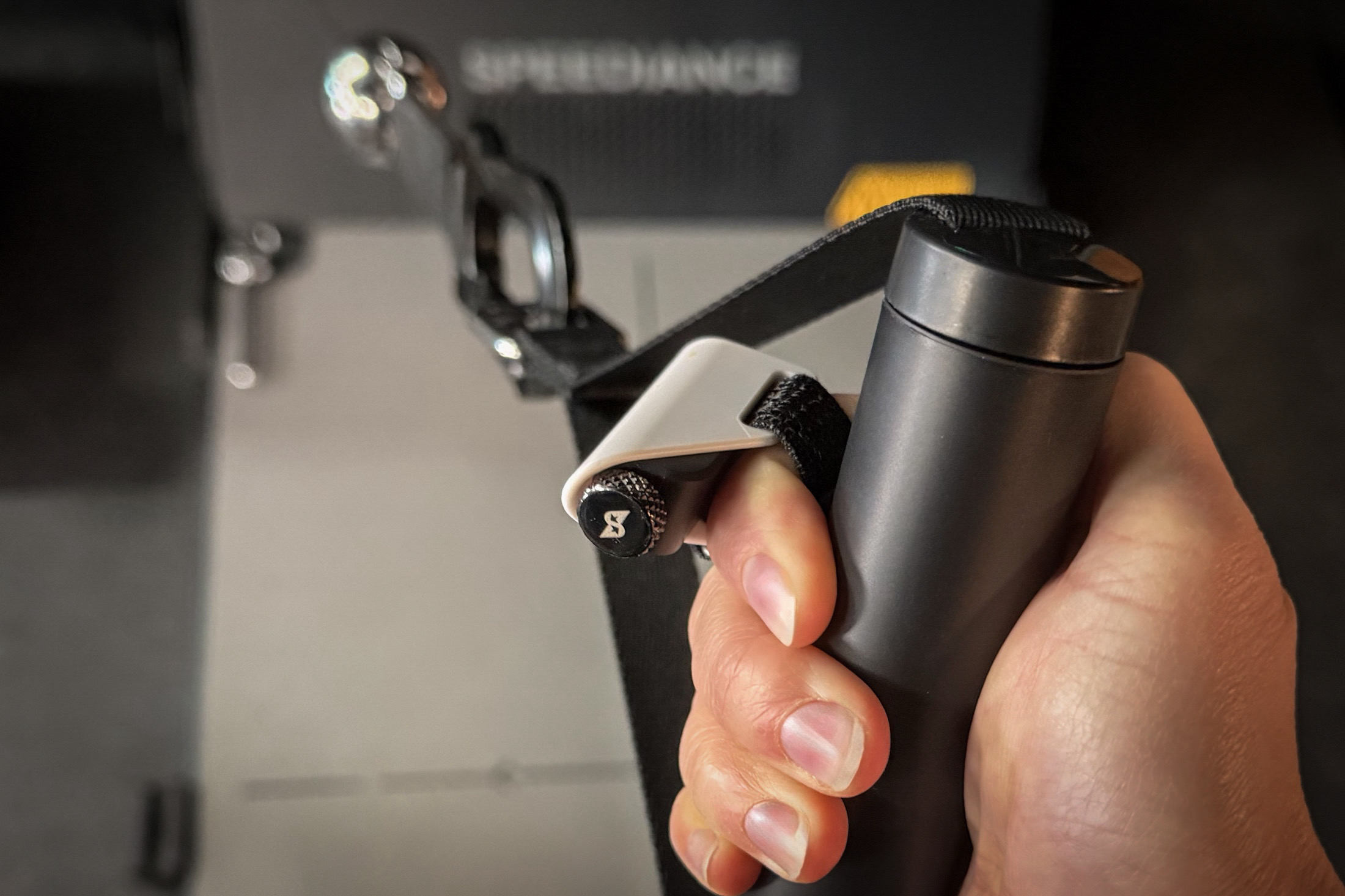
I honestly thought this would be one of those things I didn’t use. I was wrong.
The Bluetooth ring is one of the machine’s more useful features. It lets you adjust resistance mid-set without reaching for the screen, which is rad when you’re already in position. It also doubles as a quick safety control, so you can drop resistance immediately if you need to. It sounds like a gimmick at first, but it ends up being one of the features you actually use every workout.
You can also attach it directly to your handles or barbell with the included clip accessory if you don’t want to wear it on your finger.
The Resistance Ceiling
The 220-pound cap is one of the clearest limitations of the machine. For a lot of people, like me, that will be more than enough. For stronger lifters, it might not be. That’s really the dividing line with this product.
If your training centers on general strength work, accessory lifts, convenience, and getting a lot of variety in a small footprint, the ceiling may not bother you much. If you want to push heavier compound lifts, you’re going to run into that ceiling.
The AI Claim

Speediance leans hard on the AI angle.
In practice, that mostly means the machine tracks reps, resistance, workout activity, and guided programming in a way that makes solo training easier to manage. Sure, it can help make workouts feel more structured, and it can remove some of the barrier to entry for people who want guidance.
However, it doesn’t feel like it’s some revolutionary training brain.
It helps, but it doesn’t replace knowing how you want to train, and it doesn’t turn the machine into something smarter than it really is. Most of that feels more like a marketing pitch than an actual feature.
Gym Monster 2 vs. Tonal
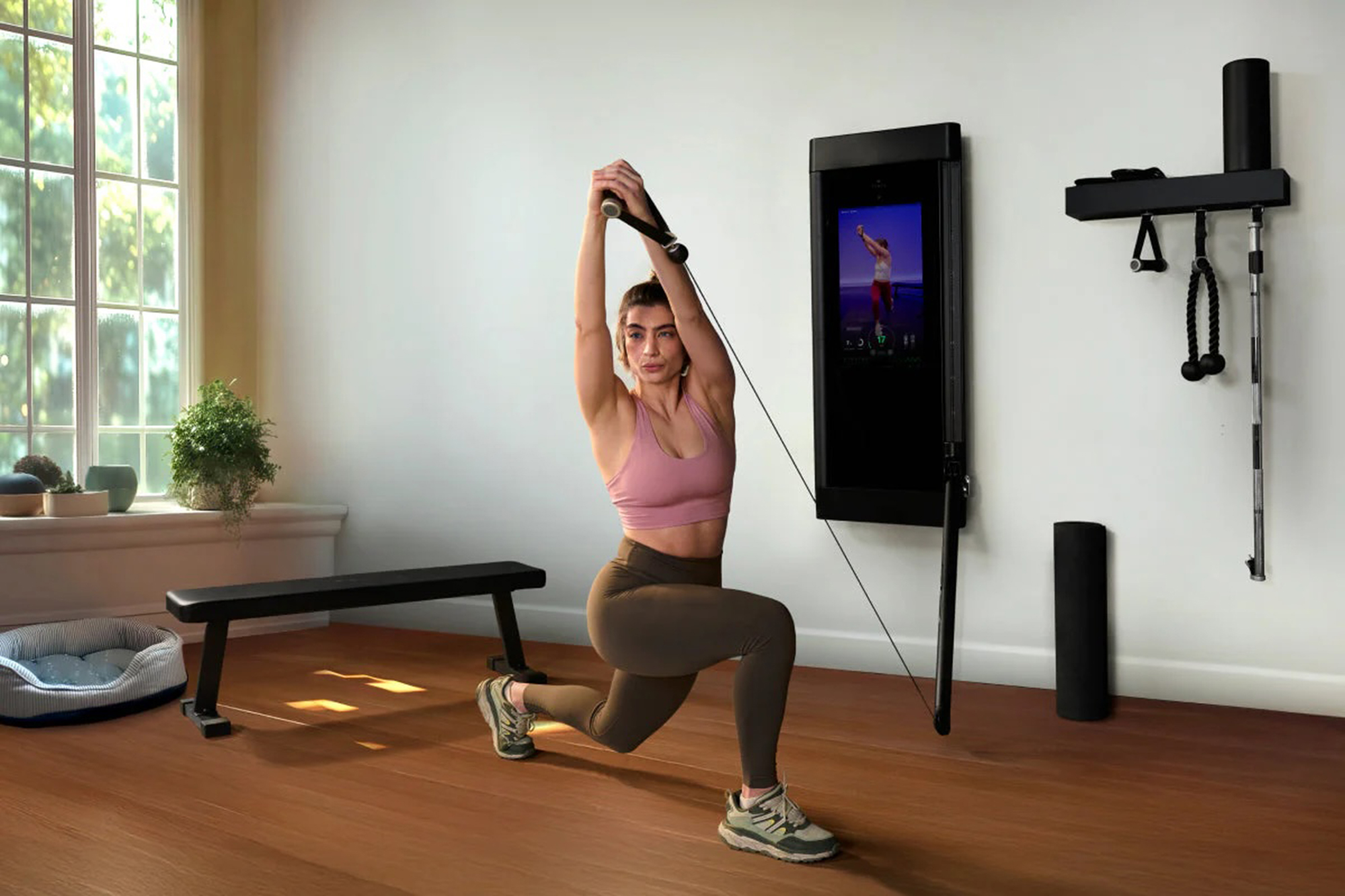
If you’re looking at the Gym Monster 2, you’re probably also looking at Tonal. Initial purchase price-wise, they’re pretty comparable. The Gym Monster 2 price starts at $3,600 for the basic package and moves up to $4,900 for the top-tier accessory package. Tonal will set you back $4,300.
A big difference starts with installation. The Gym Monster 2 is freestanding and foldable, making it easier to place and requiring a much smaller commitment. Tonal is wall-mounted and professionally installed, so it feels more permanent from the start.
From there, the biggest gap is tech-polish. Tonal’s operating system is much more dialed. The interface is smoother (in my very limited experience), the programming feels professional and complete, and the whole digital operation is just cleaner.
The Gym Monster 2 works, but it still feels janky by comparison. The internet connectivity drops, sales prompts, and an overall rougher user experience keep reminding you that you’re using a piece of connected tech from an overseas company (more on that in a bit).
Where Speediance wins for sure is in the subscription department. Tonal requires an ongoing membership to unlock the full experience, which adds real long-term cost. Speediance has no required subscription, though there are plenty of options offered. So the tradeoff is pretty simple. Tonal feels more polished. Speediance is easier to place, set up, and own.
Tech That Isn’t Quite Dialed, Yet
As I said above, the tech is still a bit rough with the Gym Monster 2. This is really where the machine starts to lose ground with me.
The connectivity issues are a problem. The machine consistently loses internet connection, even while my other devices in the same space stay strongly connected. This got irritating fast, and it pulled me out of the experience over and over again.
Also, it’s constantly needing to be updated. It seems every time I turn it on, I have to wait for it to update. Plus, the operating system just isn’t dialed. The music player is hard to navigate and control. The workouts are there, but not nearly as polished as I’d expect. And so on and so on.
Then There Are the Ads…
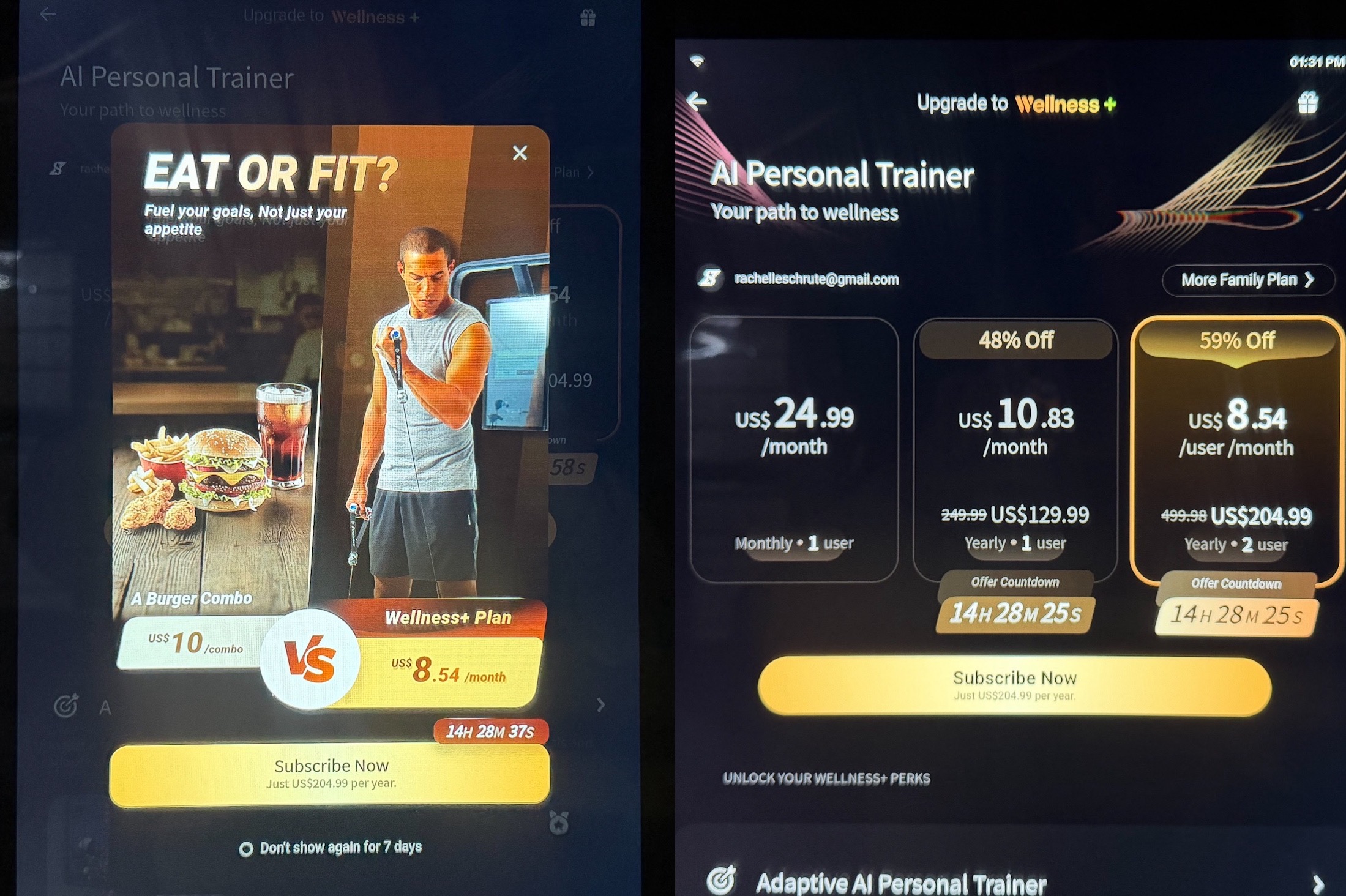
Color me irritated. Being bombarded with constant upgrades and sales prompts on-screen pisses me off. I don’t want to be pitched add-ons in the middle of a workout. I already bought the dang machine. Stop selling to me while I’m trying to use it, you know?
None of these issues makes the machine unusable, but they are definitely worth noting.
Where It’s Great
The setup really is excellent. That deserves repeating.
The footprint is also genuinely appealing. It gives you a lot in one machine without requiring a massive amount of space. For people who want a home gym but don’t want their home to feel like a gym, that’s a huge perk.
The interface is also easy to understand, and the machine offers a wide variety of exercises in one place. That’s the strongest version of the argument for this product. It’s convenient, compact, and broad enough in use that it can make a lot of sense for the right buyer.
Final Thoughts

Look, the Gym Monster 2 works. It doesn’t take up much space, is relatively intuitive, and genuinely easy to set up. It also makes a solid case for the all-in-one home gym idea, offering a lot of exercise variety without eating up the room. For those who need all the workout with none of the space, it really does do the job.
If you can overlook the tech woes, which probably come across worse here than they really are, it’s a decent machine for the home gym.
I’ll certainly still use it for quick sessions, accessory work, and convenience. For the bulk of my workouts, though, I think I’ll likely still stick with traditional weights.
Read the full article here
