




Wading boots arguably take the most abuse of any outdoor footwear. They constantly get submerged in water and beat up on filthy, boulder-strewn banks, with muck sloshing all around. Then, they bake in the sun for hours on boats, only to be tossed in the bed of a truck for days, awaiting the next use.
Or maybe, if they’re owned by an angler who “cares” for their equipment, they’re stuffed in a wading bag and left in there, soaking wet, building God knows what kind of mold and gank. Yuck.
I used to have a set I swore by. Every guide season, I’d buy a new pair of the exact same ones. But like all good products, someone had to come along and discontinue them. I bought four sets on closeout, but eventually burned through them.
Since then, I’ve had a hodgepodge of different wading boots. They all get the job done, but nothing has quite lived up to my old, long-gone favorites.
But that changed this season, when I was able to get my hands on a set of the Grundéns Rock Armor wading boots before their spring release. I haven’t been able to truly put them through the wringer yet, but so far, it’s looking like I may have found my new kicks for years to come.
In short: Grundéns has seemingly done the impossible with the Rock Armor wading boot ($330). Thanks to a rubberized, tire-like upper, you get durability without the weight. Due to their unique build, they dry out very fast, eliminating shrinking and tearing problems. I’ve only been using them for a month, but so far they seem to take angler abuse better than any other boot I’ve worn.
Looking for women’s wading boots? Check out GearJunkie Hunt/Fish Editor Rachelle Schrute’s favorite pair.
Grundéns Rock Armor Wading Boot Review
-
Highly durable upper -
Surprisingly malleable -
Quick-drying -
Light weight
Durability Boost Makes the Grundéns Rock Armor Wading Boot Intriguing

With a name like Rock Armor, it’s pretty clear what Grundéns is trying to achieve with this wading boot. Durability is the name of the game.
Rubber Upper
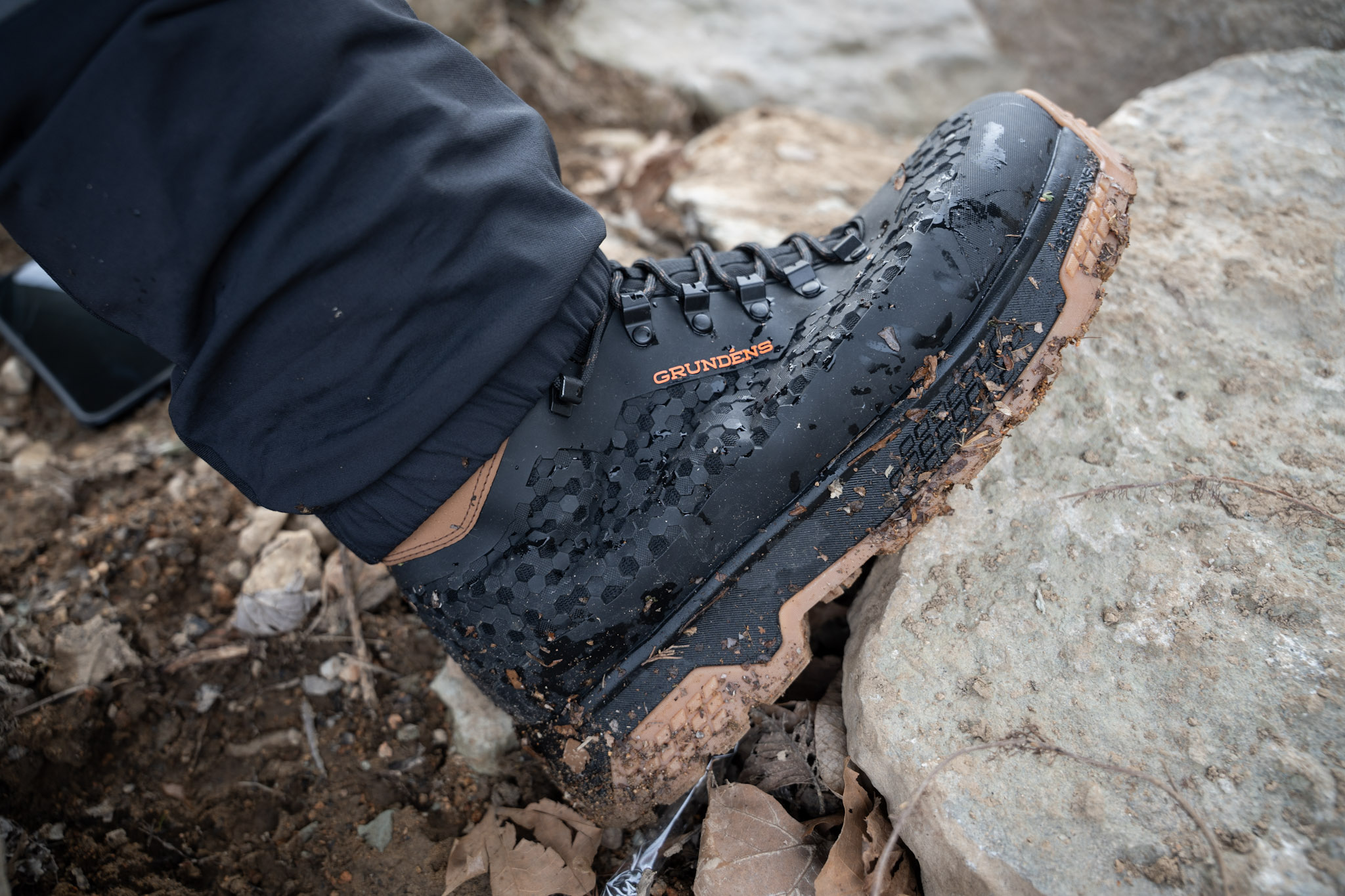
That is mainly achieved through the unique upper portion of the boot. From the outsole to the cuff, the wading boots look like a set of off-road tires. That’s the fancy, fandangled “Rock Armor” tech.
One of the main selling points Grundéns claims is that it’s tear-resistant. In the month I’ve been using the boots, I can vouch for that. Sharp beaver sticks and pointy rocks aren’t going to do a darn thing to these rubber boots.
Can I say that it will last for years? Not yet. I haven’t had them that long. But, it certainly is more tear-resistant than a synthetic cloth material you’ll find on ultralight wading boots, and I’m confident it will hold up better than leather over time.
Fast-Drying
In my opinion, the one thing that destroys wading boots faster than anything else is the constant wet-dry cycle they endure over a season. It weakens materials and overall wreaks havoc on footwear. That constant wear also causes most wading boots to shrink over time — often to the point of being unusable.
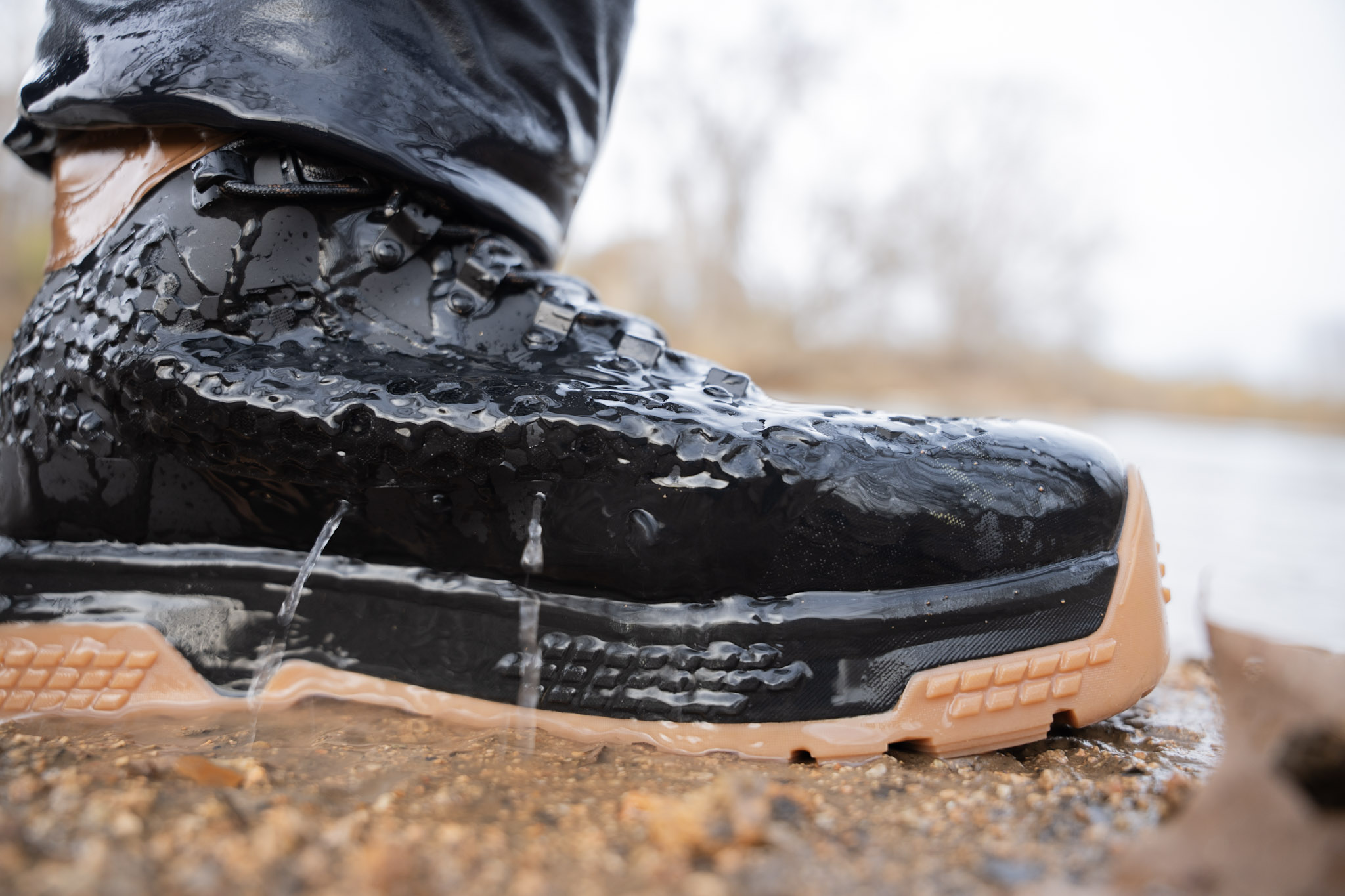
The Rock Armor upper seems to solve both of those problems. The boots dry in record time, since most of the boot is rubber. Water doesn’t soak into the boot material. Only the interior and the tongue hold any amount of water, and usually mine are mostly dry overnight.
That in itself will extend the life of the overall boot, and the rubber build should also keep shrinking to a minimum.
I’ve also found the drainage ports on the sides of the boots work quite well. When I step out of the river, all of the water is expunged very quickly — so quickly, in fact, that it was a real chore to get a photo of it happening before the water was all expelled.
Lightweight
What’s most impressive about these boots is how they attain durability without being heavy. That’s usually the deal with wading boots. You either get a lightweight set for covering miles that will fall apart, or you get a set built to last, but that weighs as much as a brick.
The Grundéns Rock Armor gives you durability in a fairly lightweight package. No, they aren’t as lightweight as wading boots designed solely for weight savings, but they’re pretty dang close. I weighed them at home compared to other wading boots in my arsenal. Here are the weights of individual boots in size 12.
- Simms Flyweight Access Boot (marketed for being lightweight): 1 pound, 6 ounces
- Grundéns Rock Armor Boot: 2 pounds, 0 ounces.
- Simms G3 Guide Boot (marketed for rugged durability): 2 pound, 8 ounces.
So, there you have it. The Grundéns is only 10 ounces heavier per boot than a “lightweight” boot, and 8 ounces lighter than another “durable” boot. And, thanks to the rubber design, I’m sure it will stay true to size and withstand wet-dry cycles much better than the leather-like G3.
No Break-In
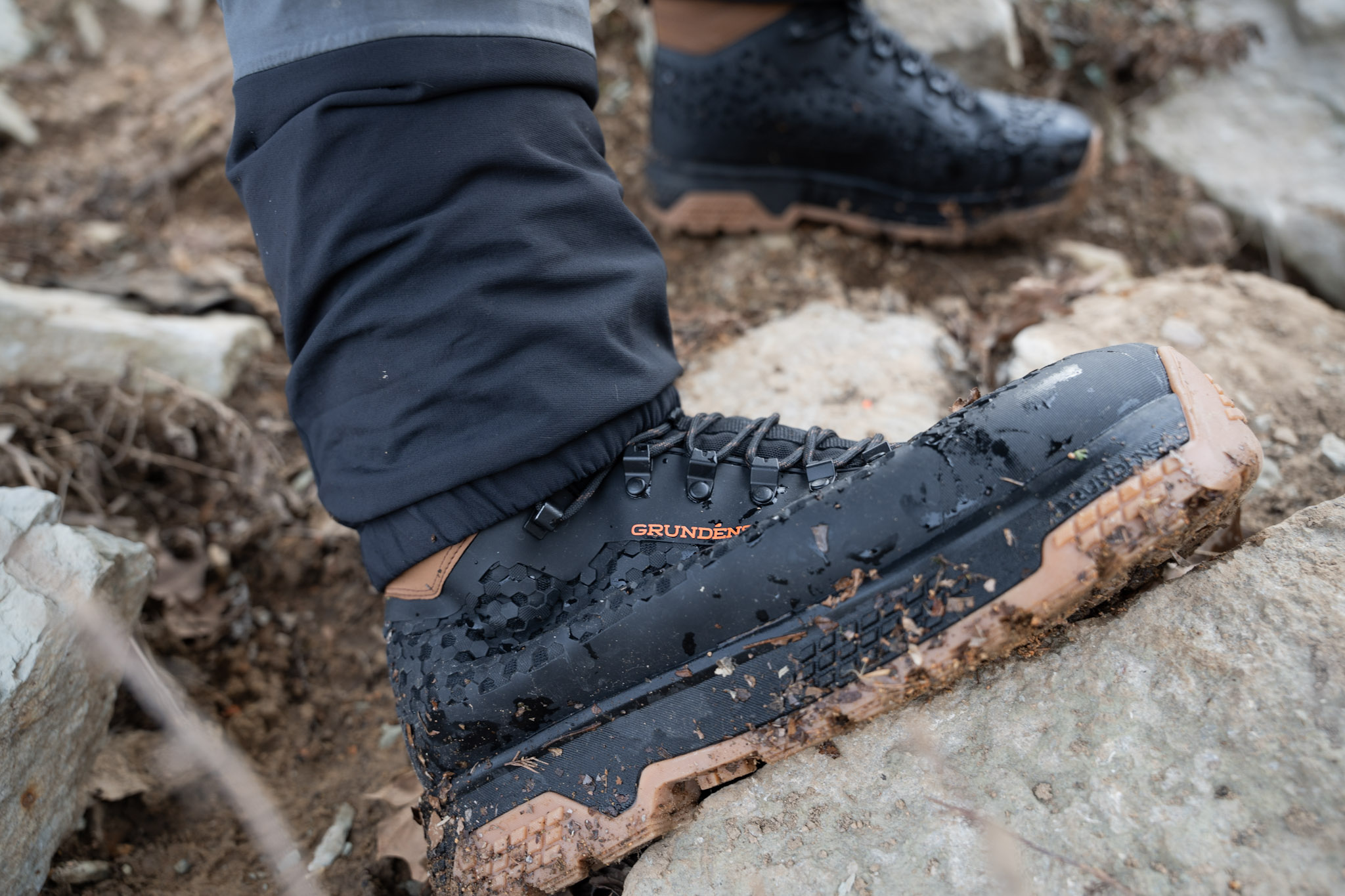
My main concern with these boots when I pulled them out of the box was how stiff they would be. As I said before, the things look like a tire. I was certain comfort and flexibility would be lacking.
Out of the box, the boots were shockingly malleable. They had just enough give to move with me while climbing up steep, rocky banks, but still provided solid ankle support. The break-in period was nonexistent. Again, a huge upgrade from leather wading boots.
From a comfort standpoint, they feel like any other wading boot does. Wading boots aren’t like other footwear. To me, there really isn’t much difference in comfort between any given set, and these will feel exactly like every other set I’ve worn.
The Downside? One Sole Option
In my single month of using these wading boots, I haven’t found much to complain about. That may change in a year if they don’t hold up as well as I expect them to, but for the reasons I outlined above, I don’t believe that will be the case.
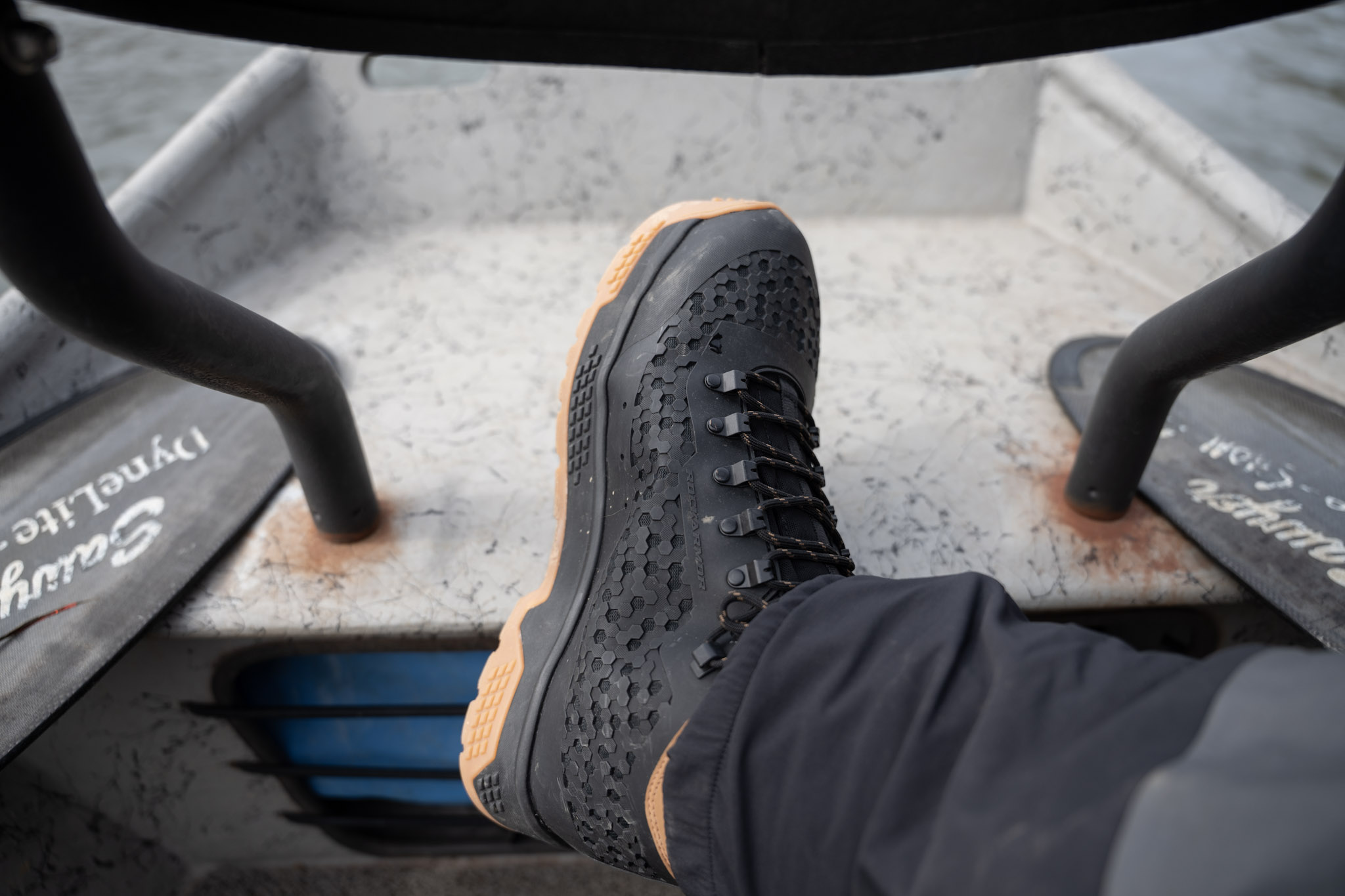
However, I do wish the Grundéns Rock Armor wading boots were available with a felt sole. Felt soles are slowly fading since some states have banned them for transporting invasive species. However, I do still think they have a place.
Rubber soles with cleats are, in fact, every bit as grippy on slick river rock as felt. They also perform much better on land as felt is slicker than snot on muddy river banks. Generally, rubber with studs is the better option. However, I refuse to wear cleated boots in a drift boat.
For me, that means I don’t have a super-grippy option for boat use, and if I get out to walk and wade, I have to be a bit more careful. If you’re young and nimble, that may be a non-issue.
But I do know quite a few people who have a set of felts exclusively for boat use. The slippery mud bank issue isn’t a problem since you’re on a boat, and anglers get sure-footed river traction without damaging the floor of a drift boat.
Final Thoughts on the Grundéns Rock Armor Wading Boots
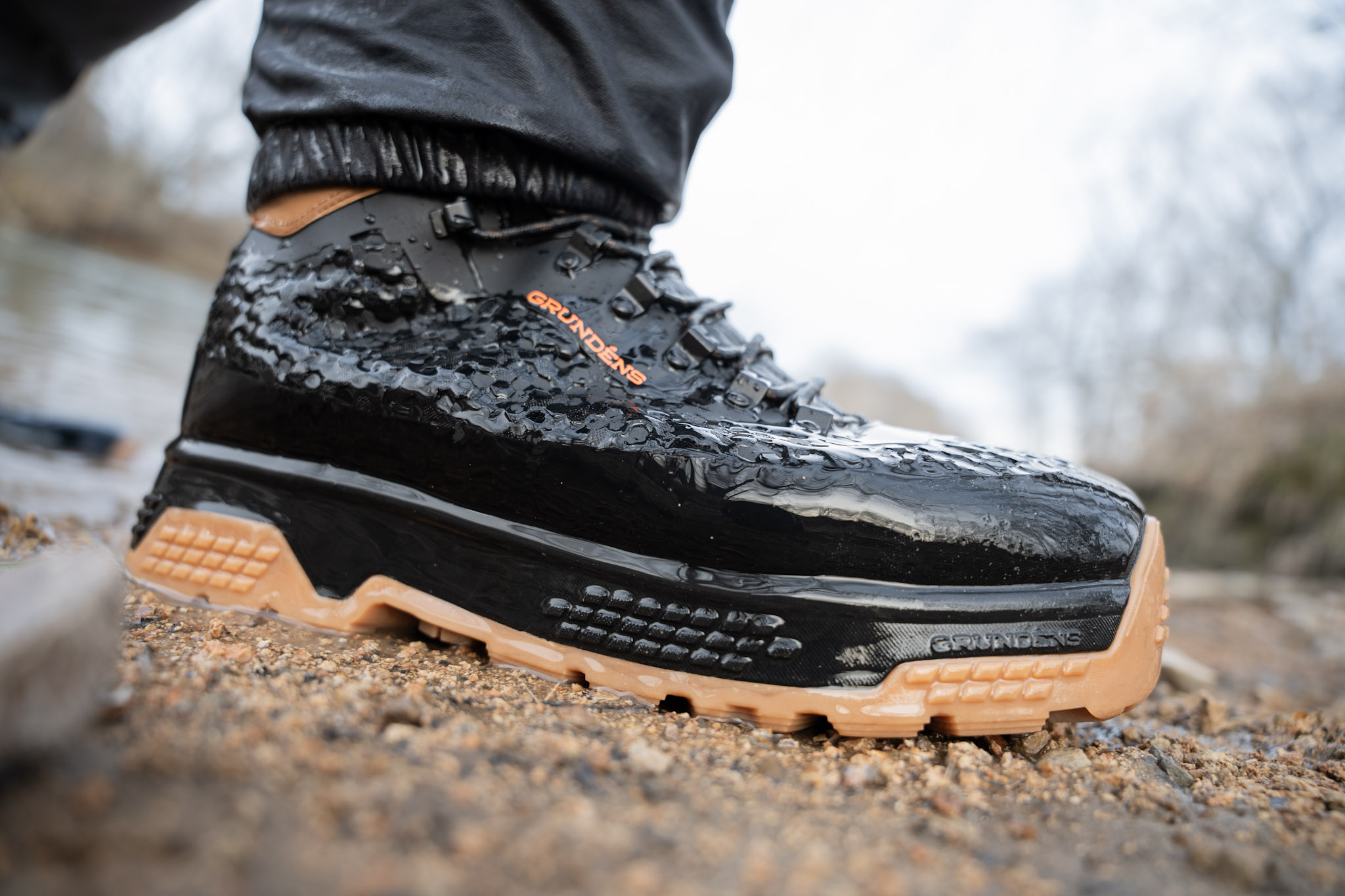
For me, the Grundéns Rock Armor wading boots check all the boxes. Are they durable enough to last a guide season? So far, check. Maybe even plus some. Do they shrink a ridiculous amount when they dry out? So far, no. Are they ridiculously heavy? Nope.
If the durability aspect changes, I’ll update this review. But as it stands, these are the perfect wading boots that solve problems that have been plaguing anglers for years.
They’re an excellent choice for anyone on the market, except those who need ultralight gear for flying or who just have to have felt soles (or grab a set of cleats). Sure, the $330 price tag is steep, but if they outlast other boots, for even just one season, it’s a smart investment.
Read the full article here
