



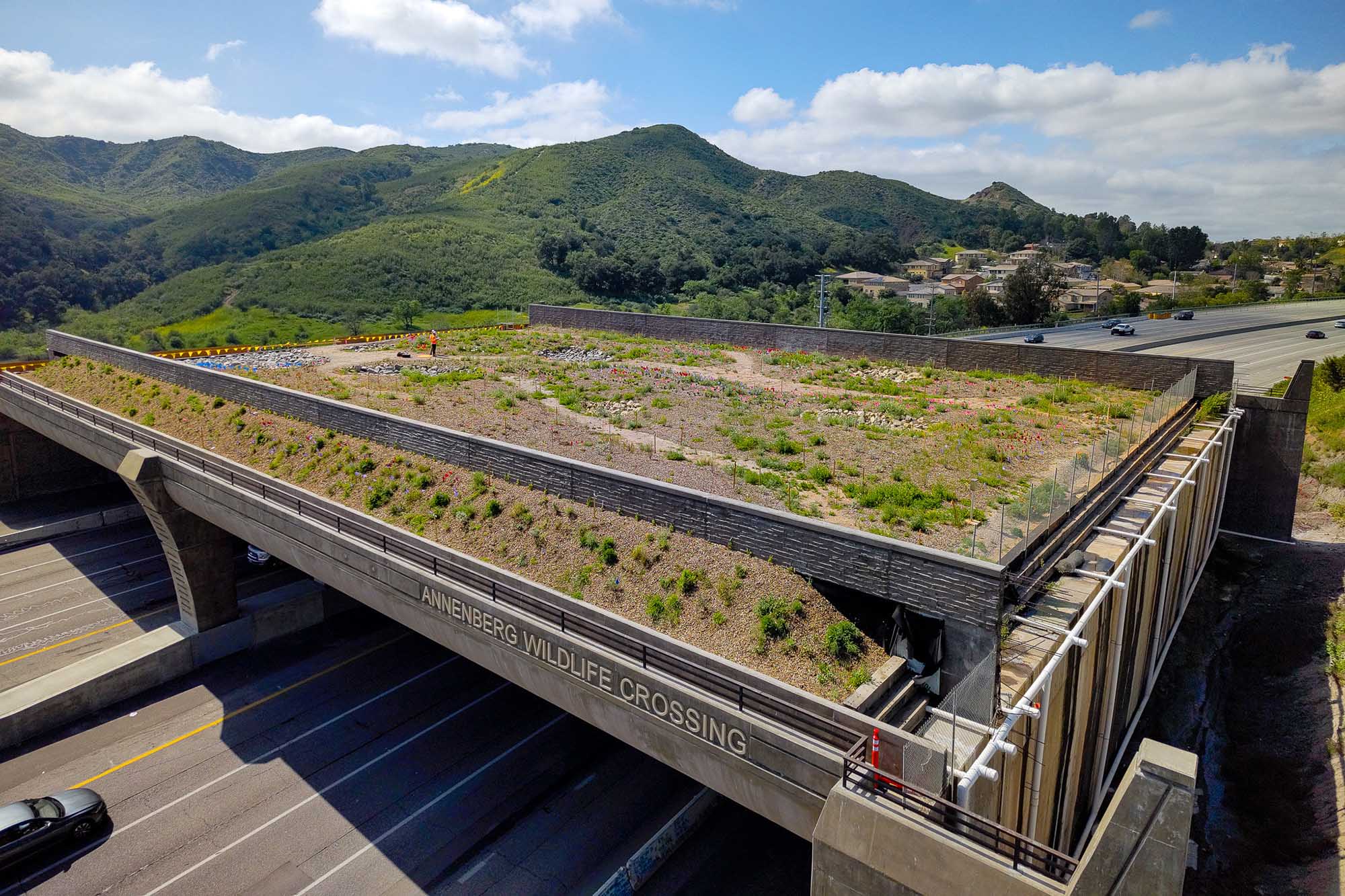

Just a few months from now, California’s mountain lions will finally have a safe way to cross one of Los Angeles County’s busiest highways. The Wallis Annenberg Wildlife Crossing is a vegetated overpass connecting the isolated Santa Monica Mountains to the south with the Simi Hills on the other side of Highway 101.
When finished in November, it will be the largest such crossing in the world, offering safe passage to many species that frequently die trying to cross the highway’s 10 lanes of traffic. Bobcats, grey fox, and mule deer will all likely benefit, but the mountain lions benefit most of all. Two out of three mountain lions die trying to cross the busy road, conservationists told GearJunkie.
“We’ve seen that corridors are working,” said Kelly Cox, senior policy and planning specialist for Defenders of Wildlife. “We’ve seen these reduce wildlife-vehicle collisions by more than 80%. That has helped increase the national consciousness about corridors.”
That consciousness has even reached the halls of Congress. Last month, a bipartisan group of four House representatives (two Democrats and two Republicans) introduced a bill to create a National Wildlife Corridor System. It’s the rare piece of federal legislation aimed at connecting public lands, an increasingly crucial step for preserving wildlife.
Given Congress’s recent decisions about public lands, the bill itself may not survive passage through both the House and Senate. But its mere existence — not to mention support by representatives of both parties — is impressive, said Paul Edelman, the deputy director of Santa Monica Mountains Conservancy.
“It’s pretty amazing,” Edelman told GearJunkie. “It shows a real growth in consciousness at the Congressional level.”
What Are Wildlife Corridors?
Back in the early 1990s, even dedicated conservationists were often skeptical of the importance of wildlife corridors.
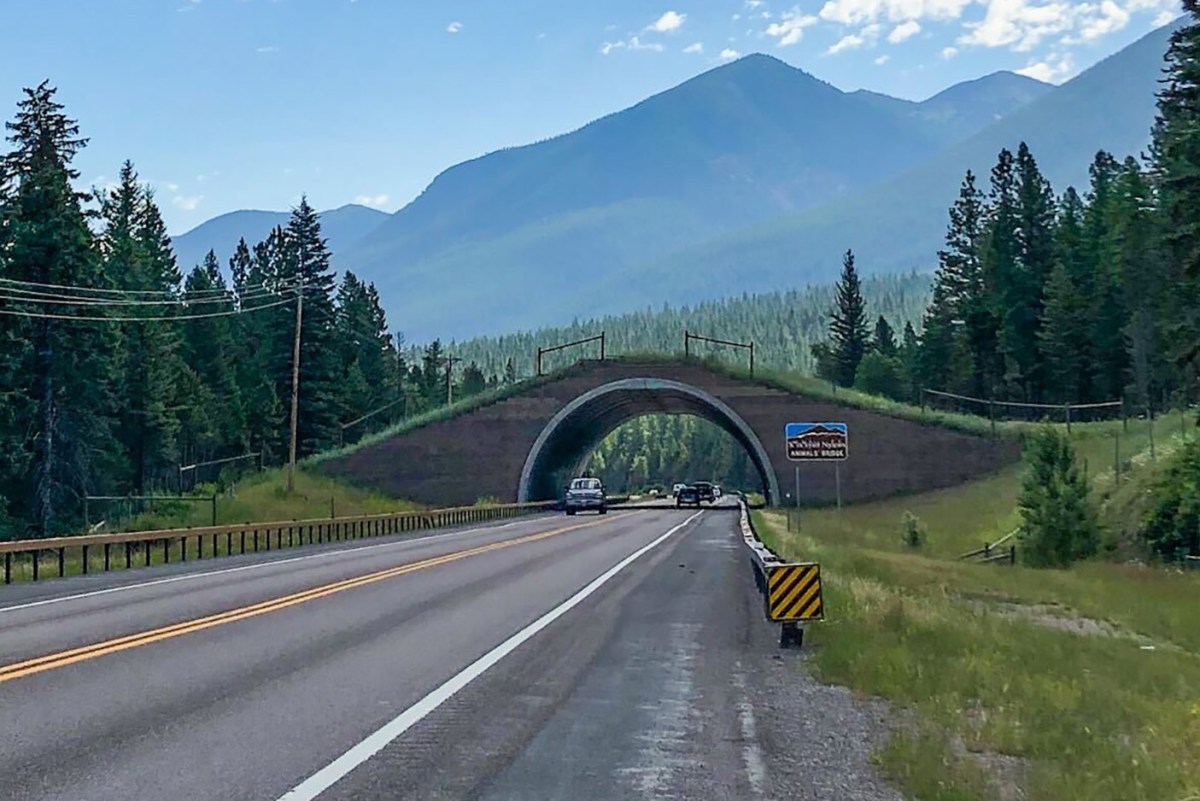
These safe passages for wildlife can range from enormous manmade overpasses like the Annenberg Wildlife Crossing to narrow pathways through neighborhoods. Edelman, who has been championing such corridors for decades in central California, said it was often difficult to convince even his peers.
Conservationists often want to focus on just buying up more public lands, he said, rather than connecting them. It becomes even more difficult when the goal is a massively expensive project like the Annenberg Wildlife Crossing. Its current total price tag is around $114 million.
“Even my colleagues said, ‘Why are you spending a million dollars on just 3 acres?’,” Edelman said. “A lot of the time, connections are very narrow and expensive and wiggly and hard to get a hold of. And people are doubtful…. When you get to buy a thing around a lake or river, people go, ‘Well, of course we want to’.”
But the benefits are both real and profound, he added. The National Park Service and U.S. Fish and Wildlife Service have proven the effectiveness of corridors by using camera traps to track animals’ movements.
“Once you establish connectivity, you get the flow of wildlife forever,” Edelman said.
A National Corridor System
Rep. Don Beyer (D-VA) has been championing wildlife corridors ever since he arrived in Congress in 2015. He met with E.O. Wilson, aka the “father of biodiversity,” in 2016 when the Pulitzer Prize winner testified before Congress about the importance of preserving wilderness. That was also the year that Rep. Beyer first introduced the Wildlife Corridors Conservation Act. It passed the House in 2020, but failed to receive approval from the Senate.
After several other attempts to promote wildlife corridors in Congress over the last 10 years, Rep. Beyer is back with arguably his most ambitious bill yet.
The Wildlife Corridors and Habitat Connectivity Conservation Act has several goals. For starters, it would create the first-ever National Wildlife Corridor System. Multiple federal land agencies would work together to establish a “habitat connectivity mapping and science program in collaboration with federal, state, and tribal governments.”
Moreover, the bill would allocate $75 million annually for a grant program creating new wildlife corridors.
If approved, the new system would likely look for new wildlife corridors in places like Yellowstone National Park. The park includes a patchwork of federal and state-owned public lands, as well as privately owned ranches and highways. Identifying and expanding safe passages for wildlife through the area could be a major step forward, according to nonprofit Defenders of Wildlife, which partnered with Rep. Beyer on the bill.
“This bill addresses one of our primary drivers of biodiversity loss, which is habitat loss,” Cox said. “We have this opportunity to connect different federal lands into a system and we should really capitalize on that.”
Other sponsors of the bill include Reps. Vern Buchanan (R-FL), Zoe Lofgren (D-CA), and Brian Fitzpatrick (R-PA). You can contact your representative about the bill through this House portal.
Growing Momentum for Corridors
Wildlife corridors have received more support in the last 10-15 years, often thanks to state and local support. Notable examples include the Florida Wildlife Corridor Act, passed in 2021, and efforts to build corridors through Washington’s Cascade Mountains. And an overpass extended over Utah’s I-80 in 2019 has “dramatically reduced wildlife collisions,” according to a Utah State University study.
The U.S. Congress even approved the first-ever Wildlife Crossings Pilot Program in 2021. A $350 million grant program focused on reducing wildlife-vehicle collisions, it has expired and is currently awaiting a possible reauthorization by Congress.
“Corridors can increase wildlife movement by about 50% and improve the long-term persistence of species,” said Cox. “You have to change your perspective. Without the connection, you’re not getting the full value of those protected lands.”
In the context of public lands, “everything is shrinking,” Edelman added, making corridors more important than ever. “No new land is being made and no new development is getting ripped up,” he said. “The arteries are more constricted, so it’s more important now than 30 years ago.”
Read the full article here
