



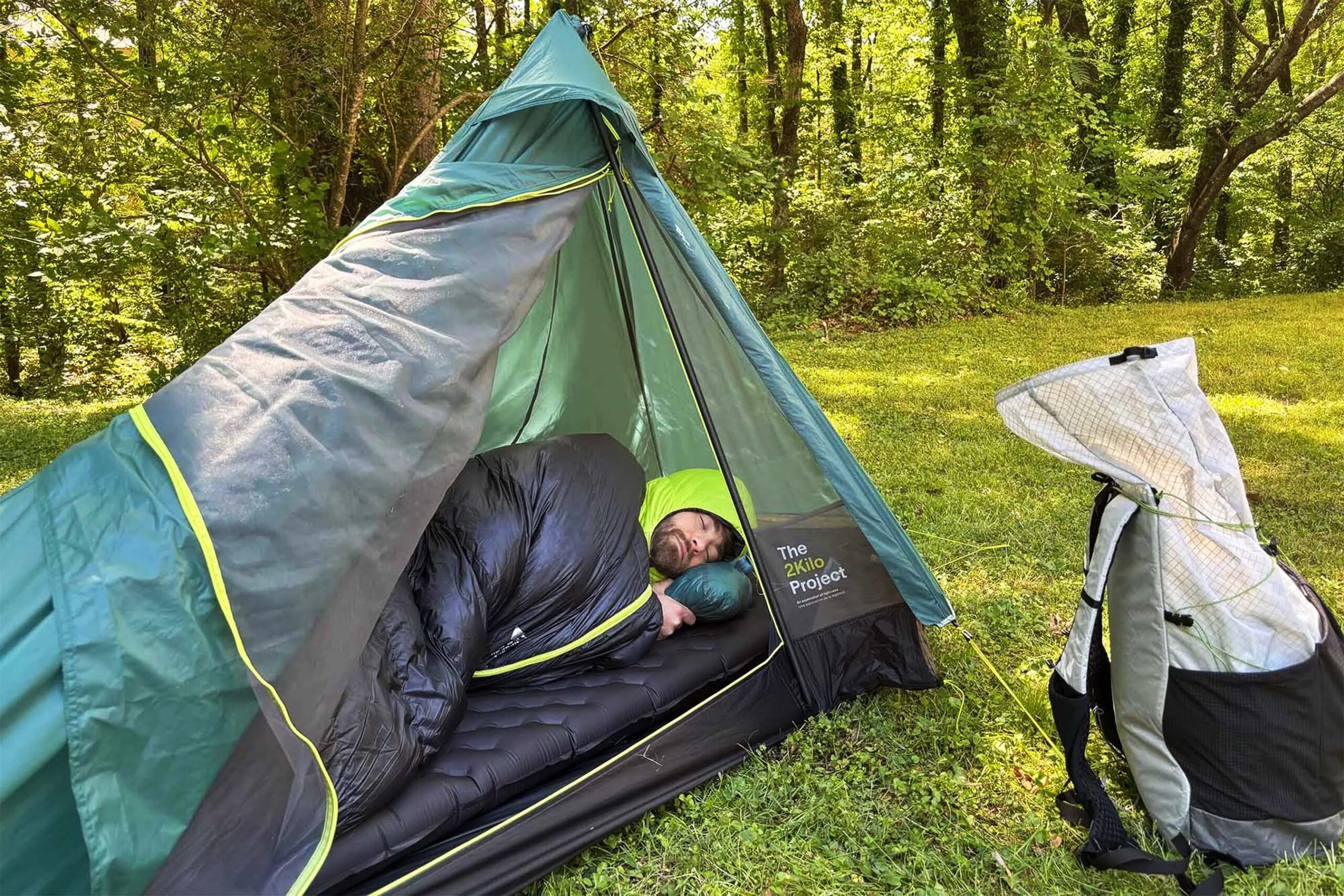

Two and a half years ago, the research division at Canadian outfitter MEC set an audacious goal. The brand wanted to create an entire ultralight camping kit collectively weighing just 2 kg — or roughly 4.5 pounds.
The kit would include the four essentials for backpacking: a tent, a sleeping bag, a sleeping pad, and a backpack to carry them. After a lot of trial and error, the MEC team pulled it off. In March 2026, it finally released the capsule, which it’s calling “the 2 Kilo Project.” It’s not just crazy lightweight, either. The gear included in this capsule also offers some innovative features.
By looking at ultralight camping gear as a whole rather than its individual pieces, MEC was able to produce something truly original, said Mark Knight, the brand’s director of product creation.
“The fun part actually is the amount of failure we went through to get here,” Knight told GearJunkie. “We weren’t interested in 1-centimeter-thick pads or tents like coffins. We wanted each product to still be relevant — as well as light.”
MEC recently sent GearJunkie a sample 2Kilo Project kit, and after testing it during a cold, wet night in my front yard, I’m stoked to take it on a real trail soon. The brand took some risks with its designs here. This kit certainly has some interesting ideas for making ultralight gear that’s both functional and fun.
Check back for GearJunkie‘s full reviews of individual pieces from the MEC 2 Kilo Project kit.
The Lightness of It All
So just how lightweight is this kit? Altogether, the four pieces of this kit weigh just 4.4 pounds.
That’s pretty impressive. Some sleeping bags and many tents weigh more than that on their own. My lightest-weight camping setup (combining together the four key items of tent, bag, pad, and pack) still weighs about 10 pounds, which many ultralighters would likely scoff at. So I reached out to some of my GearJunkie colleagues with even more experience in ultralight backpacking.
Camping Editor Will Brendza’s kit clocks in at 6 pounds, 10 ounces, using a mix of gear from Sea to Summit, MSR, Mountain Hardwear, and Outdoor Vitals. As for Staff Writer Mary Andino, her preferred ultralight setup weighs 8 pounds, 11.4 ounces, and relies on gear from standby brands like Therm-a-Rest, NEMO, and Gossamer Gear.
Cutting several pounds off a person’s setup is significant. My colleagues and I aren’t interested in setting fastest known times on the trail — we mostly just want to get to our campsite with less back and shoulder soreness. But we also want a campsite that’s decently comfortable, and the 2-Kilo Project serves up some cool innovations to make that happen while still shedding the ounces.
Alpha UL 1-Person Tent
The MEC Alpha UL ($650) is a non-freestanding tent, but it includes a carbon fiber pole that can be used in place of a trekking pole.
Unlike many other ultralight tents, MEC’s Alpha UL offers enough headspace to sit up while inside. Its L-shaped design might not put up much of a fight in heavy winds, so picking a campsite with decent protection from the elements will likely be crucial to using this effectively. It is very light, though, at just 1.2 pounds.
To shed more weight, the tent uses nylon rather than more durable materials. MEC’s designers actually started the design process with a Dyneema variant, but opted against it because the material was too noisy. Instead, they went with nylon to “prioritize a comfortable night’s sleep,” Knight said.
Perhaps the biggest factor in the tent’s low weight is its carbon fiber pegs. At just 4 g each, Knight said they’re likely “the lightest tent peg on Earth.” I banged these into the ground with a heavy rock, and they proved sturdier than their featherweight class might suggest.
The Alpha UL is also a single-wall tent. That means you can expect some condensation. However, the tent’s shape is designed to cause the condensation to drip down the sides and exit through ground vents. It was a wet night when I slept in the Alpha UL, but none of the moisture ended up on the bag (or my face), so I’m calling that a win.
Bravo 6 Sleeping Pad
The sleeping pad in this kit is incredibly warm for its 1-pound weight. At 8 cm thick, the Bravo 6 Sleeping Pad ($280) still has an R-value of 5.6, making it well-insulated for colder nights and shoulder-season outings.
MEC actually found a new synthetic material while developing the pad that reflects body heat. It’s proprietary, so Knight didn’t reveal its exact composition, but he said the material is often used in food or window coverings.
Regardless, it allows MEC to keep the pad’s weight low while maximizing warmth. According to MEC, the material (made in Taiwan) is so effective that the brand is releasing another version of the pad this fall with an R-value above 9 (which would qualify as a full winter sleeping pad).
Inflation method
Mouth pump
“Initially, the sleeping pad came back with a 9.2 R Value. We thought it was a mistake, so we sent it off to an independent tester to make sure,” Knight said. “We actually ended up dialing back the warmth for the 2-Kilo Project. But this tech is now leveling up the rest of our gear.”
In my brief testing, I found the sleeping pad to be decently comfortable, easy to inflate, and (thankfully) not too noisy — something that I’ve become more sensitive to in recent years.
Delta Pivot –2C Sleeping Bag
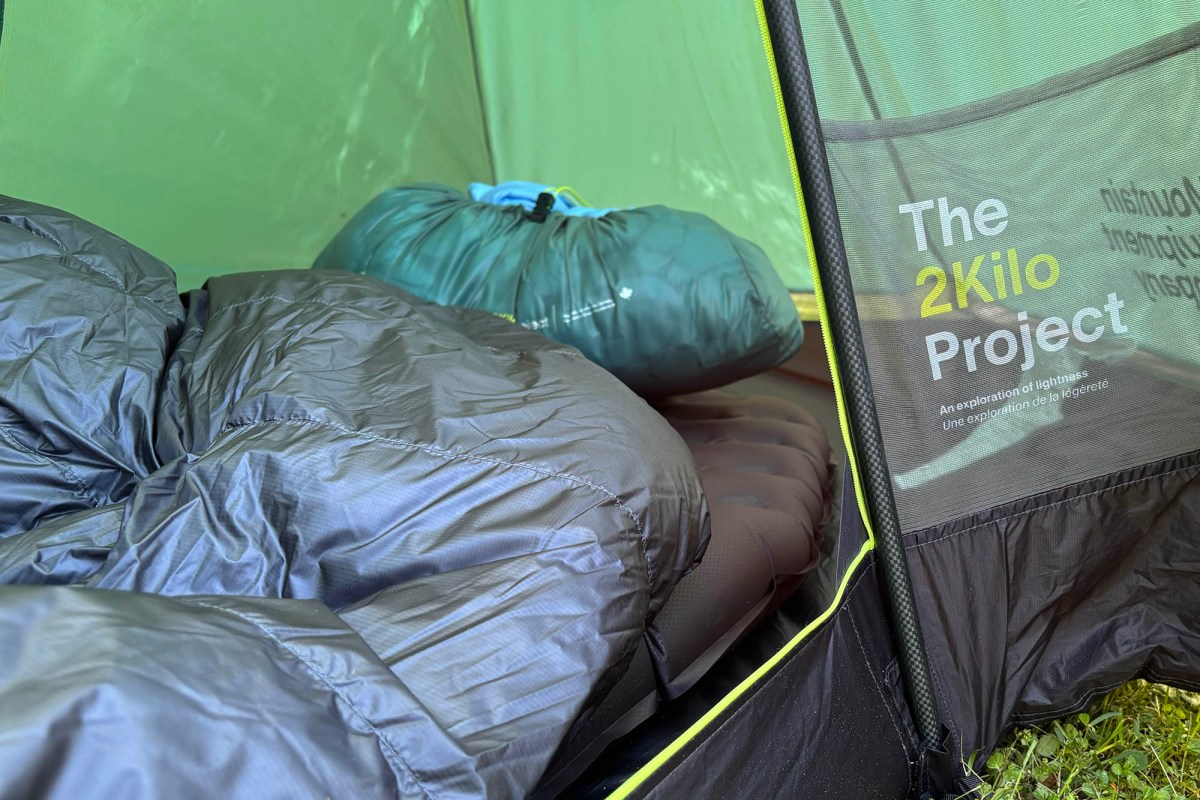
Of all four pieces in this kit, MEC’s Delta Pivot –2C Sleeping Bag ($600) throws one of the most interesting curveballs. Unlike most sleeping bags, this 900-fill down bag actually has a separate hood, rather than an attached one. According to Knight, this can offer several advantages over traditional mummy bag designs.
“In the initial modeling, we realized that the space above your shoulders — we have to heat and insulate that space. So we opted for a separate hood, which I’ve never seen before,” Knight said. “It’s like an owl’s head on a sleeping bag.”
Insulation
900 fill-power water-repellent goose down
In other words, the snug fit of the hood makes it harder for frigid drafts to blow into the bag. So it may actually be warmer than traditional designs. (I’ve encountered this problem enough times with traditional sleeping bags to know that MEC might be onto something here.)
In addition, if you’re not camping in extreme cold, you can leave the hood behind, thus saving a bit more weight and pack space. Together, the bag and hood weigh 1.1 pounds.
Charlie 32L UL Pack
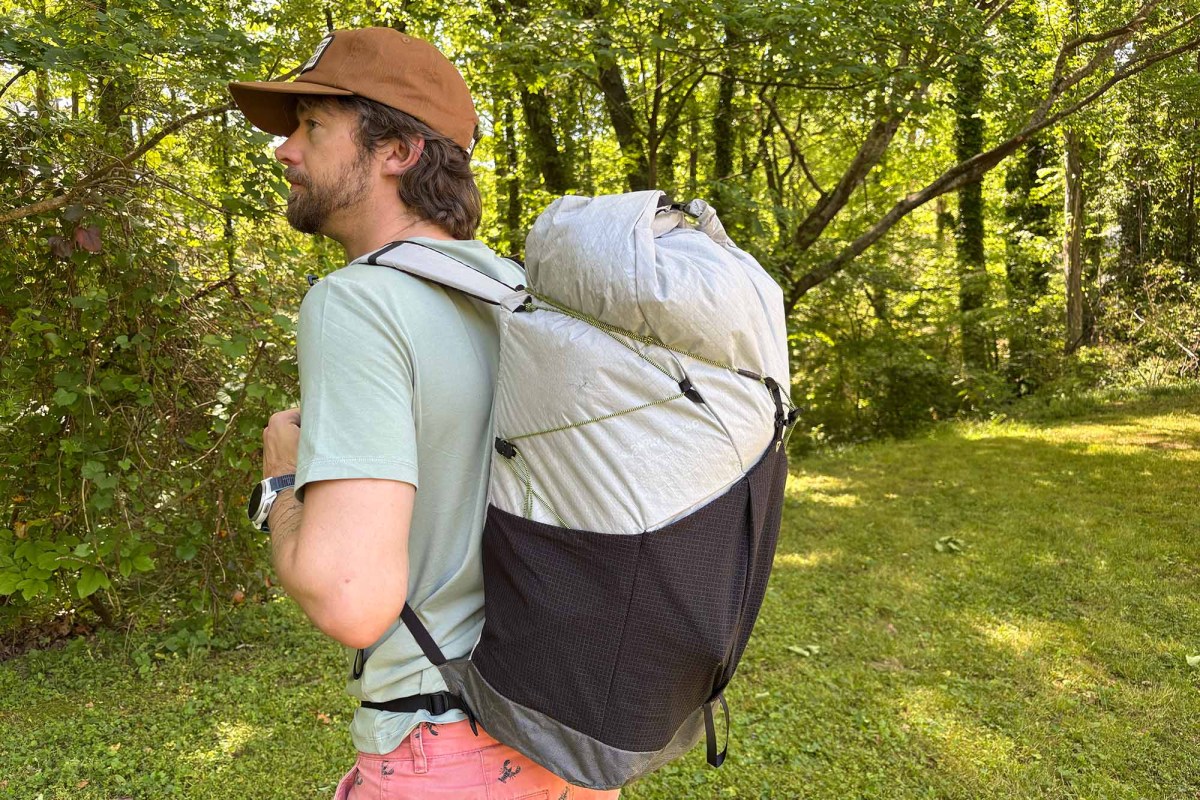
MEC’s Charlie 32L UL Pack ($300) doesn’t quite have the attention-grabbing innovations of the rest of the kit — but it’s still an impressive design.
It’s made from a combination of Challenge Sailcloth and a Dyneema-like material. In its design, this unisex pack splits the difference between a hiking pack and a running vest. The pockets on the straps are arguably something every hiking pack should have, anyway.
Primary fabric
70-denier polyester
The stretch pockets actually use a stretchy form of Dyneema, making them more durable than most such pockets, according to Knight. That fabric is a big part of why the pack has such a high price tag. It’s the most expensive fabric that MEC has ever used in its gear, with a base price of $50 a yard.
Knight said the four pieces of the kit fill up only a third of this pack, but it seemed more like half the pack’s space in my own testing. Regardless, the pack won’t have quite enough volume to meet the preferences of many campers and hikers. But for those who prefer to bring less rather than more — aiming for maximum lightness along the way — plenty of fastpackers and other ultralighters will find lots to love about this one.
‘Fit Another Beer In’
All together, the four pieces of the 2-Kilo Project cost around $1,830, which is not cheap, even by the standards of expensive ultralight gear. However, I have no doubt that many people will like the idea of a ready-made ultralight kit, thus saving them the time and effort of researching each individual piece of gear.
MEC said it field-tested the gear throughout the 2.5-year design process and is confident that many ultralighters, thru-hikers, and backpackers will find it meets their needs. There’s really no understating the appeal of a full camping setup at such a low weight.
“I can’t tell you how delightful it is to have your camp set up at just 2.5 kilograms [4.5 pounds],” Knight said. “And with such a low weight, that just means you can fit another beer in.”
The entire collection is now available on the MEC website. But this gear is currently available only in limited quantities, so act soon if you want to try it out this summer.
Read the full article here
