



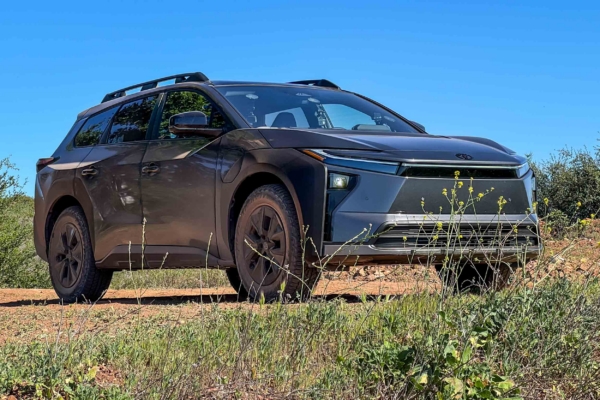

As I make my way around a hairpin left, a 30-degree slope enters my vision. Undeterred, I turn on X-mode and start to ascend. The Dunlop Grandtrek all-terrain tires momentarily slip and strain as I climb. But the 2026 Toyota BZ Woodland dutifully marches up the grade, greeting me with a stunning vista of rolling hills and avocado farms beneath me as the cobalt Pacific Ocean wafts in the distance.
With 8.4 inches of ground clearance, standard all-wheel drive, and nearly 400 pound-feet of torque to play with, the bZ Woodland makes ventures like this comfortable. And, thankfully, I only traveled 30 miles to a charging station on the ready, no need to test its middling 260-mile range.
And the view at this plateau alone made my journey west to Ojai, California, well worth it. But Toyota wanting to put its Woodland sub-brand on a bZ BEV already struck my curiosity. How does this Subaru TrailSeeker doppelganger feel both on the road and off it? I needed to find out.
In short: While 260 miles of range feels merely average today, the bZ Woodland dazzles with its combination of performance and practicality. You get 33.3 cubic feet of cargo space behind the second row and 71.8 cubic feet when it’s folded. You also get a full 375 horsepower and 396 pound-feet of torque on tap. Plenty to rocket past most anything on the road or muscle up your favorite, steep, unpaved path with ease. All without breaking the bank or burning a drop of gasoline. Just bear in mind the charging station distance.
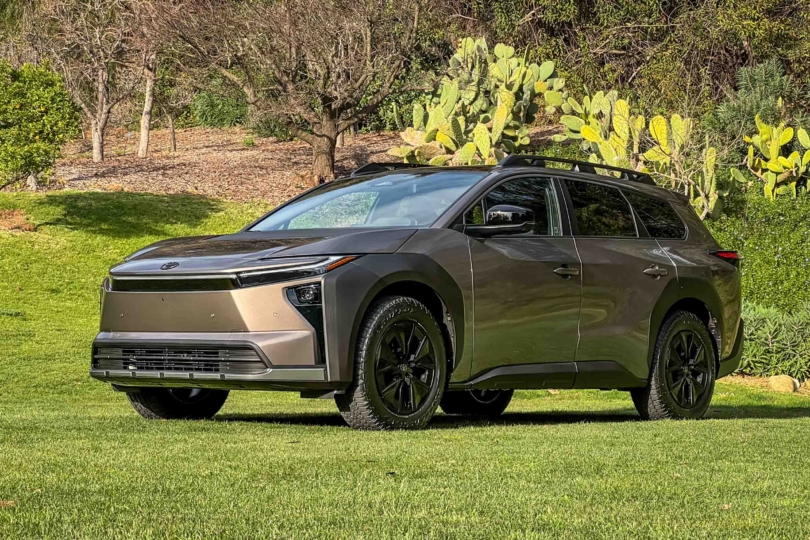
2026 Toyota bZ Woodland
-
Vehicle:
5-door, 5-seat, crossover SUV -
Dimensions:
190.2’ L x 73.2” W x 65.9” H, 112.2” wheelbase -
Cargo area (behind 2nd/1st rows):
33.3/71.8 cu.-ft. (with JBL sound system) -
Motors/Battery:
Two electric motors, one per axle/74.7 kWh lithium-ion -
Power:
375 hp, 396 lb.-ft. of torque -
Transmission/Driven wheels:
single-speed drive down gears/all-wheel-drive -
Charging:
DC fast (150 kW): 10-80% in 30 min. AC Level 2: 10-100%: 7.0 hrs. -
MSRP:
$46,750 (includes $1,450 destination charge), $48,850 (as tested)
Pros
-
Absolute rocket ship in a start line
-
Large amounts of cargo space
-
Easy-to-use center display
-
More capable off-road than it looks
Cons
-
Ho-hum driving range
-
400V system limits charging speed
-
Digital instrument cluster smaller than ideal
-
Not the easiest to reach USB ports up front
2026 Toyota bZ Woodland Review
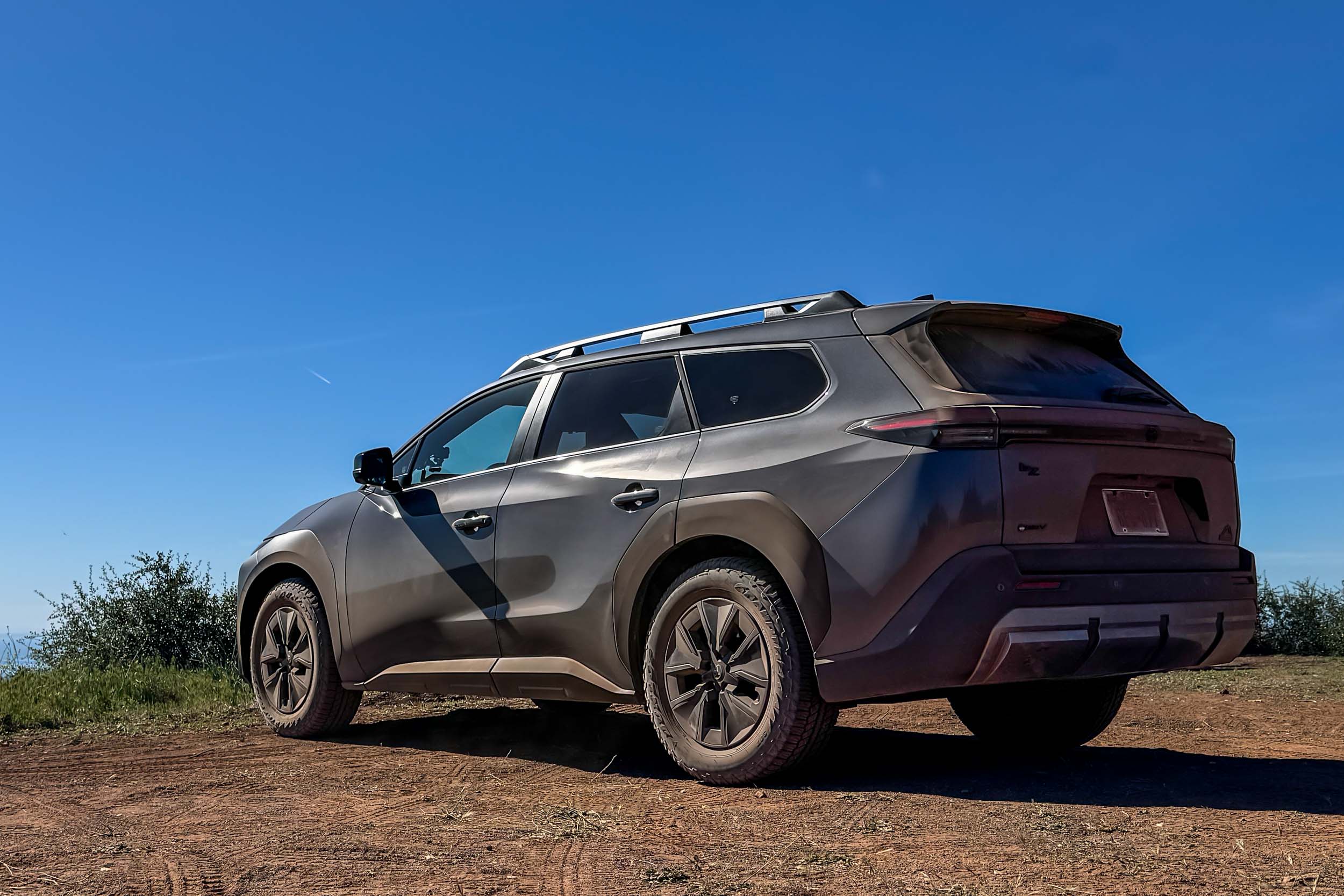
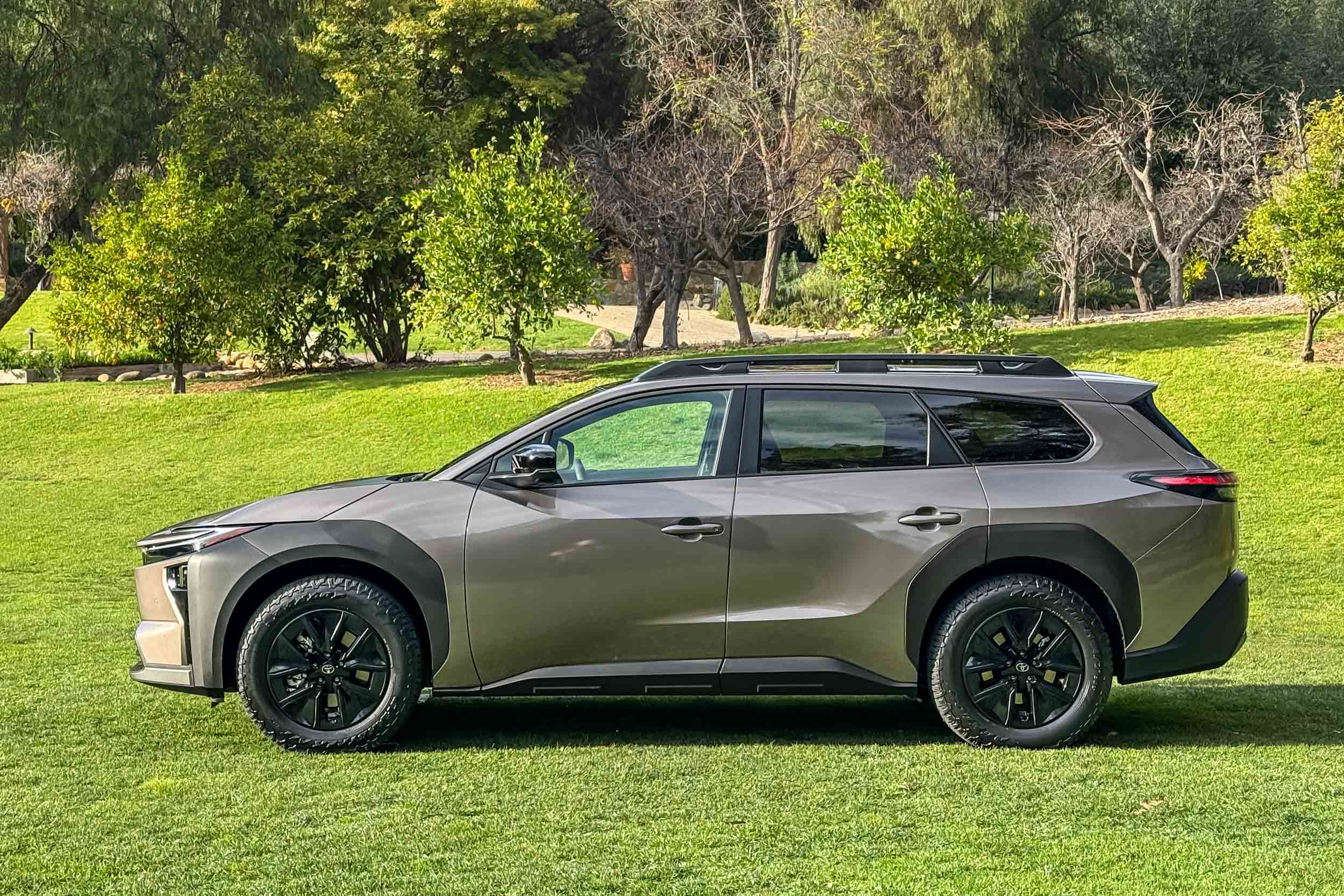
What differentiates the bZ Woodland from the standard bZ? To start, it stretches an additional 5.6 inches from bow to stern. That additional length gives the Woodland a bit more of a station wagon shape, though both Toyota and the EPA still consider it a small crossover SUV.
Moreover, the Woodland stands 0.9 inches taller. Part of that height comes from 0.2 inches of additional ground clearance, bringing the total to 8.4 inches. But that’s only if you get the taller sidewall, no-cost optional, all-terrain tires.
Doing so both helps and hurts the Woodland. It helps stylistically. First, the black cladding that makes up the base of the front and rear fenders looks more appropriate when accompanied by the chunky blocks of all-terrain rubber. Secondly, that also bears out with the gloss black 18-inch wheels, which better match the Dunlop Grandtrek rubber.
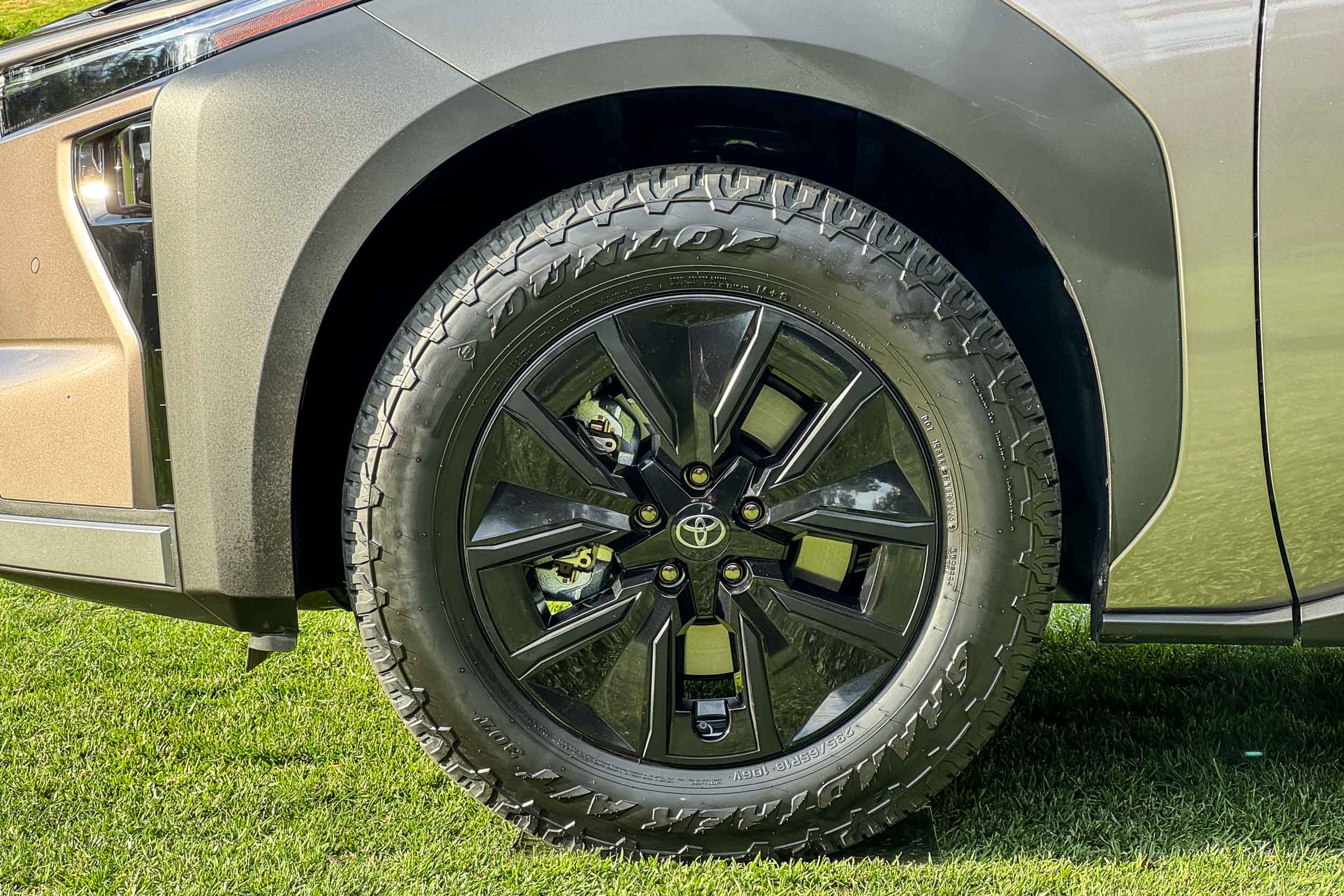
But forgoing the Bridgestone Turanza all-season tires decisively hurts when it comes to driving range. The bZ Woodland only manages 260 miles on a single charge when rolling on A/Ts. On the Turanzas, it’s 281 miles.
Prepare the Launch Pad
Both numbers fall well short of the standard bZ, which will carry you up to 314 miles on a full charge if you go with the large battery and front-wheel drive. And while the Woodland gets the larger 74.7 kWh lithium-ion 400V battery pack, it also includes standard all-wheel drive.
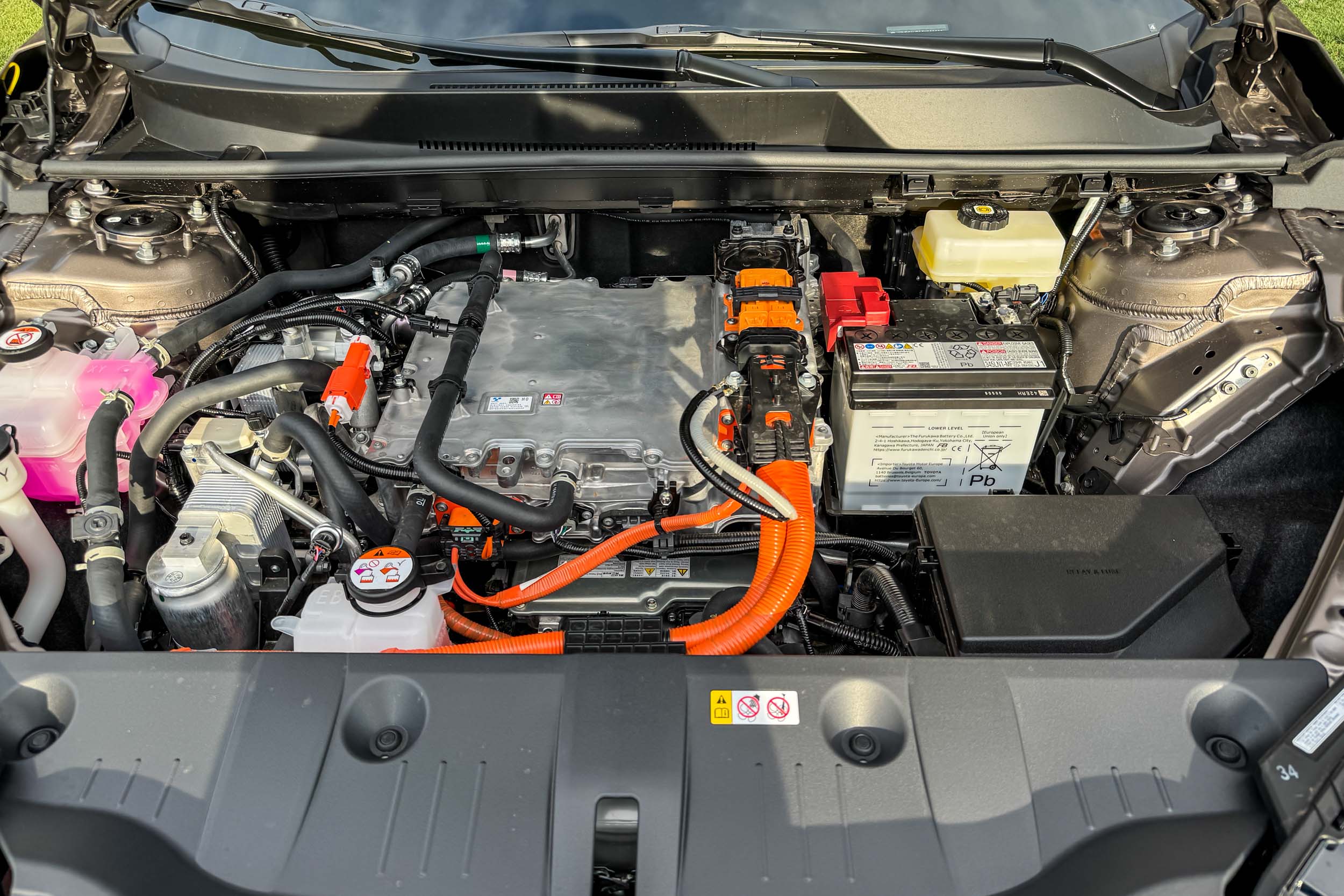
Additionally, Toyota doesn’t provide 338 horsepower to play with like the standard bZ. No, you get the same, bigger electric motor on the rear axle as you do on the front in the Woodland.
Each motor produces as much as 224 horsepower and 198 pound-feet of torque, but the battery pack capacity limits total horsepower to 375. That, however, proves plenty to propel this quirky, off-road–friendly machine to 60 miles an hour from rest in just 4.4 seconds! That’s Toyota Supra territory!
And it’s bury-the-accelerator easy. The moment you want to move, stab the pedal and get thrust into the seat back instantly. With all-wheel drive, once you hit it, the Woodland just squats on its hind legs and takes off like a rocket ship on a launch pad aimed for the moon. Satisfying!
Thankfully, the battery pack can deliver full torque to the bZ Woodland, which means 396 pound-feet will pull you up steep grades with ease, as long as the terrain provides enough traction for the aforementioned Dunlop all-terrains. More on that in a moment.
Or go the other way and use the ample torque to tow up to 3,500 pounds worth of stuff. Toyota says the Woodland will handle it fine. But I’d keep a close eye on the driving range with a load on its back.
Charge Up
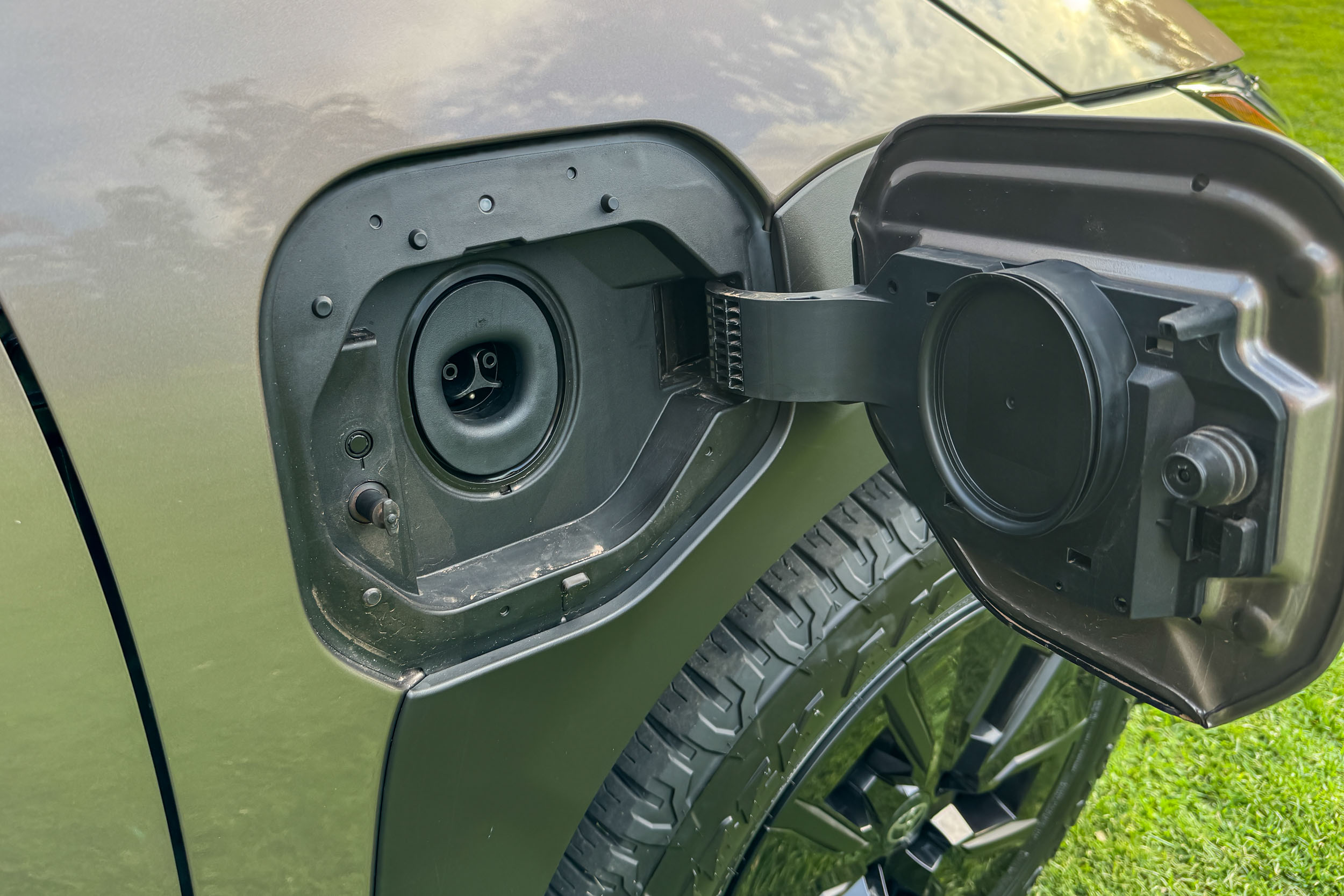
When you need a charge, plan ahead to fill the time. Several manufacturers already utilize 800V systems and charge faster. The bZ Woodland sticks with a 400V system, sadly.
It will take as much as 150 kW on a DC fast charger. That means you’ll need 30 minutes to reach an 80% state of charge if you start with 10%. On the bright side, it includes an NACS port.
On a level two charger, it will take 7 hours to get to a full charge — a nice and easy overnight-in-the-garage kind of time.
Comfortable Inside
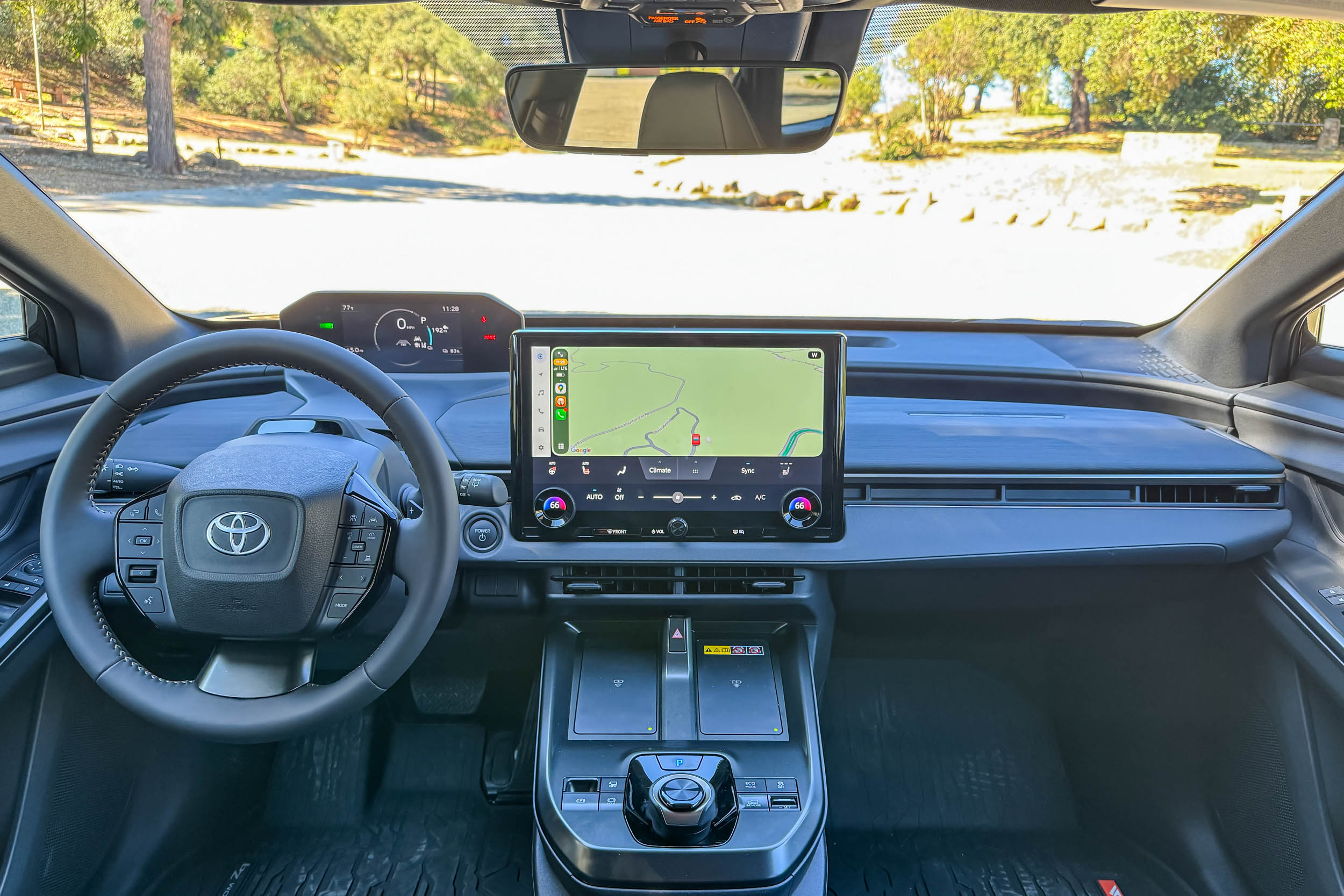
Toyota offers two trims of bZ Woodland for its first year: base and premium. Base models include plenty of nice-to-have things. To start, the 7-inch, fully digital instrument cluster and the 14-inch center display come standard, as does wireless Apple CarPlay and Android Auto.
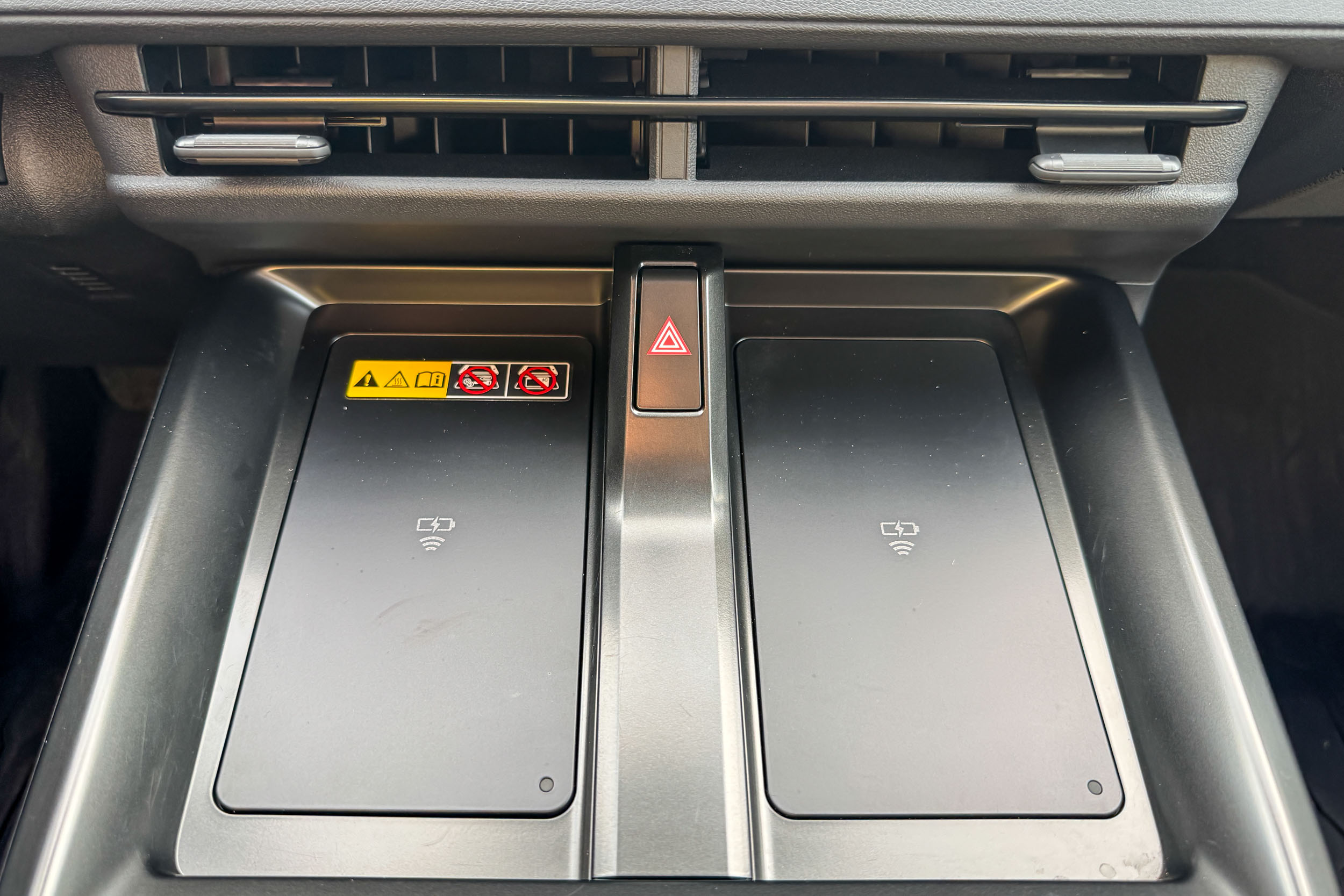
You also get two wireless smartphone chargers up front, as well as two USB-C ports in front and another two in the rear, providing 15 W and 60 W of power, respectively.
Moreover, both the front and rear SofTex upholstered seats come heated as standard, keeping all but the center rear passenger’s backside warm. That’s true for the driver’s hands, too, courtesy of the standard heated steering wheel.
All of that makes the standard two-zone climate control blasé. But the standard rain-sensing wipers proved a pleasant surprise. You also get plenty of space for four adults and supportive seats.
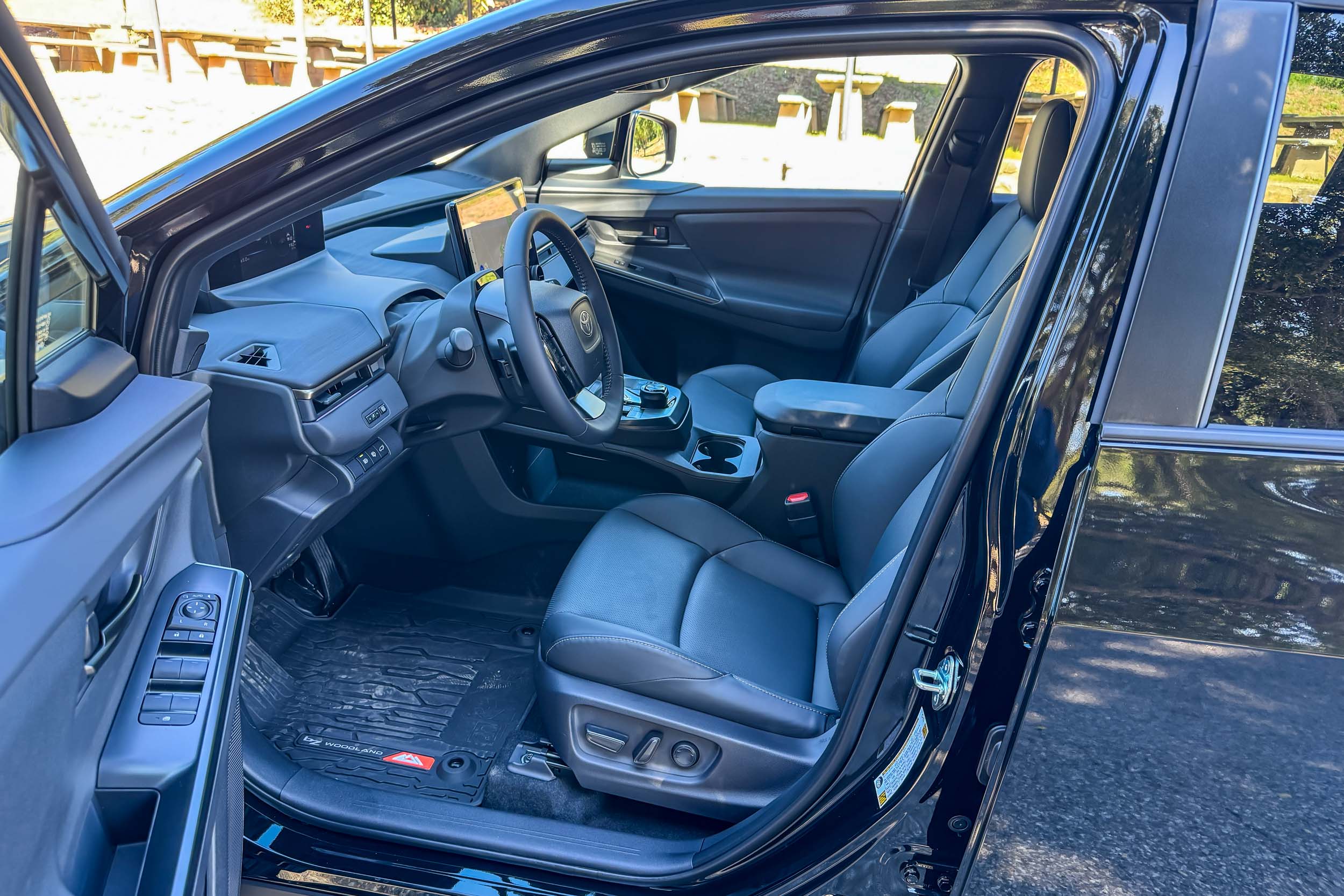
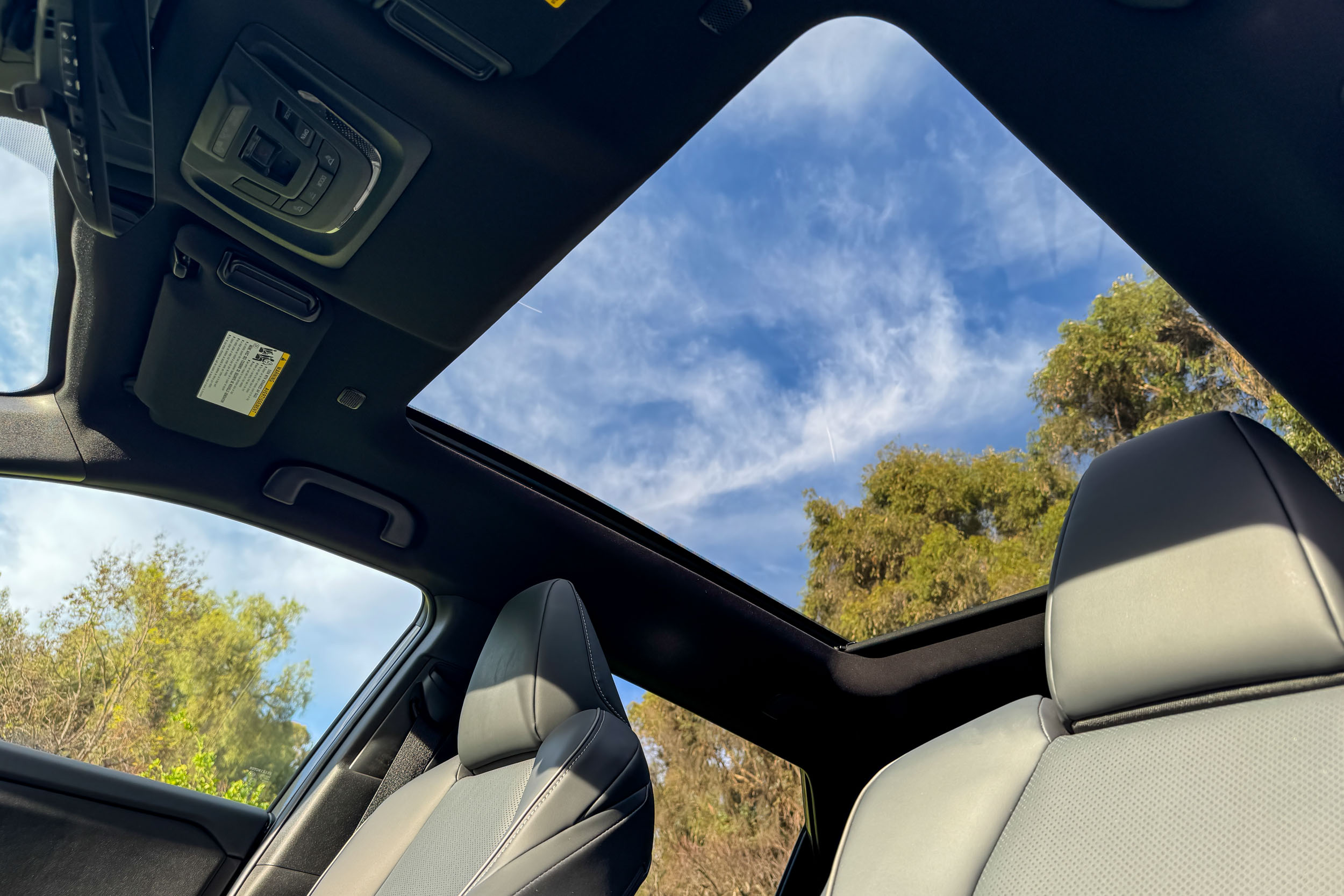
Spending the additional $2,100 to go Premium adds ventilated front seats, driver seat memory, a panoramic fixed-glass roof, and blind-spot monitoring — honestly, pretty typical stuff. But also, one decidedly uncommon one. Toyota adds a radiant foot and leg heater to the front of the cabin. Born and raised in Michigan, I appreciate the extra time Toyota put into keeping us warm.
Finally, you upgrade to a nine-speaker JBL sound system, which includes an amplifier and a subwoofer.
You’ve Got Space
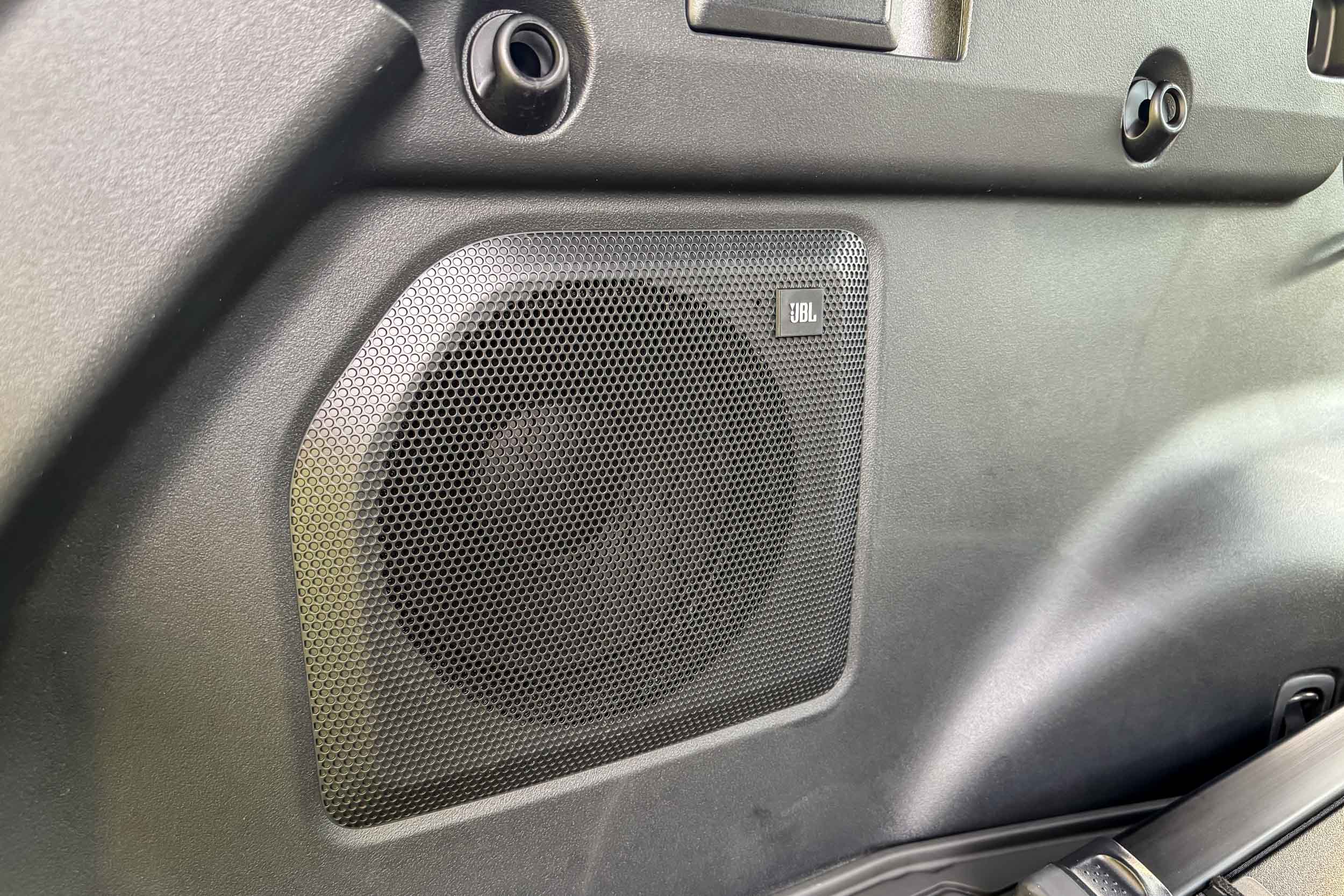
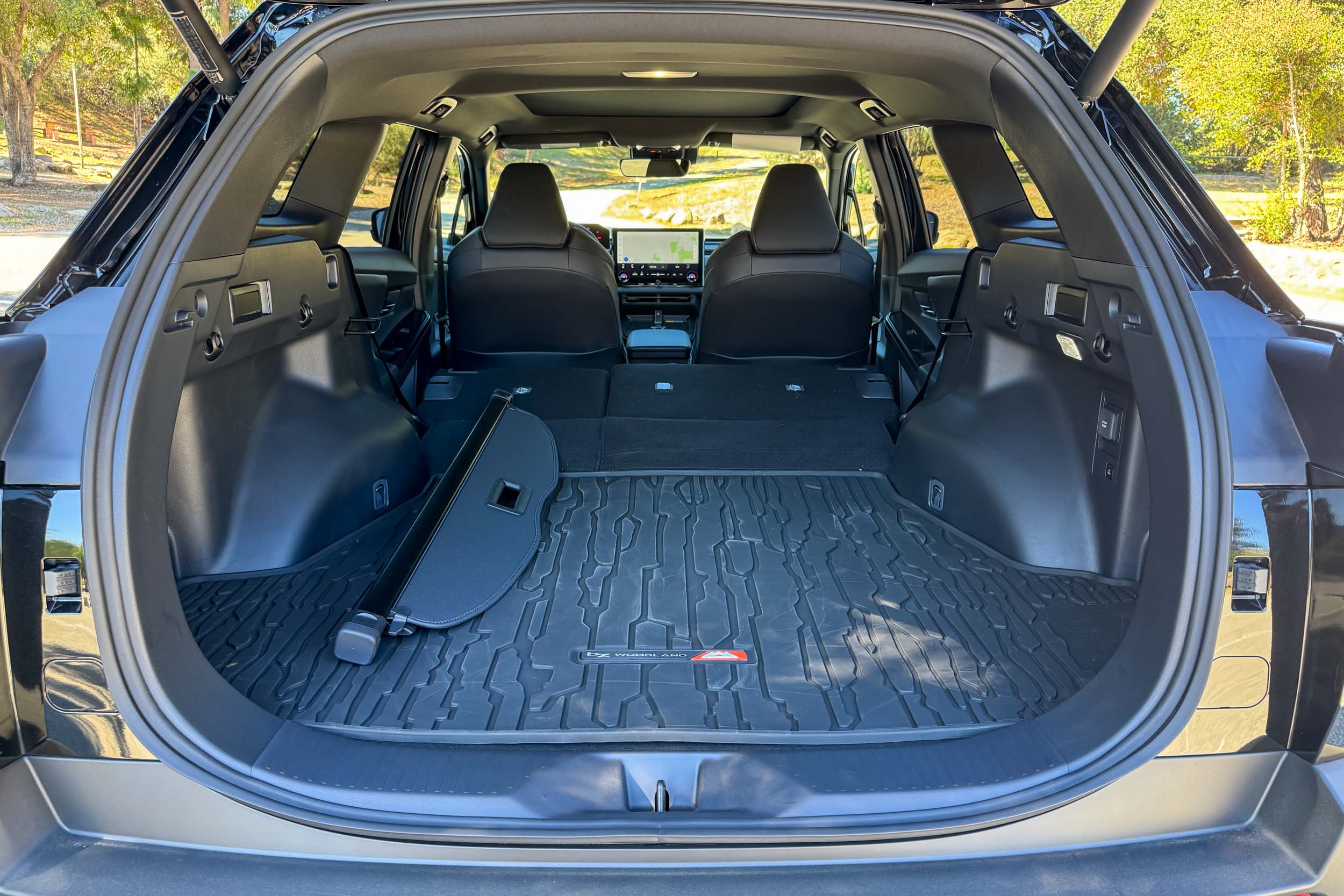
But that subwoofer comes at the cost of cargo space. Base Woodlands offer 33.8 cubic feet behind the second row and an ample 74.3 cubic feet with them folded. Premium models lose 0.5 cubic feet behind the second row, still giving you a healthy 33.3 cubic feet. But fold that row and space drops to 71.8 cubic feet, 2.5 cubic feet less than base models.
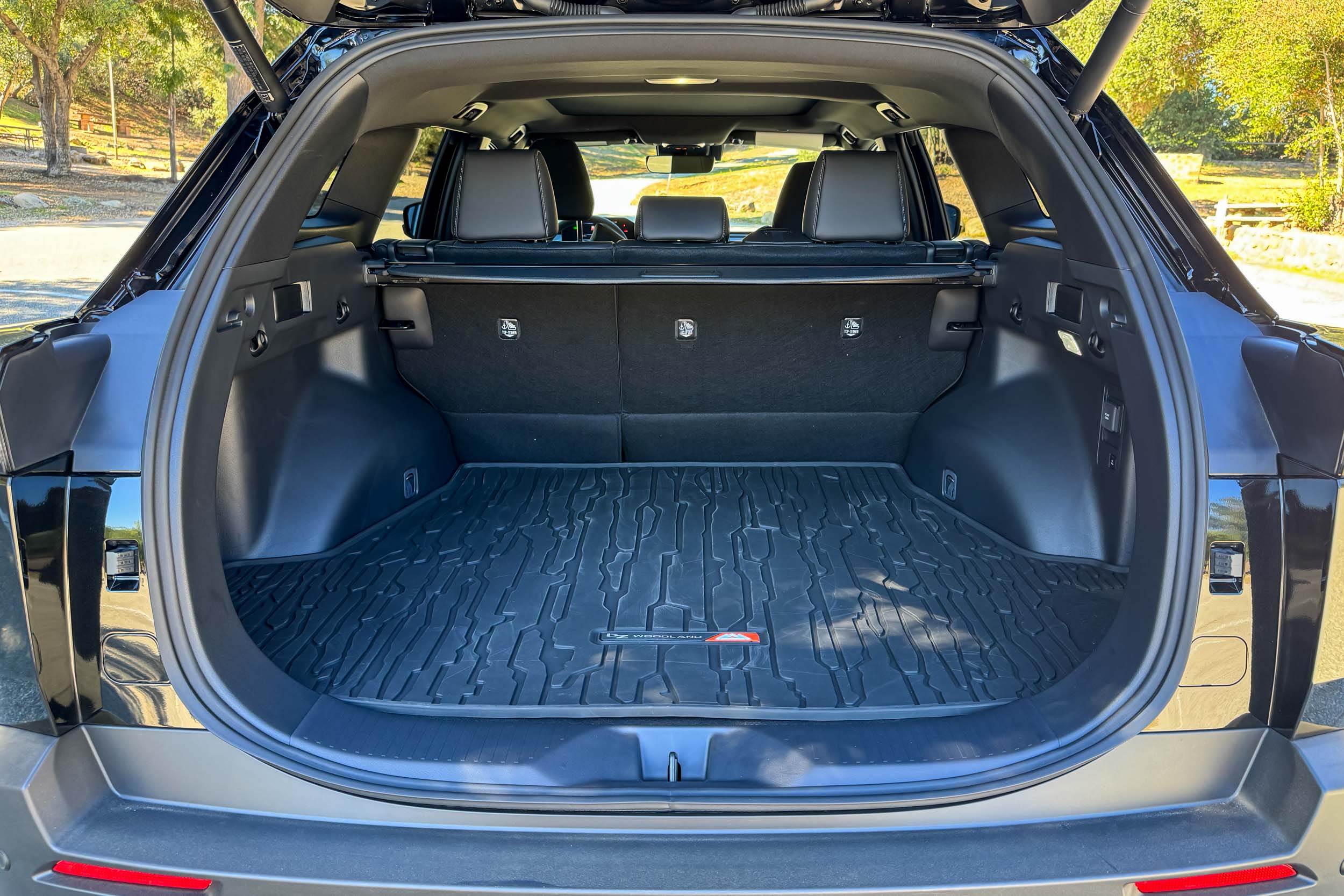
Seeing the difference stings. But honestly, the Woodland premium I drove still appeared plenty spacious. It’s not like your mountain bike fits in one, but not the other. It’s also press-of-a-button easy to open the liftgate (standard equipment) and get the bike in.
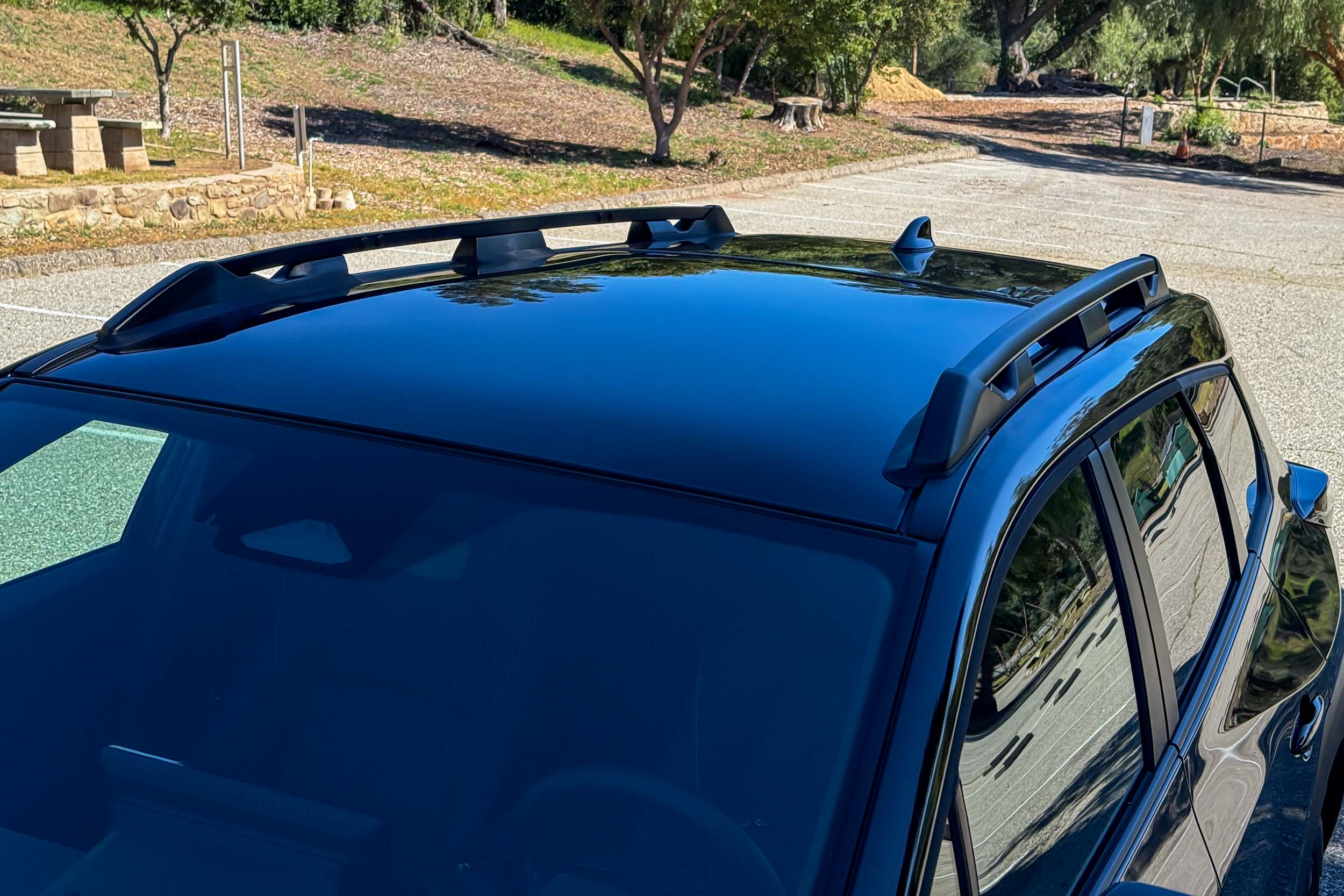
Or carry a couple of them, or kayaks, or a canoe, or whatever, the Woodland gets standard roof rails as well. Toyota didn’t give load limits, but the black, ladder-type rails look plenty strong for the usual cadre of roof-mounted toys.
Hit the Trails
Enjoying twin status with the Subaru Trailseeker, it’s no surprise the bZ Woodland offers respectable off-road prowess. It even includes Subaru’s X-Mode, which helps direct torque to the wheel with traction.
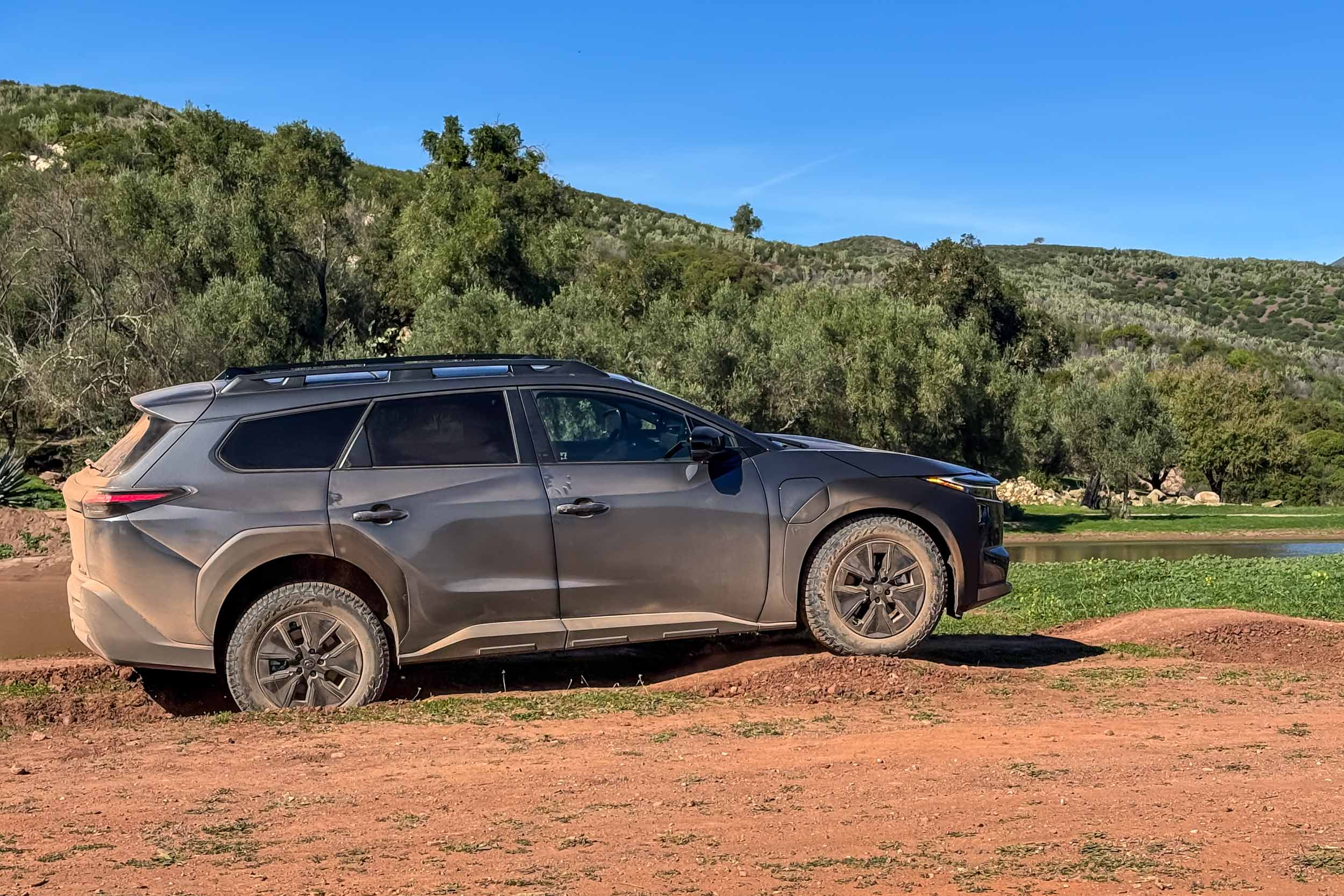
I put it to good use on a roughly 500-foot-long test course Toyota made, which included an oscillating hunk of dirt with 2-foot-deep sections scooped out of one side and piled onto the other. I lined up the driver’s side with a pile added, which meant the passenger side was about to fall. The Woodland marched through with little trouble, flinging one corner of the BEV airborne at a time as it did so.
To even get to this little obstacle involved 5.5 miles of climbing a narrow, single-lane dirt path. The first 5 miles caused little drama. And, indeed, any compact crossover would manage it fine.
But the last half mile forced the Woodland to stretch its electric legs a bit. Loose, rocky gravel teamed up with 30-degree slopes and sharp breakover points to really test the Woodland’s clearances and all-terrain tires.
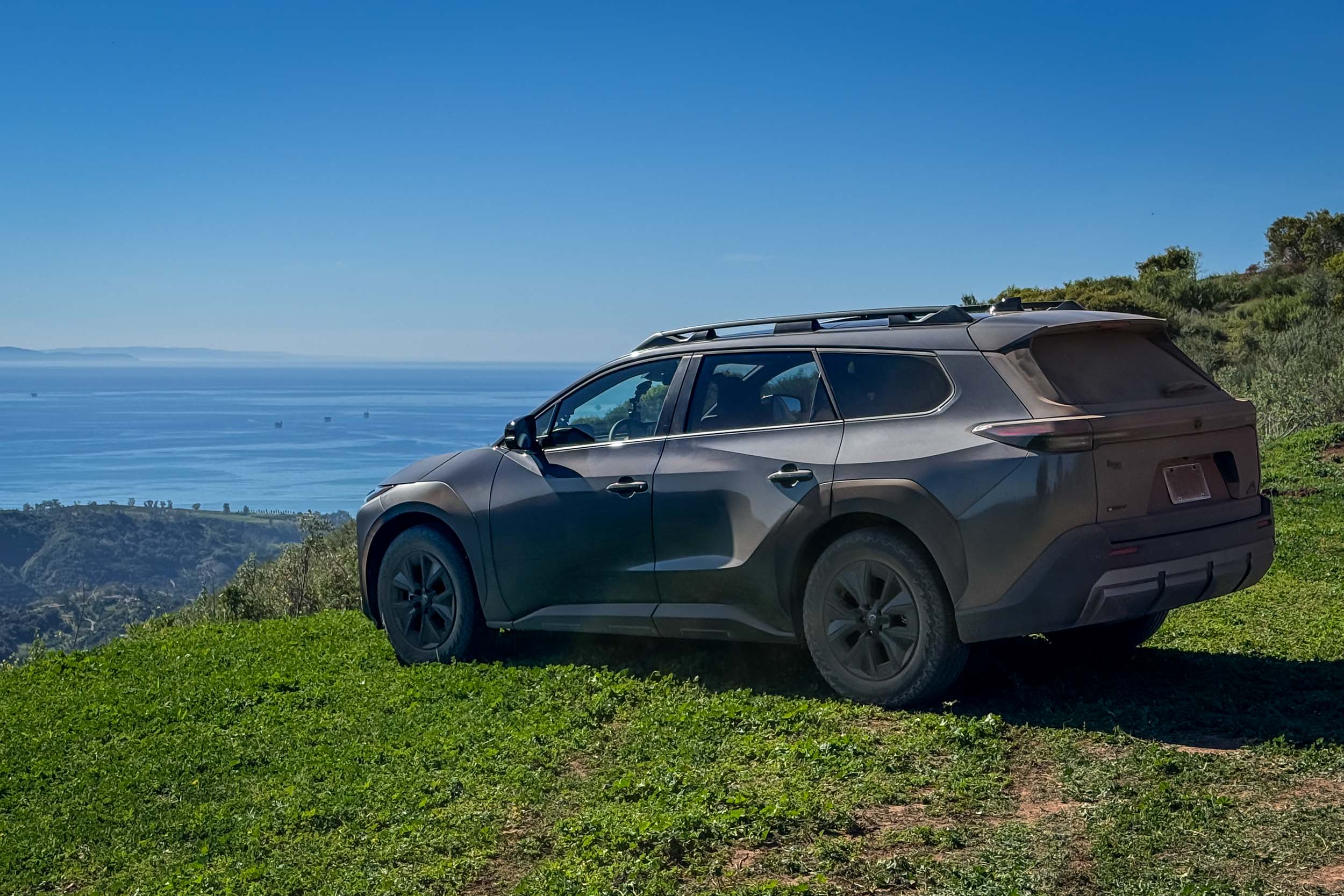
At a steady clip, it climbed to the peak and with torque to spare. The reward for my efforts was a panoramic view of rolling hills, forests, avocado farms, and the Pacific Ocean behind. Scenes like these instantly remind you why you yearn for a more capable vehicle, to see vistas like this and experience the tranquility they provide.
Hit the Road
After descending back down to pavement and hitting the dual-motor afterburners to merge onto the highway like Rocket Man on rollerblades, I settled into a 20-mile cruise back to Ojai. Thanks to the several hundred-pound battery pack mounted under the floor, Toyota kept the strut front, multilink rear suspension relatively soft, yet body roll stayed minimal.
The Woodland absorbs bumps in the road trouble-free and still feels composed through the corners. Moreover, Toyota sealed up the cabin nicely. The all-terrain tires kept quiet on the road and, even at highway speeds, wind noise never surpassed a low-frequency hum in the background.
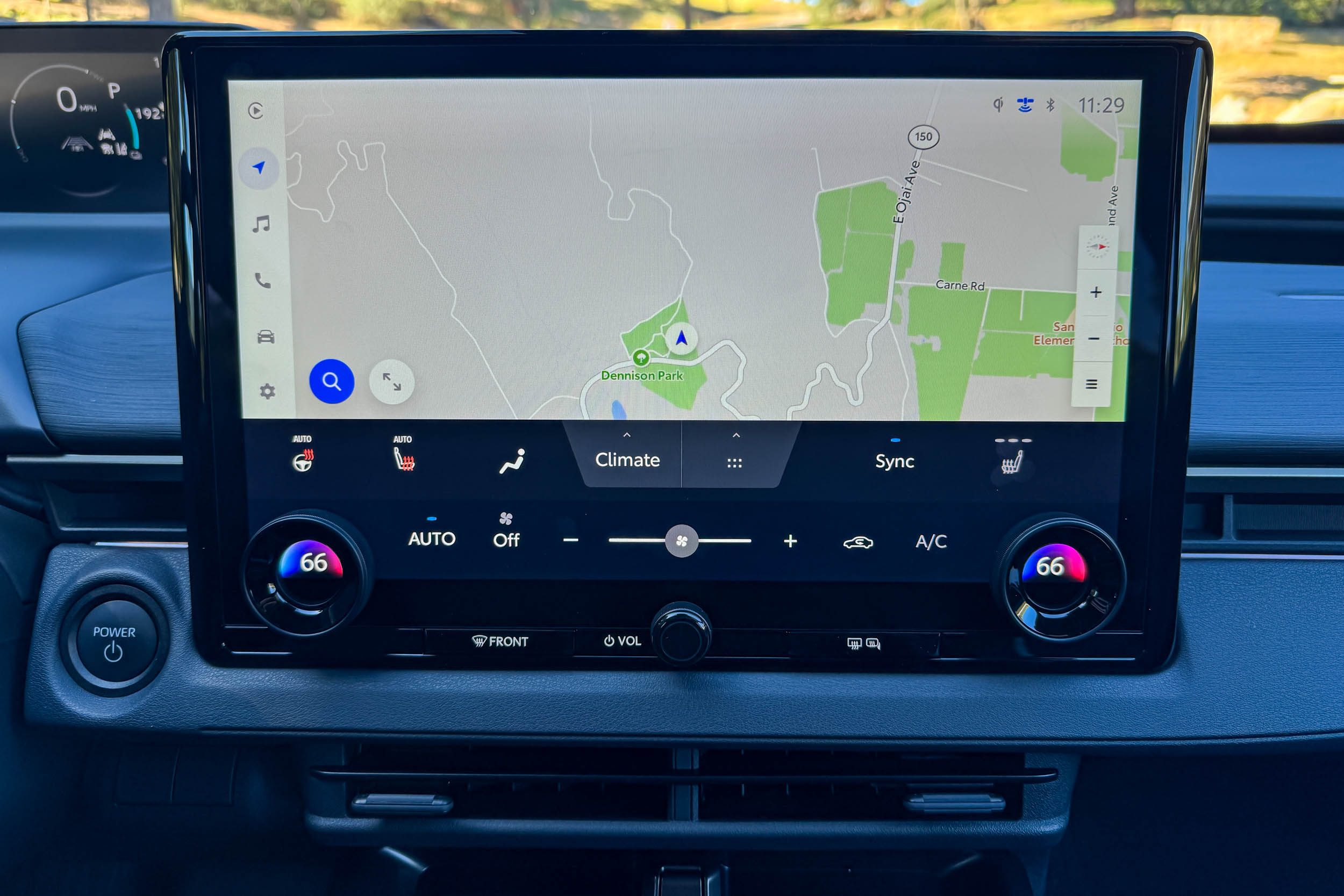
Furthermore, the center display proved easy to use, ventilated seats kept my backside cool, and seat padding and support kept me comfortable all day.
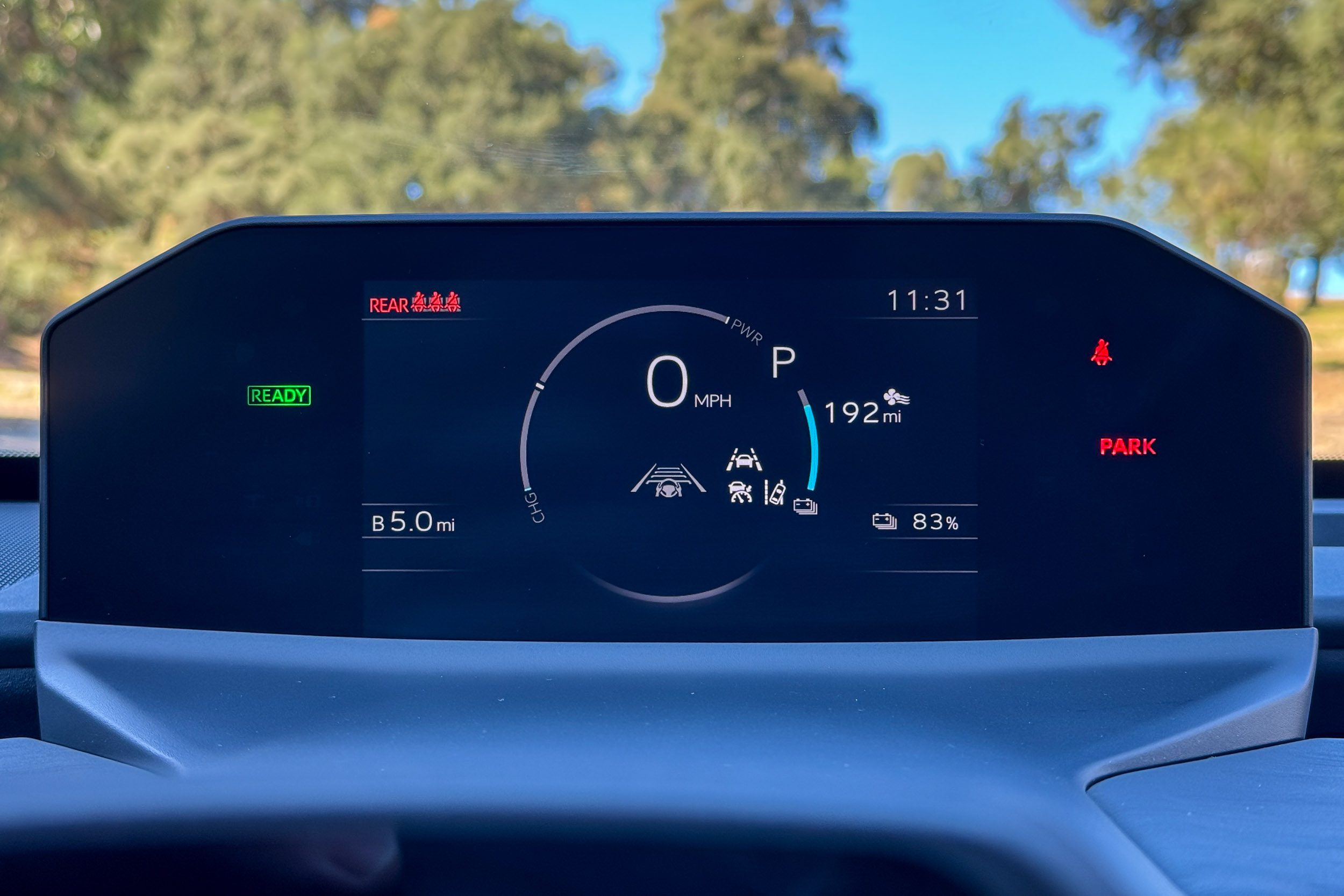
I do wish for a slightly larger digital instrument cluster, however. Seven inches and tucked back toward the windshield made it harder to read than some.
2026 Toyota bZ Woodland Review: Summary
Built on the e-TNGA platform, just like the standard bZ, the Woodland separates itself in both style and feel. But that comes at a price. Base trims start at $46,750 when you include the $1,450 destination fee, several grand over the bZ. And $2,100 worth of Premium trims and luxuries put you within spitting distance of $50K: $48,850.
That feels like a lot for a relatively compact, mainstream crossover, even with a little extra ground clearance — not to mention the only so-so driving range from the 74.7 kWh battery pack. But then I remember the views of the rugged California coast, the sports car–quick acceleration, and the number of times I needed to stop for gas.
For folks who do not need to travel too far to reach such vantage points and outdoorsy fun, the 2026 Toyota bZ Woodland offers several strengths for reasonable money. If you lean green, at the very least, it’s worth a test drive once they reach dealers in March.
Read the full article here
