



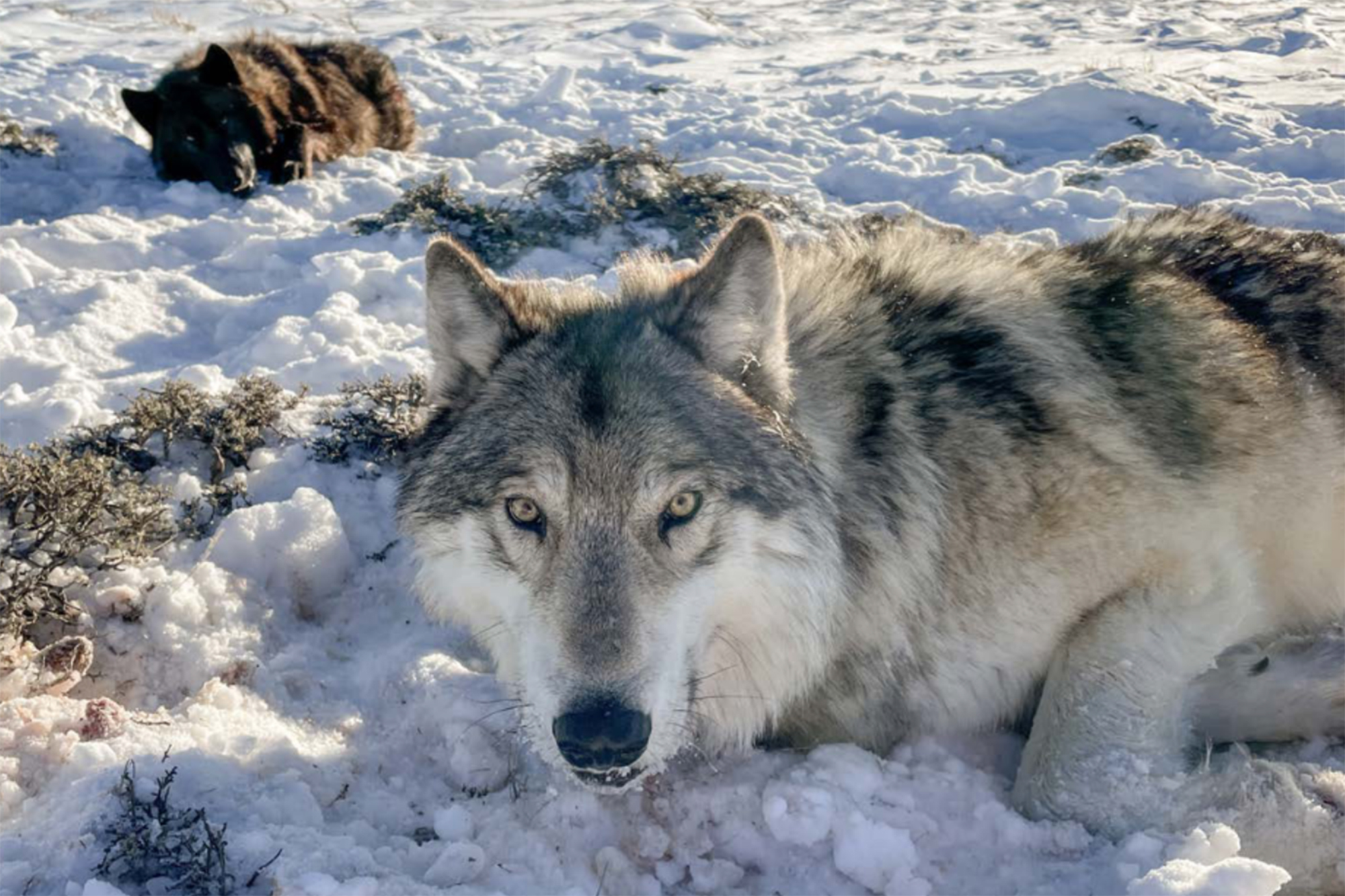

Colorado’s wolf restoration program has signs of growth, and CPW’s newest annual report lays them out plainly. The state now has four recognized wolf packs, four known litters, and a minimum count of 32 wolves at the end of the 2025-2026 biological year.
That’s the part wolf restoration supporters will point to first. Wolves are pairing, denning, and producing pups in Colorado, which is exactly what the voter-approved restoration effort was meant to start.
The rest of the report is a lot less tidy. CPW also reported a 61% adult survival rate, 10 known wolf mortalities, 43 confirmed livestock depredations, more than $700,000 in approved compensation for missing livestock and production losses, and no new wolf releases during the winter release season.
In other words, Colorado has pups on the ground and a wolf program still taking hard hits from almost every direction.
Colorado Counts 32 Wolves and Four Known Litters
CPW’s 2025-2026 Colorado Gray Wolf Annual Report covers the biological year from April 1, 2025, through March 31, 2026. The agency reported 32 known wolves in Colorado at the end of that period, including 18 adults and 14 pups.
Those wolves include 24 animals in four recognized packs and eight non-pack wolves. CPW listed the four packs as Copper Creek, King Mountain, One Ear, and Three Creeks.
The One Ear pack had the largest minimum winter count, with nine wolves, including four adults and five pups. Copper Creek had six wolves, Three Creeks had five, and King Mountain had four.
CPW recognizes a pack only after documented reproduction. By that standard, Colorado had four recognized packs and four known litters during the reporting year, which gives the restoration effort a clear sign of early reproduction.
Adult Survival Came in Below CPW’s Review Threshold
The harder number is adult survival. CPW estimated overall adult wolf survival at 61% for known wolves during the biological year, based on a sample of 28 wolves and 10 known mortalities.
CPW noted that the confidence interval was wide because the sample size was modest. That context is important, but it doesn’t make the number disappear.
Colorado’s wolf plan says CPW must review capture, transport, and release protocols if survival falls below 70% during the first 6 months after release. CPW said it completed that review and determined the mortalities weren’t caused by those protocols.
The agency concluded further review wasn’t warranted. Still, a 61% adult survival rate will remain one of the most scrutinized numbers in the report, especially with Colorado’s wolf population still this small.
10 Wolves Died During the Reporting Year
CPW documented 10 known wolf mortalities during the 2025-2026 biological year. The report lists one natural death, six anthropogenic deaths, and three deaths still under investigation.
The mortality table includes two legal takes outside Colorado, one mountain lion kill, one entrapment death, one CPW control action, one vehicle strike, one capture-related death, and three ongoing investigations.
The CPW control action involved wolf 2405 from the Copper Creek pack. CPW lethally removed that wolf on May 29, 2025, after the agency determined three Pitkin County livestock producers had experienced chronic depredation by members of the pack.
CPW said those producers had implemented viable, reasonable, and effective nonlethal deterrents identified in site assessments. The agency also said it consulted with the U.S. Fish and Wildlife Service before concluding lethal removal was legally authorized and appropriate.
The agency later tried to remove another Copper Creek wolf after additional depredations in July and August. That effort wasn’t successful. CPW also tried to remove an uncollared wolf tied to chronic depredation in Rio Blanco County, but those attempts also failed.
Livestock Depredations Add Pressure
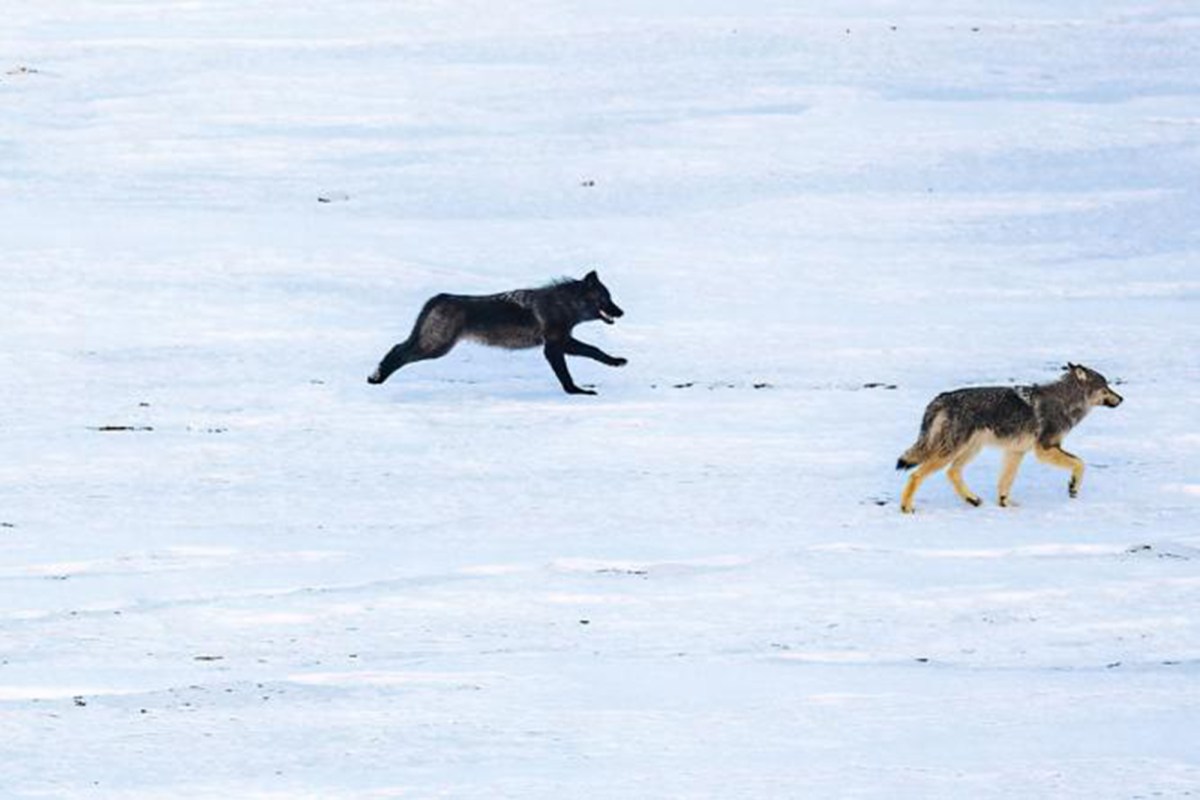
CPW confirmed 43 wolf depredations during the biological year, including 19 cattle, 23 sheep, and one working dog. The agency paid $43,275.06 for direct losses during the reporting period, though several claims remained open when CPW finalized the report.
The bigger number comes from missing livestock and production-loss claims. CPW approved $709,629.05 in compensation for ratio claims, decreased conception rates, decreased weights, and missing livestock.
That’s a lot of financial pressure around a minimum wolf count of 32 animals. It also explains why the livestock-conflict portion of this report isn’t some side issue. It’s central to whether this program can keep moving without losing more public trust in rural communities.
CPW also expanded its conflict-minimization work during the reporting year. The agency conducted 78 site assessments, bringing its total to 282 since 2022. It also deployed 13.75 miles of fladry across 15 locations, 61 scare devices, and 12 night watch events.
CPW said no livestock were lost to wolf depredation while fladry was deployed at the locations where it was used during the 2025 calving season. That’s one of the more useful practical details in the report, because it points to what may be working on the ground.
No New Wolves Were Released This Winter
Colorado’s wolf plan calls for 10 to 15 wolves to be released each year for 3 to 5 years. That didn’t happen during the 2025-2026 release season.
CPW had planned for a third year of releases and signed a multiyear agreement with British Columbia in July 2025. The agency had also begun planning January 2026 capture operations for up to 15 wolves.
In October 2025, U.S. Fish and Wildlife Service Director Brian Nesvik sent CPW a letter stating that the agency might be seeking wolves from outside the source areas outlined in Colorado’s 10(j) rule. CPW said it disagreed with that interpretation and said USFWS had previously assured the agency it could import wolves from Canada without a USFWS permit.
Even so, CPW decided not to pursue the January 2026 capture and translocation from British Columbia. The agency also tried to secure wolves from the Washington Department of Fish and Wildlife and the Confederated Tribes of the Colville Nation, but those efforts weren’t successful.
CPW announced in January that it had no plans for wolf translocations during that release season. In the annual report, the agency said substantial future translocation efforts will likely be critical for establishing a self-sustaining wolf population in Colorado.
Elk and Deer Impacts Remain an Open Question
CPW said it didn’t conduct a formal examination of wolf predation on wild ungulates during the 2025-2026 biological year. However, the agency said biologists opportunistically investigated wolf predation events.
The report also notes that several high-intensity elk and deer monitoring areas overlap places where wolves were present during the reporting year. In those areas, elk and mule deer have GPS collars so CPW can monitor survival, cause-specific mortality, and other pieces of ungulate ecology.
For hunters, that means one of the biggest questions around wolf restoration is still developing. Colorado has more wolves on the landscape, but CPW hasn’t produced a formal report on wolf predation impacts on elk and deer during this biological year.
Read the full article here
