



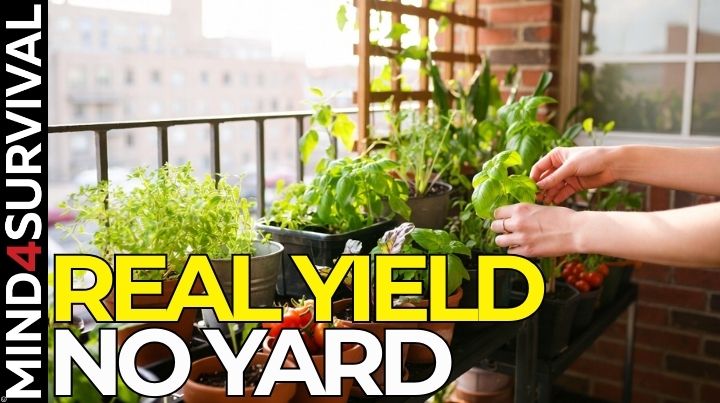

A lot of people who live in apartments take one look at their space and immediately conclude, “There is no way I can ever grow food here.” I’m here to tell you that you absolutely can.
Preparedness isn’t about having a massive off-grid farm right away. It’s about building systems where you are. Apartment gardening is all about working with the space you have: vertical areas, containers, available lighting, and smart strategies to grow real food in small square footage. Whether you have a shelf under a bright window, a balcony, or a porch, you can build a mini food-growing system right now.
Small-space gardening works because most vegetables don’t actually need much room to grow. They just need:
- Good lighting
- Proper containers
- Good soil
- Consistent watering
- A bit of attention
As long as these conditions are met, plants don’t care whether they are growing in a backyard or on a 12th-floor balcony. For apartment dwellers, container gardening is the primary option. You control the soil, drainage, and location. This means you’ll often face fewer pests and can create better growing conditions than a traditional outdoor garden.
Let’s break down the practical steps to start your apartment garden.
TL;DR: Apartment gardening relies on maximizing limited space using vertical planters, proper containers with good drainage, and high-quality potting mix. By choosing compact crops like herbs and leafy greens, and ensuring adequate light, you can build a productive indoor food system anywhere.
Quick Look at What You’ll Learn
What Makes Apartment Gardening Work?
Start with the Right Crops
When you first decide to grow food in a small space, you must choose appropriate plants. You won’t be growing pumpkins or massive crops. Instead, focus on crops that:
- Grow well in containers
- Have small or compact varieties
- Produce continuously
Best Vegetables for Apartment Gardening
Not all vegetables are suited for apartment life. You need to be selective and choose plants that can thrive in containers and limited space. Here’s a breakdown of reliable choices to get you started.
1. Herbs
If you’re new to gardening, start with herbs. Basil, mint, parsley, cilantro, thyme, and chives are almost foolproof in small pots on a windowsill. They grow quickly, so you get fast results for your cooking. Best of all, they’re regenerative—keep harvesting them, and they’ll keep growing back. This saves you money and provides fresh flavor whenever you need it.
2. Leafy Greens
Greens like loose-leaf lettuce, spinach, and arugula are perfect for shallow containers. They don’t need deep soil and mature fast. The best part is that you can harvest them continuously. Just snip off the outer leaves as needed, and the plant will keep producing from the center. It’s like having a perpetual salad bar on your balcony.
3. Cherry Tomatoes
You don’t need a huge space for fresh tomatoes. Compact or “determinate” tomato varieties are bred specifically for containers. A 5-gallon bucket is all you need. Give them plenty of sunlight and consistent water, and a single plant will reward you with a surprisingly large harvest of sweet, fresh tomatoes.
4. Green Onions
Green onions are one of the easiest and most space-efficient crops you can grow. They have shallow root systems and can be planted densely in a small pot. Even better, you can regrow them from the white ends you normally throw away. Just place the root ends in a jar of water or plant them in soil, and they’ll sprout new green shoots in days.
5. Peppers
Many varieties of both sweet and hot peppers stay compact, making them ideal for containers. Plants like bell peppers, jalapeños, and smaller chili varieties produce impressive yields without taking over your space. They love the sun, so put them in your brightest spot for the best results.
Lighting
Light is your most critical factor. Before you buy anything, assess your space:
- Which direction do your windows face?
- How many hours of direct sunlight does your space get?
- Do nearby buildings block your light?
South-facing windows usually provide the strongest natural light. East-facing windows offer good morning sun. North-facing windows generally require additional help. If your space lacks strong sunlight, adapt by using grow lights.
Full-spectrum LED grow lights are your best bet. They mimic natural sunlight, providing the balanced light your plants need to thrive. While you might see red and blue lights, a good full-spectrum (white light) LED is simpler and just as effective for most indoor gardens.
Position your lights 6-12 inches above your plants to prevent them from getting scorched. Your plants will also need a “night” cycle to rest, so don’t leave the lights on 24/7. Aim for 12-16 hours of light per day. A simple “outlet timer” can automate this for you. With a reliable grow light, you can cultivate greens and herbs year-round, even in the darkest of apartments.
Choose the Right Containers
Container size directly impacts plant health. Follow these guidelines:
- Herbs and greens: 6–8 inch pots
- Tomatoes and peppers: 3–5 gallon containers
- Root crops like carrots: Deeper pots (at least 12 inches)
Make sure every pot drains properly. Always use containers with holes at the bottom. Without drainage, roots rot quickly. You don’t need expensive planters—repurpose buckets, storage bins, or sturdy food-grade containers as long as you punch drainage holes in them.
Fertilizing Container Gardens
Do not use garden soil that you dug up from the outside. It does not work well in containers, can introduce pests, and can be really heavy.
You’ll want to use a quality potting mix designed for containers. Here’s what to look for:
- Lightweight
- Retains moisture
- Has added compost or nutrients
Maintaining nutrient balance in small-space gardening requires consistent, proactive management of the limited soil volume:
- Use High-Quality Potting Mix: Start with a soilless mix containing peat moss or coco coir, which holds nutrients better than dense topsoil. Never use regular dirt dug up from outside.
- Fertilize Regularly: Because water leaches nutrients from containers, apply a balanced, water-soluble fertilizer every 2–4 weeks or use slow-release granules at planting.
- Add Organic Matter: Incorporate compost or worm castings annually to replenish organic nutrients and improve soil structure.
- Refresh Soil Annually: Replace 25–50% of the old potting soil with fresh potting mix each season to restore nutrient levels and porosity.
- Monitor and Tailor: Use fertilizers designed for specific plant types (like higher phosphorus for tomatoes) and watch for yellowing leaves, which indicate nutrient deficiencies.
Use Vertical Space
Even if you have limited floor space, you likely have plenty of vertical space. Think upward. Here are practical ways to maximize your footprint:
- Wall-mounted planters
- Hanging baskets
- Plant stands with tiers
- Trellises for climbing plants
Using a trellis is a great way to train plants like tomatoes, pole beans, and cucumbers to grow upward instead of outward, saving you valuable floor space.
Watering in Small Spaces
Container plants dry out faster than traditional garden plants. In apartments, heating and cooling systems pull moisture from the air, accelerating this process.
Check soil moisture daily by inserting your finger an inch into the soil. If it feels dry, water it well. Avoid shallow watering. Water deeply until you see runoff from the drainage holes. Always place a tray under your pots to catch runoff and protect your floors.
If you travel or have a busy family schedule, build a more automated system:
- Self-watering containers
- Drip irrigation systems
- Water globes or slow-release watering spikes
More Indoor Gardening Options
If you want to scale up your apartment farm to produce clean, nutritious food, consider these reliable alternatives:
Windowsill Gardening
If your windowsill gets plenty of sun, grow herbs and leafy greens right there. Rotate the pots regularly so the plants grow evenly.
Countertop Hydroponic Systems
Systems like the Aerogarden consistently yield great results for cherry tomatoes, jalapeños, and everyday herbs like parsley, dill, and basil. They are an excellent, low-stress entry point into indoor growing.
DIY Grow Shelves
Install simple wire shelves with LED grow lights to create a compact indoor garden station. This allows for year-round food production, completely independent of the climate outside.
Pest Management in Apartments
Small pest problems spread rapidly in limited apartment spaces. Early action gives you the advantage. Prevent infestations with these practical steps:
- Avoid overwatering
- Ensure good air circulation
- Inspect new plants carefully before bringing them inside
- Remove dead leaves promptly
If pests appear, treat the plants immediately. Do not wait. Use:
- Insecticidal soap
- Neem oil spray
- Sticky traps for flying insects
- A simple mixture of rubbing alcohol and water sprayed directly on the plants
Planning for Year-Round Harvests
Create a layered system for your food production. Schedule plantings every few weeks to maintain steady harvests of lettuce and herbs. In winter, grow cold-tolerant greens indoors under your lights. In summer, transition to heat-tolerant crops. By rotating your plants, you establish a continuous, reliable food supply.
Realistic Expectations
Apartment gardening won’t replace a full grocery store run. But it absolutely will:
- Reduce your trips for fresh herbs and greens
- Supplement your family’s food during supply shortages
- Provide hands-on, practical preparedness skills
Every small harvest builds calm confidence.
Get Started Today
If you’re new to growing food, start simply. Buy two small herb pots this week. Next week, add a container of lettuce. Monitor how they do over several days. If they thrive, scale up gradually.
Taking charge of your family’s food security starts with a single step. Use what you have—a balcony rail, a sunny window, or a simple shelf. Build your skills, grow your confidence, and start your indoor garden today.
Additional Resources
Read the full article here
