



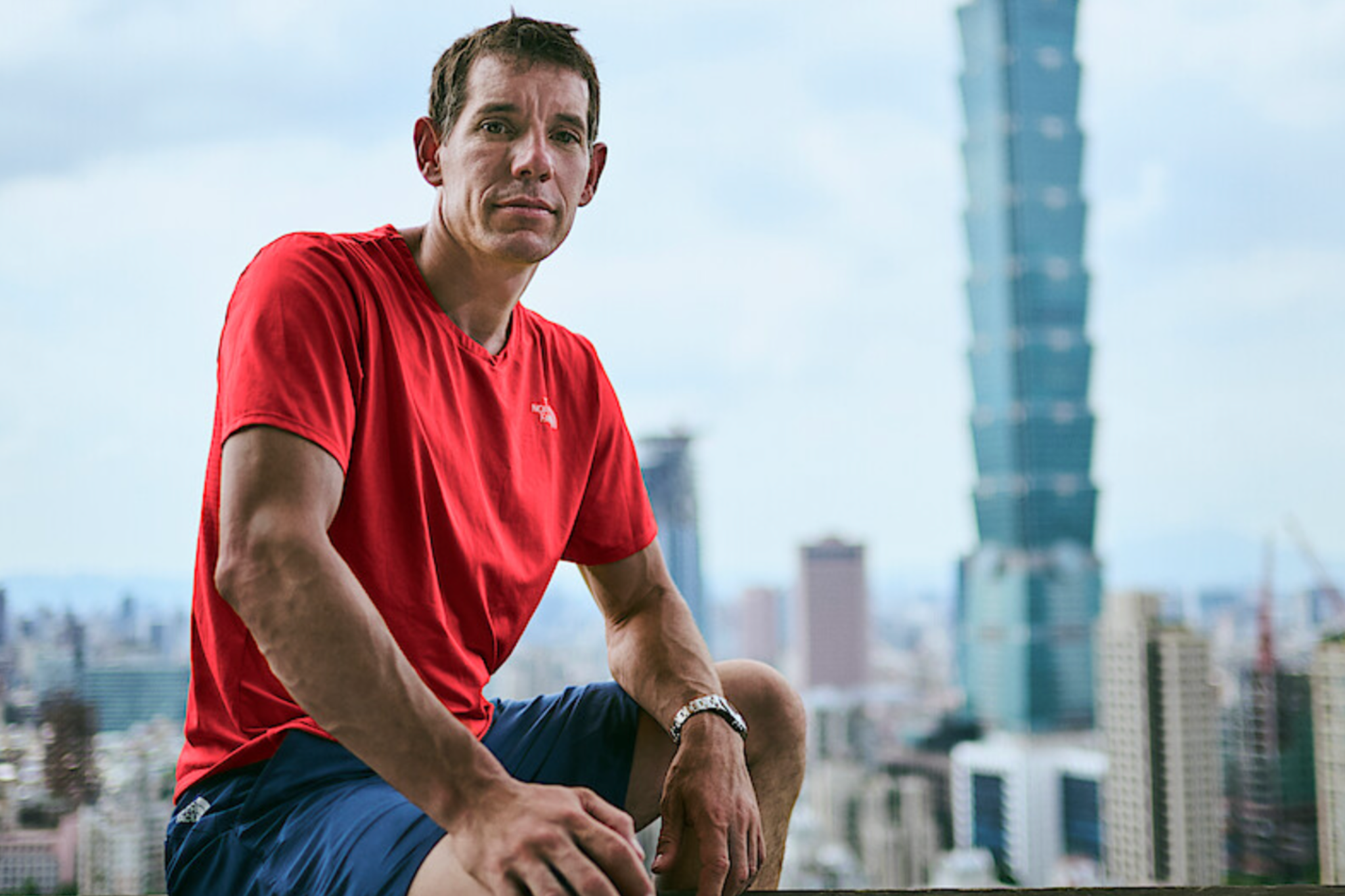

I like Alex Honnold. A lot. Not in the casual, “I watched the movie” way. I like Honnold, the person. I particularly respect something that’s rare in a modern celebrity: He’s exactly the same person on-camera that he is away from it.
The bluntness. The oddball pragmatism. The almost clinical way he talks about risk, fear, and effort. Most public figures come across like they’re giving a performance that’s on-brand.
Honnold seems like a real person, someone you could tie in with, share a belay ledge with, and talk to without any of it feeling staged.
That’s why this new project strikes me as so wrong.
What Is Honnold’s Live ‘Skyscraper’ Climb?
On Friday evening, Netflix will livestream Honnold attempting to free solo a 101-story skyscraper. Not a version you see later, once everyone already knows the outcome. This will be broadcast live, in real time, worldwide.
The elephant in the room (and some of the allure) is that if he falls, people will watch a man die.
And yes, you could say, “Then don’t watch.” I get it. Personal choice, remote control, move along. But “don’t watch” doesn’t fit when the whole damn thing is built for millions to tune in as it happens.
It isn’t just an individual decision. It’s an industry decision, a cultural decision. It’s a line.
The Problem Isn’t a Free Solo; The Problem Is It’s Live
Free soloing, at its best, has always been the antithesis of spectacle. Climbers talk about it as lonesome, internal, focused; just you, the wall, and consequence. There are no ropes, do-overs, or belayers to yell “take” to. No buffer between a mistake and the consequences.
That’s why Honnold’s El Cap ascent for the movie Free Solo mattered. Not because danger is cool, but because it strips away the B.S. Even that film raised ethical questions: cameras change things, possibly choices. But at least it wasn’t “tune in at 8.”
It wasn’t a countdown to a possible obituary.
“Live” is different. It turns consequence into programming. It doesn’t just document risk; it sells the suspense of risk. And it quietly invites the outcome nobody wants to name, while profiting from the possibility that it happens.
I’ve Seen What ‘Live’ Can Do
I’ve spent decades in another high-consequence sport — motocross and supercross — as a coach, a journalist, and someone who’s been close enough to hear the impact and feel the air leave a stadium. I’ve been present for moments you don’t get back — the kind that follow you home and show up later when you least expect them.
I’ve seen a rider die on the track. I don’t say that for shock value. I say it because it permanently rewired how I hear the word “live.” After seeing that, “anything can happen” stopped reading like marketing copy and became a memory my body keeps.
I’ve also watched crashes that didn’t kill someone, but still ended the life they had before. Paralysis, catastrophic injury, and outcomes that drag families into a new reality. And I’ve lived my own version — the accident, the aftermath, the rehab, the long tail of spiraling events that shattered my family and my identity.
I’ve written about it in my GearJunkie stories. The point is simple: I don’t romanticize the moment the world changes. I’ve seen it and paid dearly for it.
Closer to the point, I’ve been present when a climber took her last breath. It was my first real mountaineering trip. Over the course of hours, a woman I’d shared dinner with days earlier slipped away, and an ad-hoc community formed around her. Climbers did what humans do in those moments — try to help, try to process, try not to fall apart.
So when a streamer promises me “live,” I don’t hear excitement. I hear the grandstands go quiet. I hear a last breath. I feel the aftermath nobody wants to think about until it’s already here.
A Skyscraper Isn’t a Cliff
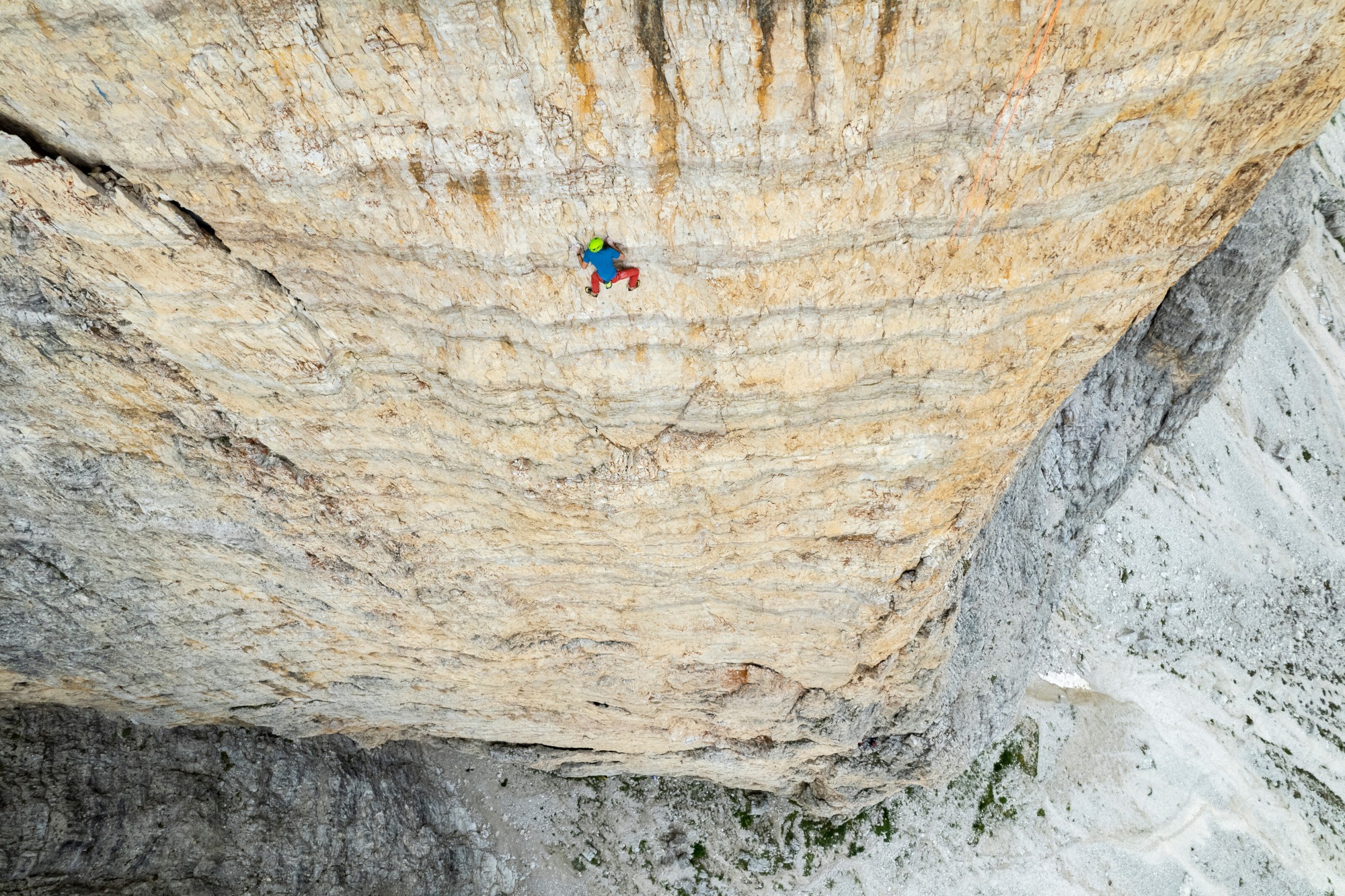
There’s another reason this feels off. This isn’t rock. It’s a skyscraper.
Rock is nature, weather, and consequence. Holds break. Things fall from above. Gear can be wrong, missing, or suddenly not enough.
A building, however, is engineered, maintained, permitted, and lit. It’s a human-made surface turned into an arena. And that changes the very nature of this climbing spectacle.
This isn’t man versus mountain. It’s risk versus attention. It’s buildering dressed up like a spiritual quest, tuned for clicks, aired like a championship. Maybe it’s personal to him. But you can be damn sure it’s not personal to Netflix.
Viewers Are Complicit
If you watch, it’s not automatically because you want blood. Climbers will tune in to watch someone do the rarest thing in the sport, control fear in real time. To see Honnold’s mind stay quiet while his body does something precise and irreversible.
But the livestream still drafts everyone into the same shitty deal: You’re also there in case it goes wrong. That’s not sport. That’s a product built on consequence, a spectacle with better lighting.
And no, I’m not accusing Honnold of chasing tragedy. He’s thoughtful. He’s disciplined. He prepares obsessively. I believe he understands consequences more than most people ever will.
That doesn’t let Netflix off the hook. Platforms aren’t neutral; they decide what gets normalized. “Live” doesn’t make the climb more real — gravity doesn’t give a damn about Netflix. “Live” makes it more marketable. That’s the part that makes me sick.
Respect Honnold, Refuse the Format
This is the tension I can’t get over — I still like Honnold. I respect him. I still believe he’s unusually authentic and surprisingly unchanged by fame, which is part of why people trust him. My default is to give him the benefit of the doubt. What he does is within his abilities, so within them it probably feels routine.
He even addressed this head-on. On the Climbing Gold podcast, he’s clear about two things: He genuinely likes climbing buildings, and he has what he calls the “James Bond principle” — when a life experience shows up, you say yes.
I get that. I aspire to do the same.
He also makes a practical point. Doing it live is less work — less packaging and publicity labor, fewer rounds of explaining and re-explaining what’s coming, fewer moving parts whose only job is to sell the thing. That’s fair. But it still doesn’t fix what bothers me.
If the goal is purity — just the act, clean and honest — and if the exposure and money are meant to fuel something real, including the Honnold Foundation, and then film it and release it later. The story doesn’t disappear. The impact doesn’t disappear. The audience doesn’t disappear.
What disappears is the one ingredient that makes this a moral equation: The suspense of watching it unfold with no edit and no buffer. Because the suspense is the product here.
“Live” isn’t about authenticity; it’s about monetizing the possibility of the worst outcome, packaged around the one person the world trusts to get away with it. It’s rubbernecking with a subscription login.
It grinds on me more because it’s Honnold. If this were some anonymous daredevil chasing clicks, I’d shrug and move on. When it’s Honnold, it feels like a permission slip. Even the most grounded athlete will eventually get pulled into the version that pays, because that’s where the attention and money go.
If you want to document feats like this, there’s a responsible way to do it. Film it. Don’t air it live. Tell the story after everyone’s alive. Let the story be about preparation and judgment, not about whether the audience gets to watch him hit the sidewalk in real time.
Will I Watch?
I don’t know.
All of me wants to support him. And that’s exactly why I don’t want to reward Netflix for turning this into a live hook. I care about Honnold. I hate the whole damn thing around him.
Maybe this is what it means to make a living as a climber now, in a “race to the bottom” media landscape. Say yes, feed the algorithm, keep it moving, keep people watching.
I honestly hope he nails it. I just hate that “live” is what they think they have to sell to earn our attention. Is real climbing not enough anymore? Do we really need the possibility of disaster to look up from our phones?
Alex, please come down safely. If I’m not watching, it’s not you. It’s all the noise around you.
Read the full article here
