




With the Buzz surrounding the Kimber 2K11, introduced in Guns & Ammo’s January 2025 issue, and the KDS9c first seen in the August 2023 edition, you wouldn’t be wrong for assuming the Model 1911 has become a double-stack. A priority to increase capacity continues to dominate the headlines throughout firearms media. The 2K11 utilizes 20-round magazines for the 9mm chambering, and 13-round mags for the .45. The KDS9c — only in 9mm — carries 15 rounds in its magazine well. However, if you subscribe to the everyday carry (EDC) lifestyle, a half-pound of follow-up shots on your belt plus another in a spare magazine isn’t always convenient or comfortable. It may not even be legal to carry more than 10 or 15 rounds for those living in restrictive areas. The truth is there’s nothing wrong with depending on a quality Model 1911.
I worked for a company first sergeant who was one of the last Marines to insist on being issued a Model 1911. Though the M9 was adopted in 1985, it took more than 15 years for the U.S. Marine Corps to collect and dispose of its M1911s and M45s from its Reserves and specialized units. When I went through armorer school in 1998, we were still trained to service both the M9 and M1911A1. If we had them in the racks, elder Marines who enlisted during the 1970s and ’80s checked these pistols out and wore them like a coveted badge.
“Old Slabside” was the pistol’s nickname, and each seemed to have personality traits distinguished by a rack number on the grip. The .45 was a trusted companion. Each of us measured ourselves against the heroics of Col. Walter Walsh, a former FBI agent, combat legend and National Match champion. Following the invasion of Okinawa, Walsh shot a Japanese soldier at 80 yards with one shot from his .45. We never asked it to recoil less, because we knew it hit like a hammer. It was the shooter’s responsibility to train and get stronger, to learn how to manipulate the trigger and manage the recoil. If a Marine couldn’t shoot an Expert score at the range, he resigned to carry an M9.
Next Gen (OR)
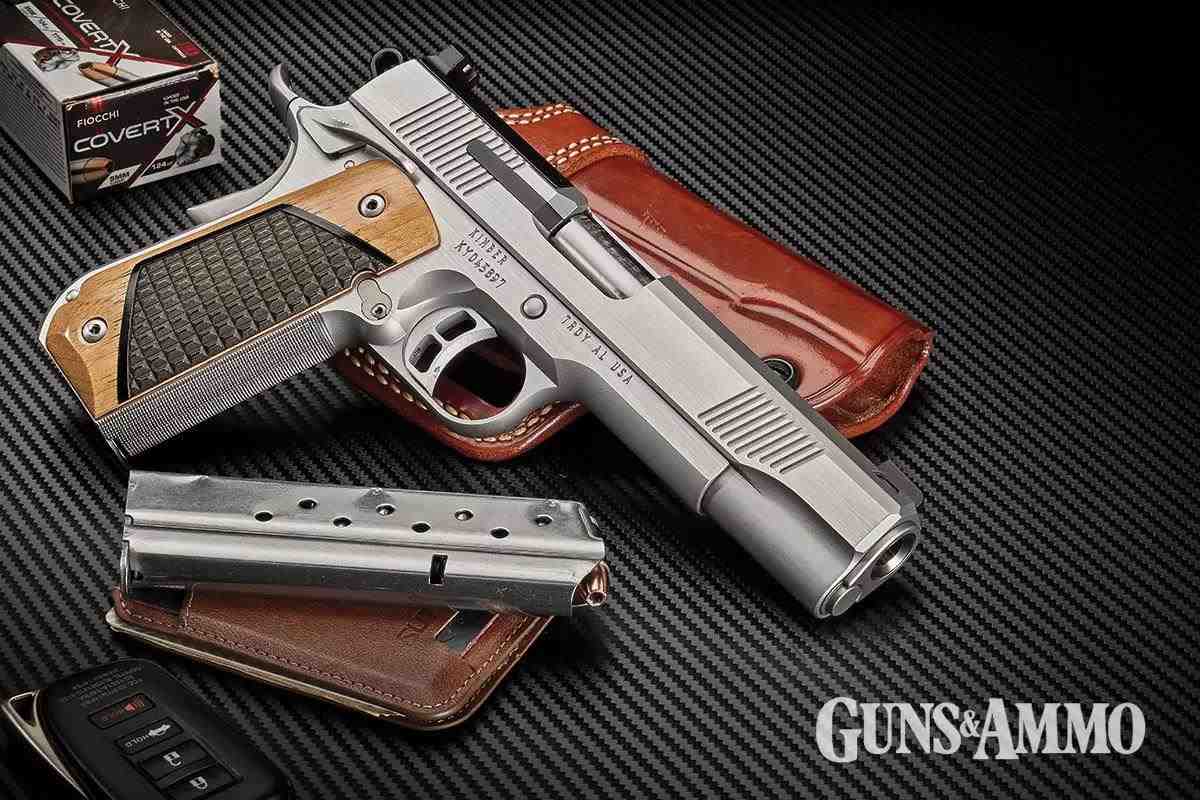
The pendulum has returned for the 1911, as it enjoys a renewed interest. For those who prefer the slimmer circumference of the grip, hybrid walnut panels, balanced handling and familiar controls, the Next Gen is a pistol possessing durability, function and style for a relatively modest retail of $999.
Advertisement
“‘Next Gen’ was chosen for the name because this pistol was priced and developed for those looking to enter the pistol market,” said Director of Product Management, Assembly and Finishing Pedi Gega. “The Next Gen 1911 may be the first step in attracting new marksmen. It’s like what we did with the 1911 in the 1993, ’94, timeframe. People customized Colt 1911s then, and a shooter would have to step up to one made by the likes of Ed Brown, for example, to find features that are now standard on the Next Gen 1911s. Even back then, most people were not able to order all of these features at the same time.”
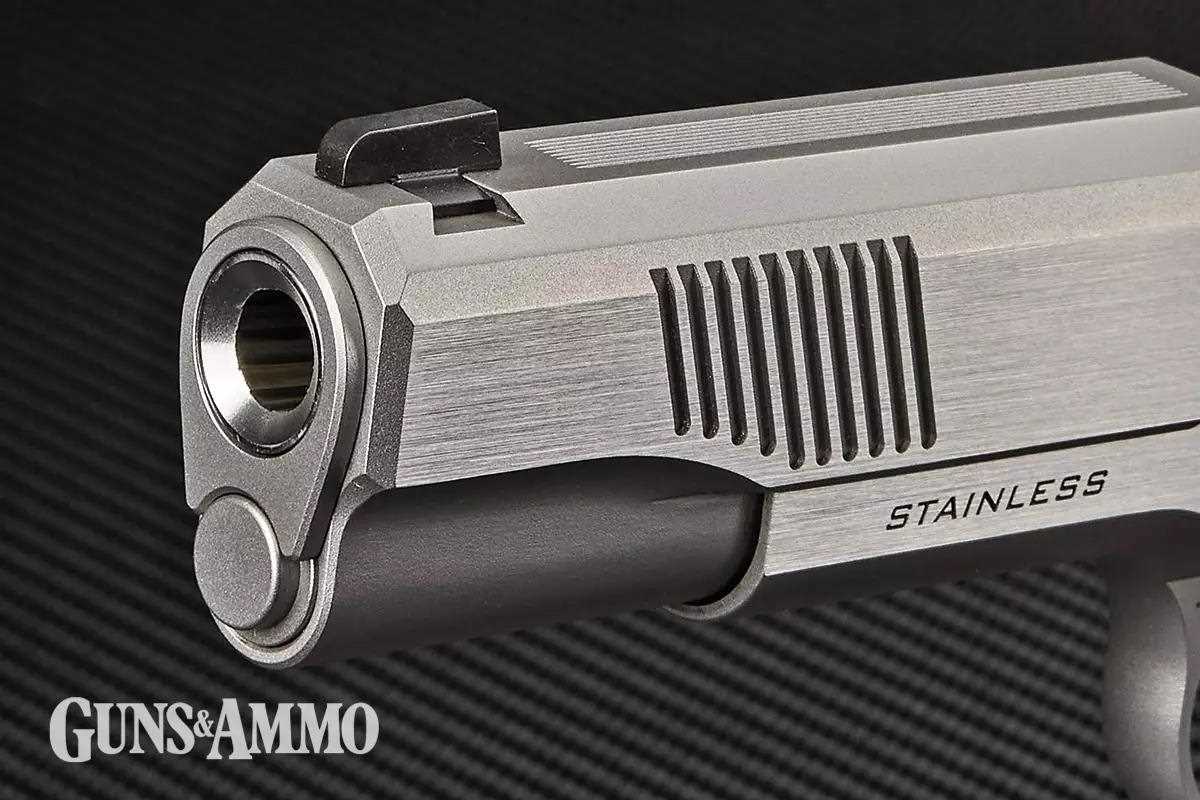
Introduced in 2025, the Next Gen (OR) series is configured as the Custom Two-Tone Next Gen (OR) or the Stainless Next Gen (OR). The two-tone model is CNC’d from inherently corrosion-resistant stainless steel and given additional protection with a KimPro II black finish on the slide and a satin silver finish on the frame for contrast. The controls are also finished in KimPro II black for accents on the Custom Two-Tone Next Gen model. The Stainless Next Gen version is first blasted with a matte finish and then horizontally brushed along the sides of the frame and slide for a subtle contrast. The only black accents are the skeletonized combat hammer, sights, optic plate and extractor.
Both models are available in 9mm or .45 ACP. The 9mm barrel is ramped to ensure feeding, while the .45 barrel is stainless. They have swinging links, bushings and a traditional lock-up design. Disassembling the Next Gen 1911s sent for evaluation was a throwback to yesteryear. Kimber provides a bushing wrench to assist with depressing the plunger while rotating the bushing and unlocking it from the slide. If you’ve fieldstripped a 1911 before, you should be able to accomplish this with your thumb and without the wrench. Lining up the slide-lock lever with the notch at the bottom of the slide allows it to be removed, followed by the slide assembly. This reveals either a ramped 9mm barrel or a standard .45 barrel. The barrel also has a hood with a notch as a witness hole. (It’s a loaded chamber indictor.) There’s a slight pronounced ring at the muzzle to tighten the relationship between the muzzle and the bushing, but these are not hand-fit so-called “match” parts. The muzzle is flush to the bushing face and has a deep 11-degree crown to protect the integrity of its accuracy potential.
Advertisement
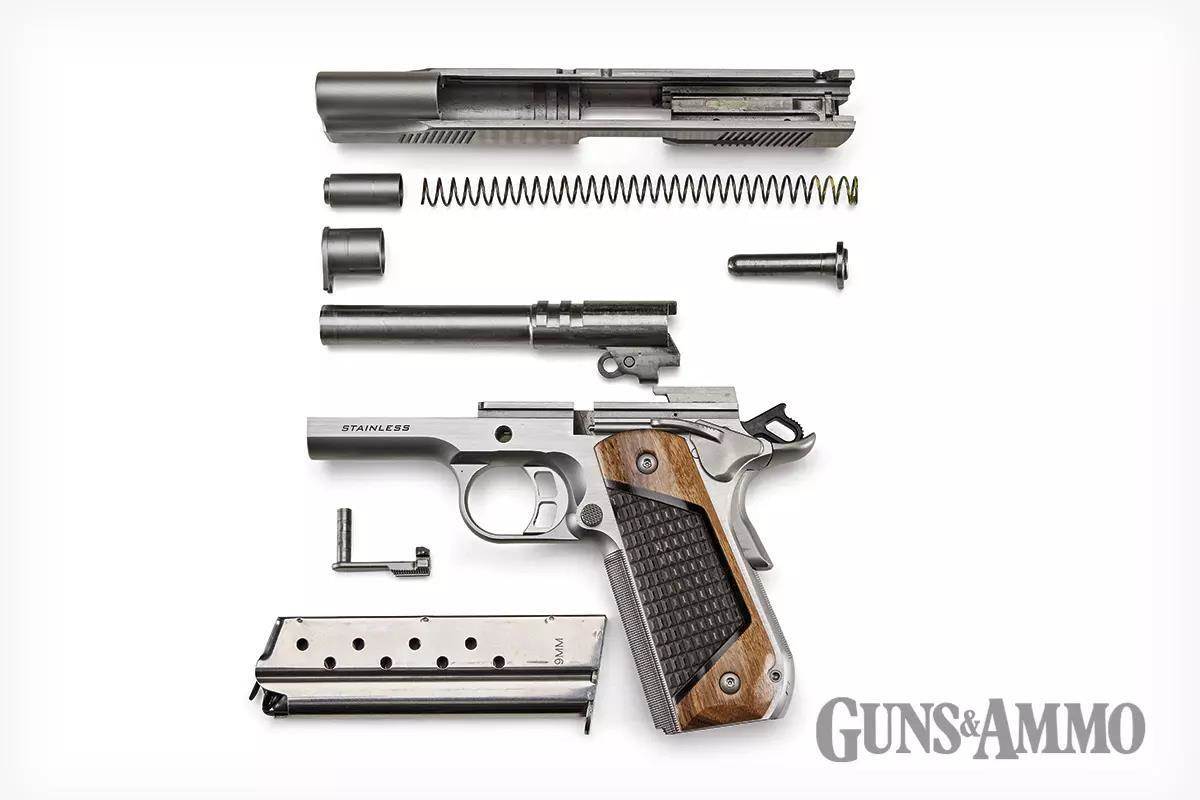
With the slide assembly off the frame, it’s easy to remove the guiderod and recoil spring. The spring is a yellow-marked 12-pound type for 9mm and 16-pound for the .45. The spring weight accommodates the many loads and grainweights of ammunition available, which I verified by shooting a random mix of projectiles during function testing. I call it the “Typewriter Test.”
The guiderod is stainless steel and is the conventional, short Government profile. This detail is welcomed by those who don’t enjoy figuring out how to disassemble varying full-length guiderod designs. (Many of us have debated when the 1911 even needs a full-length guiderod.)
One of the nicest features of the Next Gen 1911 is seen in its detailed disassembly. The action is the lauded Series 70, which means it lacks the additional safety plunger and firing pin block that worsens the feel of the trigger experienced in Series 80 models. The Next Gen 1911 comes apart like a traditional 1911A1, too, albeit with notable improvements.
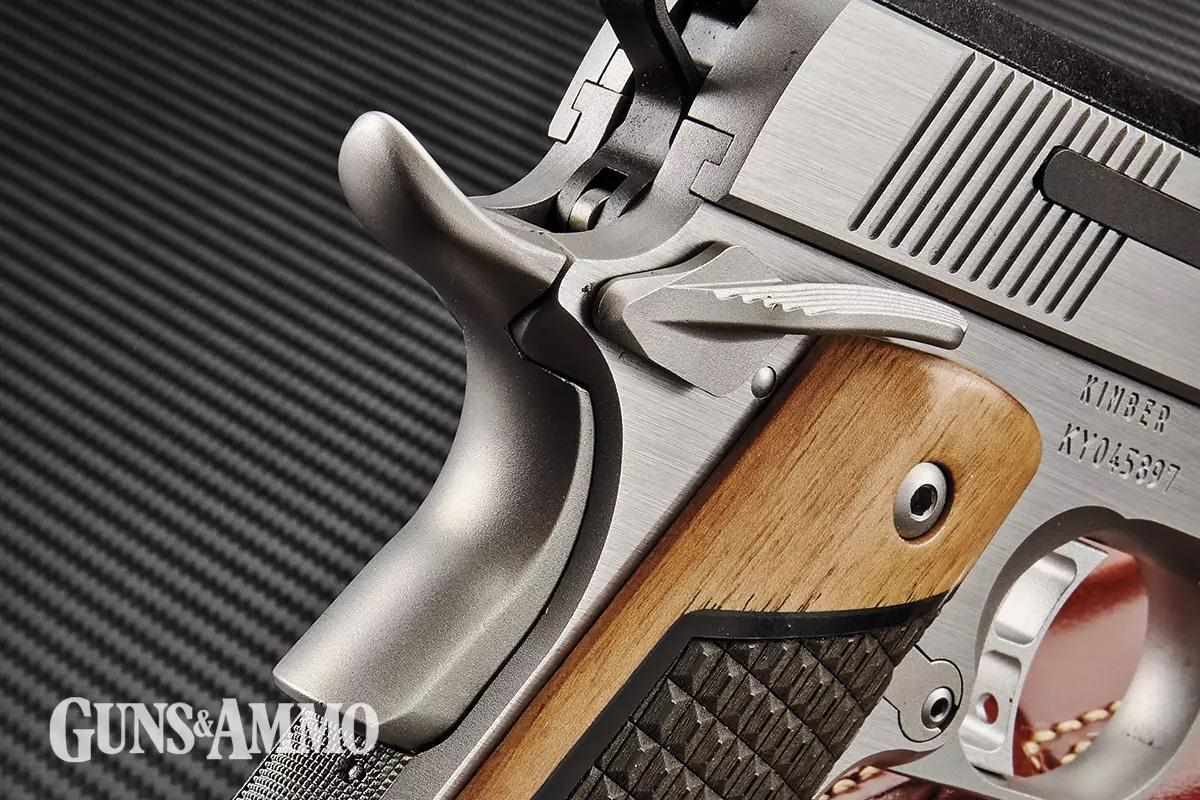
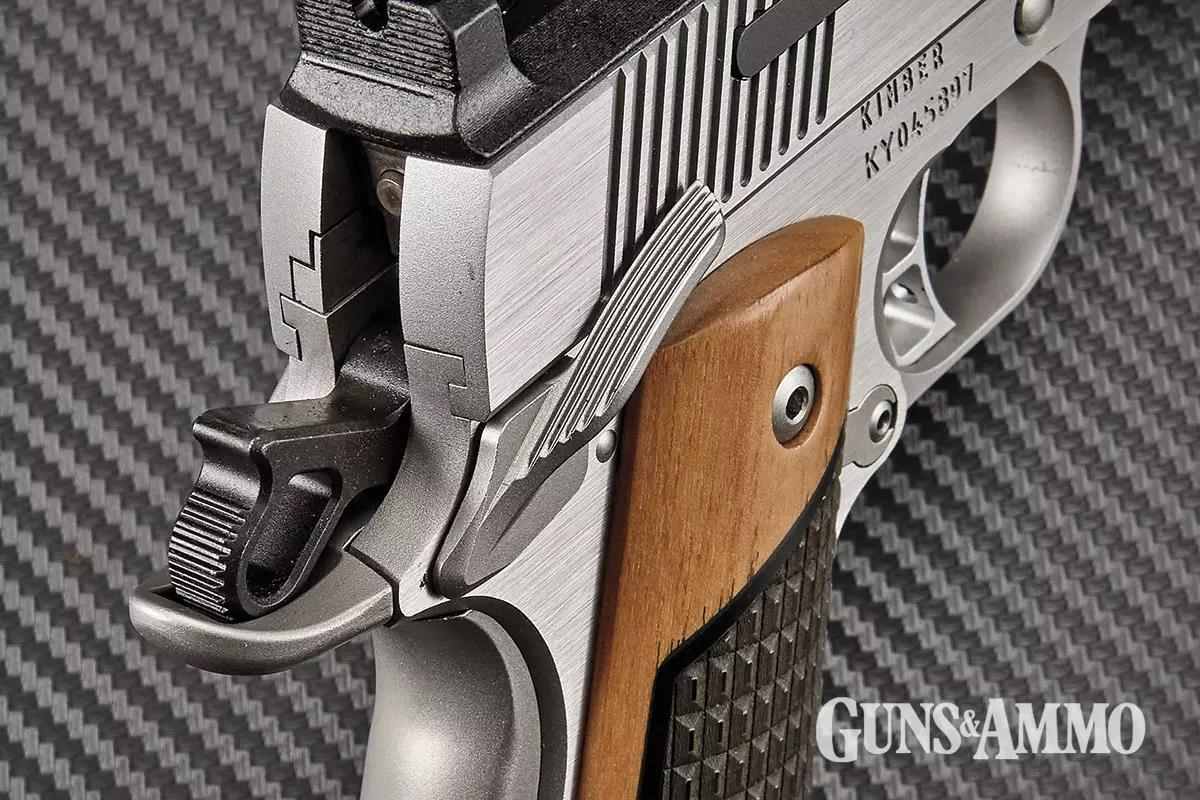
The hammer is the skeletonized “combat hammer,” which evolved from the ring hammer first appearing on the early Commander model in 1949 — also initially chambered in 9mm. Further protecting the hand from hammer bite is the smooth grip-safety lever. Though it does not feature a bump, it is slightly raised for positive deactivation. As with most 1911s, the Next Gen features a bilateral thumb-safety lever that’s used to lock the hammer back. The extended, serrated pads are not too wide but long enough to also offer additional support for the thumb to press against to help counter muzzle flip during multiple-shot strings. (Downward pressure on the safety lever with our thumb also ensures that we don’t unintentionally push it up and unintentionally reengage the safety when firing.)
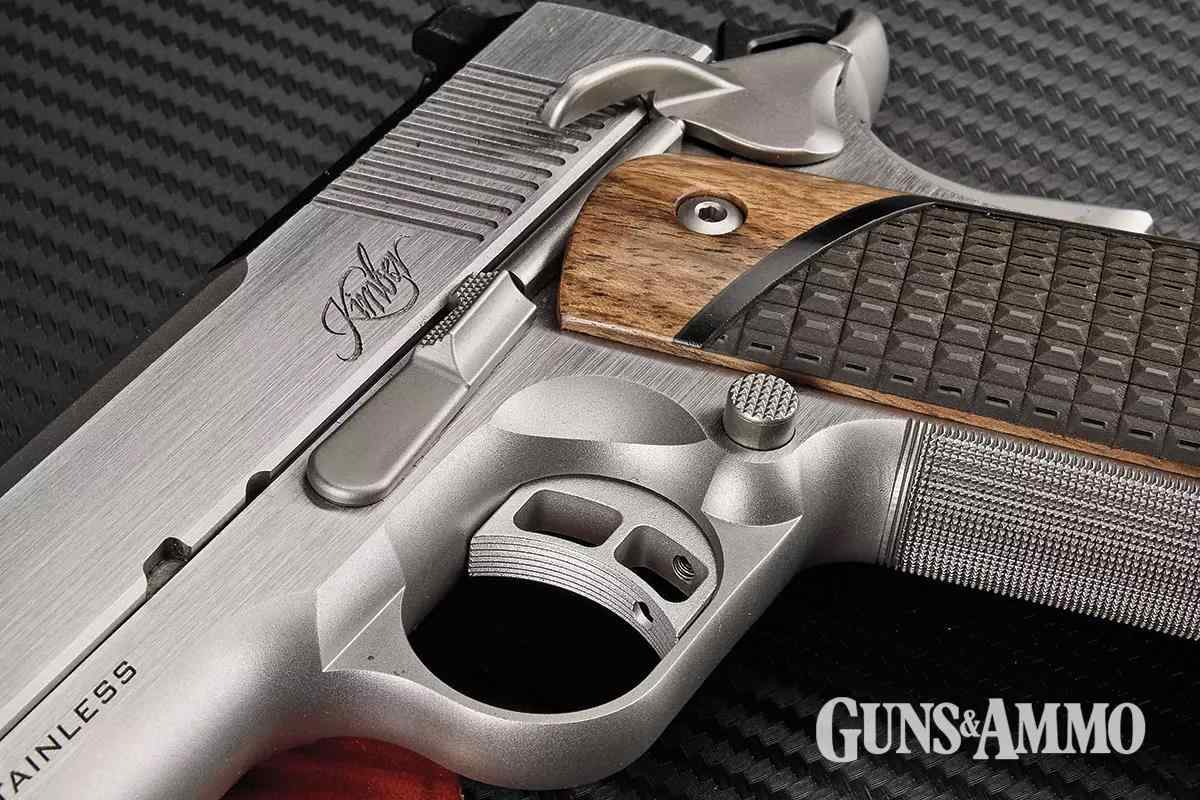
Kimber refers to the trigger as its “GT” trigger. It’s aluminum and given a two-slot skeletonized profile with a traditional curved and serrated face. At the bottom is a hole to insert a small Allen wrench to adjust the trigger’s overtravel. A slight amount of pre-travel is evident before 4½ pounds of pressure is required to fire. The GT trigger displayed a crisp snap rather than a spongy break. The firing control group is precision machined and finished to achieve that trigger press without the need of stoning. It also helped Kimber reduce the cost of the product tremendously while maintaining the same level of cleanliness with respect to the trigger’s travel. The trigger is adjustable by adjusting the leaf spring tension, but it should be done by a qualified gunsmith.
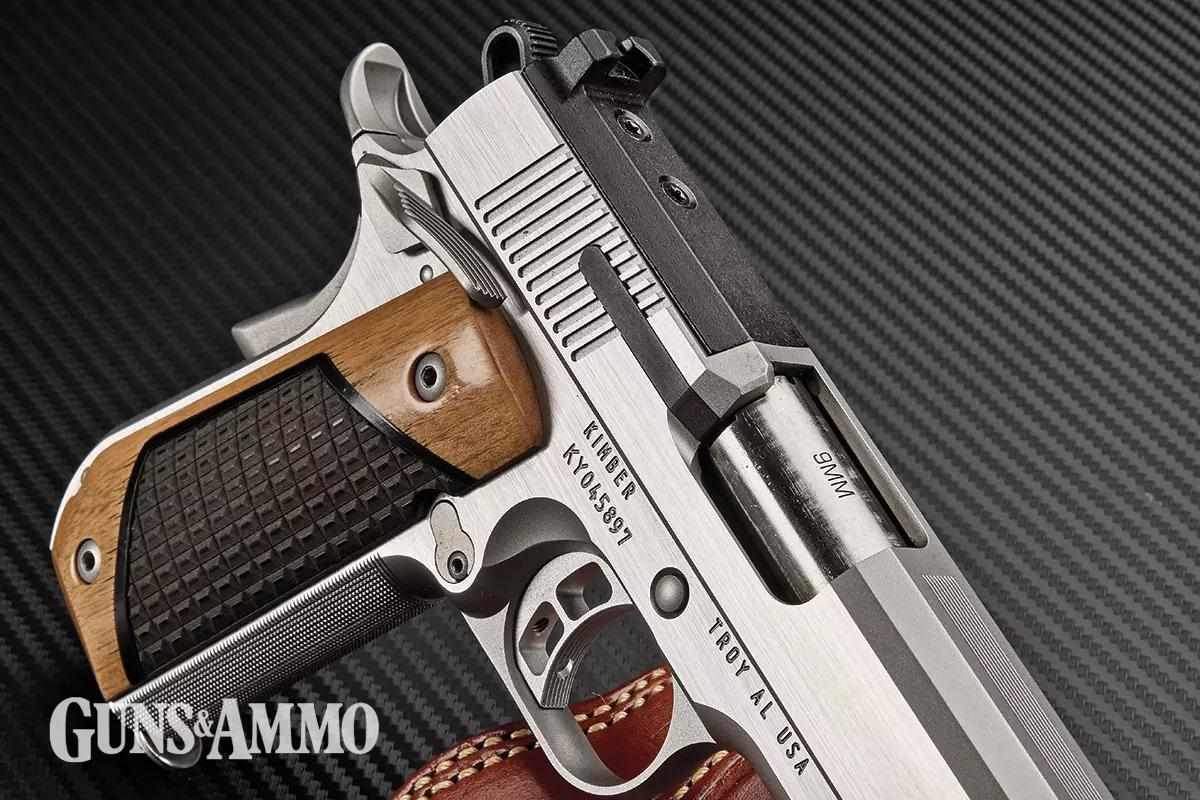
We see 1911s with both internal and external extractors. Browning designed pistols in his era with both. Though a few of the 1911 prototypes were submitted with external extractors, the U.S. Army specified internal extractors on the final version. Though the 1911 served the military with an internal extractor, commercial offerings with external extractors became common in the ’80s. Internal extractors require an eye for quality control to ensure proper spring tension. The external extractor is easier for the modern manufacturing process. In my 30 years of servicing 1911s, I have not observed a practical advantage either way.
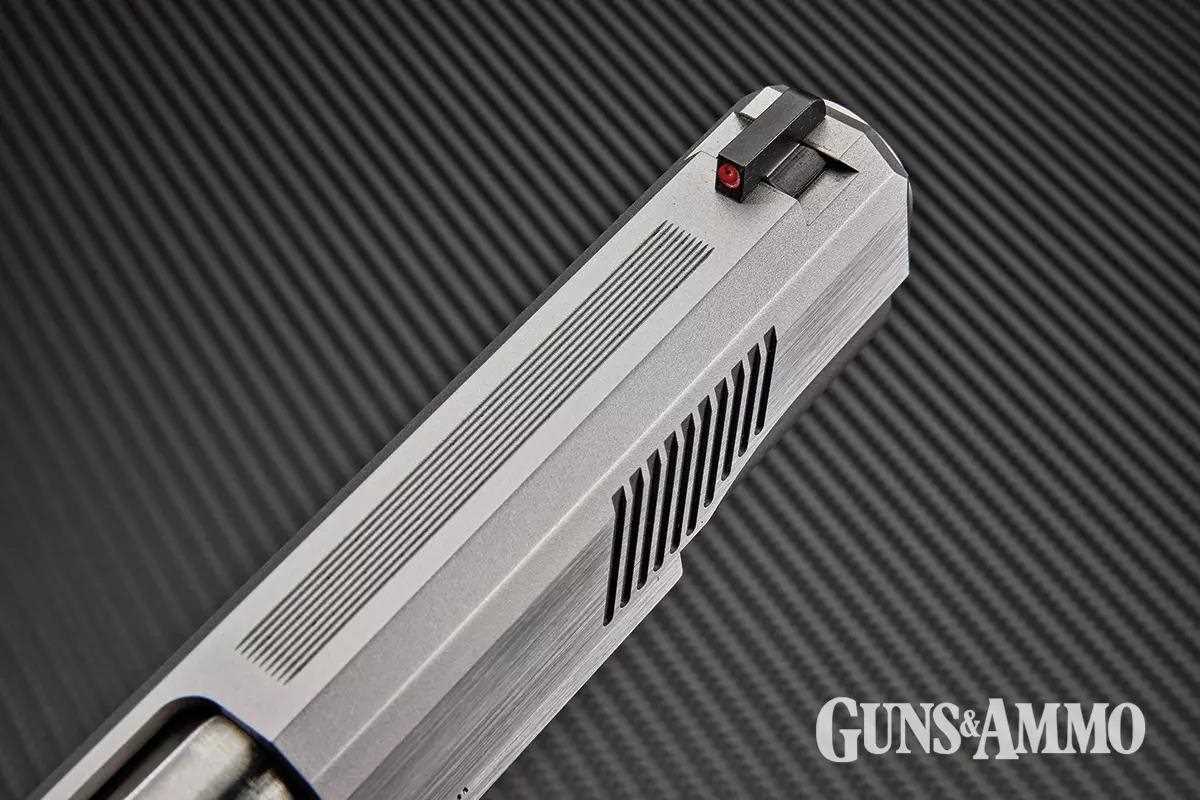
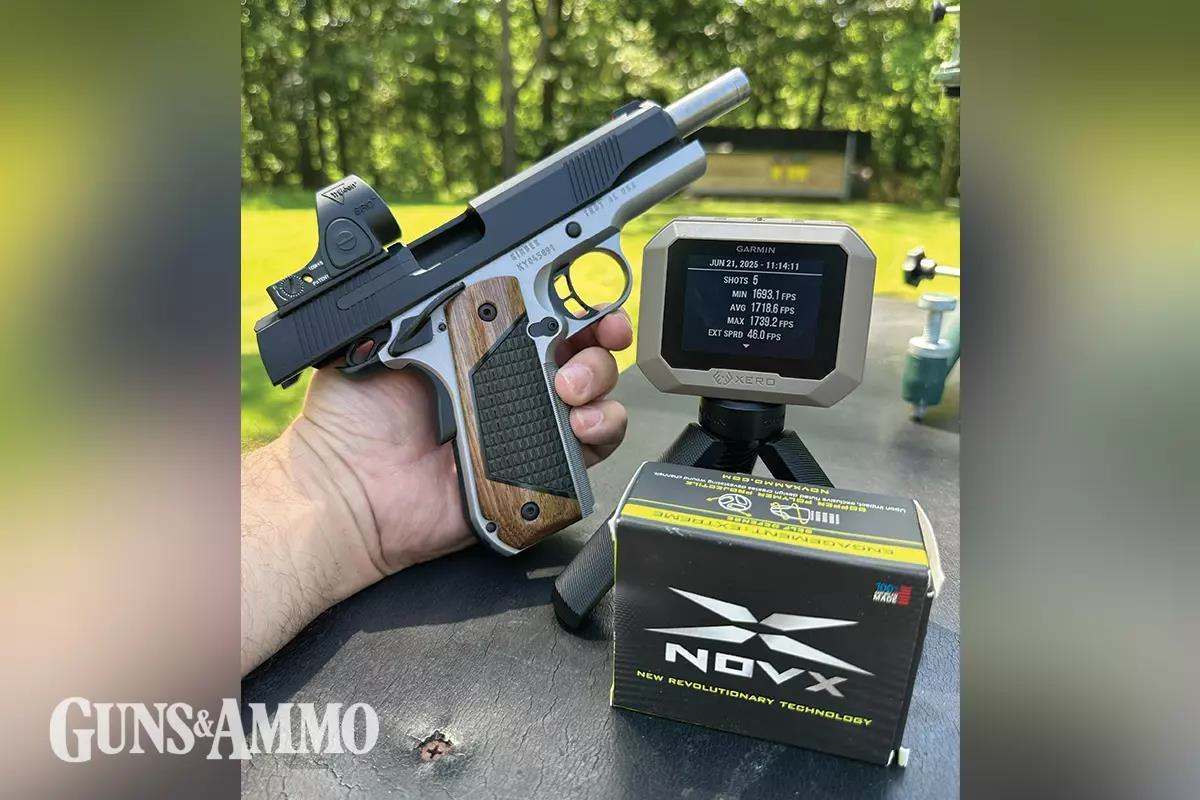
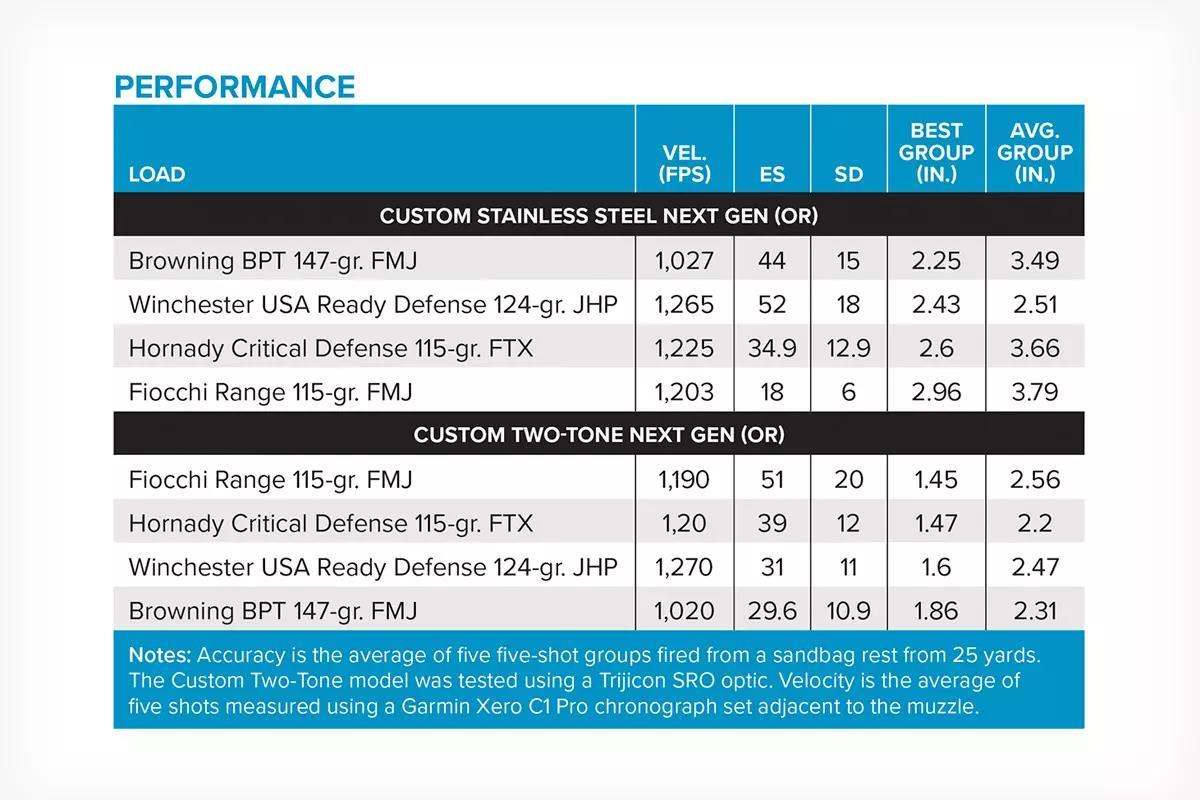
Standard sights on the Next Gen 1911 are a dovetailed, red-painted dot at the front — also meaning that it can be adjusted with a sight pusher for windage corrections. Out of the box, the rear is an integral, non-adjustable, serrated, all-black U-notch on the coverplate. The coverplate is secured to the slide by two T-10 fasteners. With an external extractor and Series 70 design, Kimber was able to lower the cut to make it optic ready (OR). This approach lowers the optic’s height over bore. With an optic mounted, it’s still not low enough to use the front sight as a backup, which is why there’s no rear sight behind the optic. Kimber provides a C&H adapter plate for an RMR footprint, which accept numerous products from Holosun, Riton and Trijicon, to name a few. A Trijicon SRO was mounted to the Custom Two-Tone Next Gen 1911 for this evaluation, while the Stainless Next Gen 1911 was tested with iron sights only.
Feature Rich
The Next Gen 1911 has several notable features that affects its practicality in handling and shooting. The frame lacks a triggerguard undercut, a trend that encourages a high grip. Typically, this can improve recoil management and speed effective follow-up shots. Undercuts aren’t necessary for single-stack frames.
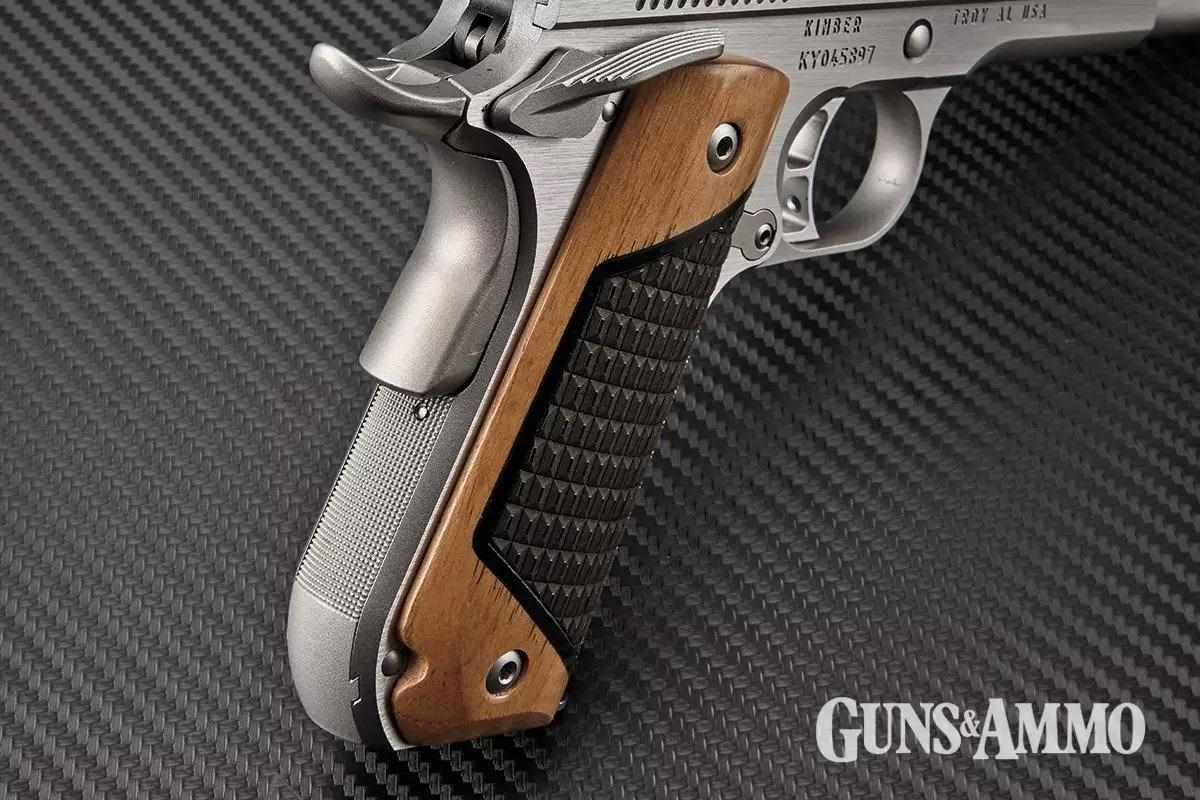
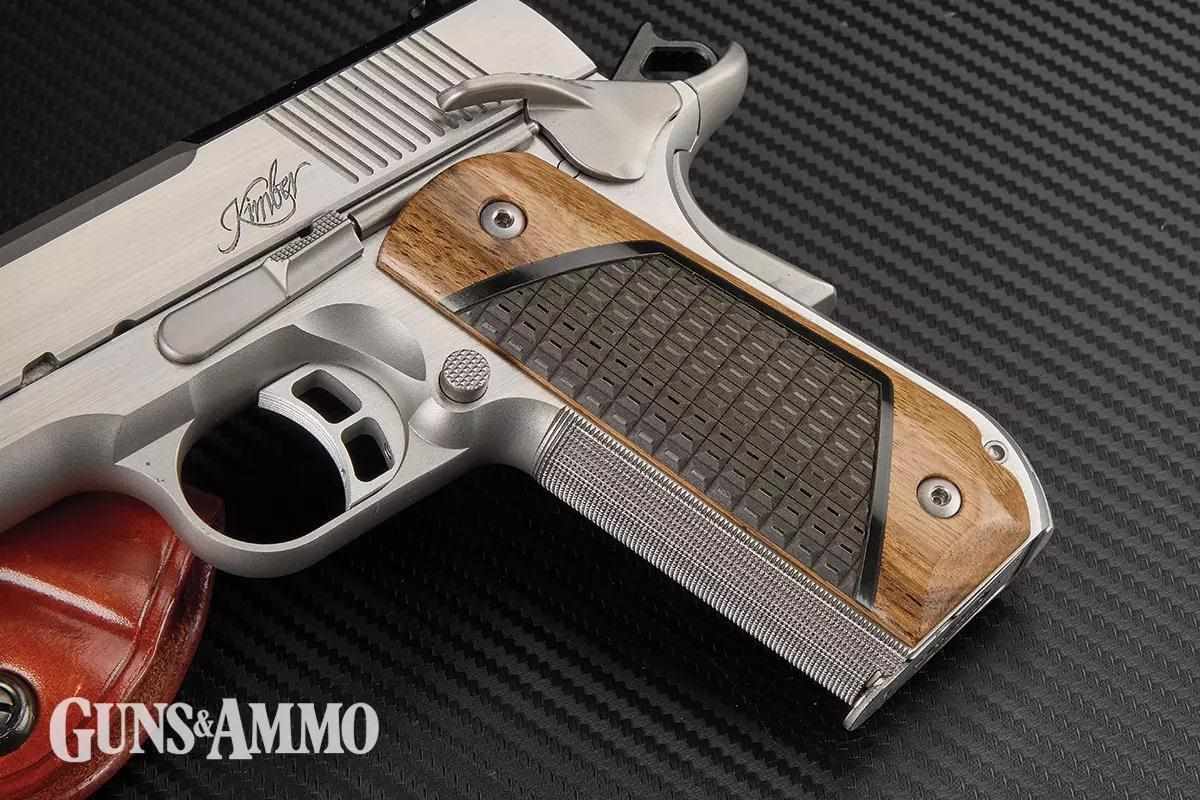
This article would be incomplete if the bobtail to the mainspring housing and frame wasn’t discussed. Championed by Ed Brown in the 1990s, the bobtail is a curve that eliminates the sharp angle at the bottom-rear of the frame. The rounded frame and mainspring housing reduces the risk of printing against thin-layered clothing such as a t-shirt, and it makes the pistol more comfortable to grip. The benefits are subjective; some feel that pressure from the corner of the grip against the palm is important to aid in control during recoil.
Also notable is that there is no accessory rail integral to the dustcover. Despite continuing interest among the public and law enforcement regarding lights on a pistol, there are still more holster options for 1911s that lack a rail or light. Even with the aesthetic treatments of the Next Gen series, these fit in standard 1911 carry rigs.
The grips are a blend of old and new. Starting with smooth black walnut panels shaped to the bobtail contour, each have a G10 inlay featuring a “frag” pattern for texture. They are secured to the frame by 3⁄32 Allen-head fasteners. Notably, the top is low enough not to interfere with the extended thumb-safety levers.
Besides the aforementioned external extractor, sight and optic cut, the Government-length slide wears additional details. The ejection port was deeply lowered and flared to accommodate the optic-ready slide.
“With optics, there are many sizes and varieties,” said Gega. “The Trijicon SRO and Vortex Defender are popular, and these sit forward and slightly over the ejection port. By lowering the port on the slide, a cartridge case does not get caught between the optic and the slide. It has a cleaner path to escape and get out of the way.”
The sides have thin serrations at the front and rear, and the top of the slide has angles that lead to the flat top. The flat-top seems appropriate given the optic cut coverplate, but there are fine serrations between the front sight and the ejection port. These are tastefully executed details that are reminiscent of features on handmade custom pistols between the 1970s and 2000s.
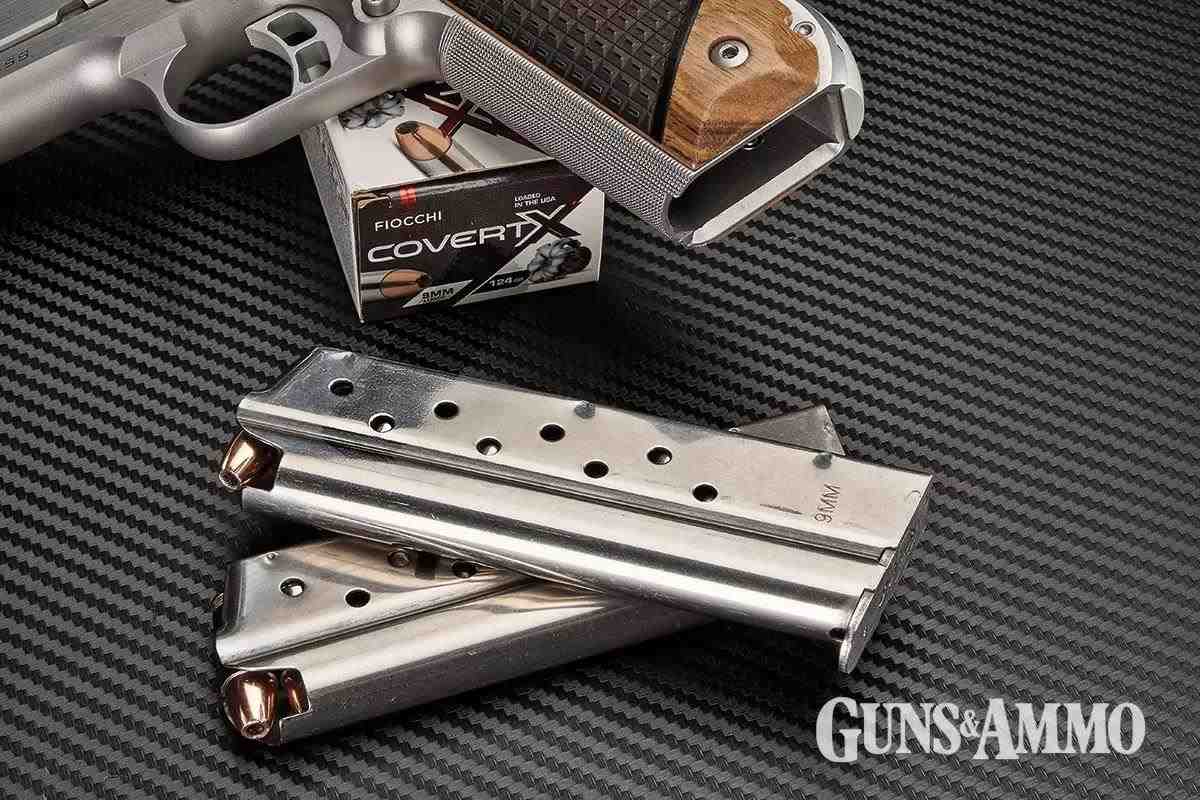
Inside the high-quality ballistic-nylon soft case is the manual, cable lock and empty chamber flag, as well as a sticker, two magazines and C&H Precision accessory pouch with RMR adapter plate. As-is, the Next Gen is an excellent proposition for less than a grand. Plus, unlike many 1911s under the glass counter, these wear a Kimber brand and are made in Troy, Alabama.
Things I Wish For?
I’d recommend a default front-sight color being a bright day-glow yellow, orange or green, or a small paint kit to allow users to change the color. As it is, the red-painted dot on the front sight was hard to see quickly. Besides altering the front sight, I would have appreciated a lighter trigger feel to extract more of its accuracy potential. However, I approve of the Next Gen’s Series 70 system. Tested at 4 pounds, 12 ounces, the trigger was more than acceptable, especially if you aim to carry it. As time moves on, I could change these details. Part of the fun in owning a 1911 is the ease in personalizing it to make it uniquely yours.
Saved Rounds
A lot has happened to John M. Browning’s design since 1911. Browning might not recognize it, or have fathomed the multi-axis, computer-numerical controlled (CNC) machines the stainless-steel components are now shaped from. Front slide serrations, optic-ready slides, ambidextrous thumb-safety levers, protective grip safeties, a bobtail frame, beveled edges and magazine well. Are simpler times ahead? Given the advancements the KDS9c and 2K11 have contributed to modern pistol design, it would be easy for a casual eye to look beyond the Kimber Custom Next Gen (OR) models. That would be an unfortunate oversight.
Kimber Next Gen (OR)
- Type: Recoil operated, hammer fired, semiautomatic
- Cartridge: 9mm (tested), .45 ACP
- Capacity: 9 rds. (9mm), 8 rds. (.45)
- Barrel: 5 in., stainless steel, 1:16-in. twist
- Length: 8.6 in.
- Height: 5.4 in.
- Width: 1.35 in.
- Weight: 2 lbs., 4.2 oz.
- Finish: KimPro II Black/Satin Silver or brushed stainless steel
- Grips: Black walnut, G10 inlay
- Sights: Fixed post, red dot (front); fixed notch, black (rea
- Safety: Thumb lever, bilateral; grip lever
- MSRP: $999
- Manufacturer: Kimber, 888-243-4522, kimberamerica.com
Read the full article here
