



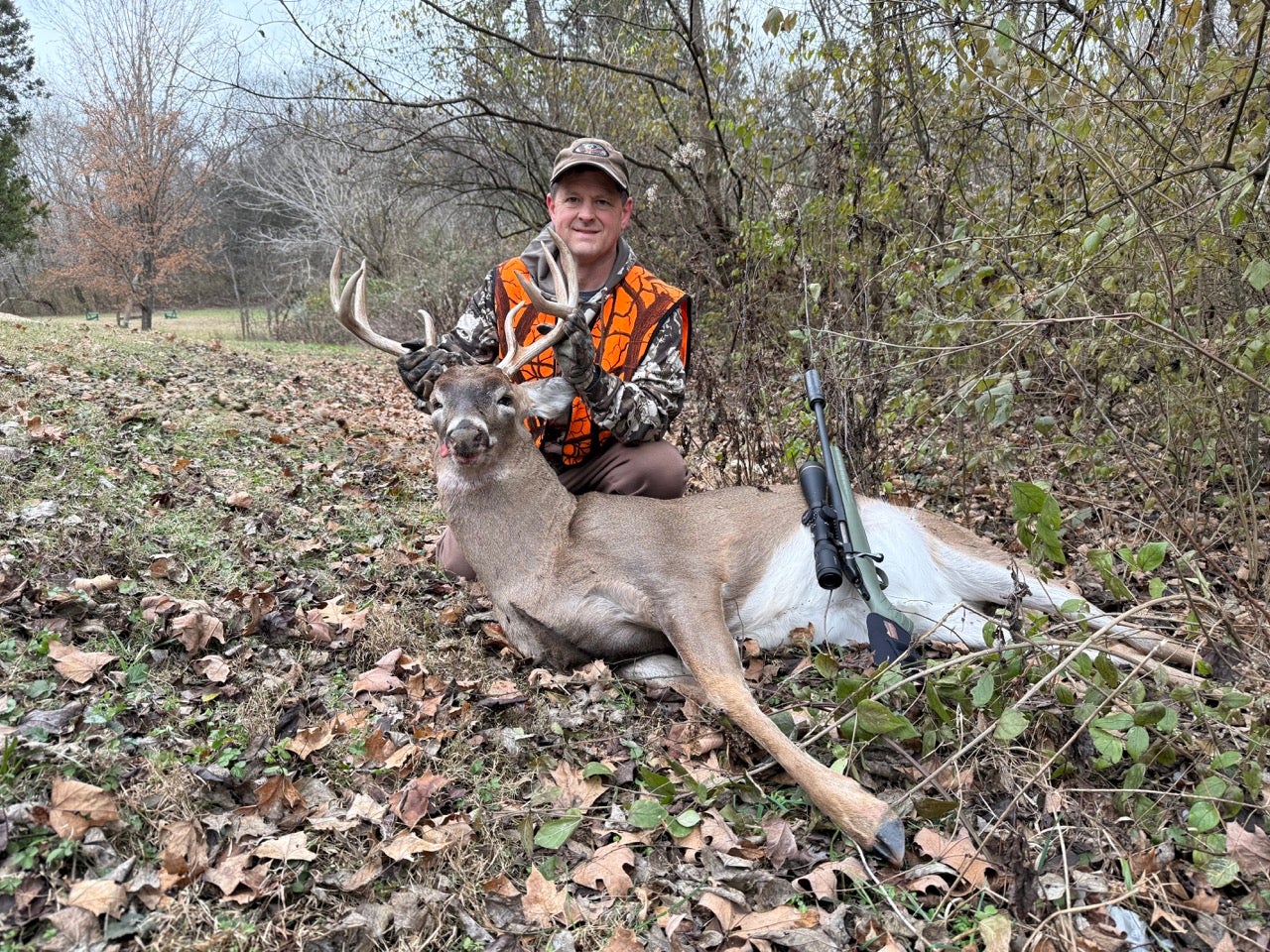

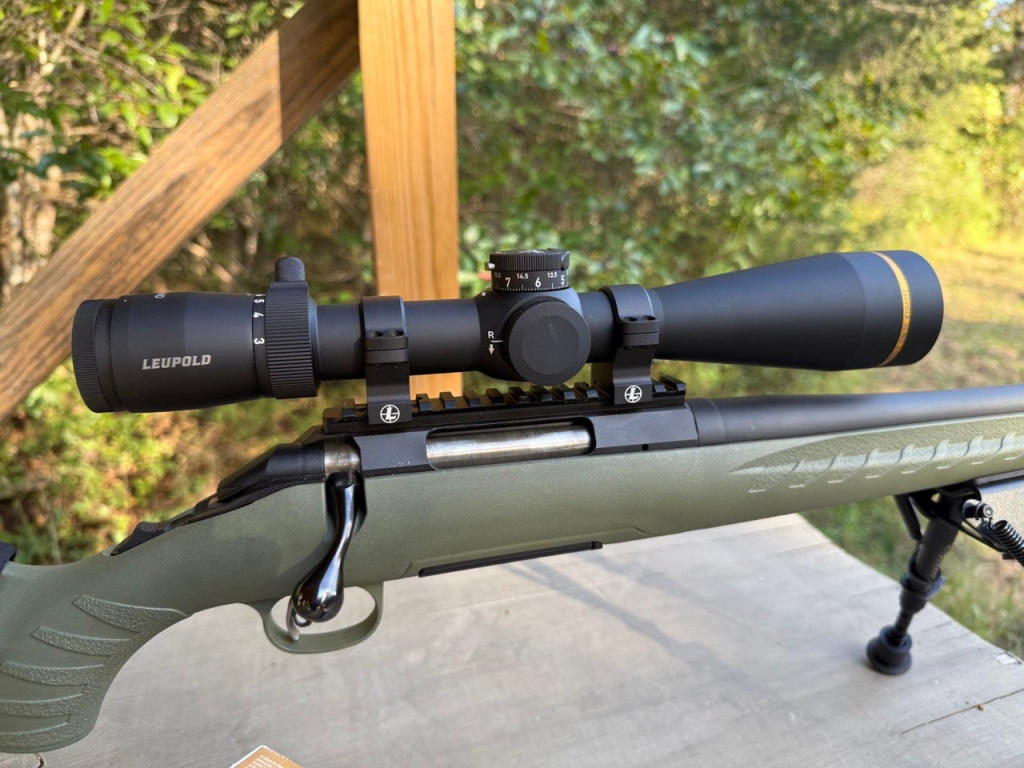
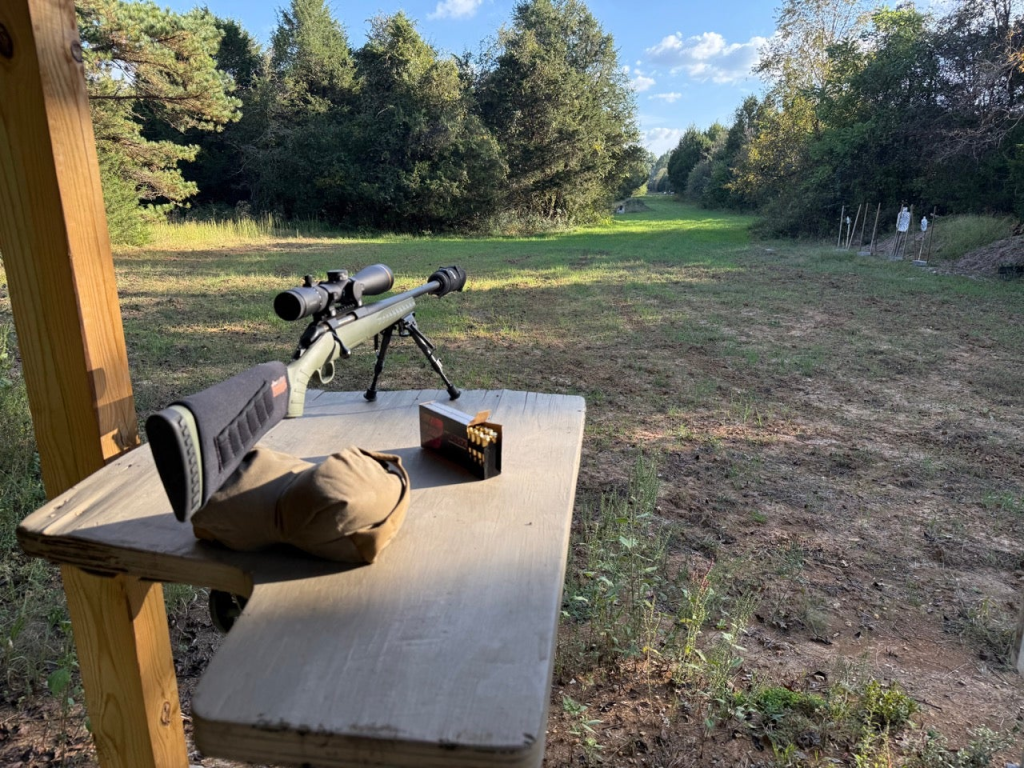
Earlier this year, I tested the new Leupold VX-5HD Gen 2 scope with a Ruger American Predator 18″ .308 rifle and premium ammunition, including the Barnes 130 grain TTSX. This past deer season put that setup to the test, and it delivered admirably.
What started as careful preparation and range work culminated in a successful harvest of a mature 8-point buck, proving just how well modern solid-copper bullet technology performs when it matters most.
A Quick Recap of the Rifle Setup
For those who might have missed the initial review, here’s the rifle setup I was testing:
- Ruger American Predator 18″ .308 Winchester
- Leupold VX-5HD Gen 2 3-15×44 HTMR-MIL scope
- Barnes 130-grain TTSX and the new Harvest Collection ammunition
After extensive range testing that took this rifle out past 500 yards on steel, I had complete confidence in the accuracy and ballistic performance of this combination. But range performance and field performance are truly two different animals. This season would prove whether all that preparation would translate to ethical, effective hunting performance.
I specifically chose the Barnes 130-grain TTSX for this hunt because of its solid copper construction, 3,000 feet per second performance, and the tight groups produced with my rifle. I knew that if I encountered a less-than-ideal shot angle – which is often the reality of deer hunting during the rut – I’d need a bullet that could penetrate deep through heavy bone and vitals. The all-copper design of the TTSX is engineered for maximum weight retention and deep penetration, exactly what’s needed for those challenging quartering shots.
The Hunt: A Lesson in Patience
The 2025 deer season had been a lesson in patience and persistence. I’d identified two target bucks on trail cameras back in September, and I saw them a few times in daylight during late October.
But then November arrived, and with it, unseasonably warm temperatures that threw everything off. The deer went nocturnal, and to make matters more challenging, we had a bumper crop of acorns in the woods. With abundant food scattered throughout their home range, the deer had little reason to move during daylight or concentrate in predictable areas even during the rut.
Day after day through November, I sat watching immature bucks and does while the mature bucks moved only after dark. It’s the kind of hunting that tests your resolve. You know the deer are there, and you’re putting in the time, but the conditions and critters just aren’t cooperating.
Then came mid-December, and the second rut. This late-season breeding period can be a brief but intense flurry of activity, as bucks that have been locked up or nocturnal suddenly start moving again during daylight, searching for those last does coming into estrus. I was set up overlooking a food plot with heavy timber on the edges – a perfect location for catching deer transitioning between bedding and feeding areas.
Late one afternoon, I caught movement in the timber. One of my target bucks, a mature 8-point with a heavy body and thick neck, was pushing a young doe through the woods. I could see him nudging her, clearly in pursuit mode. They were working their way toward the food plot, and I knew this might be my only chance. Once that doe decided where she wanted to go, he’d follow, and they could just as easily disappear back into the thick timber as step into the open.
The Moment of Truth
Sure enough, the doe broke from the woods into the food plot, and the buck followed close behind. But this is where hunting often gets real – he didn’t offer me a perfect broadside shot. Instead, he stopped for a moment, quartering toward me at approximately 70 yards, focused entirely on the doe. I knew my window of opportunity was measured in seconds, not minutes. She had headed back into to the woods, and he’d quickly be right behind her.
This is the moment where equipment choice and preparation either pay off or leave you regretting taking the shot as you search for a wounded animal. I’d chosen the Barnes 130-grain TTSX specifically for its solid-copper construction and deep-penetration characteristics. I trusted that bullet to do its job even on a front-quartering shot through the shoulder. It was time to put that trust to the test.
I settled the Leupold’s HTMR-MIL reticle on the front shoulder, accounting for the quartering angle and visualizing the bullet’s path through to the vitals. We were in the last 15 minutes of legal shooting light, but the scope’s crystal-clear glass and the second focal plane reticle design made it easy to pick my exact point of impact even in the fading light. The second focal plane design keeps the reticle at a consistent, visible size regardless of magnification – a significant advantage in low-light hunting situations. The Ruger’s adjustable trigger broke cleanly at just over 3 pounds, and the rifle recoiled smoothly, thanks to the suppressor helping mitigate recoil.
Through the scope, I watched the buck hunch and bolt back into the timber, and I thought I heard him crash a few seconds later. The shot felt good, but that’s when the waiting game begins. I gave him around thirty minutes before taking up the trail – a practice I’ve learned is worth its weight in gold, even when you’re confident in your shot placement. I like to take it really slow at first, until I find the first sign of a blood trail or evidence of the buck’s path through the woods.
The Recovery and Bullet Performance
The blood trail was minimal due to the angle of the shot, but I could see broken branches and tracks where he ran through the woods. A little over fifty yards into the thick timber, I found my buck piled up. He’d made it less than 60 yards from where I’d shot him, a testament to the effectiveness of the Barnes TTSX bullet on a challenging front quartering shot.
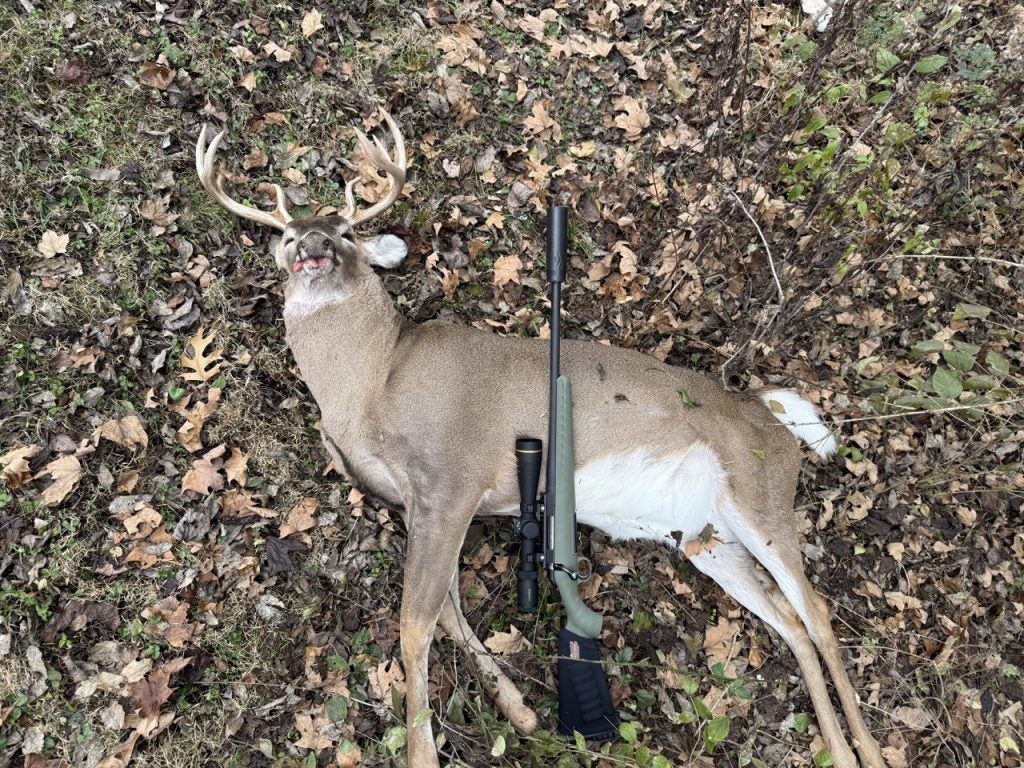
Now, here’s where things got really interesting from a technical standpoint. Upon further inspection, I discovered the full story of what that Barnes solid copper bullet had accomplished. The 130 grain TTSX had entered through the front shoulder on a quartering-toward angle, which is one of the toughest shots you can take on a big mature whitetail. The solid copper bullet had penetrated completely through the heavy front shoulder bone, traveled through both lungs, and finally came to rest just under the hide near the opposite hind quarter.
That’s approximately 30+ inches of penetration through some of the toughest material a deer has to offer – heavy bone, dense muscle, and vital organs. When I recovered the bullet, it had retained virtually all of its weight and had expanded to nearly double its original diameter. The classic “copper petals” of the TTSX design had opened perfectly, creating a devastating wound channel while maintaining the structural integrity needed for that incredible penetration.
This is exactly why I chose solid copper bullets for this hunt. A traditional cup-and-core bullet hitting that heavy shoulder bone on a quartering angle could have fragmented, lost weight, and failed to reach the vitals. The Barnes TTSX performed exactly as designed.
The Rifle and Scope Performance
While the bullet performance stole the show, I can’t overlook how the Ruger Predator and Leupold VX-5HD Gen 2 scope contributed to the success. The rifle’s accuracy, which had been proven on the range, translated perfectly to the field. The free-floated barrel delivered the sub-MOA accuracy needed to place that shot exactly where it needed to go.
The Leupold scope was equally impressive. The HTMR-MIL reticle in the second focal plane design remained highly visible even in the last 20 minutes of legal shooting light – a critical advantage when you’re making a shot in fading conditions. The second focal plane keeps the reticle at a consistent, readable size, giving me a precise aiming point without being too fine or too thick at my chosen magnification.
The scope’s edge-to-edge clarity made it easy to identify the buck as one of my target animals and pick my exact point of impact. The 3-15x magnification range meant I had the scope dialed to 6x – enough magnification for a precise shot at 80 yards while maintaining a wide enough field of view to track the deer’s movement from the timber into the food plot.
Lessons Learned
If I could distill this experience into actionable advice for other hunters, here’s what I’d emphasize:
Patience Pays Off: Those frustrating weeks in November when the deer went nocturnal were tough, but staying persistent and waiting for the right conditions (in this case, the second rut and cold weather) eventually created the right opportunity. Exercise patience when conditions aren’t ideal.
Test and Trust Your Equipment: All those hours at the range weren’t wasted time. They built the confidence I needed to take a challenging shot in the field and know that my equipment would perform. When that buck stopped quartering toward me, I didn’t second-guess my setup.
Bullet Selection Matters: I specifically chose the Barnes 130-grain TTSX for its solid copper construction and deep penetration characteristics. That decision was validated when the bullet performed flawlessly on a quartering-toward shot through heavy bone. Choose your ammunition based on the performance you need, not just the price tag.
Shot Placement Still Matters: While the Barnes bullet performed exceptionally, I still made every effort to place the shot in the vitals, accounting for the quartering angle. Premium ammunition enhances your capabilities; it doesn’t replace good marksmanship and ethical shot selection.
Be Ready for Brief Opportunities: That buck could have followed the doe right back into the timber without stopping. Being set up, focused, and ready to take the shot when the opportunity presented itself was crucial. Hunting often comes down to being prepared for those brief windows.
Modern Ammunition is Worth It: Yes, Barnes ammunition costs more than traditional soft points. But when you consider the quick, ethical harvest and the recovered bullet proving its performance, it’s money well spent in my book. We owe it to the animals we pursue to use ammunition that will perform when it matters most.
Final Thoughts
As I write this, my freezer is full of tasty venison, and a beautiful 8-point Euromount sits in my office as a reminder of the hunt. But more than the meat or the trophy, this experience validated the long hours of research, range time, and patience that typically go into a successful hunt.
The Barnes 130-grain TTSX bullet did exactly what it was designed to do – penetrate deep through heavy shoulder bone, expand reliably, and deliver a quick, ethical harvest. The quartering-toward shot, which could have been problematic with lesser ammunition, resulted in a short tracking job and a clean recovery.
For hunters considering solid copper bullets, particularly the Barnes 130-grain TTSX in .308 Winchester, I can offer this simple endorsement: it works. Not just on paper, not just on steel targets, but in the real world on tough quartering shots through heavy bone and vitals. That’s the kind of performance that matters when you’re sitting in a blind on a December afternoon, watching a target buck push a doe through the timber with only seconds to make a decision.
This setup has earned its place as one of my go-to deer rifles, and I’m already looking forward to next season. Whether you’re pursuing whitetails in the hardwoods or muleys in the high country, this combination of rifle, optics, and ammunition can deliver the performance you need to make accurate, effective shots when opportunities present themselves. Happy hunting, and may your shots be true and your recovery trails be short.
Read the full article here
