




Images by the author
When you mention a rifle that fires the Browning .50 caliber round, shooters tend to get a distant, wistful look in their eyes. The sheer explosive power of that venerable cartridge is well-known. From former military members who experienced the .50 BMG in a M2 or other variant to others who simply want one of the most powerful rifles in the world, the old .50 lives on.
One of our sons has a father-in-law who is a retired engineer and a shooter. He packed parachutes for the U. S. Army in a past life and likes to keep his “hand in”, so to speak. He expressed interest in acquiring a .50 BMG rifle. So, cutting to the chase, he now owns this particular rifle. Being a retired engineer, that shows in the modifications he made to the hard case… more later. He also makes some beautiful furniture, and he used his woodworking talents to make a couple of shooting benches for his property that you could rest the front end of your Chevy on… they are very strong.
Consequently, I contacted HM Defense, which expressed interest in working with him. They not only sent him the rifle via our local FFL, but also some loaded ammo and empty cases. After picking the rifle up, it had made several trips to one of those shooting benches, which is where I caught up with it. He is proud of his new acquisition, as he should be.
So now you know why and how we got this particular rifle. Now, let’s look at the cartridge… where did the Big .50 come from?
The Back Story
From its inception in 1918 to today, the big .50 has achieved legendary status. It really began in the waning days of WWI, when General John Pershing expressed a desire for an anti-aircraft round of at least .50 caliber that had a muzzle velocity of at least 2700 fps. John Browning got in on the act and soon had a round that could fill the bill. It went through a few teething pains – Winchester wanted it to be rimmed, but Pershing said no. There were to a few other glitches along the way.
Finally, a less powerful, water-cooled machine gun that fired an early version of the .50 BMG made its appearance in October of 1918. This round had a muzzle velocity of 2300 fps. After studying a German cartridge (the 13.2×92mmSR Mauser 1918 T-Gewehr anti-tank round), further development continued. This water-cooled version proved unsuccessful. From 1921 to 1937, experimentation went on. John Browning died in 1926, so others were involved in completing it, most notably Colt.
They came out with the M2 in 1933, but with a water jacket. Later, the air-cooled version we are familiar with was produced. It was labeled the M2 HB (heavy barrel). This gun weighed 84 pounds, 37 pounds lighter than the water-cooled version. Further development led to the AN/M2 variant for aerial use. It weighed 60 pounds. The rest, as they say, is history.
This Rifle
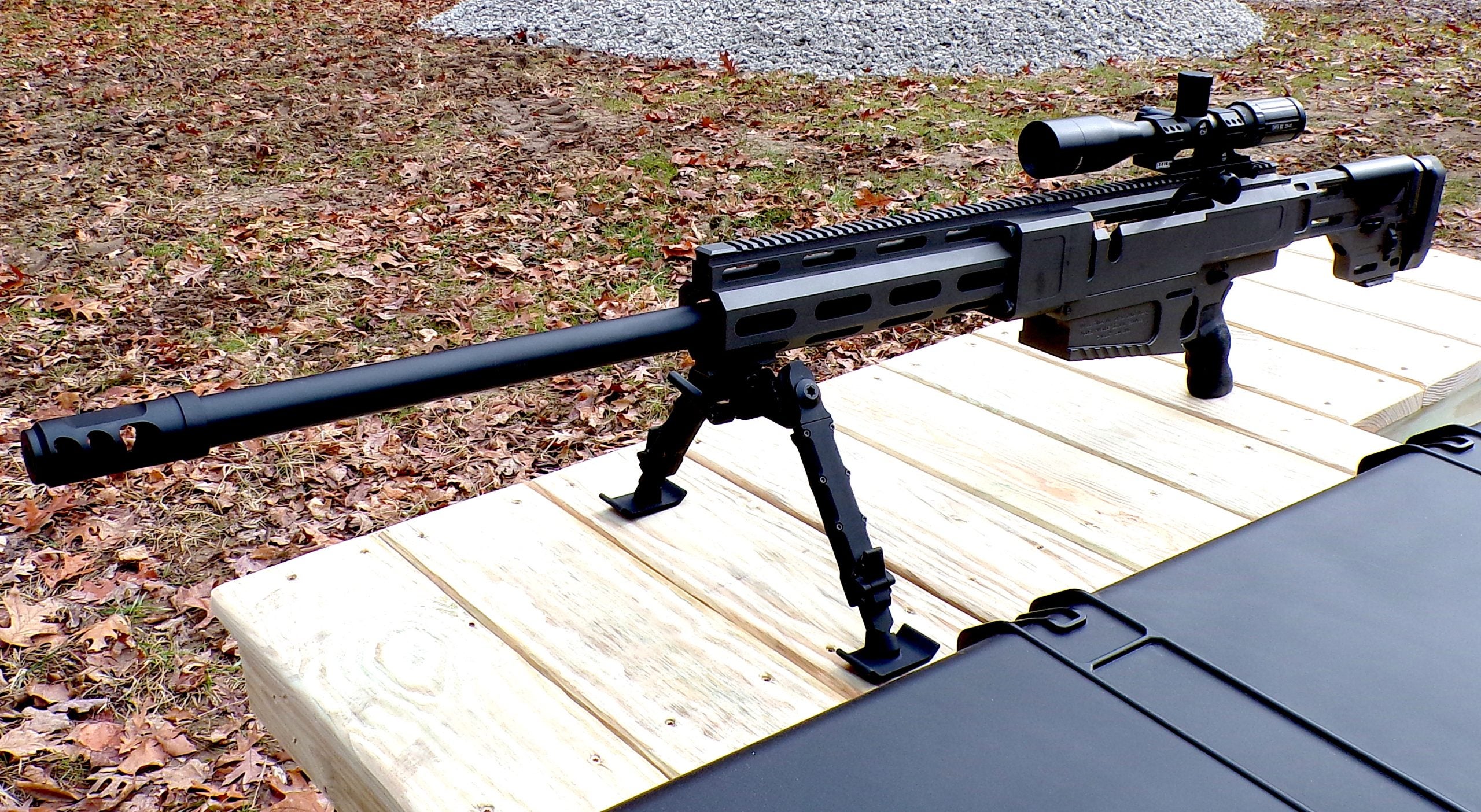
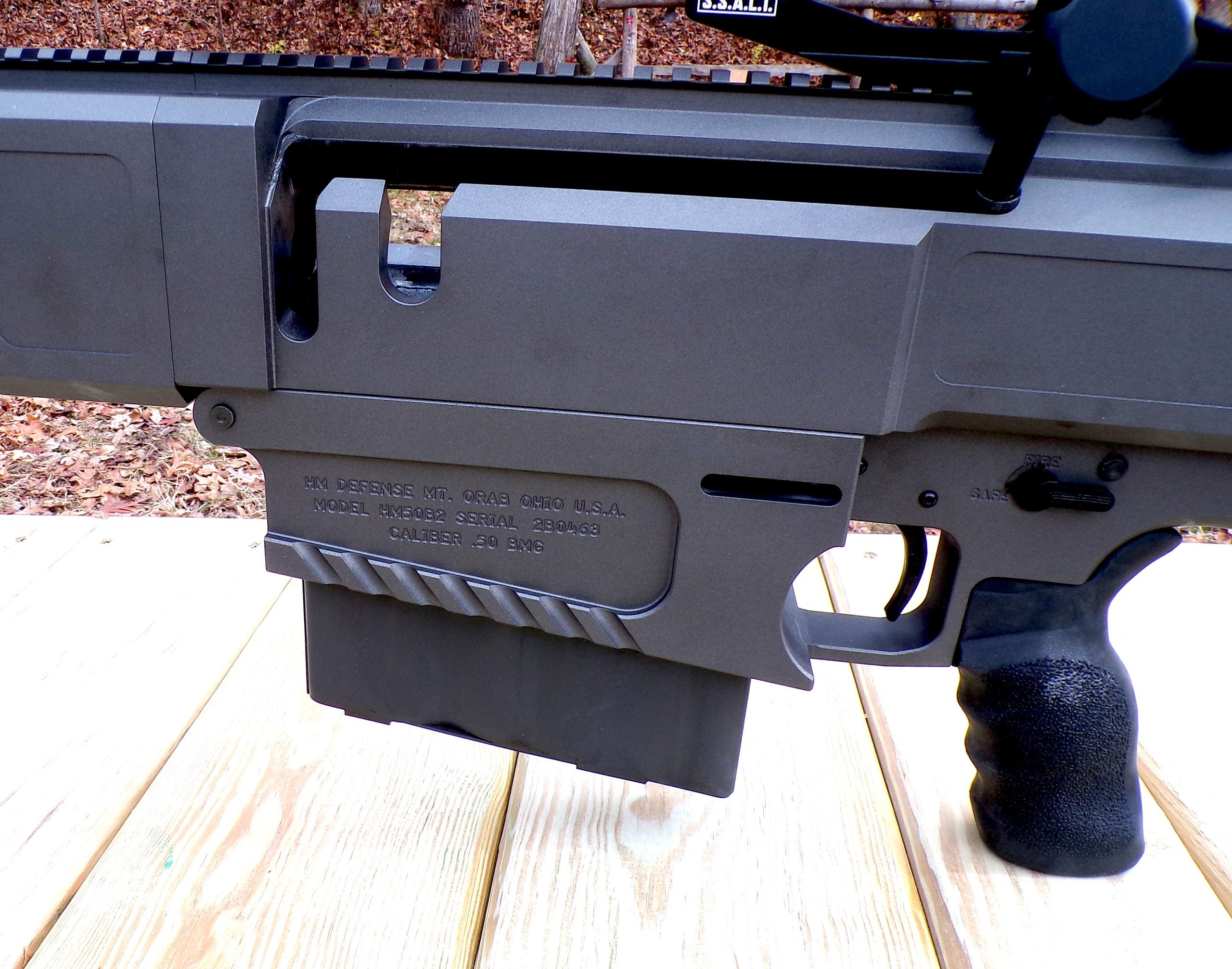
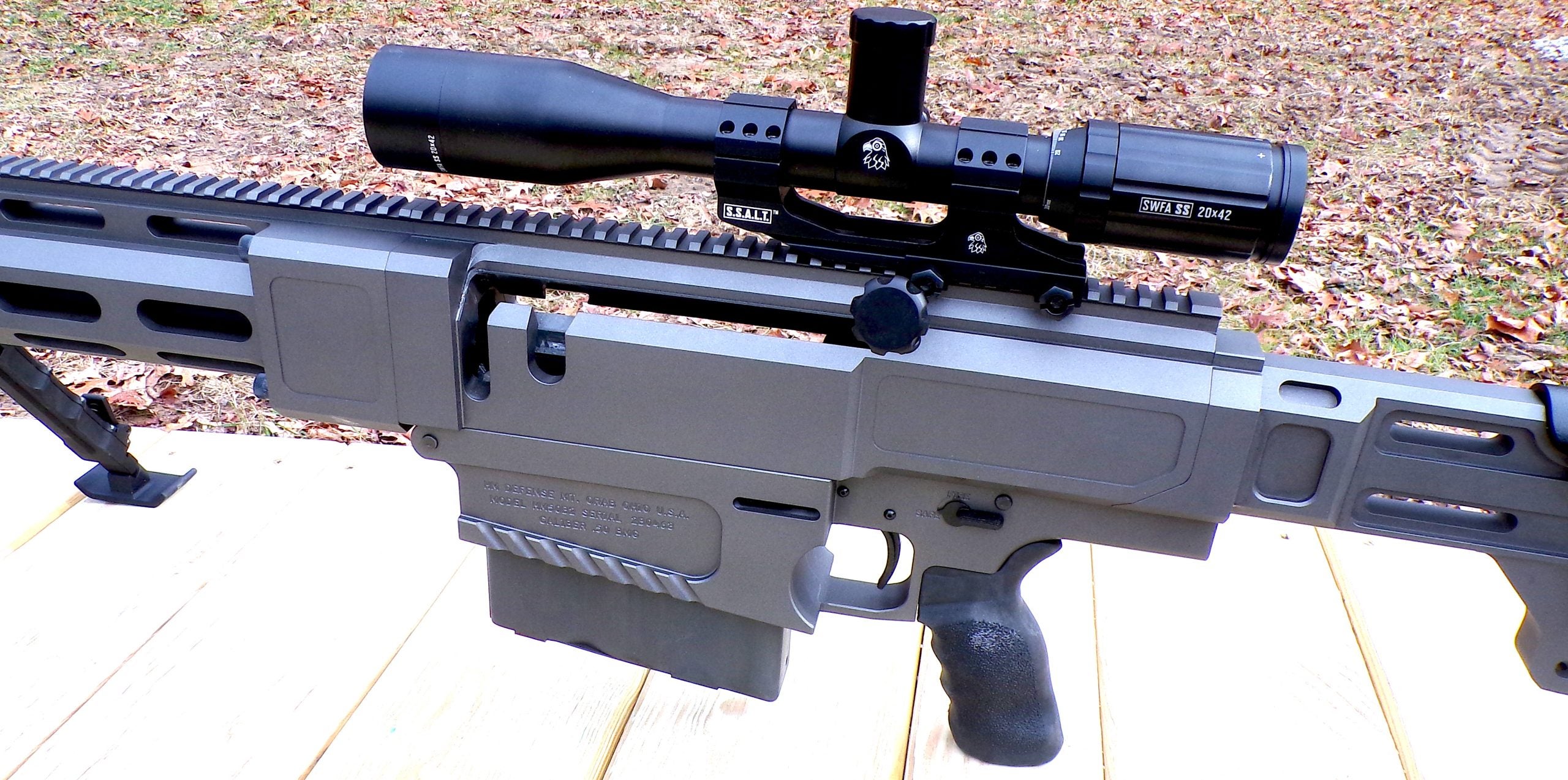
HM Defense is a company located in Ohio. They make several products, many of which end up in the hands of military organizations. Another of their popular rifles is the Defender AR, in 5.56mm. The “bomb-proof” Monobloc gas block on this gun is not a separate unit screwed to the barrel, but is machined integrally with the barrel.
Also, it uses what the company calls a battle-ready bolt… the cam pin hole does not go all the way through. The pin sits in a “well” machined into the bolt. That gives the bolt extra strength. Look for more about the monobloc AR in a future review here. Both of these are patent-pending technologies.
I mentioned the other gun to draw attention to the engineering HM Defense employs. You only have to examine their .50 to see how they’ve paid attention to details.
Now might be a good place to list some features and specifications about this rifle. Here is its web page.
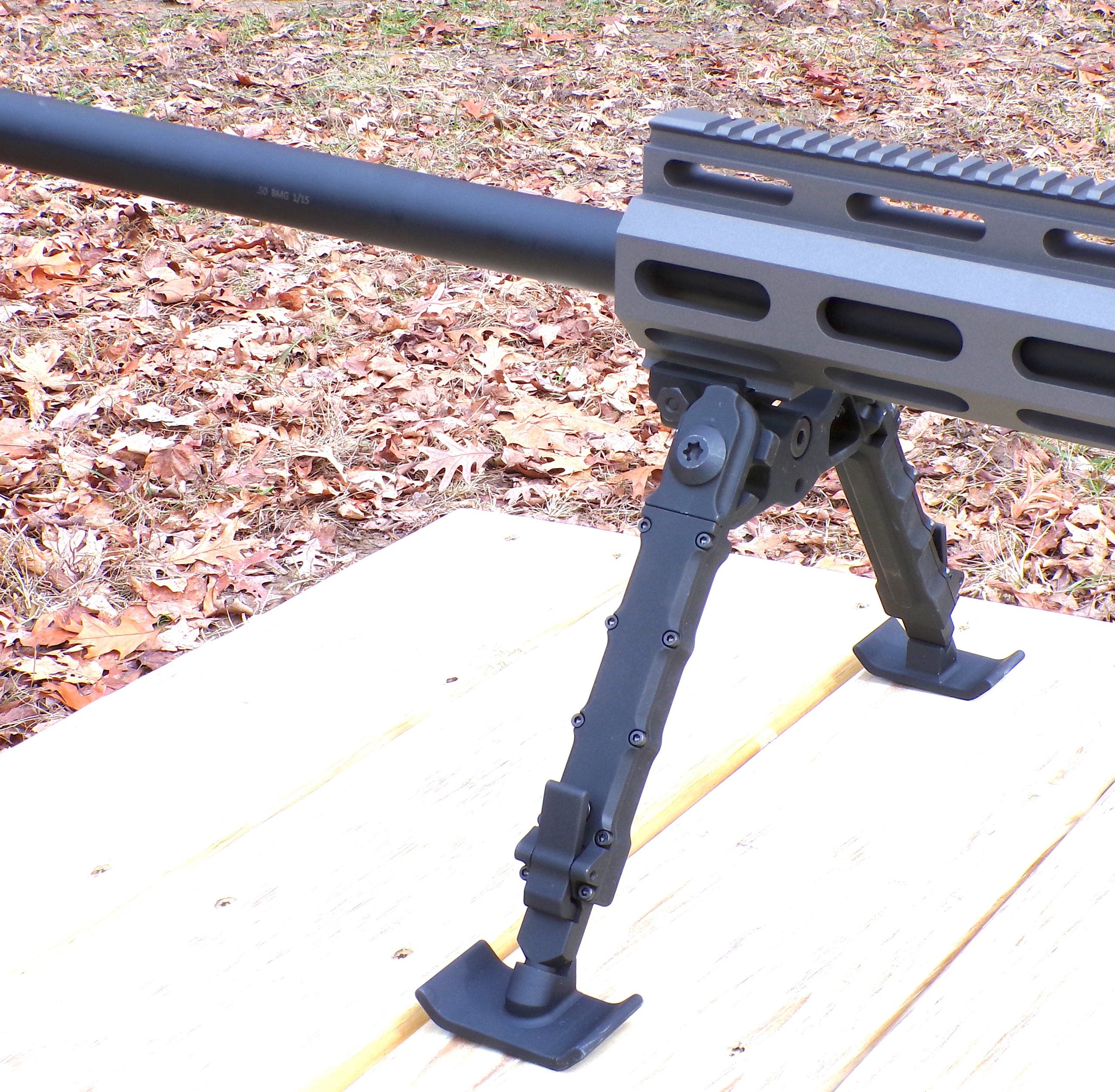
- Barrel: 29.5 inches, 8 grooves, 1:15 twist; match grade; button rifled; threaded 1”-14 TPI
- Bolt: Patented HMB, made from 9310 steel
- Rail: 14-inch Picatinny, free-floated billet rail CNC-machined from aircraft-grade aluminum
- Upper Receiver: 7075-T6 billet; left or right ejection (bolt handle is on the left side)
- Lower Receiver: CNC-machined from aircraft-grade aluminum
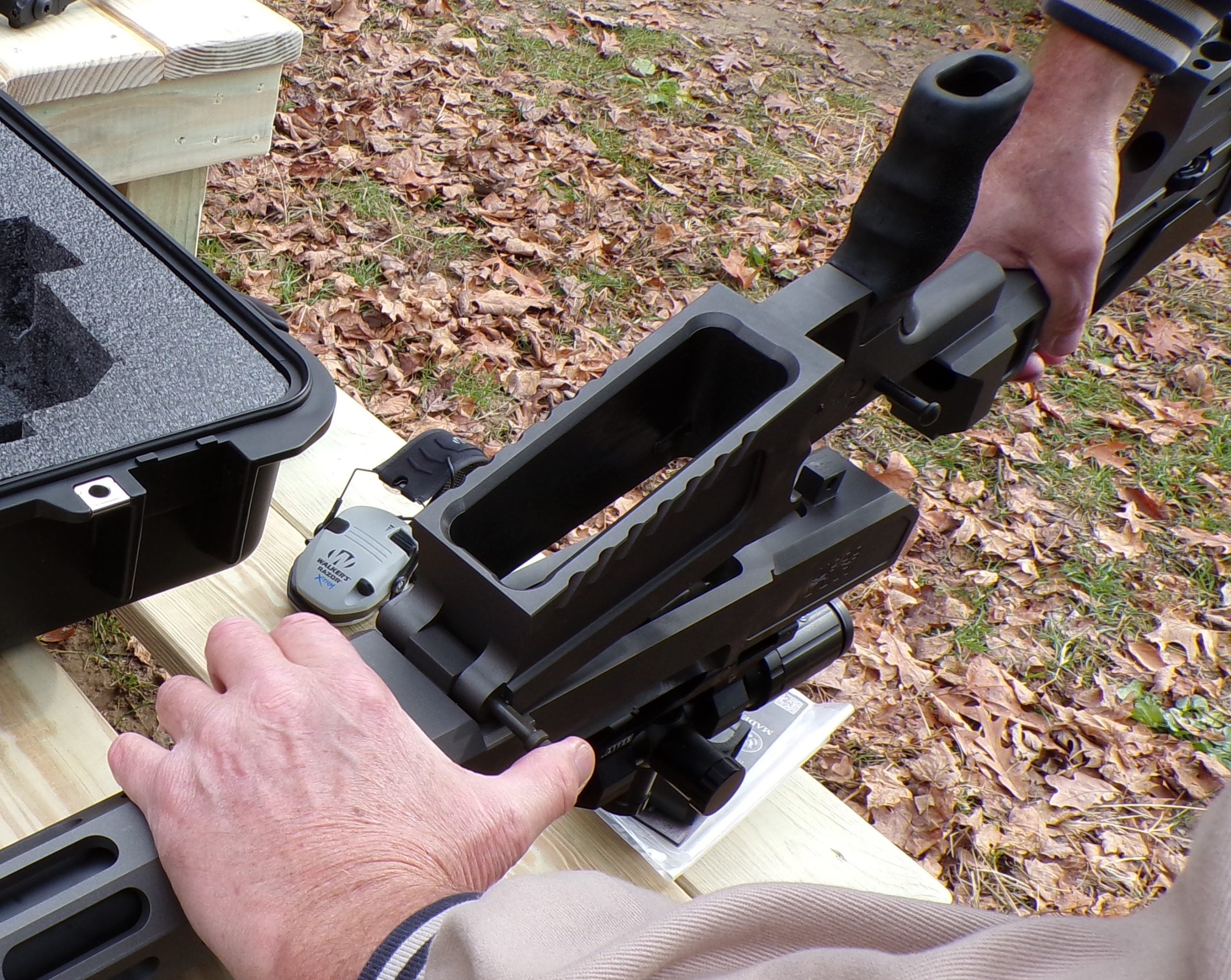
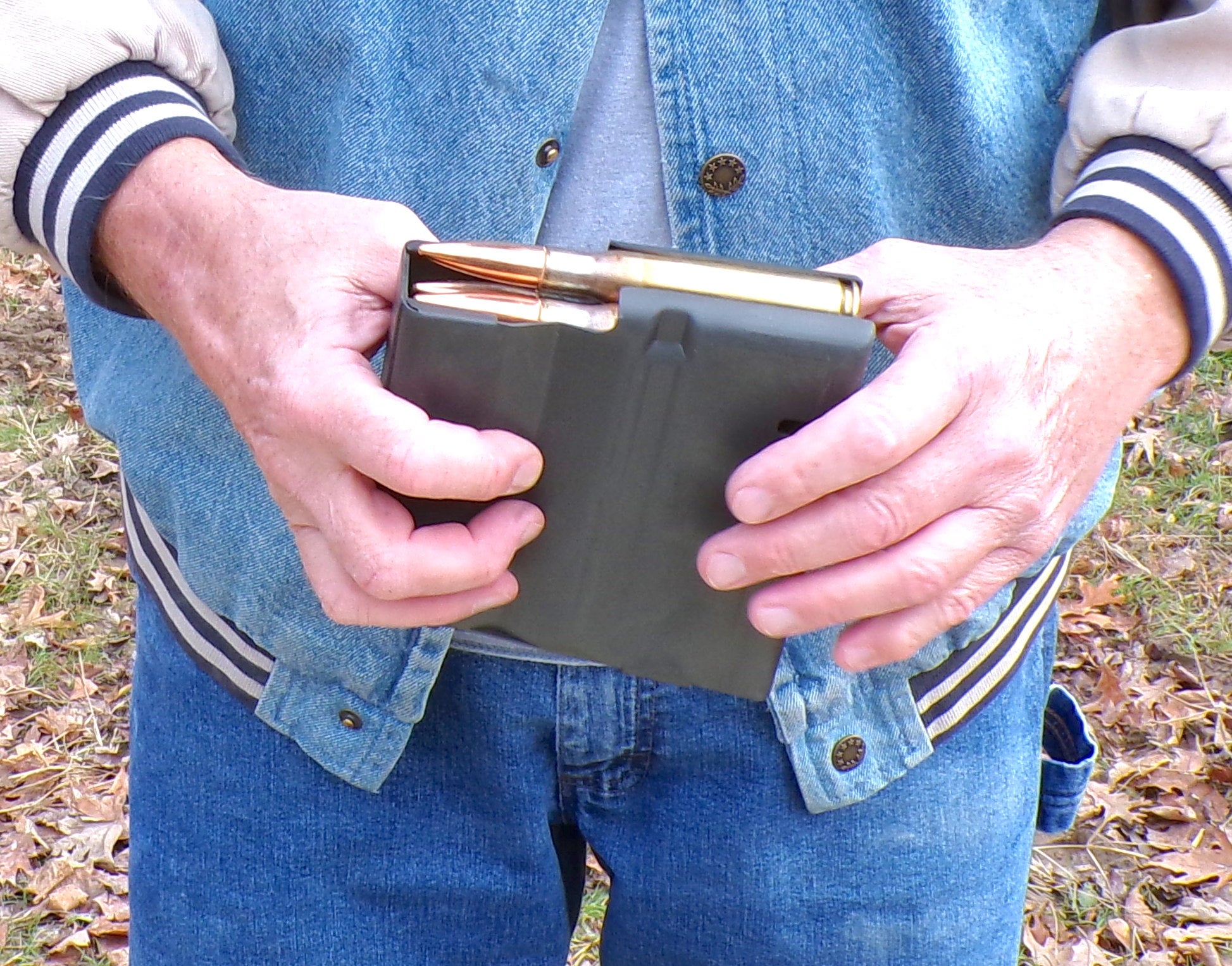
- Magazine: One 10-round magazine is included
- Case: Deluxe hard case with laser-cut foam
- Trigger: HM target trigger
- Grip: ERGO tactical super ambi
- Bipod: HM50, with sled feet
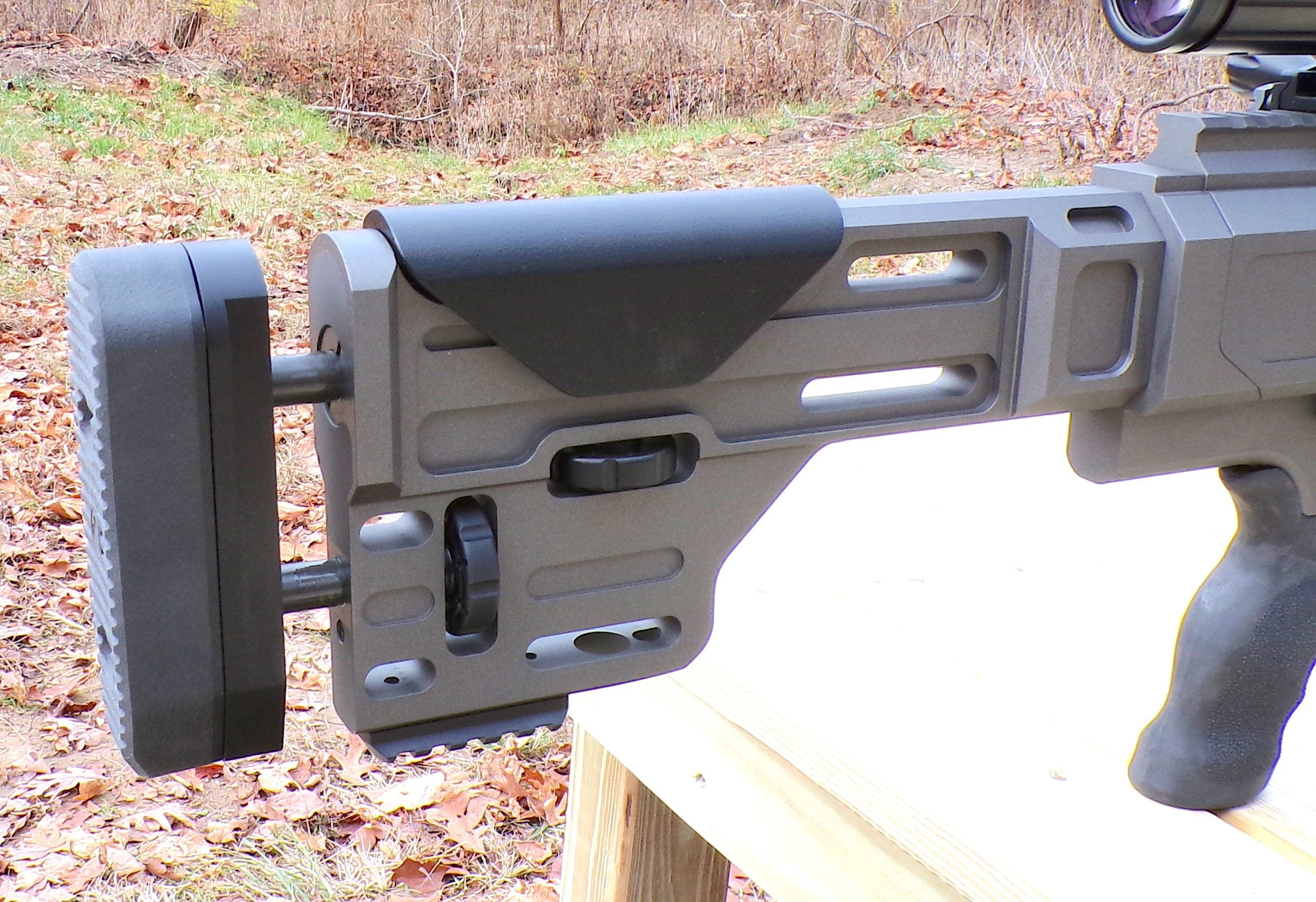
- Stock: HM Precision adjustable (pull length and cheek piece) CNC-machined stock
- Weight: 29.75 pounds minus optic, bipod, and magazine
- Length: 56 ¾ inches
- Monopod Mount: Removable monopod mount included
- Finishes: Black, FDE, Tungsten Cerakote
- MSRP: $7895. Sale prices may apply at the time of writing (before Christmas)
Photos
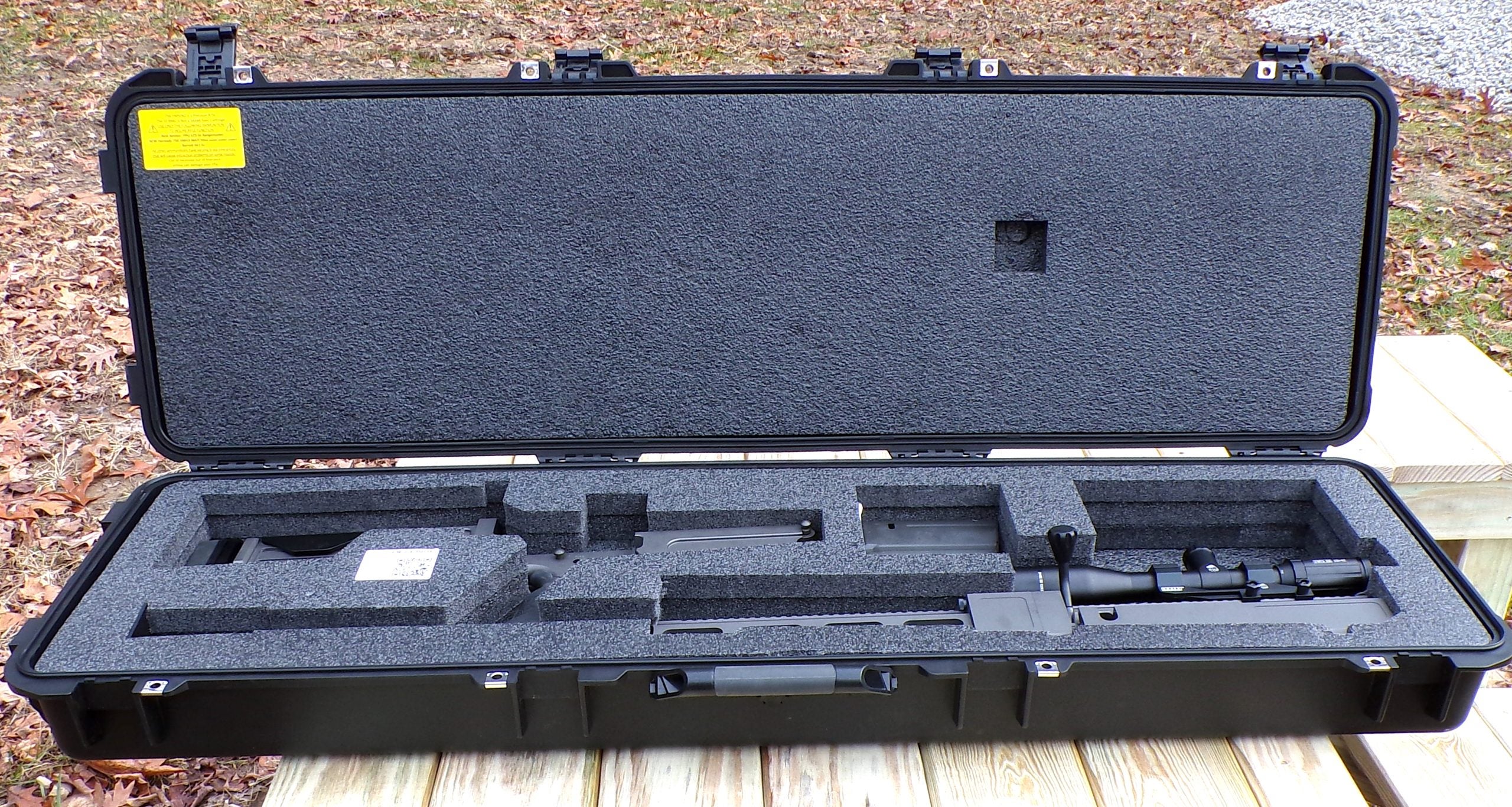
The case. The owner made a few judicious alterations as he saw fit. Here’s another view:


Ah… Range Time!
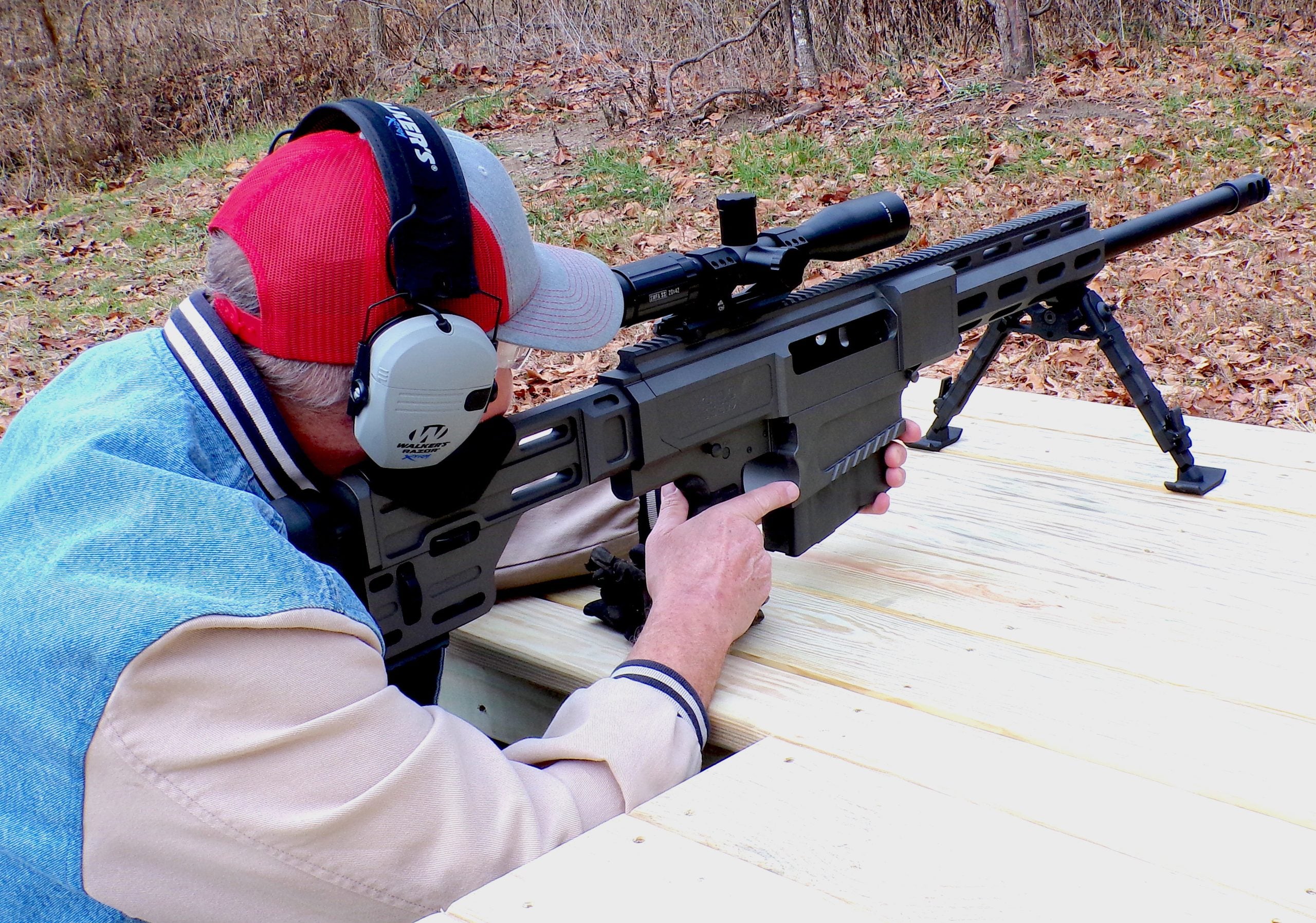
After collarbone surgery, my titanium plate and I were a bit hesitant to place the rubber recoil pad against my shoulder, so our friendly gun owner volunteered to shoot it while we were there. (After shooting it, he mentioned that he would be hesitant to shoot it from prone… he was concerned about HIS collarbone…)
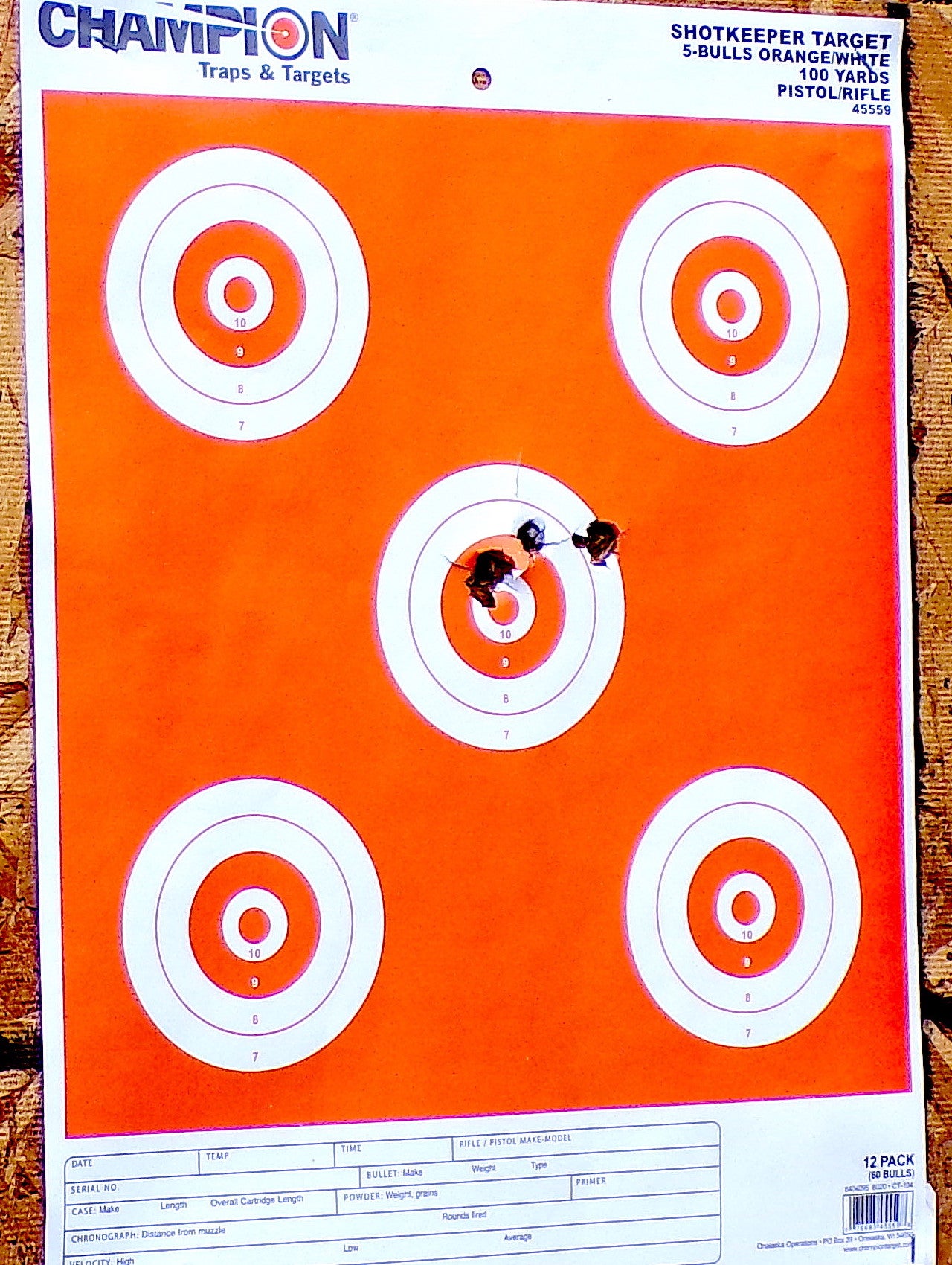
Anyway, he had made a substantial target stand 100 yards out, with targets stapled to it. He will eventually extend his range to more 50-cal-worthy distances, but he needed to start somewhere, and this works.
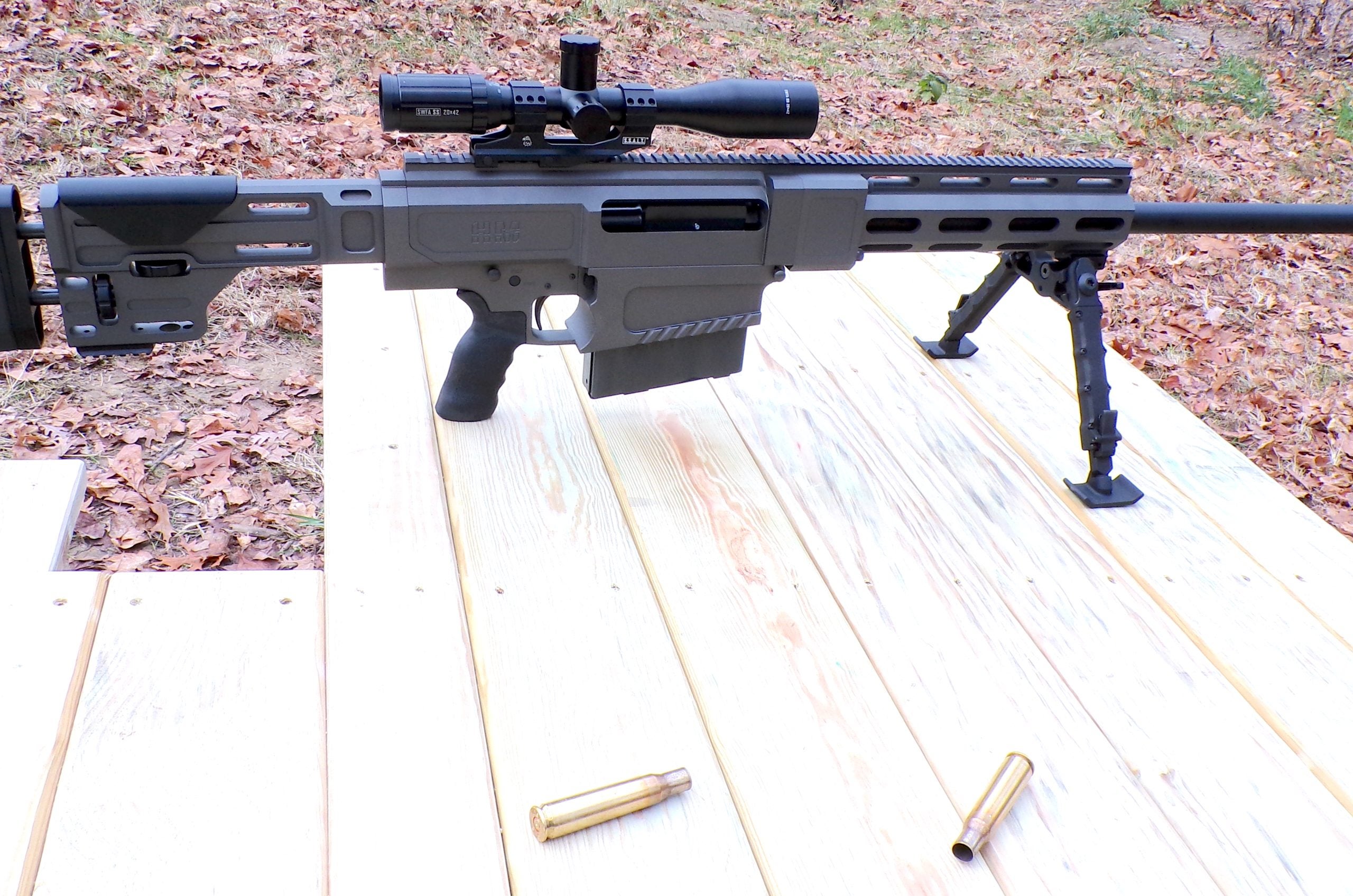
He put a SWFA SS 20×42 scope on it. This scope hits way above its price class. It shrugs off the big .50’s recoil and has yet to lose zero. Its large, easily-grippable turrets make adjustment easy. This is a very good buy at $349, with another $110 for the mount.
Before we look at the target, I need to tell readers that HM Defense recommends a few ammo brands to be used with their .50s.
They include:
- PPU 625-grain Rangemaster
- New Hornady 750-grain AMAX Match (with the purple primer sealer)
- Barrett 661-grain Match
The guns’ chambers are made to very tight tolerances, and stuck cases can shorten a range session. Annealed ammo cases work best. He will eventually get into reloading for his .50, which will allow customization. Look for an article on that after the first of the year.
Conclusion
As part of the wrap-up of this little review, I have a question… why would you need such a beast? I mean, you have a rifle that weighs more than 30 pounds, range-ready, and is longer than most seventh-graders… not to mention the huge “ka-boom” when you pull the trigger, or the massive thump your shoulder endures. Why would you need this?
The short answer is that you may not need it, but it’s sure fun to have. Even with the least-expensive ammo costing a bit over $4 a round, the thrill you get from shooting such a gun is paramount. I’ve shot other .50s (pre-collarbone-incident) and found the experience exhilarating. When you pull that trigger, every loose thing around you for many yards is either literally blown away or flattened.
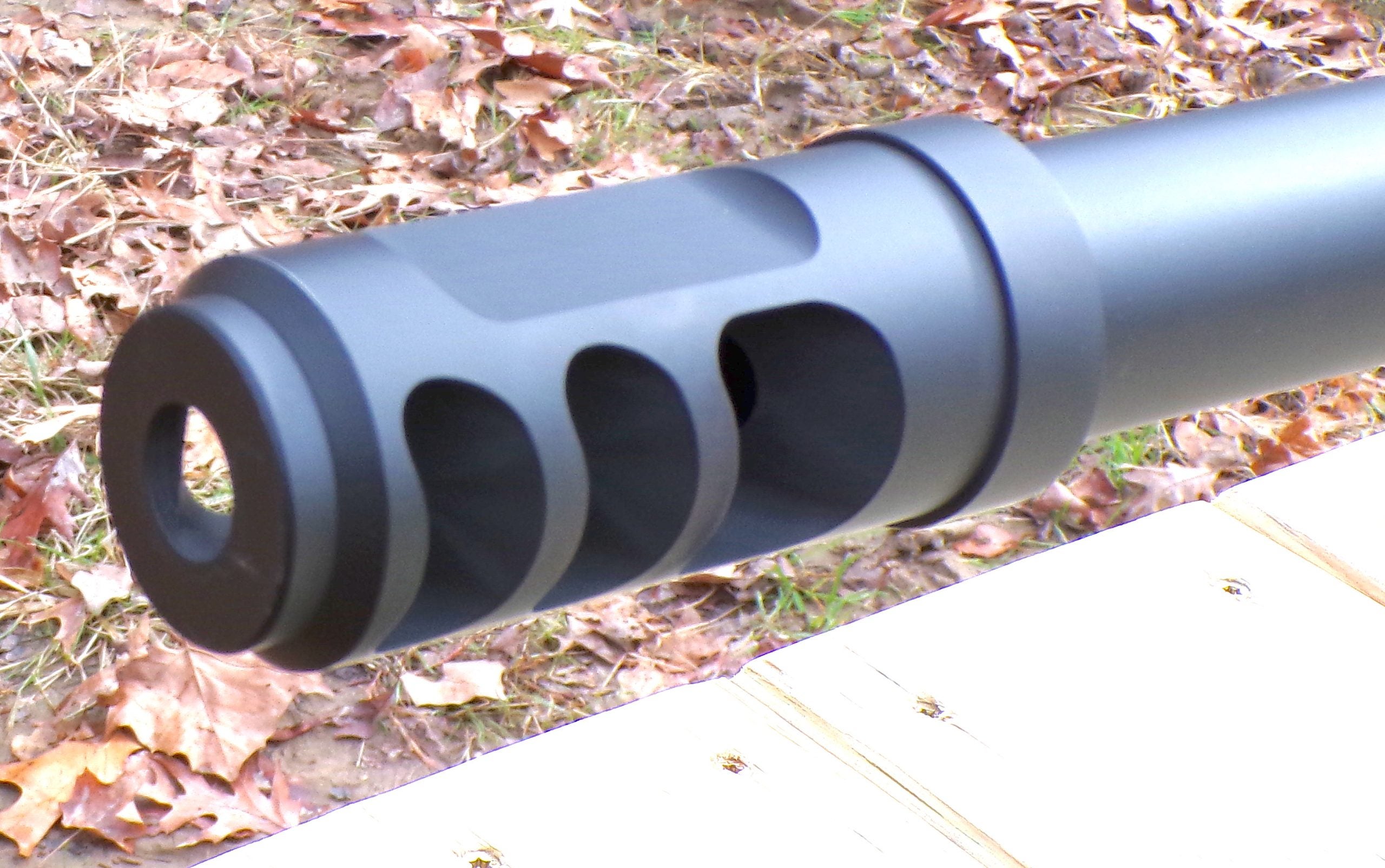
I was standing with my back to him when he shot it, and even my hair moved from the backward blast. The recoil is something special. It’s hard to describe… the impulse is just different from what other rifles offer. It’s sharper and quicker, if those are the right descriptors. It’s no wonder they put huge muzzle brakes on these things… You need the brake to allow the gases to pull the gun forward. If you had to soak up all that raw recoil, you might not want to shoot it.
Read the full article here
