





There’s a reason people still grab battle rifles. Compared to 5.56 or 7.62×39, they carry energy farther, cut through cover better, and don’t run out of steam when the distance opens up.
The Cold War gave us the golden age of battle rifles: heavy, durable, and purpose-built around the 7.62×51mm NATO cartridge. Some became icons. A few became legends. And while modern shooters love their lighter rifles, there’s a reason battle rifles still show up as DMRs, patrol rifles, and “if I could only grab one” choices.
The focus is on the rifles that defined the category: NATO’s FN FAL and HK G3, America’s M14, and the AR-10 as the modern continuation of the 7.62 NATO battle rifle.
The FN FAL and HK G3
If you want the two rifles that defined Western battle rifle doctrine during the Cold War, start here.
For much of NATO, it was the FN FAL and the HK G3; both chambered in 7.62×51mm NATO, widely issued, and proven in harsh environments.
The U.S. took a different path with the M14, but for much of the free world, the FAL and G3 were the era’s standard.
Why They’re Often Compared
The similarity is simple: the same cartridge, the same mission, the same timeframe.
- Cartridge: 7.62×51mm NATO
- Role: standard-issue battle rifle for numerous Western-aligned nations
- Performance: effective at distance, hits hard, credible barrier performance
They weren’t built for the same mechanical philosophy, though—and that’s where the differences matter.
The Key Differences That Actually Matter
Operating System
- FAL: gas piston system with an adjustable regulator. When tuned correctly, it can run a wide range of ammunition and keep running even when dirty—at the cost of needing attention to the gas system over time.
- G3: roller-delayed blowback. It’s mechanically simpler in the sense that it doesn’t depend on a piston or gas port. That simplicity translates to real-world ruggedness, especially in adverse conditions.
Reliability in Harsh Conditions
U.S. evaluations at Aberdeen famously noted the G3’s low sensitivity to dirt, largely because it isn’t relying on a gas system that can foul. The FAL’s gas system can get clogged, especially with dirty surplus ammunition, though the adjustable regulator gives it flexibility that the G3 can’t match without changing parts.
Recoil and Shootability
- The FAL generally feels smoother, with some of the gas energy redirected by the system.
- The G3 has a sharper impulse because everything moves rearward through the operating cycle. It’s not unmanageable, but side-by-side, many shooters notice the difference immediately—especially in rapid strings.
Ergonomics and Controls
This is where the FAL earns its reputation.
- FAL controls typically feel more natural: safety placement, mag release, and general handling.
- The G3/HK91 manual of arms is iconic but less forgiving—especially for reloads.
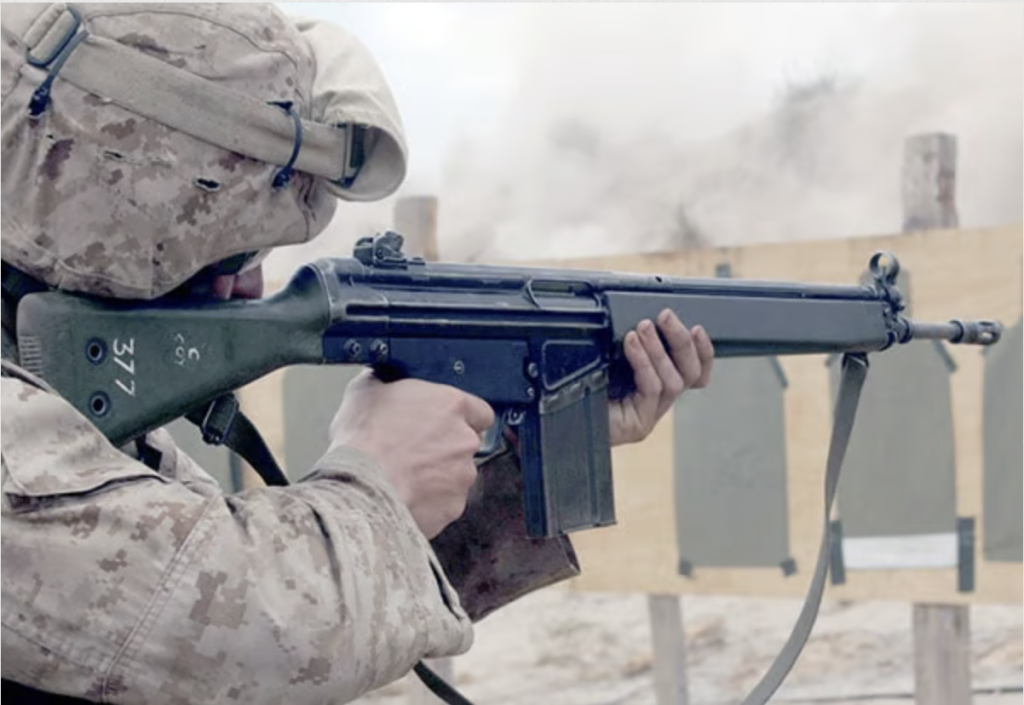
Reloads and the Hold-Open Issue
The FAL’s hold-open is a real advantage. Insert magazine, run the charging handle or drop the bolt—back in business.
The G3/HK91 does not lock open on an empty mag in standard form. That means you often find out you’re empty after the rifle goes dead. In military use, tracer management helped. In civilian use, it just slows you down.
That said, the G3’s “lock and slap” charging handle method is brutally effective once learned. It’s also one of the reasons the platform became a cultural icon.
Optics and “Modernizing”
The G3 family generally gets the nod here.
- The receiver design and mounting system made optics integration easier earlier.
- The FAL can be fitted with a scope, but it often requires high-quality dust-cover mounts to maintain zero.
Construction Philosophy
- FAL: often built around more traditional machined construction.
- G3: stamped steel and pins—cheaper to produce, easier to field, sometimes noisier and more “industrial,” but genuinely durable.
A Real-World Test: Kargil War (1999)
One of the more interesting “apples-to-apples” moments came in the Kargil War (May–July 1999), fought in high-altitude mountainous terrain.
India fielded FAL variants; Pakistan fielded G3 variants—both license-produced. In that environment, the advantages of 7.62 NATO were obvious. Longer engagement distances and barrier performance favored full-power rifles over intermediate cartridges.
That’s also why, even today, the G3’s penetration and range remain part of the conversation in that region—especially with India’s adoption of rifles in smaller calibers for many roles.
Bottom Line: FAL vs G3
- The G3 is often seen as simpler, rugged, and highly reliable in adverse conditions.
- The FAL is often known for better ergonomics, a smoother recoil, and a more shooter-friendly experience, plus the utility of adjustable gas settings.
If you’re picking one purely for a hard-use “keep it running” rifle, it’s easy to understand why the G3 has the reputation it does. If you’re picking one for practical handling and shootability, the FAL makes a serious case.
The M14: America’s Answer…And America’s Problem
The U.S. went its own way.
Adopted in 1959, the M14 was essentially the next step beyond the M1 Garand, updated to accept a detachable magazine and the 7.62 NATO cartridge.
It also arrived at the wrong time.
In open terrain, the M14 made sense. In the jungle and close-in realities of Vietnam, it became clear that a heavy 7.62 battle rifle was not ideal for the average infantryman.
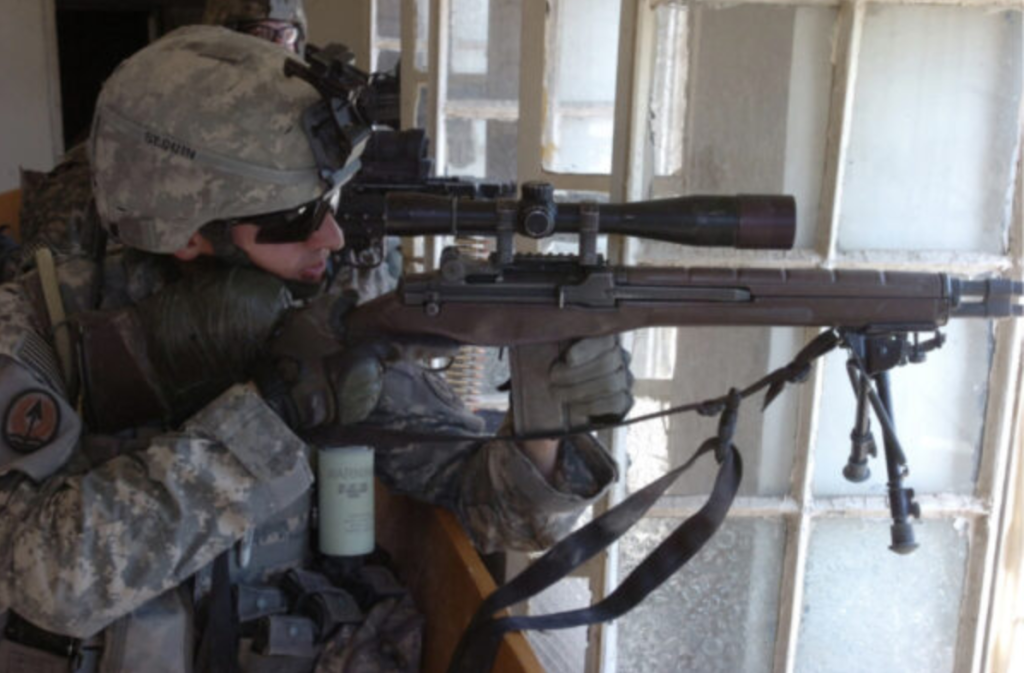
The M14 evolved into a platform still used in designated marksman roles and specialized contexts. But as a general-issue rifle, its window closed fast.
The Modern AR-10: Refined, Lighter, and Purpose-Built
The AR-10 of today is not the rifle Eugene Stoner introduced in the 1950s—and that’s the point.
Modern AR-10 platforms have benefited from decades of refinement, with manufacturers focusing heavily on reducing weight, managing recoil, and improving shootability without sacrificing the ballistic advantages of full-power cartridges. Improved materials, smarter machining, and better component design have made the modern AR-10 far more manageable than its early iterations.
Rail systems are now standard, allowing shooters to mount optics, white lights, bipods, and night vision with ease. That adaptability transforms the AR-10 into a rifle that can credibly serve as a long-range precision gun, a designated marksman rifle, or a general-purpose defensive rifle.
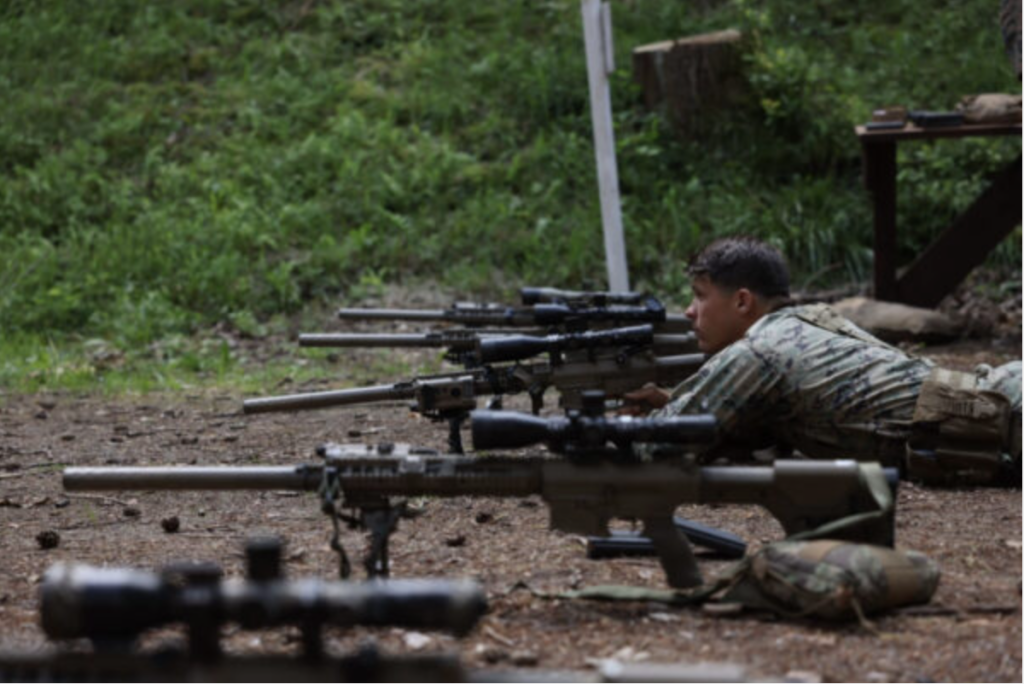
Barrel technology has also improved substantially. Modern AR-10s benefit from improved steel, more consistent chambering, and enhanced rifling, all of which translate into greater accuracy and more predictable performance. Muzzle devices—whether brakes or suppressor mounts—play a significant role in recoil control, helping mitigate the impulse of cartridges such as .308 Winchester and 6.5 Creedmoor.
Adjustable stocks, improved triggers, and upgraded bolt carrier groups allow shooters to tailor the rifle to their body, optic height, and intended role. The result is a platform that’s comfortable to shoot for extended sessions—something that was never a strong suit of early battle rifles.
The AR-10’s ability to run .308 Winchester and 6.5 Creedmoor gives it real flexibility.
A Practical Example: Palmetto State Armory Sabre AR-10
A good illustration of where the AR-10 platform sits today is the Palmetto State Armory Sabre AR-10 in .308.
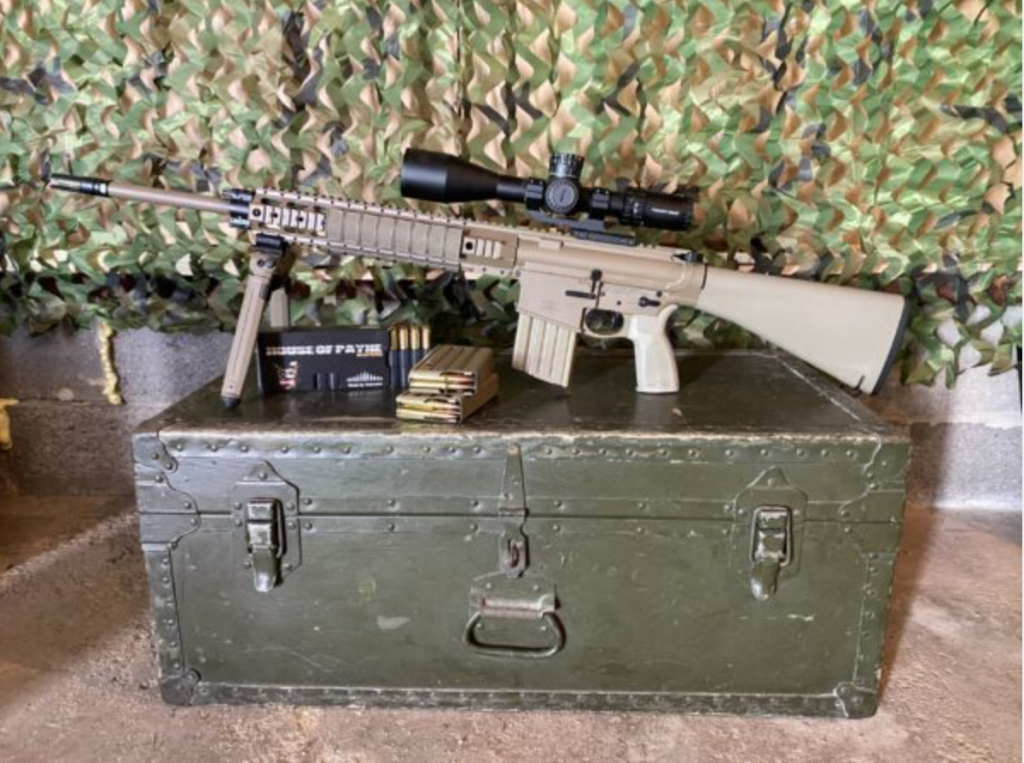
Configured with a 20-inch barrel, 12.5-inch quad rail, and a classic A1-style stock, the Sabre blends traditional battle rifle DNA with modern usability. It ships as a field-ready package, including magazines, a Magpul bipod, and a carry bag—making it immediately usable without requiring additional investment just to get started.
The Sabre’s billet construction provides rigidity where it matters, while the quad rail allows shooters to mount optics and accessories without limitation. It’s not a lightweight rifle, nor is it trying to be. Instead, it represents a modern interpretation of the AR-10 as a serious .308 platform—capable of precision shooting, practical field use, and defensive roles.
Read the full article here
