



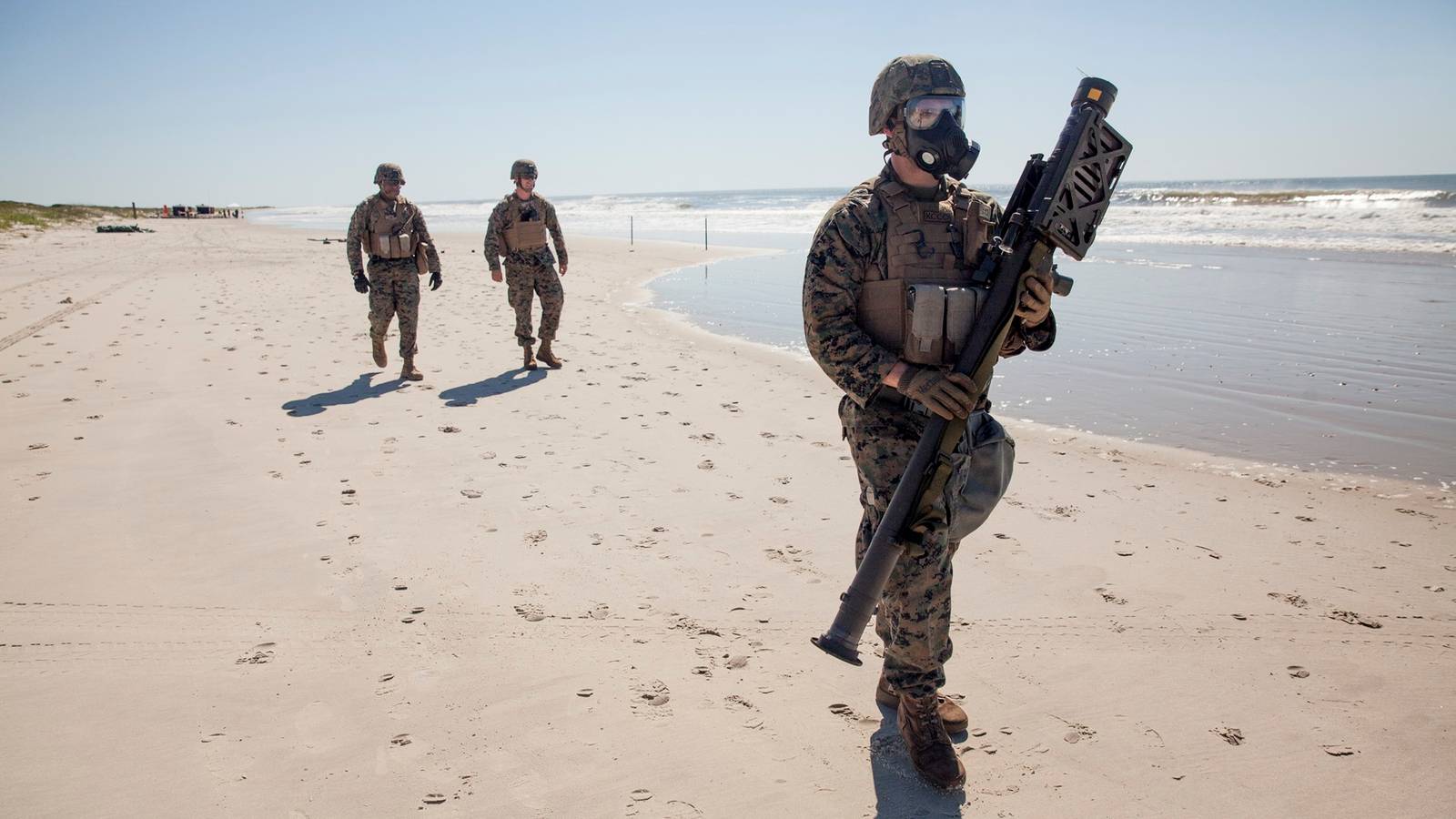

The Marine Corps has revealed its Ground Combat Element 2040 plan, a fiscal year 2026 framework that sets how infantry, fires, and reconnaissance units are supposed to fight through 2040. The service published the document Aug. 26, according to a Marine Corps press release, and posted the full text on the Plans, Policies, and Operations website.
The framework is an update to an earlier Ground Combat Element (GCE) 2040 vision. It is not a new table of organization by itself, but it is the investment and training map the Corps says it will use to keep ground units able to seize, hold, and defend key maritime terrain against a peer force, including when drones, networks, and other high-end tools get jammed or shot apart.
The move sits alongside other recent force-structure work, including a plan to add more than 6,500 billets and a new robotics and small-drone training group. This document has a narrower focus: it tells ground combat units what Headquarters wants them to get good at over the next 15 years, rather than announcing a single new vehicle or a single new bonus.
Lieutenant General Jay M. Bargeron, the Deputy Commandant for Plans, Policies, and Operations, summed up the idea as follows:
Our central imperative is to cultivate a Ground Combat Element that is fully enabled by cutting-edge technology but remains fundamentally human-centric.
What Changes for Infantry Units
The document and Bargeron’s briefing around it point to changes that show up at company and squad level, not just at a future headquarters.
Bargeron told reporters the Corps is still adding a fifth infantry company built around reconnaissance and fires, according to Military Times. He also described turning the anti-armor missile gunner role into a precision-strike job. The 0352 Marines would keep the anti-armor mission and add loitering munitions and the training to use them. Military Times reported there is no formal new military occupational specialty title in the works.
The practical effect, as Bargeron described it, is range. Squads, platoons, and companies are supposed to find and hit targets out to about 20 kilometers with organic precision fires instead of waiting on a battery or an aircraft to talk onto the target. The framework also calls for more organic mortars and crew-served weapons inside infantry battalions.
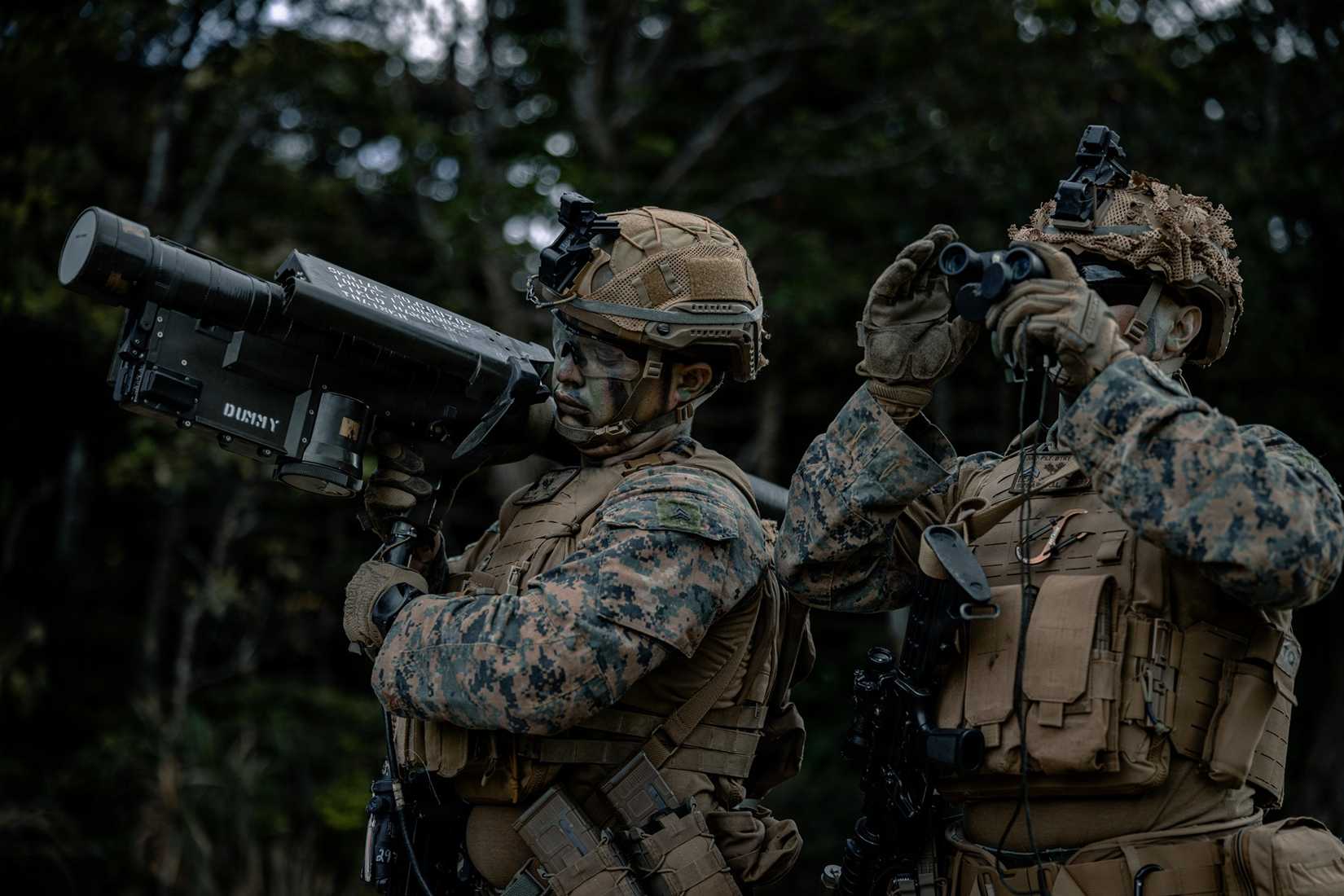
Drone defense is the other near-term demand. Bargeron called defending against attack drones “one of the biggest holes in our swing,” according to Military Times. The press release lists squad-level Ground-Based Air Defense as a materiel priority. Military Times reported the Corps has already bought 400,000 rounds of special 5.56 ammunition meant to be fired from the M27 and plans to field hundreds of organic counter-small unmanned aircraft systems this year.
The framework also keeps two platforms at the center of ground mobility: the Amphibious Combat Vehicle and the Advanced Reconnaissance Vehicle. Long-range surface fires, small unmanned aircraft, and layered air defense sit with them.
Marine Littoral Regiment reconnaissance and sea-denial work is supposed to scale into division and regimental headquarters, not stay isolated in those specialized units.
The 2026 to 2040 Timeline
The plan runs in three overlapping windows.
Near-term, 2026 through 2030, is drone defense and finishing Force Design fielding already in motion. The document says concentrated units in the open are now easy to find and easy to hit. The near-term bet is sensors, counter-drone kits, unmanned systems, and command-and-control gear that can survive that environment.
Mid-term, 2031 through 2035, is when artificial intelligence and autonomous systems are supposed to start carrying more of the headquarters, logistics, bridging, and breaching load.
Layered counter-drone defense is supposed to be routine down to the squad. Headquarters upgrades are supposed to plug into Combined Joint All-Domain Command and Control.
Long-range, 2036 through 2040, is the ultimate design the document stresses: edge computing, wider human-machine teaming, and robotics that take first contact so fewer Marines have to.
The document still calls resilient infantry formations the foundation. Training is supposed to keep the close-combat skills even as the robots show up.
Lieutenant General Eric E. Austin, the Deputy Commandant for Combat Development and Integration, wrote that Combat Development and Integration and the Portfolio Acquisition Executive will work the plan with Plans, Policies, and Operations. The document itself says technology “enhances human judgment but never replaces it.”
What the Document Does Not Change
Bargeron told reporters the new tools do not replace the ground combat element’s job. That job is still to locate, close with, and destroy the enemy, or to repel an assault by fire in close combat.
The framework is also blunt about failure. Formations have to work when the network is down. Bargeron told reporters there will be a point in a fight when the robotics and the fast decision aids get denied, according to DefenseScoop, and the question left is what the humans can still do.
That is the constraint for anyone reading this as a unit problem rather than a concept paper. The next four years are not a science-fiction reset. They are counter-drone kits, more organic fires, a fifth company in the infantry battalion, and a missile gunner community that is being asked to shoot farther with new munitions.
Interested Marines should read the full Ground Combat Element 2040 framework on the Plans, Policies, and Operations site and watch how their own battalion actually fields the fifth company, the counter-drone gear, and the precision-strike training.
Read the full article here
