



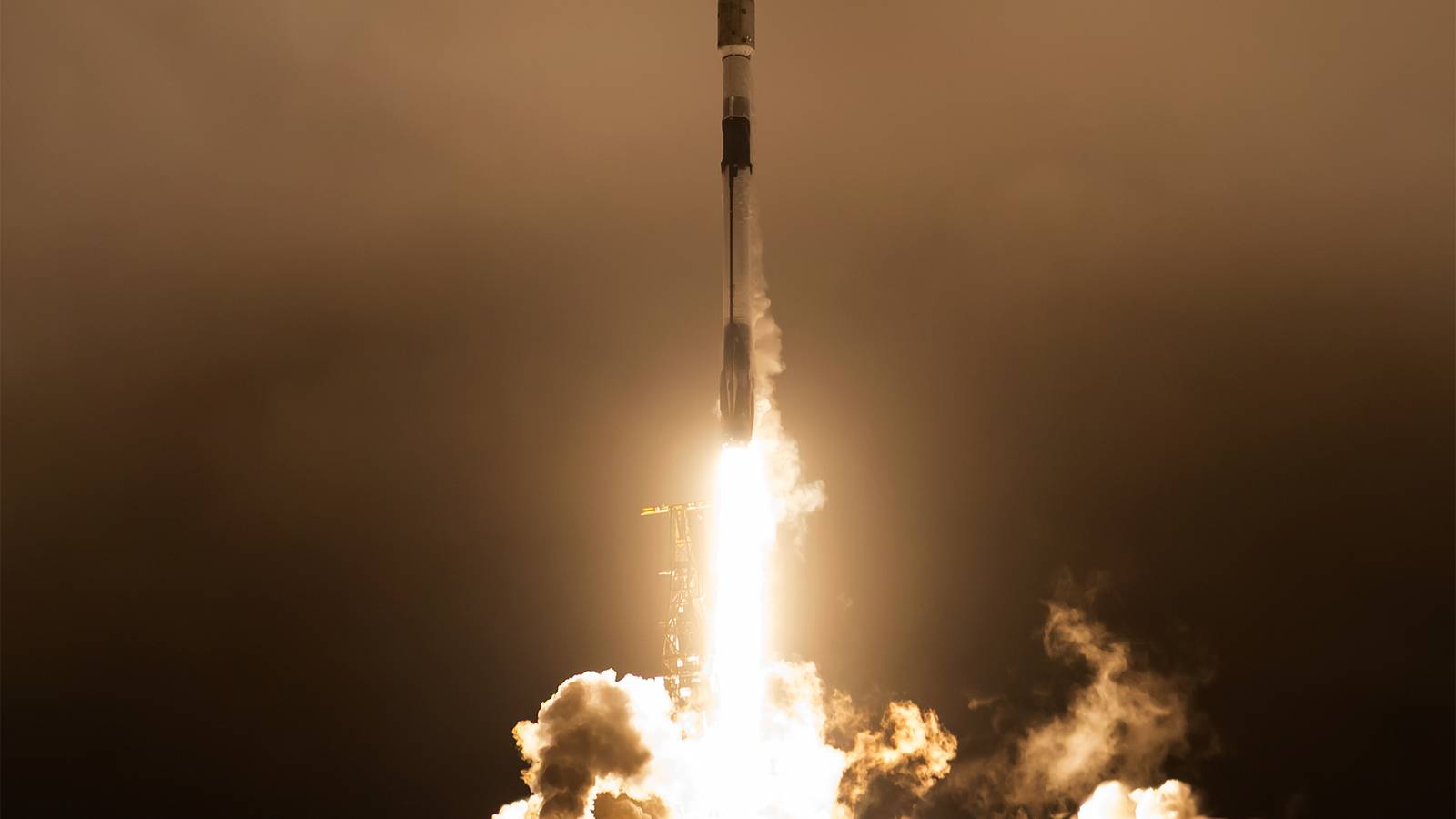

Some U.S. military satellites have been operating so long that the Guardians controlling them weren’t alive when the spacecraft first reached orbit.
“There are operators at Schriever Space Force Base that are younger than the satellite that they’re operating,” Ryan Roberts, Deloitte’s Space practice cyber leader, told Military.com. Some satellites, he said, are more than 30 years old.
Their age is taking on new significance as space becomes an increasingly important warfighting domain.
Air Force Secretary Troy Meink made an unusually direct acknowledgment last week at the Air, Space & Cyber Conference in National Harbor, Maryland, saying the Space Force has “on-orbit space control weapons” capable of defending the joint force against hostile adversary action. Meink did not disclose details about what those systems are or how they operate.
But putting increasingly consequential military capabilities into orbit creates another challenge: protecting the computers, software and networks that allow them to work.
Retired Air Force Lt. Gen. Chris Weggeman, a managing director at Deloitte, has a blunt description for that vulnerability.
The soft underbelly of space is cyberspace, Weggeman said.
Military.com sat down with Weggeman and Roberts during the AFA conference to discuss what Deloitte is learning from Project Constellation, an effort that has effectively begun creating a laboratory in orbit where researchers can safely attack their own satellites and test defenses under actual space conditions.
A Cyber Lab in Orbit
When military threats to satellites are discussed, attention often turns to missiles, jamming and other ways an adversary might physically disable or disrupt a spacecraft.
Weggeman said the cyber attack surface is much broader, extending across ground systems, radio-frequency links, satellites, user equipment, launch systems and the supply chain.
Roberts said putting a satellite hundreds of miles above Earth does not make it immune from familiar cyber vulnerabilities.
The tyranny of distance between us and the satellite is not an insulator, Roberts said. It’s not a cyber resiliency insulator.
Project Constellation allows researchers to test those vulnerabilities against spacecraft actually operating in space. Deloitte officials said they have safely launched simulated cyberattacks against their own satellites to determine whether onboard defenses can recognize them.
What that’s really turned into is, again, out of necessity, we’ve sort of built an on-orbit cyber range, Roberts said.
One challenge is determining what an anomaly aboard a satellite actually means. Is it being attacked? Or did something simply go wrong?
Hardware can fail. Software can behave unexpectedly. The space environment itself can affect a spacecraft.
Weggeman said Project Constellation is helping researchers distinguish potentially malicious activity from changes caused by hardware, software, firmware or environmental conditions. Artificial intelligence is being used to help make that distinction.
Deloitte says Project Constellation is testing AI and machine-learning tools and software-only cyber defenses intended to identify anomalies and improve resilience in orbit.
‘Don’t Do the Cyber Adversary’s Job for Them’
Detecting an attack creates another problem. Satellites have finite computing power, memory, storage, bandwidth and power. A cyber defense that consumes too many of those resources could interfere with the mission it is supposed to protect.
I tell the team all the time: Rule number one, don’t do the cyber adversary’s job for them in the name of cyber defense, Roberts said.
That gets at a larger tradeoff Weggeman believes military acquisition has historically struggled with. Programs balance cost, schedule and performance. Cybersecurity added later can be viewed as something that increases costs, delays delivery or competes with performance.
Weggeman argues that integrating cybersecurity from the beginning can change that equation by avoiding later modifications while increasing the resilience of the mission itself. “We’re finally coming out of the dark ages of where we are a cost sink,” Weggeman said.
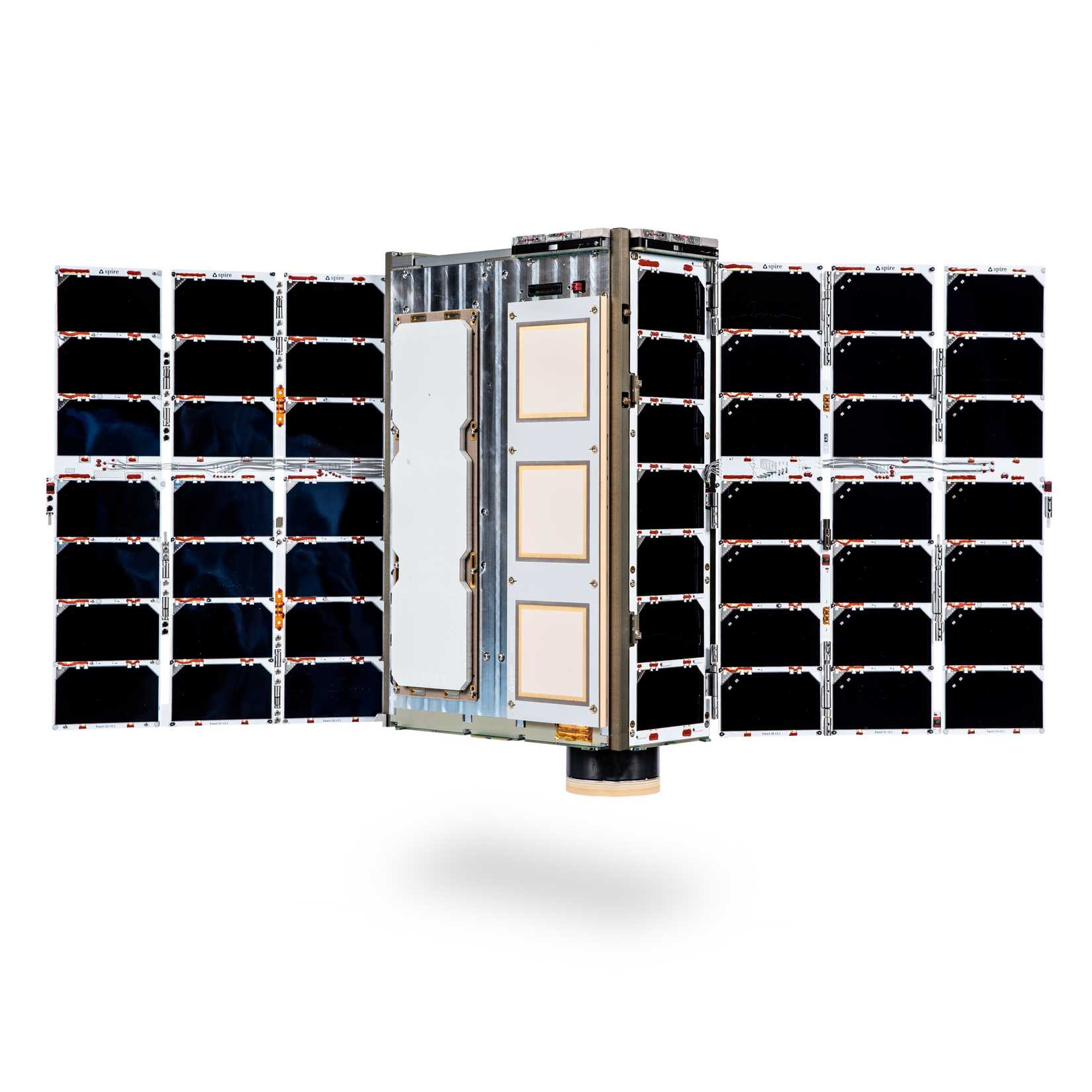
The experiment began with Silent Shield, an intrusion-detection system launched aboard Deloitte-1 in March 2025. The system analyzes activity aboard the spacecraft for anomalies and can alert operators on the ground.
But building cyber defenses into new satellites solves only part of the problem. Thousands of spacecraft are already up there.
Modernization Can’t Only Mean Launching New Satellites
In an earlier interview with Military.com, retired Air Force Maj. Gen. Brook Leonard argued that the traditional approach to satellites needs to change.
“Space, for me, is moving from being an extension of national power and sovereignty to the foundation of it,” Leonard said.
Yet satellites have traditionally been closer to what Leonard described as a “one-way ticket to space”: Build a spacecraft and payload for a particular mission, launch it and eventually replace it.
Leonard argued that future systems need to be more adaptable after reaching orbit, allowing capabilities to change rather than requiring an entirely new spacecraft. “We’re trying to make it so satellites are loaded, not engineered,” Leonard said.
Project Constellation may provide one example of what that could look like. Deloitte-1 carried a dedicated hardware version of Silent Shield. That approach works when cyber protection is incorporated into the spacecraft before launch.
It doesn’t solve the problem for a decades-old satellite already orbiting Earth.
A Software Fix for Satellites Already in Space
“We’re not going to be putting on astronaut suits and bolting on hardware,” Roberts said.
Instead, Deloitte has developed what Roberts called a “massless” version of Silent Shield. The company says Project Constellation is being used to engineer and test a software-only cyber defense that could be deployed to satellites already in orbit.
The goal would be to give operators greater visibility into suspicious activity aboard legacy spacecraft without waiting to replace them. Weggeman compared that idea to the way the Air Force has modernized the F-16 Fighting Falcon over decades.
We didn’t throw away the F-16 every time we had a new weapon, a new payload, a new sensor or a new software and a new operational flight program, Weggeman said. Modernization can’t only just be launch new.
Not every satellite will necessarily be capable of accepting new cyber software. Weggeman acknowledged that some architectures may not have the computing or storage capacity required. But Project Constellation is testing whether at least some existing spacecraft can change after launch.
That matters more as the Space Force expands what Guardians are being asked to do in orbit. New Chief of Space Operations Gen. Douglas Schiess said Tuesday that arming and growing the Guardian force will be one of his three top priorities, while describing the service as a military force built to deliver space warfighting advantage.
For Weggeman, however, the objective isn’t ultimately a particular cyber technology. “This is not about a cyber payload,” he said. “It’s about mission success.”
As the U.S. puts more military capability into orbit, achieving that mission may increasingly depend on finding ways to defend and adapt the satellites already there.
Read the full article here
