





Iranian law school applicants were abruptly locked out of testing and application services during the September LSAT administration after the Law School Admission Council interpreted new U.S. sanctions as prohibiting service to Iranian citizens or residents.
The initial screening also caught some Iranian American and Iranian Canadian dual citizens living outside Iran, according to notices and accounts shared by affected applicants.
On Aug. 24, the Treasury Department’s Office of Foreign Assets Control (OFAC) indefinitely suspended Iran General License G, which had authorized academic exchanges and educational services otherwise barred by U.S. sanctions.
The Treasury also suspended four authorizations covering sports exchanges, certain educational work in third countries, personal remittances and conference-related services.
The administration cited Iran’s military programs, attacks on U.S. partners, support for proxies, and efforts to profit from control of the Strait of Hormuz.
How This Change Came About
An OFAC general license is a standing authorization that permits anyone meeting its conditions to conduct transactions that sanctions would otherwise prohibit.
General License G specifically allows U.S. organizations to administer professional certification tests, university entrance examinations and related admissions services to people located in Iran or ordinarily resident there. That language covered standardized tests such as the LSAT.
Once the license was suspended, the underlying prohibition in 31 CFR 560.204 again barred U.S. persons from exporting services to Iran.
The Treasury subsequently announced that requests for individual licenses would face a presumption of denial except when required by law or under exceptional circumstances involving threats to life, physical safety or the environment.
LSAC told affected candidates that the change prevented it from providing LSAT administration and related services to certain Iranian citizens or residents. Its initial notice listed LSAT registration, Credential Assembly Service subscriptions, application processing and score-reporting services.
LSAC encouraged candidates who believed they qualified for an exemption to contact the organization promptly.
Citizenship Is Not the Regulatory Test
The Treasury regulations do not impose a blanket prohibition on every Iranian citizen worldwide. They restrict services provided to people located in Iran or ordinarily resident there.
LSAC’s initial screening appears to have gone further by blocking accounts associated with Iranian citizenship, including accounts belonging to some U.S. and Canadian citizens living outside Iran.
LSAC later asked some affected applicants to document their permanent residence before restoring access. Those applicants were caught by LSAC’s initial method of enforcing the sanctions, rather than by an explicit Treasury rule barring Americans or Canadians with Iranian citizenship.

A separate restriction could still apply to someone on an OFAC sanctions list or to a transaction otherwise covered by the Iran sanctions program.
LSAC’s published policy similarly defines sanctioned persons as people residing in certain restricted areas and individuals designated by the government, not every national of a sanctioned country.
Applicants have reported that LSAC subsequently requested an “Attestation of Permanent Residence” and supporting documentation, restoring some accounts after confirming the users were not ordinarily resident in Iran.
Nothing in the Treasury’s order or LSAC’s published policy requires applicants to renounce Iranian citizenship. U.S. law permits dual nationality and does not require Americans to choose between U.S. and foreign citizenship.
Renouncing Iranian citizenship would also be an unrealistic remedy for many people, as it involves much more than surrendering a passport. Under Article 988 of Iran’s Civil Code, a person generally must be at least 25, receive approval from Iran’s Council of Ministers, complete any required military service and transfer Iranian real estate to an Iranian citizen within one year. Approval is not automatic.
Other Educational Restrictions Are Already Appearing
The LSAT is not the only examination affected.
Educational Testing Service (ETS) stopped offering the Test of English as a Foreign Language, or TOEFL, and the Graduate Record Examination, or GRE, inside Iran. The TOEFL measures English proficiency, while the GRE is used for admission to many graduate programs.
Unlike LSAC’s initial notices, ETS expressly says Iranian nationals remain eligible to test in other countries. It also stopped processing new score-report requests for test takers located in Iran after Sept. 8.
The current LSAT dispute is Iran-specific, but LSAC’s standing sanctions policy can affect anyone residing in a sanctioned territory or appearing on a federal blocked-person list, regardless of citizenship.
Educational sanctions have produced similar disruptions before.
Coursera—an online platform offering university courses and professional training—restricted access in Iran, Cuba, Sudan and Syria in 2014, then restored most Iranian courses after General License G was issued.
How Current, Former US Presidents Have Sanctioned Iran
President Jimmy Carter began the modern U.S. sanctions regime against Iran in November 1979, freezing about $12 billion in Iranian government assets after militants seized the U.S. Embassy and took American hostages.
On April 7, 1980, Carter issued Executive Order 12205, prohibiting most U.S. exports to Iran, new credits or loans involving Iran and new service contracts supporting Iranian industrial projects. Ten days later, Executive Order 12211 prohibited most Iranian imports and certain transactions connected to travel in Iran.
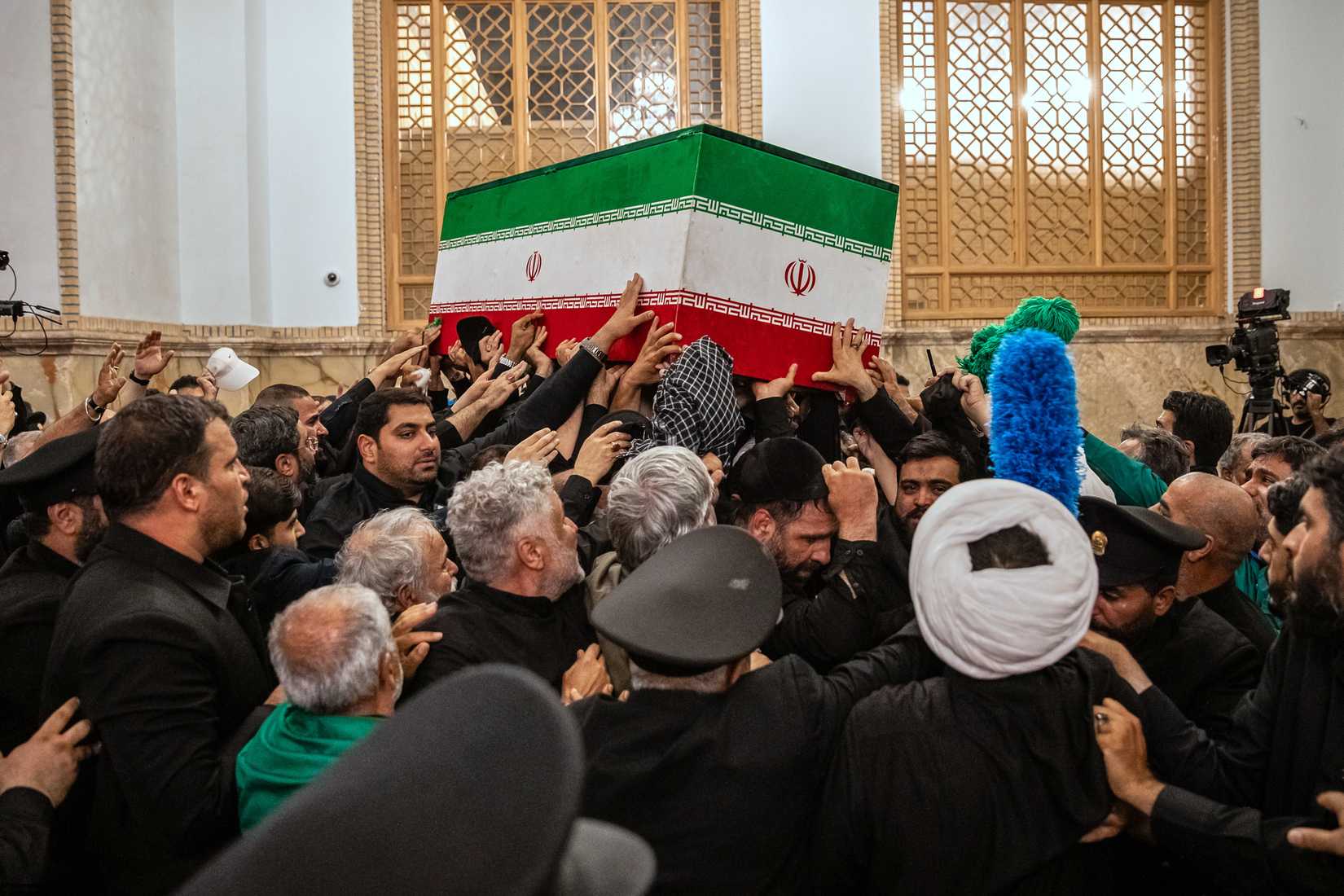
Both orders responded to the continuing hostage crisis and were revoked by Executive Order 12282 in January 1981 under the Algiers Accords, which led to the hostages’ release.
Sanctions returned in layers. President Ronald Reagan issued Executive Order 12613 in 1987, prohibiting most imports of Iranian goods and services because of Iran’s support attacks on commercial shipping in the Persian Gulf.
President Bill Clinton issued Executive Order 12957 in March 1995, restricting U.S. involvement in Iranian petroleum development, followed by Executive Order 12959 in May, which imposed a broad embargo on U.S. trade and new investment in Iran.
On Jan. 16, 2016, President Barack Obama issued Executive Order 13716 after the International Atomic Energy Agency verified that Iran had completed key commitments under the Joint Comprehensive Plan of Action (JCPOA).
The order revoked Executive Orders 13574, 13590, 13622 and 13645 and portions of Executive Order 13628 as part of the nuclear-related sanctions relief. Those measures had provided much of the presidential authority for nuclear-related secondary sanctions.
The administration also waived certain statutory sanctions, removed specified people and entities from sanctions lists, and issued limited licenses. Most direct trade between U.S. persons and Iran remained prohibited, while sanctions tied to terrorism, human rights abuses, weapons proliferation and ballistic missiles stayed in force.
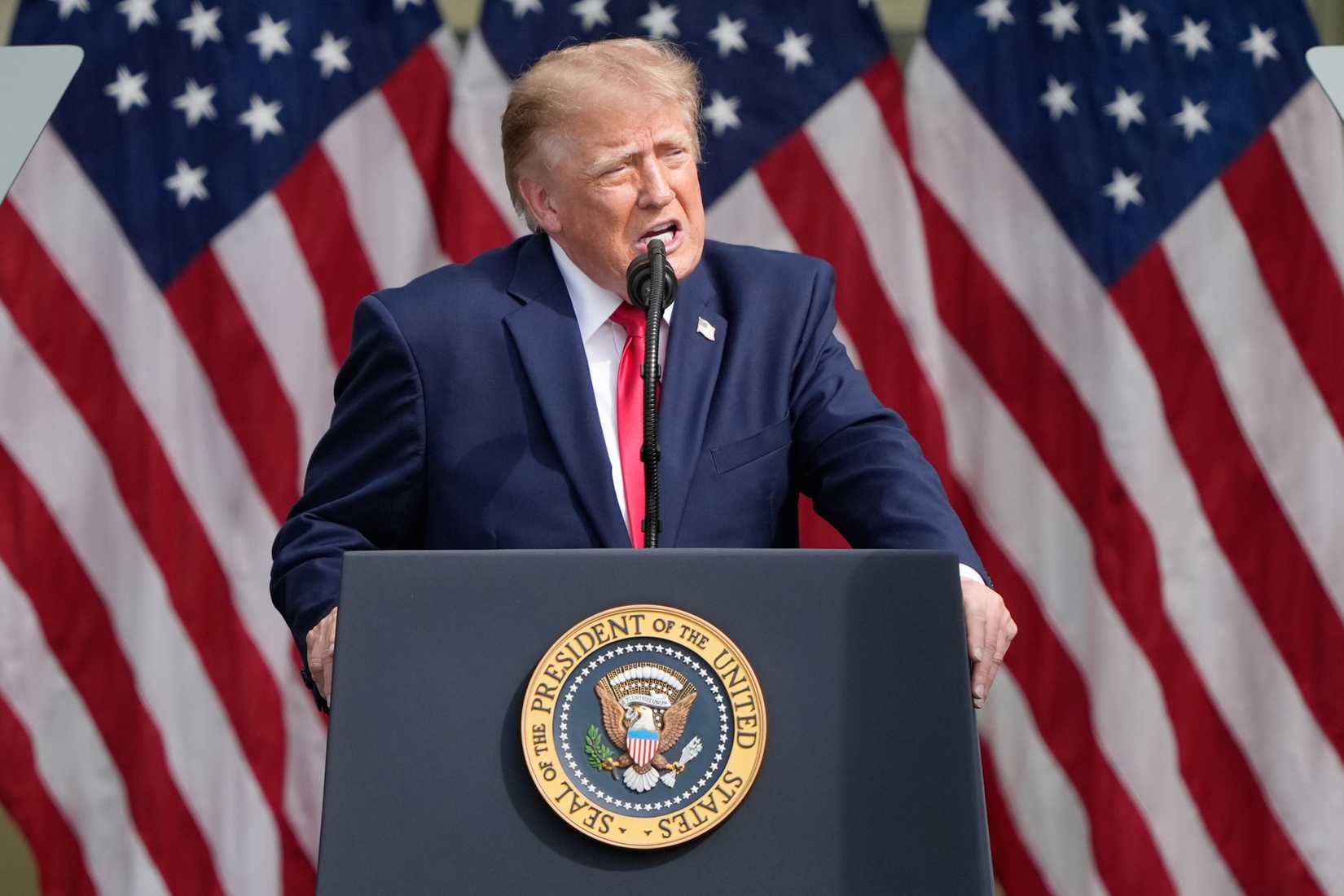
President Donald Trump speaks as he attends a ceremony to commemorate the 25th anniversary of the 9/11 attacks at the Pentagon, Friday, Sept. 11, 2026, in Washington. He has called AI and data center threats “a hoax.” (AP Photo/Manuel Balce Ceneta)
President Donald Trump withdrew from the JCPOA in May 2018 and fully reimposed the lifted or waived sanctions that November. His administration later expanded sanctions through Executive Orders 13871 and 13902.
After returning to office in 2025, Trump directed Treasury to intensify enforcement and reconsider licenses providing Iran economic relief.
Operation Economic Outcast expanded that system again in August 2026 by adding five sanctionable economic sectors and suspending several general licenses, including the educational authorization that had covered testing and admissions services.
Washington’s Iran Pressure Campaign
Treasury placed General License G within Operation Economic Outcast, a broader campaign launched on August 24 intended to pressure Iran over its nuclear and conventional weapons programs, support for armed proxies, attacks on U.S. partners, and interference with the Strait of Hormuz.
Sanctions provide economic leverage alongside diplomacy and military deterrence, and courts have historically given presidents substantial latitude when restrictions rest on national security and foreign policy judgments.
Companies also have reason to act cautiously because willful violations can carry criminal penalties. That compliance pressure helps explain LSAC’s rapid response, although it does not explain why the organization initially seemingly used Iranian citizenship rather than residence as its apparent screening method.
The administration can argue that eliminating exceptions increases Iran’s isolation and raises the cumulative cost of its military conduct. Educational testing, however, has no obvious connection to weapons production or proxy financing, and LSAC’s initial response temporarily reached American and Canadian citizens outside Iran.
A pressure campaign directed at Tehran’s missiles, proxies and regional operations reached aspiring U.S. law students within days, demonstrating how quickly economic sanctions can expand beyond their stated security targets.
Read the full article here
