



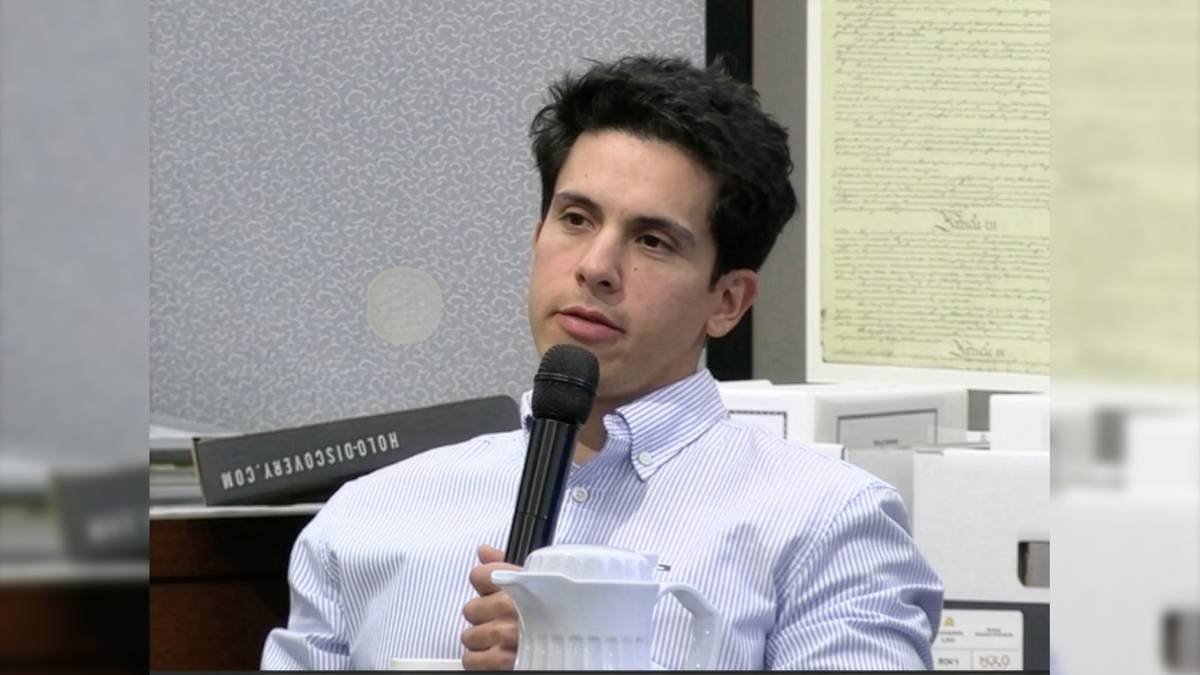

U.S. Navy veteran Omar Alrabadi was recently awarded a $56.5 million judgment roughly five years after he was beat unconscious on the Las Vegas strip and sustained a traumatic brain injury that led to the end of his service.
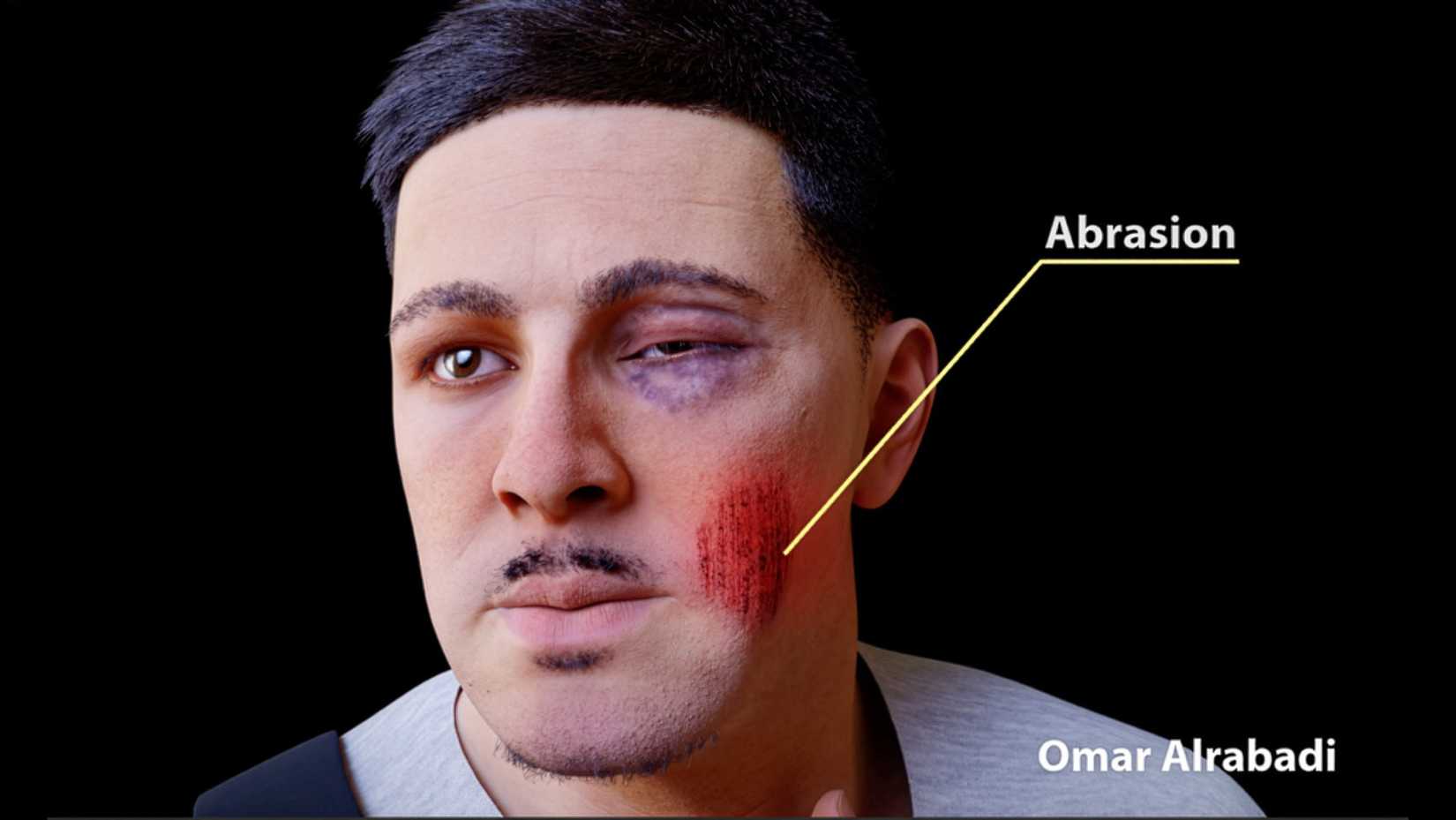
Alrabadi was attacked by multiple individuals in the early morning hours of July 31, 2021, by security guards and unknown individuals who, for reasons unknown to this day, beat the Navy sailor to the ground, knocked him unconscious, and stomped on his head six to eight times, fracturing his skull and causing hemorrhaging throughout his brain.
Alrabadi was ultimately forced to leave the military due to injuries sustained in the assault.
A jury delivered the verdict on Aug. 7 following a three-week trial before Judge Jasmin Lilly-Spells in Las Vegas’s Eighth Judicial District Court. The case stemmed from an attack on Alrabadi by multiple individuals, with the jury finding Caesars Entertainment and Three Amigos Restaurant Group, LLC equally at fault while assigning zero responsibility to the plaintiff.
That 50/50 split in costs incurred for each defendant includes $15 million in past damages, and $41.5 million for future damages, Kimball Jones, the Las Vegas-based attorney who represented Alrabadi, told Military.com. The attackers have never been found or identified, which contributed towards the broader legal case.
“We believe that the only reason we don’t know who they were is because Chayo [a restaurant under the Three Amigos subsidiary] and Caesars intentionally covered for them,” Jones said. “Otherwise, how do you let this happen without documenting the names of these people? These are literally your customers.
“They’re literally there buying booze, hanging out with your bouncers, arms around them, and everybody after the fact claims they have no idea who these people are. That’s unrealistic. And then you essentially thwart the police investigation by telling the police you don’t know anything about it, so the police literally shut down their investigation because there are no witnesses. … It was that combination of issues that made it so that those guys got away.”
Military.com reached out to Caesars Entertainment and Three Amigos for comment on the verdict. No responses were received.
How the Case Unraveled
The case, described by Alrabadi’s legal counsel as a “systemic failure of security at one of the Las Vegas Strip’s highest-traffic corridors,” determined that the two defendants were negligent in their training and supervision of security personnel.
Caesars Entertainment was held liable as owner and operator of the LINQ Promenade, where the attack took place. Three Amigos Restaurant Group, LLC, was held liable as operator of Chayo Mexican Kitchen and Tequila Bar, where the violence originated.
Jones told Military.com that when he came onto the case originally there was a lot of information not previously known or very limited.
He said court records showed that individuals at Caesars and Chayo, when questioned by police, said they didn’t know anything about it. Jones said after digging into the incident, it was discovered that the scene in question began at Chayo restaurant, was escalated and pushed onto the LINQ Promenade, and Alrabadi ultimately made it as far as the Flamingo Hotel and Casino before he was knocked unconscious and then stomped almost to death.
“All we know [at the beginning of the case] is we have this guy that was almost killed, and the reasons why seemed really strange,” Jones said. “Like, it didn’t make sense because there wasn’t really evidence of him engaging in violence. … Omar has no memory of what happened to him. His brain was seriously damaged.
“As we dug into the case, we discovered that it appears Caesars does have some involvement, so we had to add Caesars into the case, even though they weren’t even in the case at the beginning.”
What Happened on July 31, 2021
Jones told Military.com that Alrabadi was with his cousins on the day of the incident.
Alrabadi was stationed with the Navy in Washington State but grew up in San Diego, Calif., with cousins described more like brothers who lived next door. Spread out from Washington, to Ohio and Florida, they planned a Las Vegas trip to celebrate one of the family members getting married.
“They’re just having a good time,” Jones said. “They go they literally go skydiving that morning. They were just walking around the strip, they looked at the Bellagio fountains. They [did] some gambling. Just very normal stuff.”
Following a late dinner, they walked around the strip before returning to their hotel rooms. That was when they ended up at Chayo.
Jones, referencing surveillance footage uncovered throughout the legal process, said it appeared that within just a very short period of time after walking in, Alrabadi and the cousins get confronted by bouncers for an unknown reason. They were all asked to go to the front.
“They complied because they’re being asked to do it, and they go to the front, and then they’re talking with the bouncers,” he said. “All of a sudden, one of the bouncers just grabs Omar by the front of his shirt and starts forcing him out. And the cousin is like, ‘Why are you putting hands on him? He hasn’t done anything.'”
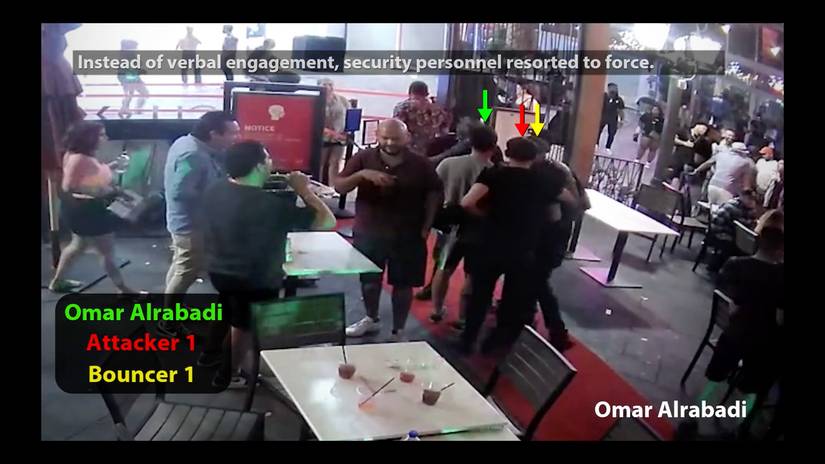
A scuffle brews and the trio is pushed out into a large courtyard area between the LINQ and Flamingo. Jones said two bouncers “literally take Omar’s cousin down to the ground” while a third kicks him in the head. The acts were all caught on video.
Alrabadi then approached a fourth bouncer trying to stop the assault, gently touching his shoulder “in a submissive way” as to not escalate the situation, Jones said.
“There’s kind of what we described as a handoff between the bouncer who is pushing Omar for no reason—Omar’s not violent, but he’s getting pushed around by this bouncer—and these two guys that are his buddies, very obviously. One of them immediately punches Omar in the face one second after the handoff with the bouncer.
“Omar tries to get away, and the guy keeps punching Omar in the back of the head over and over again as Omar runs away. Omar gets inside the Flamingo Casino looking for help. There’s no guards anywhere to be found, and the guy knocks Omar unconscious.”
Even while unconscious, the punches and kicks persisted. It’s estimated that Alrabadi was stomped in the head six to eight times, fracturing the skull and resulting in brain bleeds, or hemorrhages. He almost died from the violence.
The doctors indicated that if there had just been a little tiny bit more swelling, it would have caused a midline shift, which means the brain shifts over to one side, and ultimately that that would have likely been fatal.
To add insult to injury, the attackers left an unconscious Alrabadi and then went back to the initial scene where the bouncers were located. Jones said they exchanged “high fives and fist bumps and bro hugs, like they’ve just accomplished something together.”
Once law enforcement arrived at the scene, the attackers were gone and both security at Chayo and Caesars both told officers they didn’t know what happened.
The Three-Week Trial
Jones said that one of Chayo’s arguments was that Alrabadi or someone in his group was trying to start a fight with a group of Asian males, prompting bouncers to get involved before things got out of control.
“But there were some major problems with that story that we pointed out to the jury,” Jones said. “That was a real problem to begin with.”
One issue was how the defendants’ policies and procedures say that all witness statements and incident reports need to be completed at the latest by the next day, but preferably the day of, the incident. In this case, Jones’ team had clear testimony that, in fact, all witness statements were created on the day of the incident, which was July 31, 2021, and given to the manager that very day.
“But the tricky part about it for them was that those witness statements were all gone,” he added. “They had all been apparently destroyed because all the witness statements we got in the case were from two weeks later, after they had received a letter from an attorney. … It appears they then made new witness statements and got their story straight.
“In fact, they actually ended up getting two witness statements from one of the involved bouncers—which were not identical, which had different information in it, even. So, we felt very strongly that they had witness statements that would have told the true story earlier, but those were destroyed and replaced with some that made the company look quite a bit better.”
Jones said the incident report made numerous claims about the attackers being put in headlocks, on the receiving end of threats, and that Alrabadi or someone in his group hit a bouncer in the back of the head. But video was obtained of how the incident started, showing that none of those claims were factual.
Also, according to Jones, more than 1,000 video clips (1,013 to be exact) were withheld at the beginning of the trial. Once discovered, they were too late to be used in the plaintiff’s arguments.
“We had significant evidence of Caesars destroying a ton of video footage,” Jones added. “I think we identified 18 cameras they had that should have captured significant portions of this incident out in the LINQ Promenade and within the Flamingo that were all destroyed, all the video. So, there were huge issues of evidence destruction by both of the defendants in the case.”
Alrabadi’s Life Post-Attack
Jones said that the jury in Alrabadi’s case valued the ultimate monetary judgment as a response to the condition of the former Navy service member. Essentially, they put a value on the life he lost and conditions he endures for the remainder of his life.
Alrabadi, now 33, has an inability “to think at a high level,” as Jones described. He’s lost a huge portion of his IQ, his ability to remember, ability to taste, ability to smell. He’s also had vision problems.
“Headaches…wake him up in the night, every night,” he said. “Just imagine when you go to sleep at night, that probably at some point in the middle of the night, you’re going to wake up with just a screaming headache that is going to be so bad that it literally pulls you out of your sleep, and you have to deal with that for an hour or two, and then go back to sleep. That’s him every day.”
He said that for those who question the large monetary amount, he wants them to empathize with Alrabadi and what he lost. He made the argument of the fair value a reasonable person would have to be paid “to have their life that they plan for stripped from them in that way,” while carrying all these various medical burdens.
Jones actually recommended a judgment between $50 and $70 million, so the final amount fell short of his own aspirations.
“We have a very easy time of recognizing the money, the profits and losses that huge corporations are able to earn, and I think that we very fairly identify those things and reward or punish based on very simple factors in that sphere,” Jones said. “But when huge corporations do something to a person where they devastate their life, I think people sometimes start calling into question what the value is.
Still, where this incident occurred and how it played out drew Jones’ attention and, ultimately, the jury’s benefit of the doubt.
“I felt proud that I could represent Omar, who is the best guy that you can imagine,” he added. “He’s such a wonderful guy, and he’s such a fighter. He’s he’s doing his best to not let this incident define him, right? But man, it’s a devastating thing that took away most of the things that he wanted to do with life, and so now he kind of has to choose a different path, which is tragic. Nobody wants that.”
Read the full article here
