



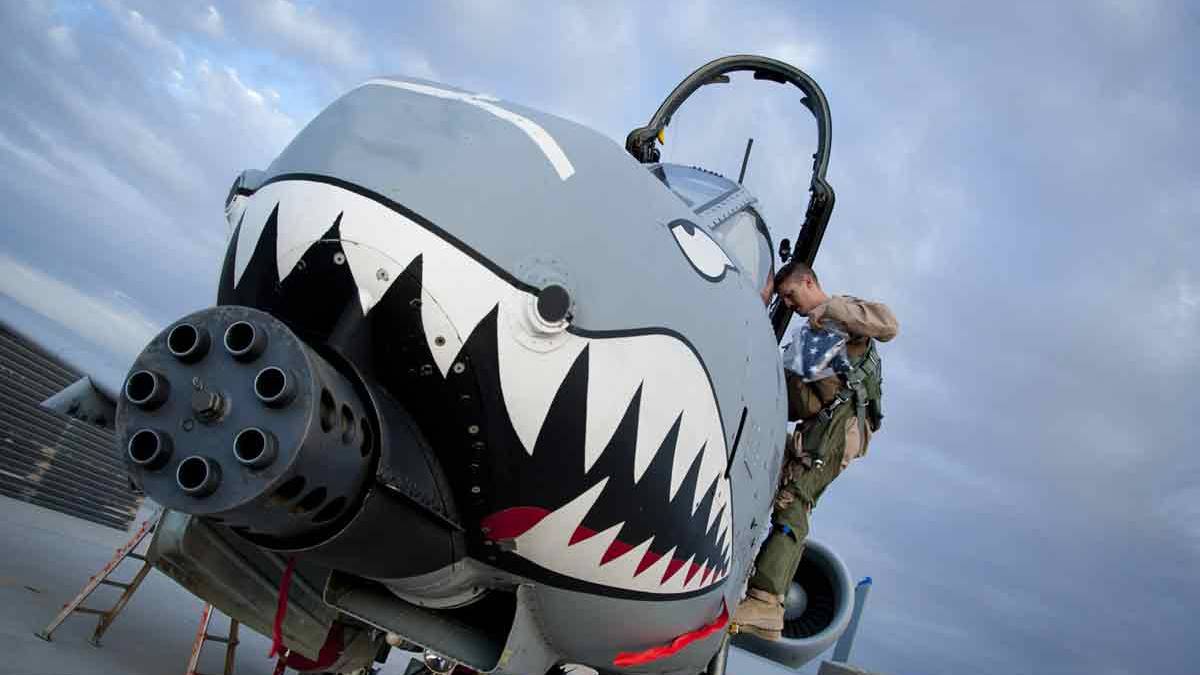

Congress is trying to save an aircraft by naming a bill after the sound of its gun. The bipartisan BRRRRT Act would require the Air Force to maintain at least 126 A-10 Thunderbolt II aircraft through fiscal 2033 and rebuild support programs that the service has already started dismantling.
The name stands for the Bolstering Recognition, Resurgence, Retention, and Remembrance of the Thunderbolt Act. It also imitates the unmistakable noise produced when the A-10 fires its 30 mm cannon.
Behind the memorable name sits a serious disagreement over whether the military should retire an aging aircraft before it has a dedicated replacement for protecting troops on the ground.
The Bill Would Reverse the Air Force’s Retirement Work
Rep. Abe Hamadeh, R-Ariz., introduced H.R. 9780 on July 20 with Rep. Don Davis, D-N.C., as the Democratic co-leader. Republican Reps. Richard McCormick of Georgia, Derrick Van Orden of Wisconsin, Sam Graves of Missouri and Cory Mills of Florida joined as original co-sponsors.
Several sponsors come from states with direct ties to the aircraft: Georgia and Missouri host the remaining A-10 squadrons at Moody and Whiteman. Davis-Monthan conducted its final A-10 flight July 29, ending operational flying there.
The Arizona base remains home to the military aircraft “boneyard.” As of Sept. 2, H.R. 9780 remains referred to the House Armed Services and Foreign Affairs committees. It has received no committee vote and has not become law.
The proposal would require the Air Force to retain at least 126 A-10s in its total inventory beginning in fiscal 2027 and maintain enough aircraft, units, pilots, testing and support to keep the fleet viable through fiscal 2033.
It would also give the service 90 days after enactment to explain how it would restore depot maintenance, pilot training, weapons instruction, flight testing and other support programs previously reduced in anticipation of retirement.
The bill would prevent additional retirements until the defense secretary certifies that an aircraft or combination of systems has entered service, become fully operational, and can perform the A-10’s missions.
The Army Secretary, Navy Secretary acting through the Marine Corps Commandant and head of U.S. Special Operations Command would have to provide written agreement. An aircraft performing close air support as a secondary assignment would not qualify as a replacement.
The bill goes further than keeping aircraft on a flight line. It would protect certain retired A-10s from being stripped for parts, preserve aircraft that could return to service or transfer to an ally, restart an A-10 demonstration team and protect the pilot training and weapons school pipelines. It also would require studies of foreign transfers, future autonomous aircraft and lessons that should carry into an eventual replacement.
The Air Force originally sought to retire the entire fleet by the end of the fiscal year. Congress instead established a minimum inventory of 103 aircraft. The service later announced that three squadrons containing approximately 54 A-10s would remain at Moody Air Force Base, Georgia, and Whiteman Air Force Base, Missouri, through 2029 and 2030. The BRRRRT Act would preserve a considerably larger fleet for three additional years.
Why the A-10 Is Different
The simplest way to understand the A-10 is that it is a specialized tool. Most modern fighters perform several kinds of missions. The A-10 and its pilots concentrate on helping troops who are fighting on the ground, directing other aircraft toward ground targets and supporting the rescue of downed aircrew.
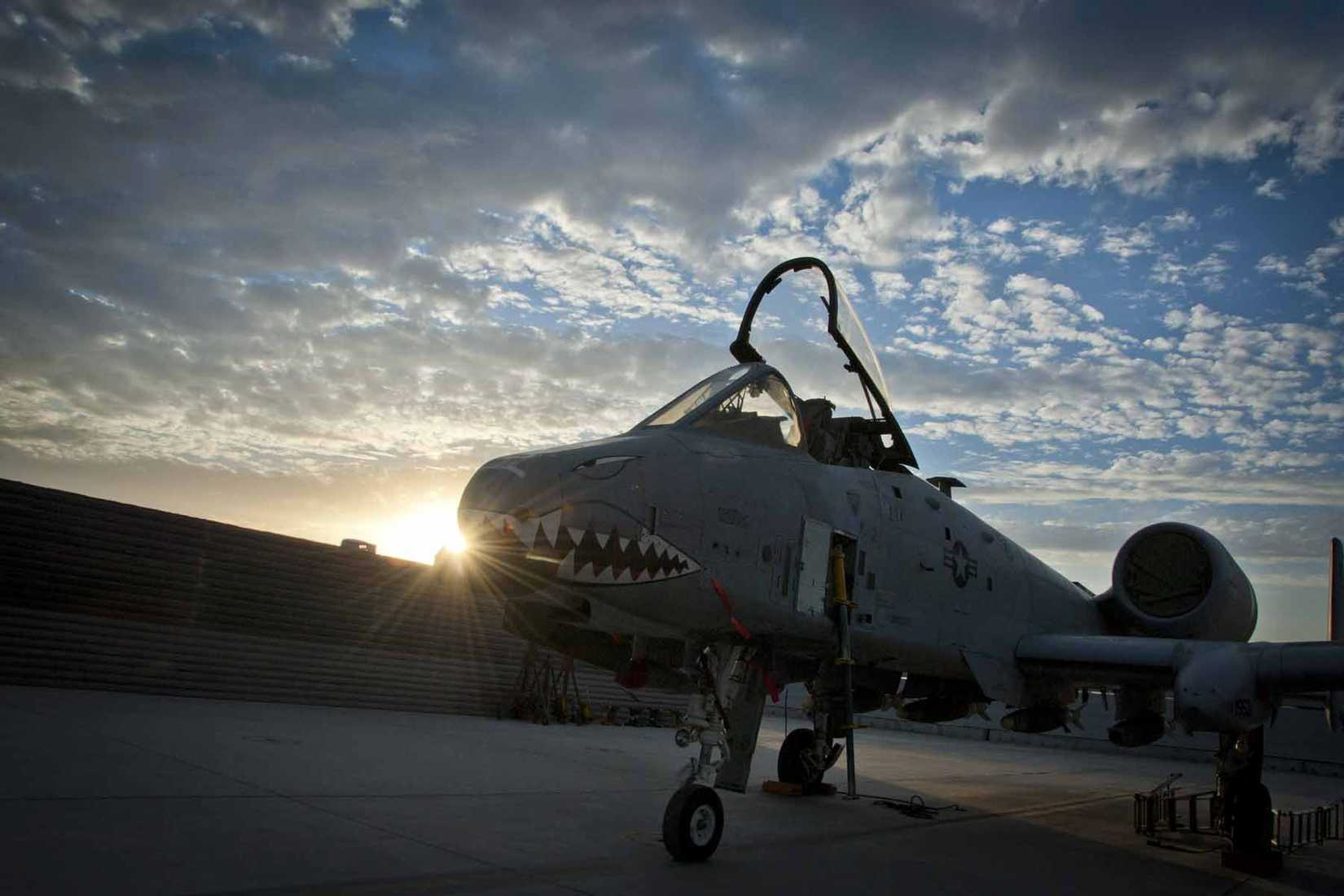
Its design helps the pilot see, remain nearby and attack precisely. The A-10 can maneuver at low speed and low altitude, stay near a battle for an extended period and use short, austere airfields close to the fighting. Its large bubble canopy gives the pilot visibility. Those features help when friendly and enemy forces are close together and the situation changes quickly.
The aircraft carries a seven-barrel GAU-8/A 30 mm cannon that can fire 3,900 rounds per minute. It can also carry as much as 16,000 pounds of bombs, rockets and missiles on 11 weapons stations. That mix lets one aircraft attack armored vehicles, moving targets and other threats without depending on a single kind of weapon.
The A-10 was also built to survive damage. Titanium armor protects the pilot and parts of the flight-control system. Self-sealing fuel cells reduce the danger from punctures, and manual controls allow the pilot to keep flying after hydraulic power is lost.
The Air Force says the aircraft can survive direct hits from armor-piercing and high-explosive rounds as large as 23 mm. Interchangeable engines, landing gear and tail surfaces simplify repairs at bases with limited facilities.
Other aircraft can perform close air support. The difference is how much of the A-10 enterprise is built around that job.
Why the Air Force Still Wants to Move On
The same design that makes the A-10 useful in close combat creates limits elsewhere. Flying low and relatively slowly can expose it to modern air defenses.
Air Force officials have cited the fleet’s average age of more than 43 years and concern that it would not survive well in a conflict against a peer military. The service estimated in its fiscal 2026 budget request that retiring the fleet would save $423 million in operation and maintenance costs.
The Air Force does not argue that close air support will disappear. It plans to spread the A-10’s work among aircraft including the F-35A, F-15E and F-16. Those aircraft can perform close air support while also carrying out other missions, and the F-35 can operate in threat environments that present greater danger to an A-10.
Supporters of H.R. 9780 answer that dividing the mission among several aircraft does not preserve the A-10 community’s specialized training, endurance, weapons mix and ability to coordinate directly with ground forces.
What Congress Must Decide
H.R. 9780 would not keep every A-10 forever. It would make the Pentagon preserve a larger fleet and the people and facilities needed to operate it while the military proves that another aircraft or group of systems can do the same work.
For now, the Air Force plans to keep a much smaller force through 2030; the House has backed sustainment through that year, and the standalone BRRRRT Act remains a proposal with no committee vote.
Read the full article here
