





Aerospace & Defense
S-400: Russia’s Air Defense Shield That the Ukraine War Proves Has Quite a Few Holes
Satellite imagery in August showed four S-400 launchers destroyed at Gelendzhik. The next day Ukraine said boat-launched drones burned two more in Crimea. The system those strikes were hunting is the one Moscow sold as the successor to the S-300.
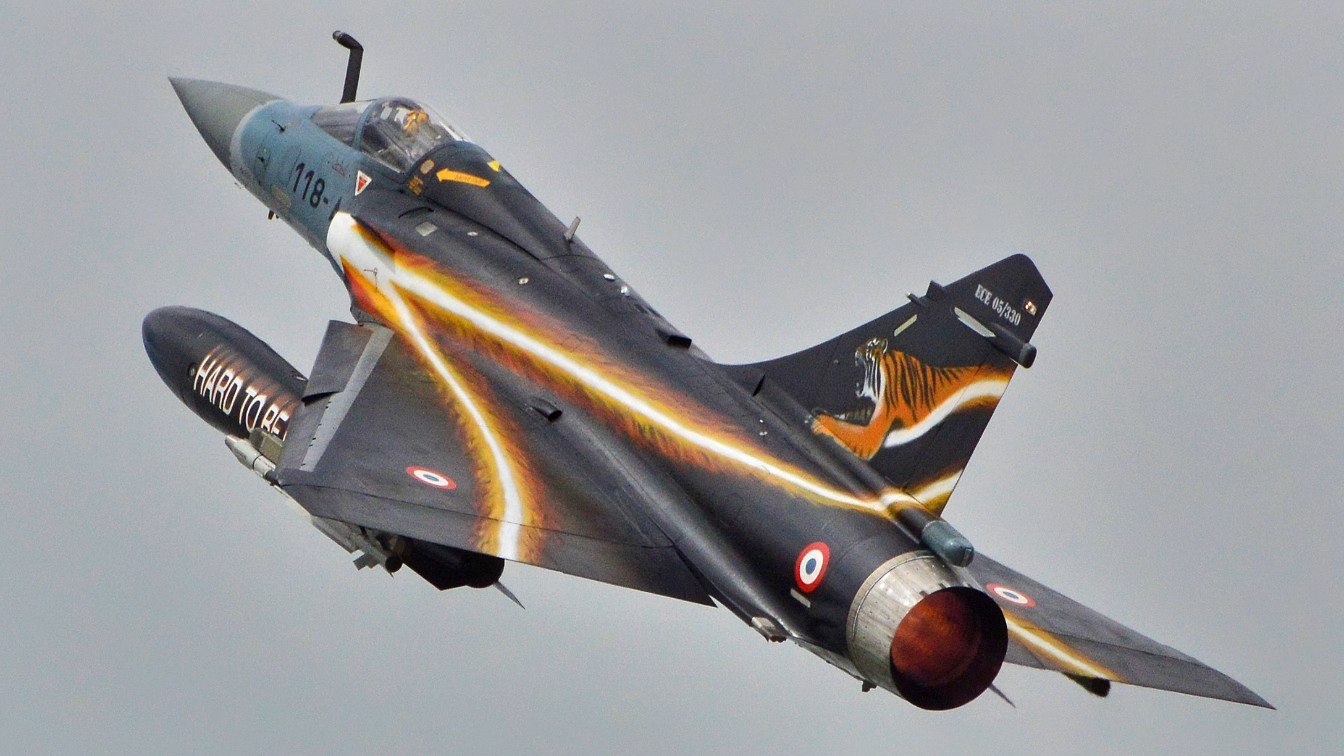
Dassault Mirage 2000-5. Image Credit: Creative Commons.
Satellite imagery dated August 9 showed four S-400 launchers destroyed at Gelendzhik on Russia’s Black Sea coast, after Ukrainian units said the battery had been firing at Ukraine the day before. The next day, Ukraine’s military intelligence said its Group 13 operators burned two more launchers in occupied Crimea, flying FPV drones off Magura boats, and published the claim on August 10. The trucks those strikes were hunting belong to the system Moscow has spent two decades selling as the successor to the S-300: a battery on wheels, built to find aircraft and missiles at long range and kill them before they reach whatever is being guarded.
The Crimea piece is a claim by Ukrainian intelligence. Gelendzhik is stronger because the satellite is on the record. Neither is a count of the whole force. Figures claiming that destroyed S-400 batteries numbered in the thirties have circulated for years and remain unverified. Visual counts run in the tens of launchers, which is not the same thing as tens of batteries.
What Moscow Changed: Meet the S-400
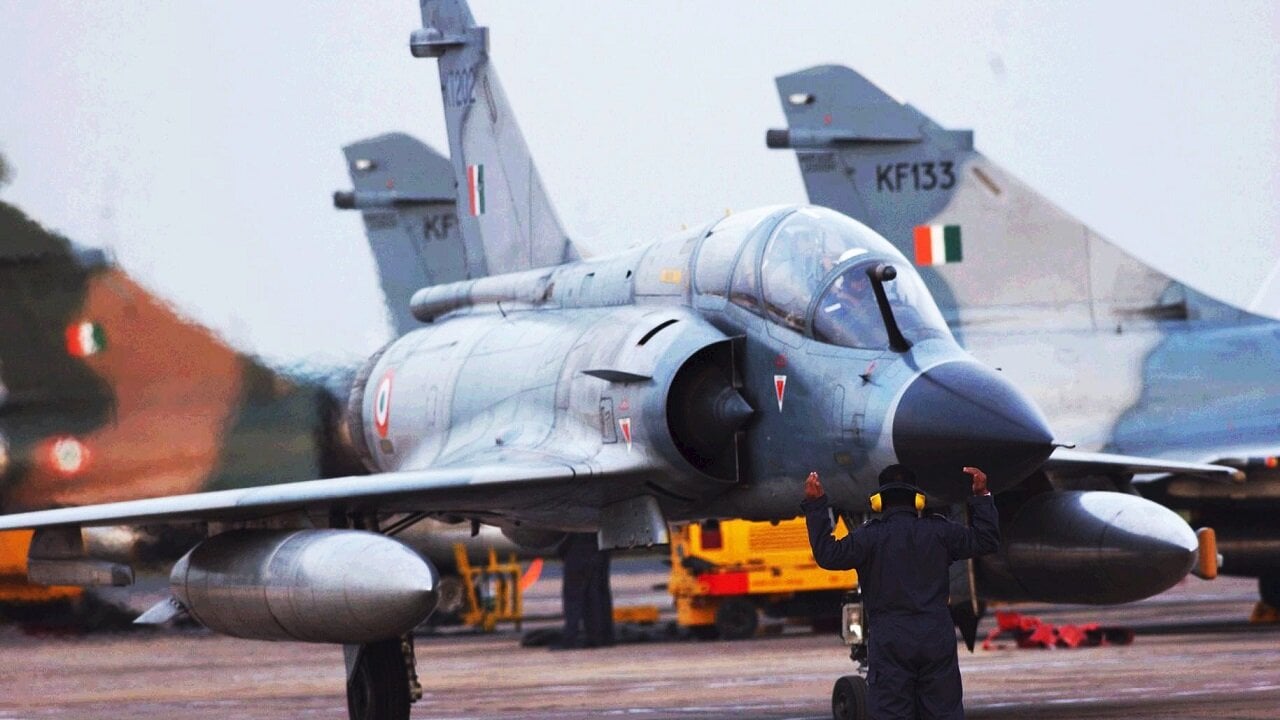
Mirage 2000. Image Credit: Creative Commons.
The S-400 Triumf — NATO’s name is the SA-21 Growler — was approved for Russian service on April 28, 2007. The first battalion went on combat duty on August 6 of that year in Elektrostal, in the Moscow region. Almaz-Antey drew it up in the 1990s as the next step after the S-300 family, and roughly seventy to eighty percent of the early design was adapted from that family, including launchers, canisters, and radars.
A regiment is a command post and a long-range acquisition radar, then several fire units, each with an engagement radar and the trucks that carry the missiles. One of those trucks holds four large missiles, or as many as sixteen of the smaller 9M96 rounds if those tubes are fitted. From 2007 until 2018, the missile actually doing the work was the 48N6 family, a round already used with the S-300, out to about 250 kilometers. The 9M96 pair — about 40 kilometers on the short round, 120 on the longer one — can ride on the same truck; in practice it is the standard load on a different system, the S-350. The famous round is the 40N6. Russia accepted it for service in September 2018, eleven years after Elektrostal. The advertised range is 400 kilometers.
What a Regiment Costs
Export contracts are the only prices in public, and they are not the same product. Turkey signed on December 29, 2017, a deal reported at $2.5 billion. The first components arrived in July 2019. That same month, Washington pulled Ankara from the F-35 line. CAATSA sanctions on Turkey’s procurement agency followed in December 2020. The batteries have sat largely unused.
India signed in 2018 for five regiment-sets at $5.4 billion in Reuters’s accounting, $5.43 billion in Indian reporting. Three were in the country by 2023. The fourth arrived in May. The fifth is now on a November 2026 calendar. In March, New Delhi approved buying more as part of a $25 billion package. On August 30, Indian reporting said Russia had submitted a proposal for five additional squadrons. That is a bid, not a signed contract.
China was the first export customer: a 2014 contract, two regimental sets, the first arriving in 2018, the second handed over by January 2020. The early press reported four to six battalions. The delivered count is two regiments.
What the War Has Done
Ukraine has been hunting these batteries since 2022. The launchers can be replaced. The radars and the command vehicles cannot, not at the same speed, which is why Ukrainian reporting in May 2023 of a HIMARS hit on a 55K6E command post in Kherson got the attention it did. The photographs circulated. They were not independently verified at the time. This publication wrote the strike when the imagery first appeared. The campaign has run three more years: ATACMS and Storm Shadow on Crimean sites, drones on the radars, and, this month, boats in the Black Sea.
Occupied Crimea has been the main hunting ground. Launchers and fire-control radars have been hit repeatedly, including a February strike Ukrainian special forces said took down a launcher and a 92N6E radar together. Russia still fires the system at aircraft and missiles. It has also used S-400 missiles against cities, and this year has converted some launchers to fire refurbished rounds on a ballistic profile. That is why the launcher count never tells the whole story. The radar that lets a battalion see is the piece Moscow cannot stamp out as fast as the trucks.
Indian officials said their batteries saw combat against Pakistan in May 2025, including a long-range kill. Pakistan disputes the claims. No independent party has verified them, and they do not change what is visible in Ukraine.
The system did a job Russia actually needed. It helped keep Ukrainian aircraft off medium and high altitude over the occupied zone and the border belt. It did not stop Storm Shadow, ATACMS, Neptune, or the boats. It did not keep Crimean airfields or the Black Sea Fleet headquarters intact.
What Is Still Coming: Meet S-500
On December 17, 2025, Russia’s defense minister said the first S-500 regiment had entered combat duty. Moscow describes it as a higher layer, not a replacement.
Read the full article from the source.
