




Eight minutes after the medevac plane lifted off from Roswell, its GPS went dark. The crew was flying a Beechcraft King Air through the New Mexico night toward a patient waiting near Ruidoso. Without satellite navigation, they began asking for help.
An air traffic controller called a supervisor, who reached out to the military and asked it to stop jamming, so they stopped jamming. The plane’s GPS came back, and the crew then reported the airport in sight. They accepted a visual approach, the kind flown by looking out the window rather than by instruments.
With the aircraft lined up, the supervisor told the military it could turn the jamming back on. Roughly five minutes later, the King Air struck a mountain ridge in the dark. All four people aboard were killed.
That sequence of events comes from a preliminary report released by the National Transportation Safety Board, and it has drawn national attention for a reason. It is believed to be the first known case in which military GPS jamming has been linked to a fatal civilian plane crash in American airspace.
What Investigators Know
That flight went down in the early hours of May 14. The King Air, operated by Generations Jets for Trans Aero MedEvac, had left Roswell Air Center late on May 13 to pick up a patient at Sierra Blanca Regional Airport.
It never arrived. The wreckage was found hours later in steep terrain in the Capitan Mountains, and the crash ignited a wildfire that burned thousands of acres.
What caused it has not yet been established. The FAA, in a statement to Military.com, stressed that point directly. “The NTSB has not yet determined the probable cause or any contributing factors to the accident,” the agency said, adding that investigators “collect, validate and analyze all available evidence before reaching any conclusions.”
A final report is not expected until 2027. However, the preliminary report does establish the timeline, including the jamming.
The Crew
The four who died were a medical transport team on a night mission. Keelan Clark and Ali Kawsara were the pilots. Kawsara was 23 and from Fort Worth, Texas. Sarah Clark and Jamie Novick were the flight nurses.
After the crash, an executive with Trans Aero MedEvac said the two nurses “embodied what it means to care for others,” and that their commitment to patients and teammates would not be forgotten.
They were flying the kind of mission that defines air medical work, going to get someone who needed a hospital, in the middle of the night, over hard country.
The Stop Buzzer
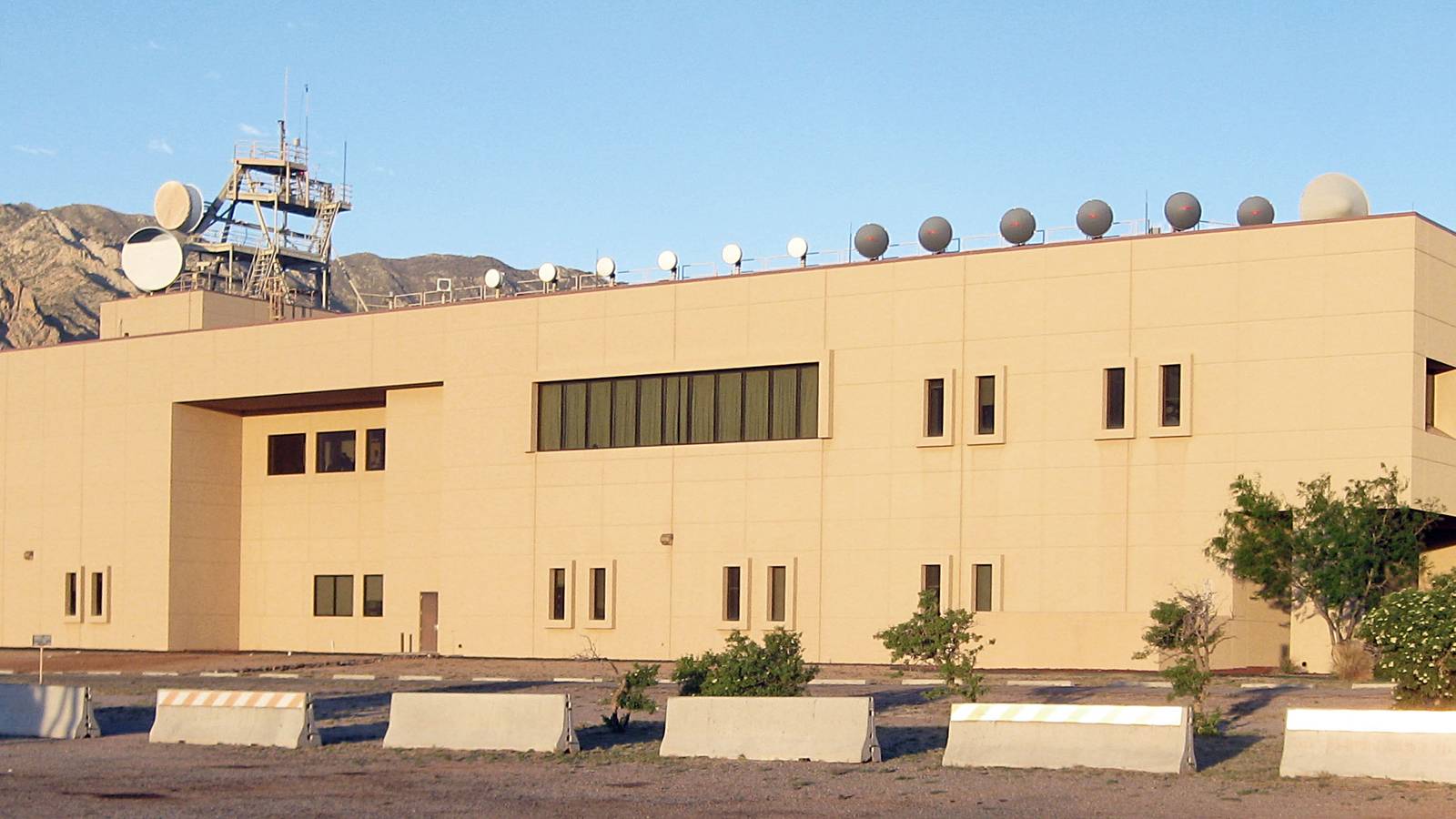
Jamming that night was part of a scheduled military exercise, one of the routine electronic-warfare tests conducted at White Sands Missile Range in southern New Mexico. Its purpose is to train and test in a GPS-denied environment, the kind of conditions American forces increasingly expect to face against a sophisticated adversary.
Pilots are warned of the testing in advance through federal notices, and the exercise runs in a set window, most of it overnight. Built into the arrangement is a safety valve that controllers call a stop buzzer. If jamming begins interfering with a civilian aircraft, a controller can ask the military to pause it.
That is what happened for the medevac crew, and it worked, briefly. The jamming stopped, the GPS returned, and then, after the crew reported the airport in sight, the jamming resumed. The plane hit the ridge with the jamming back on, roughly 14 minutes before the exercise was scheduled to end for the night on its own.
Years of Warnings
The stop buzzer and the surrounding friction were nothing new. For years before the May crash, air traffic controllers had filed reports through NASA’s Aviation Safety Reporting System raising alarms about the White Sands jamming, according to reporting by IEEE Spectrum, which reviewed the filings.
In late 2021, one controller wrote that a request to halt the jamming had been refused, and added that refusing to stop the buzzer was commonplace.
A 2024 filing described the delay in pausing jamming as a danger to the flying public. Spectrum also reported, citing a person familiar with the discussions, that FAA managers had been told each pause in the jamming cost the military between $5 million and $10 million. Neither the FAA nor White Sands confirmed that figure.
What the filings show is that the hazard at the center of the May crash had been named, in writing, by the people working the airspace, well before anyone died in it.

The Other Side of the Story
Jamming is just one thread of this investigation; other threads will be pulled as well. Conditions that night were unforgiving. There was no moon. The crew accepted a visual approach into mountainous terrain rather than continuing to hold for an instrument procedure.
And the destination airport’s automated weather system was out of service, which mattered more than it might seem, because the instrument approaches there were not authorized without a local altimeter setting. Their backup to the GPS was, effectively, unavailable that night.
The FAA said it maintains a network of ground-based navigation aids precisely so that flights can continue when satellite service fails, including radio beacons, distance-measuring equipment and instrument landing systems, and that it issues notices to warn pilots of disruptions. This system is designed with redundancy, but on this flight, on this night, the redundancy did not hold.
John Cox, a retired airline pilot and safety consultant, put the tension plainly in remarks to The Associated Press. “The loss of GPS should not result in the loss of an airplane,” he said. That both things are true, that GPS alone should not down an aircraft and that four people are dead after losing it, is the knot the NTSB now has to work through.
Potential for Problems
This crash occurred in the middle of a trend the aviation world has watched with growing unease. Reports of GPS interference in American airspace have climbed sharply in recent years, according to the Aircraft Owners and Pilots Association.
They have gone from a handful of incidents annually to dozens, as military electronic-warfare testing expands and the technology to disrupt satellite signals spreads.
For now, the government has said little, although its hands are tied. The Department of Defense referred questions from Military.com to the Army. The Army, citing the ongoing investigation, declined to comment, and the NTSB will not issue its final word until 2027. Until then, what remains is a documented sequence of events with a big hole in the middle where a cause will eventually go.
Read the full article here
