



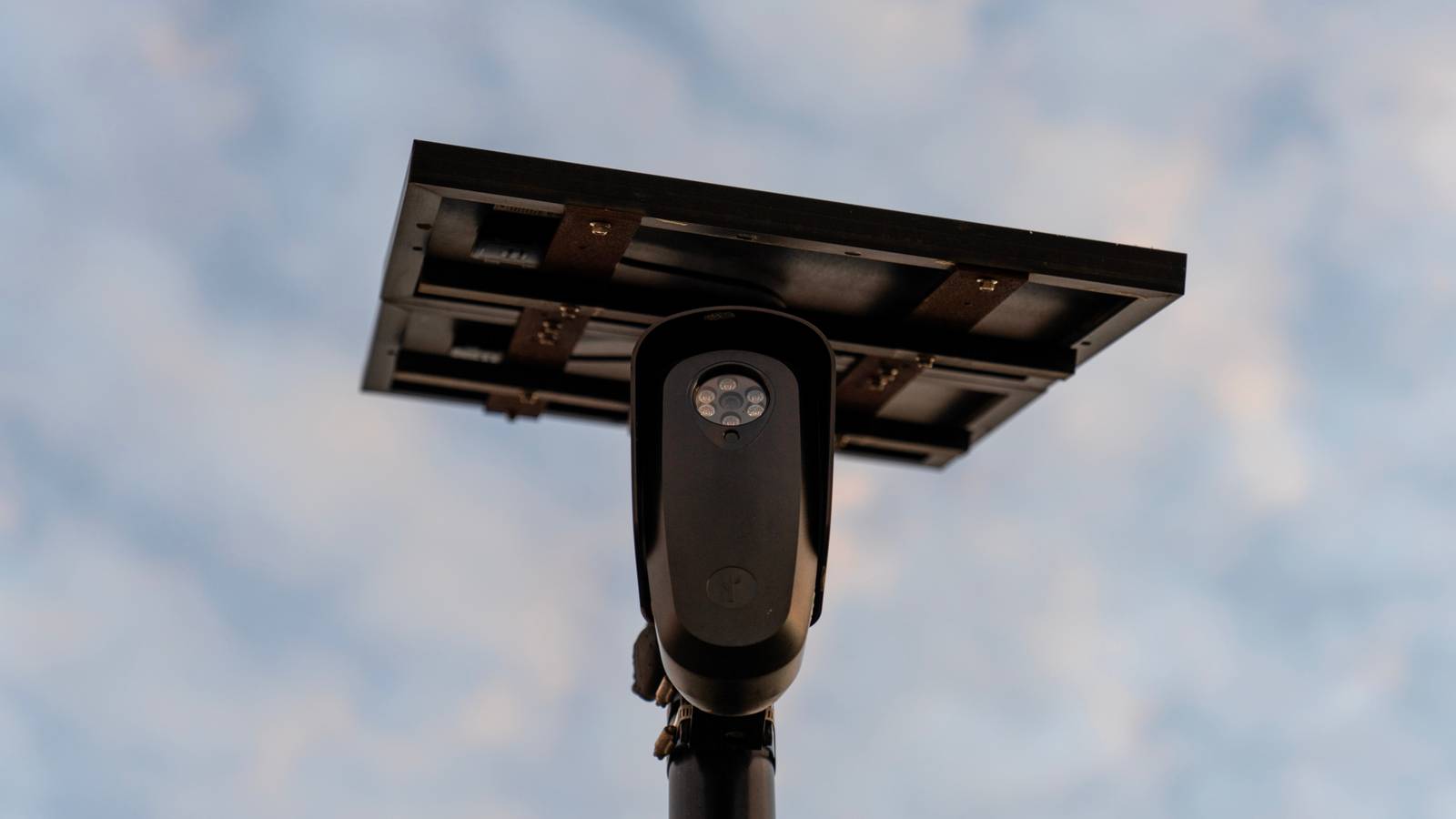

In a country where divisions are pronounced and agreement is minimal, a growing number of Americans have found common ground on a particular issue: privacy.
The technology many citizens have rebelled against is the automated license plate reader. The company at the center of the fight is mostly Flock Safety, whose cameras photograph passing vehicles and feed that data into a searchable national network used by thousands of law enforcement agencies. Opposition to this tech cuts across political lines and persuasions, mirroring similar opposition that has sprung up in various U.S. pockets against AI data centers.
Chad Marlow, a senior policy counsel at the American Civil Liberties Union (ACLU) who leads the organization’s national work on Flock-like technology, has watched that national coalition of opposition assemble.
“I think that people all over the country are opposed to mass government surveillance, but for different reasons,” Marlow told Military.com.
Libertarians view it as the government intruding on private lives, Marlow said. Meanwhile, he said that supporters of the MAGA movement see the technology as “hitting directly on their concerns about the deep state.” Traditional conservatives see counterintuitive measures that go against their small-government principles.
Progressives’ “biggest concern” regarding mass surveillance are the vulnerable groups that surveillance has always targeted first, he added. Centrists, he said, simply find it offensive that a system tracks “everywhere everyone goes, even if they are not suspected of a crime.”
“While all these groups have different reasons for opposing Flock, ALPRs, and mass government surveillance, they are all arriving at the same conclusion: mass government surveillance is out of control and needs to be reined in immediately,” Marlow said.
Repeated efforts by Military.com to attain comment from Flock received no responses ahead of publication.
The Business of Being Watched
The sharpest criticism of Flock’s model is coming unexpectedly, perhaps, from another surveillance company.
Steve Lindsey is the co-founder and chief strategist of LiveView Technologies, which builds the solar-powered mobile security towers, most notably at the Lincoln Memorial Reflecting Pool.
His company competes in the broader surveillance market, and he argues the core problem with license plate networks is not the cameras but the business model behind them—which he calls the “network effect.”
He explained that the idea behind it is that a customer pays for a handful of cameras but gains access to the entire network’s data, and everyone else gains access to theirs.
“Once the network gets big enough,” Lindsey told Military.com. “Every person [criminal or not] is being tracked.”
A company built on that model, he added, has every incentive to own the data and hold it as long as possible, because the data is the product.

Lindsey said his own company takes a different approach, describing features that he believes the industry should adopt broadly.
LiveView customers retain exclusive ownership of their footage, he said, while the company cannot view that footage without permission. Its units capture no facial recognition or biometric data, and data is generally held for about 30 days on the device before being recorded over.
He also said the network-sharing feature that powers license plate systems “should not be the default behavior” and should require something closer to a subpoena to activate.
‘A Meaningless False Sense of Security’
Where Lindsey sees a fixable design flaw, the ACLU sees something more akin to a feature.
Marlow said the reassurance that Flock’s customers own their data does not mean what buyers think it means.
“In most cases, as with Flock, the customers ‘own’ the data, but then Flock’s standard contract gives the company a perpetual, royalty-free, worldwide license to use the data with very few restrictions, making the ownership issue moot,” Marlow said. “In fact, it intentionally provides a meaningless false sense of security for Flock customers.
“Flock’s core business model is to trade people’s privacy for profits, and the more location data they have to trade, the more money they make.”
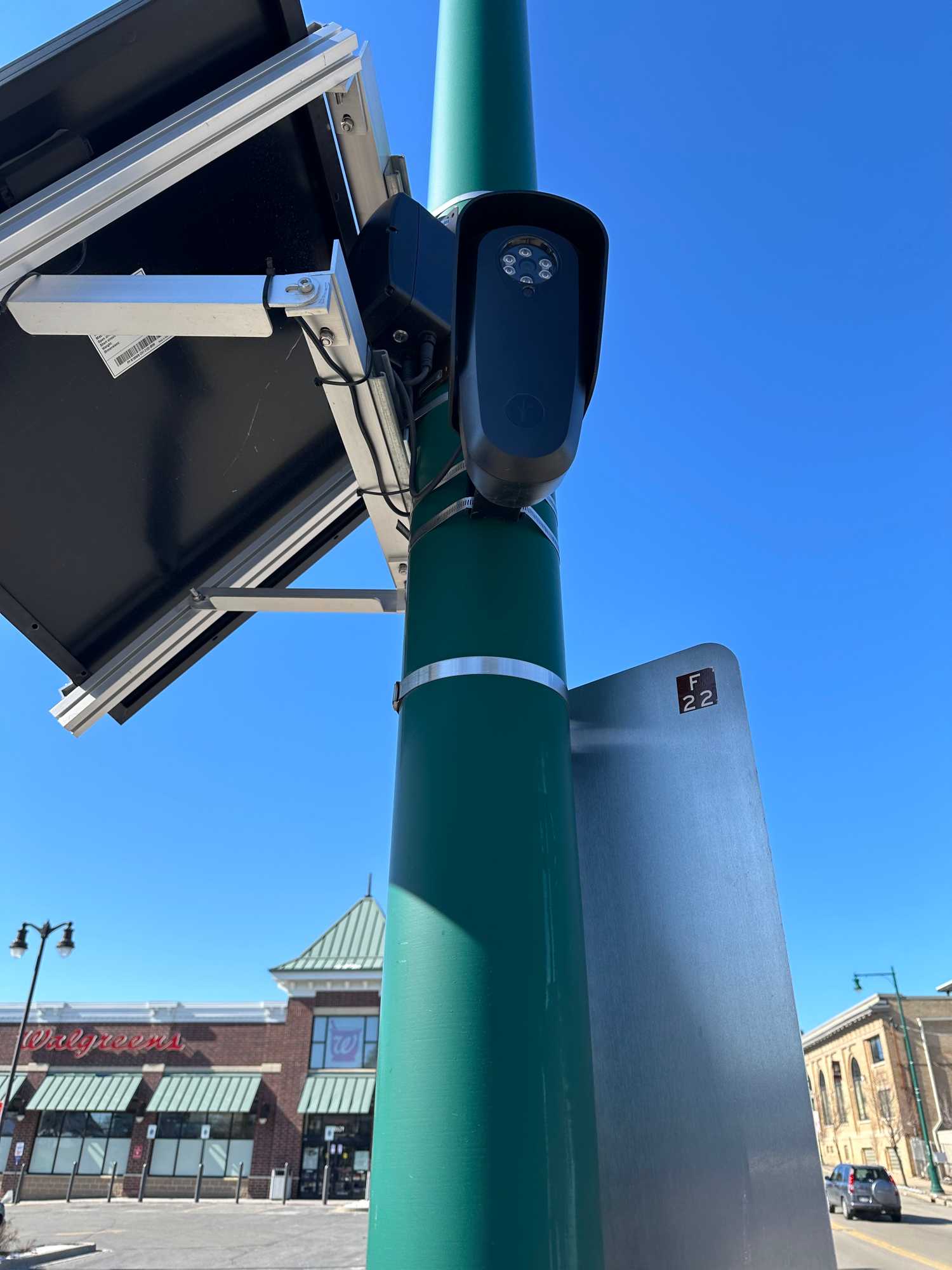
Flock, he said, is backed by nearly $1 billion in venture capital “counting on the massive returns selling access to nationwide data provides,” and is locked into a model that trades privacy for profit.
Marlow’s clearest concerns are about retention. It takes only seconds to check a license plate against a law enforcement hot list, he noted, yet Flock’s default retention period is 30 days. New Hampshire limits retention to 3 minutes, for example.
The ACLU’s position is that 48 hours is an “acceptable limit” in the absence of a specific investigation.
“The 30-day default Flock retention period is absurd, unjustified, and does great harm to American privacy,” Marlow said. “The idea that every person in America should be tracked for an entire month because any one of us could turn out to be a criminal adopts a very un-American view of privacy that our Founders would find deeply troubling.”
Who Watches the Watchmen?
Flock and the police departments that use it point to audit tools as a safeguard against abuse.
However, those tools have caught officers misusing the system. In Georgia alone, several officers have been arrested this year over the alleged misuse of surveillance and license plate data, according to the Georgia Bureau of Investigations.
Marlow is unconvinced that catching some misuse proves the system works. The audits, he said, cannot be judged effective without knowing how much misuse goes undetected.
“Even if Flock catches several dozen officers who misuse the system, if the total number of police misusers is in the hundreds, then the audit system doesn’t work nearly well enough,” he said.
His deeper objection is to the premise of self-regulation. He and the ACLU have encouraged not using ALPRs (Automated License Plate Recognition) at all, adding that if used they should operate with “critical guardrails.”
“I don’t think many Americans support the idea of letting a fox guard the hen house,” he said, arguing that a company’s first loyalty is to its investors rather than the public.
Flock’s Defense
Flock maintains that its cameras are not the main issue at play, though not everyone believes the company for various reasons.
For example, the company told police in Loveland, Colo., that it had no federal contracts, according to local NBC affiliate 9News. After the outlet presented public records it discovered showing shared access between Flock and Border Patrol agents, the company acknowledged that it wasn’t being forthright about its government pilot agreements with U.S. Customs and Border Protection and the Department of Homeland Security.
“We clearly communicated poorly,” Flock’s chief executive, Garrett Langley, said.
Questions about the company’s honesty surfaced again this month.

At a City Club of Cleveland forum on July 10, Flock’s chief communications officer, Josh Thomas, said that such tech is here to stay.
“There will be cameras in public, and if it’s not Flock, it’ll be someone else,” Thomas said, according to Cleveland.com. “So, the question that we have to ask ourselves is, how do you then align the values that matter?”
The forum came days before Cleveland City Council was scheduled to vote on whether to renew the city’s contract for the 100 Flock cameras it has used since 2023.
The council ultimated voted 9-6 to renew Flock’s contract for six months, adding privacy protections and directing the city to seek competing bids for a new provider.
Voting followed the release of audit logs, reviewed by Signal Cleveland, showing that most searches of Cleveland’s data were run by outside agencies—some as far away as California. Out-of-state agencies had also run immigration-related searches in the city’s system.
In Columbus, Ohio, a police audit found over 15,000 possible immigration-related searches. It prompted the mayor to order a halt to statewide access.
In Congress, an amendment to restrict federally funded jurisdictions from using the readers drew sponsors from both parties before it was voted down in committee.
Flock has defended its technology as a tool that solves crimes, recovers stolen vehicles and locates missing people. They have said local governments, rather than the company, are mainly responsible for data access.
For Marlow, the through line is the coalition itself and what it signals. Americans who agree on almost nothing, he said, have looked at the same technology and reached the same verdict.
“This national display of public unity on this issue,” Marlow said, “is very inspiring and refreshing.”
Read the full article here
