



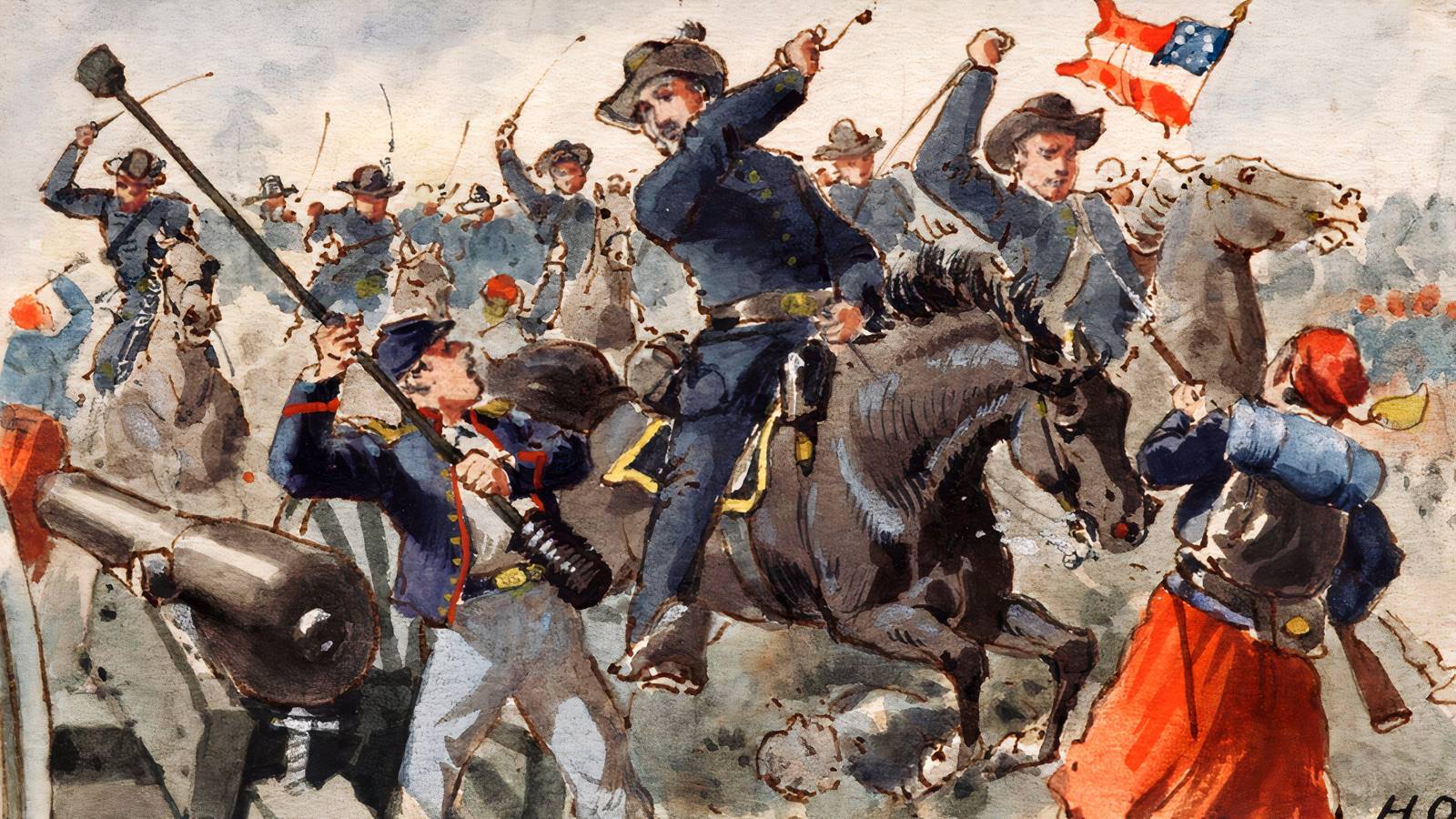

On July 21, 1861, the road from Washington to Centreville, Va., was filled with civilians eager to see what many believed would be the war’s first and perhaps final major showdown. Confidence in a quick Union victory ran so high that spectators treated the march toward Bull Run less like the opening of a brutal campaign and more like a public outing.
Men, women and children joined members of Congress on the hills overlooking the fighting. Some arrived with picnic baskets, carriages and opera glasses, expecting the Union Army to break the rebellion and clear a path to Richmond.
William Howard Russell, covering the battle for The Times of London, described the strange excitement around him.
“On the hill beside me there was a crowd of civilians on horseback, and in all sorts of vehicles, with a few of the fairer, if not gentler sex,” Russell wrote. One woman watching through an opera glass celebrated a heavy burst of gunfire: “That is splendid, Oh my! Is not that first rate? I guess we will be in Richmond tomorrow.”
By late afternoon, many of those spectators were swept into the Union retreat. Union soldiers, horses, artillery wagons, and civilian carriages crowded the roads back to Washington after Confederate forces turned an early Union lead into a surprising victory.
In the North, the fight became known as the First Battle of Bull Run, after the stream that crossed the battlefield. Confederates called it the First Battle of Manassas, after the nearby railroad junction.
Both Armies Arrived Unprepared
Public pressure pushed the Union Army toward Manassas. Newspapers called for an advance on Richmond, Va., while members of Congress complained that President Abraham Lincoln and the Army were moving too slowly. Many volunteers had enlisted for only 90 days, reflecting the widespread belief that the war would be brief.
On July 16, Brig. Gen. Irvin McDowell led about 35,000 Union troops out of Washington. His target was Manassas Junction, where two important railroads met about 30 miles southwest of the capital. Capturing the junction could disrupt Confederate reinforcements and open a route toward Richmond.
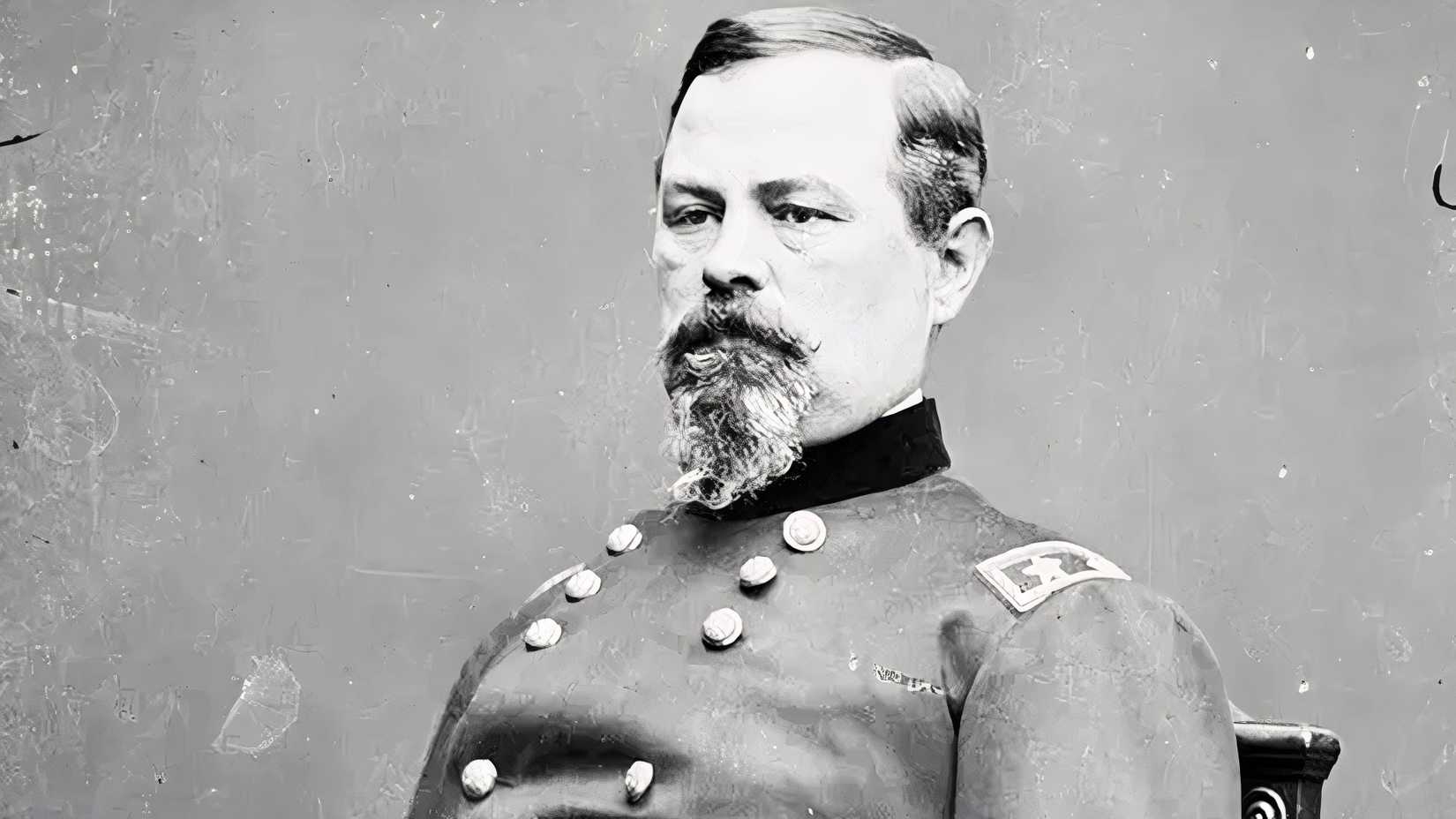
McDowell knew his soldiers needed more training, but political demands for immediate action outweighed military caution. Most of his men were inexperienced volunteers.
The Confederate forces waiting near Bull Run were little better prepared, with newly recruited troops and officers who had never commanded formations of that size in combat. The U.S. Army Center of Military History identifies poor preparation, unrealistic expectations and inexperienced leadership among the battle’s central lessons.
Uniforms made the confusion worse. Some Union units wore gray, while some Confederate soldiers appeared in blue. Other regiments arrived in colorful militia uniforms that bore little resemblance to the standardized blue and gray clothing later associated with the war. On a battlefield already clouded by smoke and disorder, troops sometimes struggled to distinguish friend from foe.
A Railroad and a ‘Stonewall’ Changed the Fight
McDowell’s attack initially worked. Union troops crossed Bull Run at Sudley Springs and drove back the Confederate left flank during fighting around Matthews Hill. For a time, a federal victory appeared within reach.
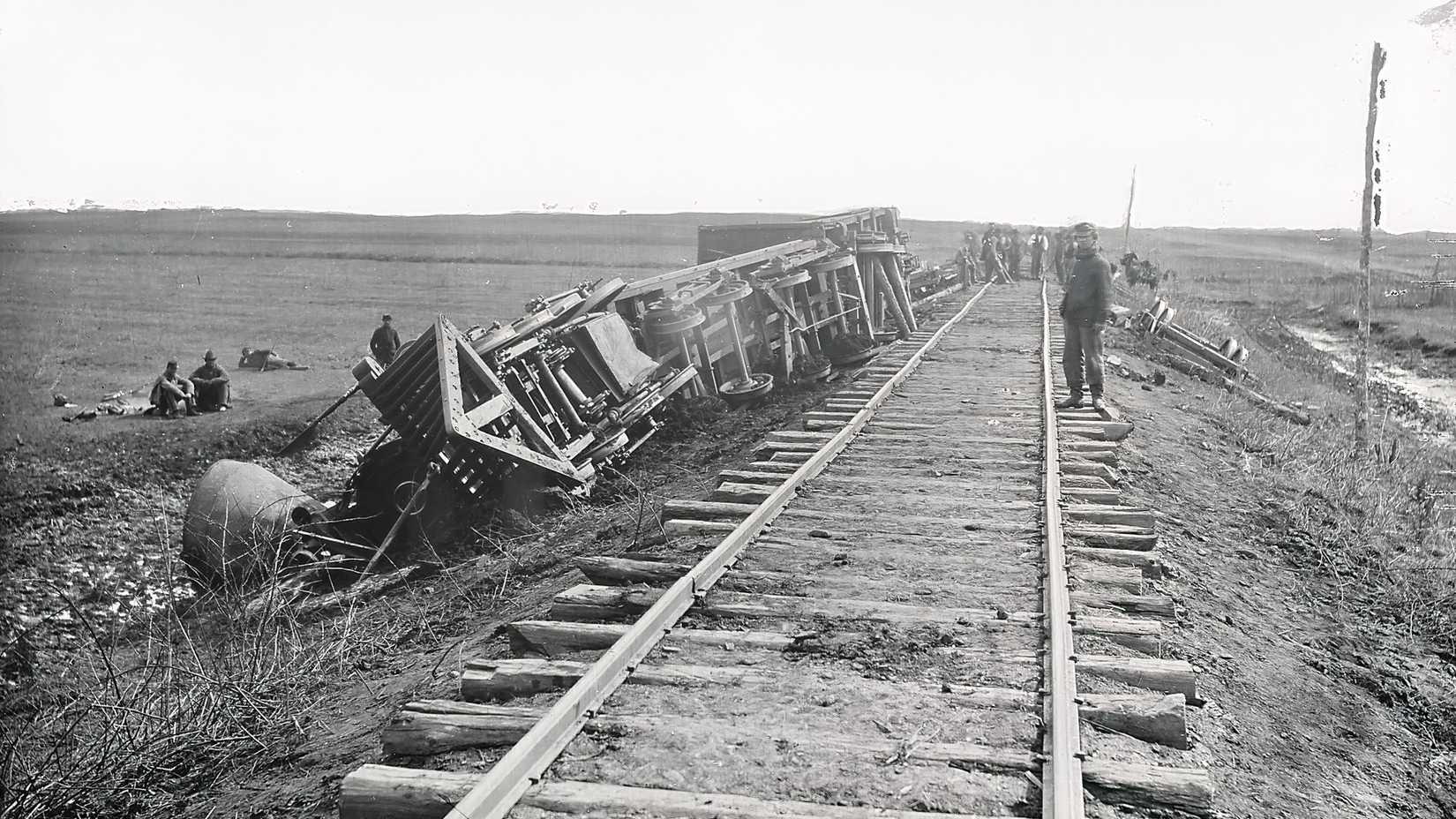
The railroad network gave the Confederates a critical logistical advantage. Gen. Joseph E. Johnston eluded the Union force holding him in the Shenandoah Valley and moved about 9,000 troops by rail to reinforce Brig. Gen. P.G.T. Beauregard near Manassas. Their arrival offered an early demonstration of how railroads could move soldiers quickly enough to alter the course of a battle.
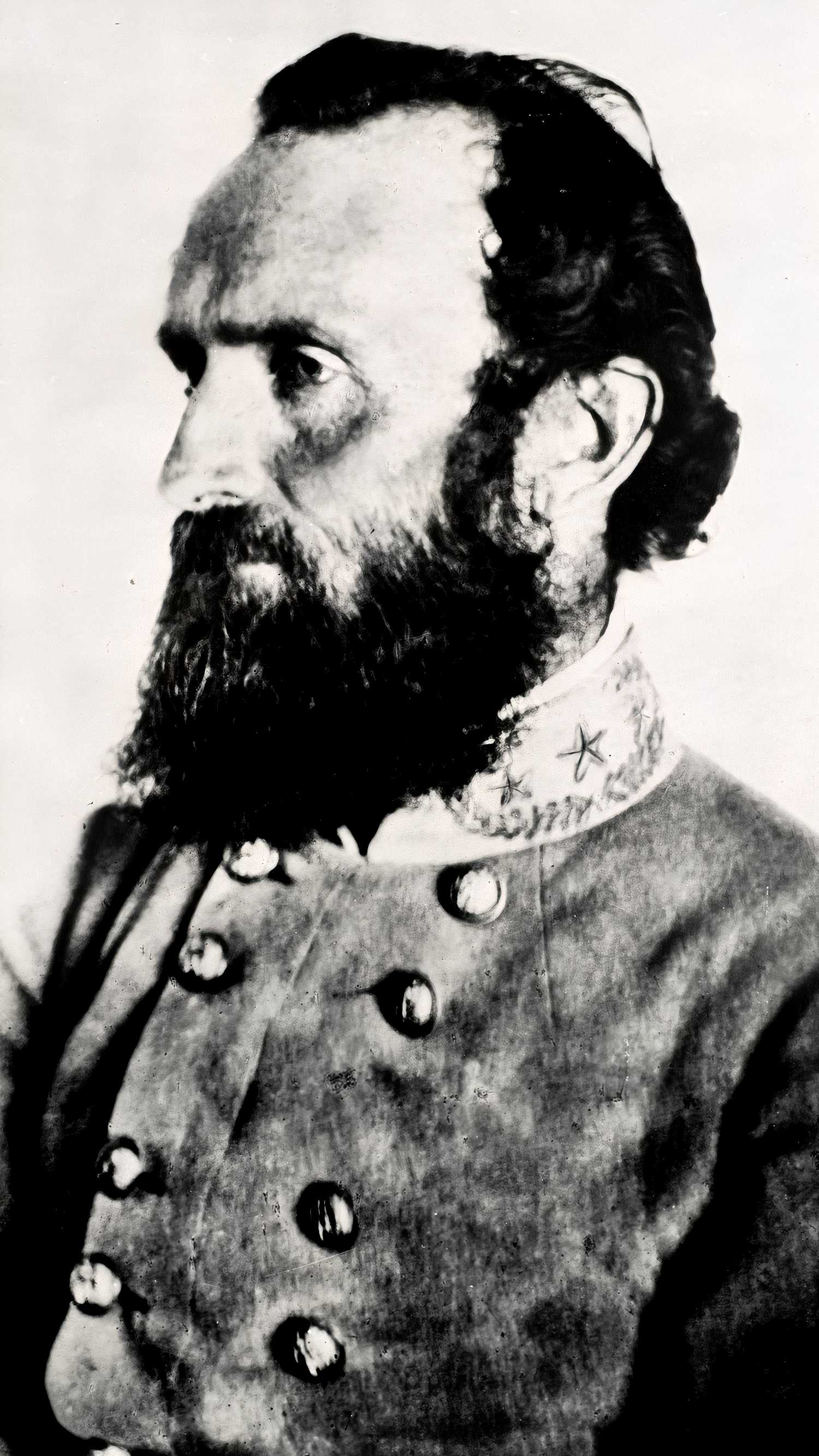
On Henry Hill, about 2,500 Virginians under Brig. Gen. Thomas J. Jackson formed a defensive line supported by 13 artillery pieces. As Union forces pressed their attack, fighting around the guns became fierce and sometimes hand-to-hand.
During the chaos, Brig. Gen. Barnard Bee reportedly pointed toward Jackson and declared, “There stands Jackson like a stone wall!”
Historians still debate whether Bee meant the remark as praise or criticism, but the name endured. Jackson became “Stonewall” Jackson, and his command became known as the Stonewall Brigade.
Inspired by Jackson’s stand, Confederate troops held firm as more reinforcements arrived. The intense battle saw the cannons on Henry Hill change hands several times. As the day went on, Union attacks lost momentum while the Confederate line stiffened. By late afternoon, a series of Confederate counterattacks broke through and drove Union soldiers from the field.
An Orderly Retreat Became a Rout
At first, the Union retreat was not a panic. Regular soldiers covered the withdrawal while volunteers moved back across Bull Run. The withdrawal deteriorated when they reached roads crowded with wagons and the carriages of people who had come from Washington to watch the battle.
Confederate artillery fire overturned a wagon on the Cub Run bridge, blocking the crowded escape route. Soldiers abandoned weapons, artillery and equipment as they scrambled through the creek and up its muddy banks. The withdrawal collapsed into a rout, sweeping senators and other spectators into the chaos. One senator fled after a Confederate shell struck his buggy; another reportedly tried to stop retreating troops.
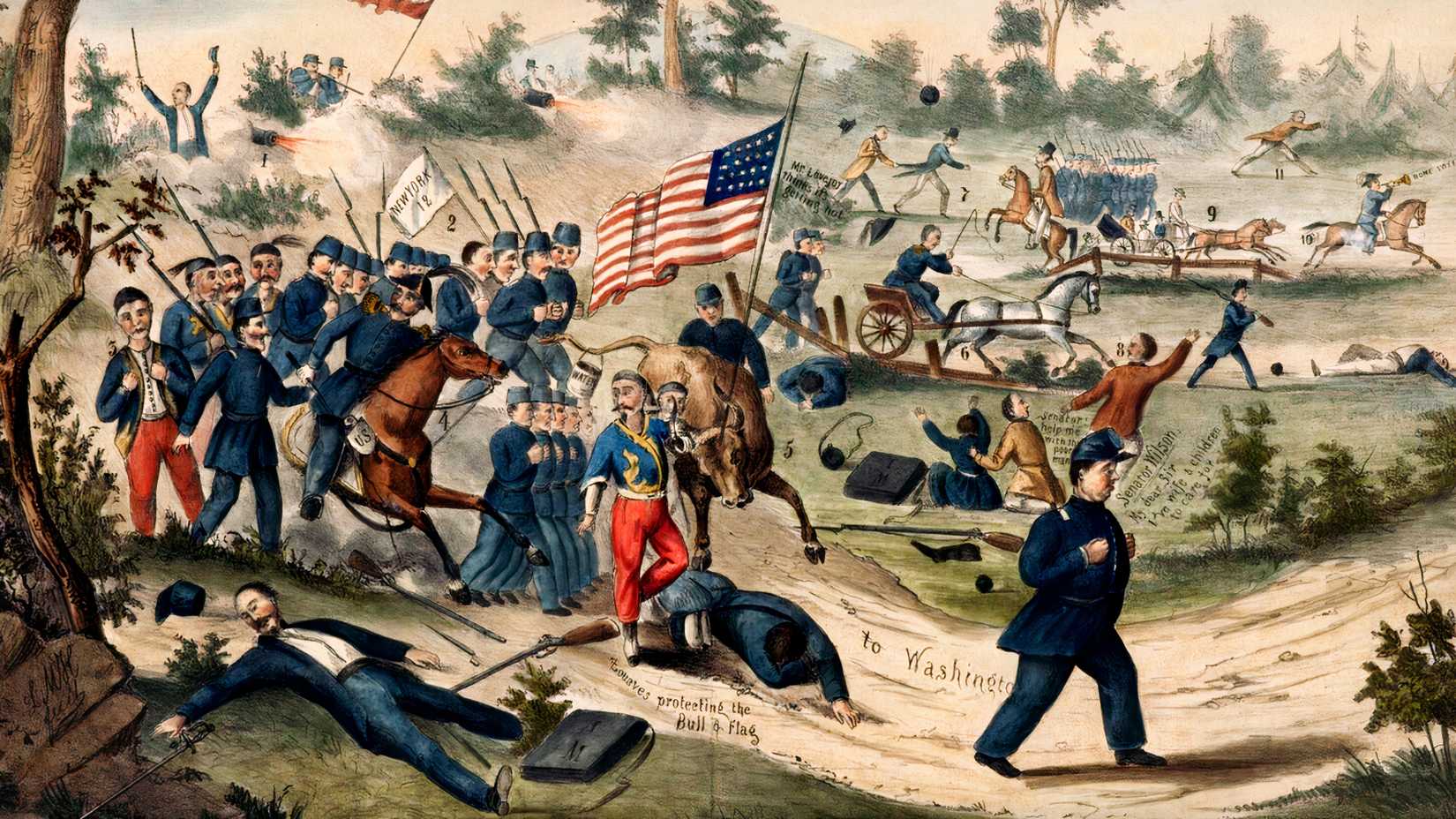
The Confederate Army was too tired and disorganized to chase the Union troops effectively. By the next morning, most of McDowell’s defeated soldiers had made it back to Washington’s defenses.
Bull Run Rewrote Expectations for the War
Bull Run did not bring the Confederacy close to winning the war, but it changed how both sides understood the conflict. The Union defeat exposed the danger of sending inexperienced volunteers into battle before they had been properly trained, supplied or organized.
Within days, Maj. Gen. George B. McClellan assumed command of the federal forces around Washington and began reorganizing the troops that would become the Army of the Potomac.
The Confederate victory produced celebration across the South, but neither army was prepared to exploit the result. Beauregard and Johnston’s forces were nearly as disorganized and exhausted as the retreating Union troops, preventing an effective pursuit toward Washington.
Thirteen months later, the armies returned to the same ground for the Second Battle of Bull Run, also called Second Manassas. The first battle’s deeper result had already taken hold. A war many Americans expected to settle in weeks had revealed the scale of the struggle ahead.
Read the full article here
