




I’ve developed a healthy distrust of our digital world, and for a number of reasons, but none of them involve a distrust of technology as a whole. I absolutely love technology. I’m still delighted that I get to live with modern medicine and air conditioning, for example, and I think the coolest tech I’ve seen in my life is the 3D printer.
In my mind, it opens up so much potential for evolution that it’s likely to change manufacturing forever. I can, for a reasonable price, buy a device that will let me prototype a product, produce it, and to sell it if I want, or just to keep my family in goods that we need and that meet our specifications. It’s amazing.
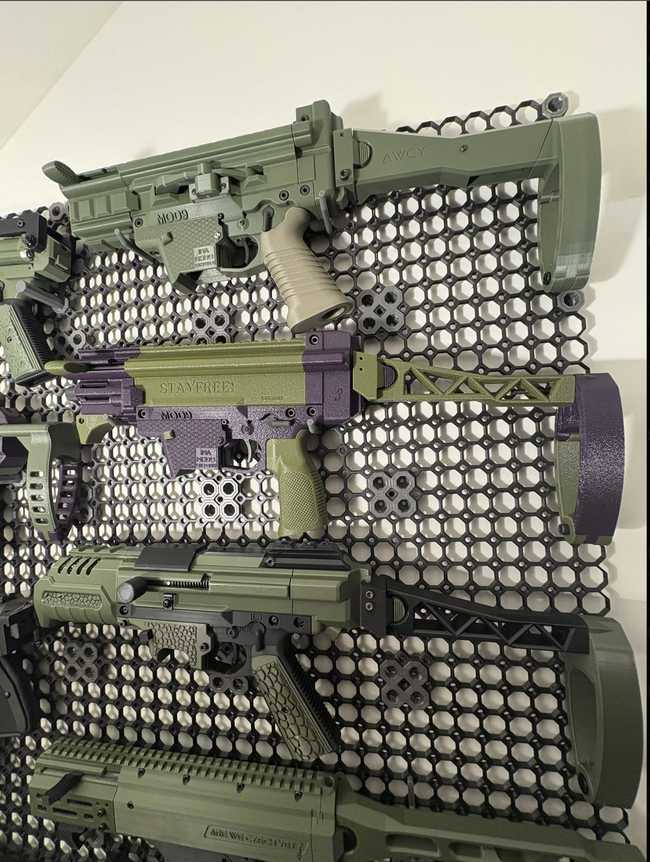
And yeah, I can make guns with it, which is even cooler.
But, as we’ve covered previously, there are those who seem to think that the fact that their bans on so-called ghost guns are about as ineffectual as any other gun restriction they’ve concocted, what they need is to make it so the printers can’t make a gun.
No one actually knows how to do that, and there are a few options out there, including an AI system that will look at a print file and supposedly decide it’s for a gun or it’s not “with a high degree of accuracy,” as reported by the tech website The Verge.
But the site also notes that there are a lot of people upset by this push, and they’re not gun people.
“Besides just relying on a list of known guns, the self-trained detection method can spot new or modified ghost guns STL files that aren’t in the database yet,” Print&Go writes on its website.
That second [The AI system mentioned above] approach in particular has drawn backlash. And gun lovers aren’t the only ones bristling at the idea of mandating gun file scanning on printers. An outpouring of hobbyists, independent makers, and right-to-repair advocates worry this type of on-device surveillance, even if well intentioned, risks fundamentally usurping the open-source, DIY ethos of 3D printing. Still-evolving file-scanning technology, some tell The Verge, could misidentify everyday objects like hoses or Nerf toys as possible guns. Worse still, makers say a no-print database that earnestly starts with gun files could be abused and expanded by corporate entities looking to enforce IP and copyright protections.
Tech ostensibly sold to stop shootings, in other words, may eventually prevent a maker from printing their own car part or novelty lamp.
“It’s all a big ball of stupid and I hate it,” Seattle Makers founder Jeremy Hanson told The Verge. Hanson, who has been involved in various maker spaces since childhood and currently works to provide tools, workspaces, and know-how to other creators, worries efforts to implement blocking technologies into printers could stymie future makers. Hanson and his colleagues pushed back against the Washington requirement, helping lead to its eventual defeat. Another, weaker bill that makes it illegal for anyone intending to manufacture unlicensed firearms to possess or share gun files was signed into law in late March.
“I see it as a toe in the door on controlling manufacturing,” Hanson added. “It’s already illegal to have a homemade unlicensed gun, and this technology [3D printing] isn’t efficient for manufacturing firearms. But it’s a good way to sell it to the public. The actual mechanism for control is vague and remains undetermined.”
And let’s understand that the tech won’t stop shootings in the first place.
As I’ve already noted in a previous piece, you’re more likely to die from constipation than you are from being shot by a “ghost gun” in the first place. Further, there’s little evidence that those who obtain so-called ghost guns wouldn’t find a firearm via some other means. A study not that long ago tried to link these kinds of firearms to suicides, but also found that there was no correlation between “ghost guns” and homicides.
So yeah, the technology wouldn’t stop shootings.
But, so far as I can tell, literally every other aspect brought up, particularly by printing advocates, seems perfectly valid.
We live in a world where we’re told we won’t own our video games or movies, we’re just licensing them, and they can be taken from us whenever a giant company wants. That’s the cost of digital content, after all. We don’t buy software anymore; we rent it for a monthly fee. From Adobe to Microsoft, the push is to get the world into a position where the company continues to profit off of you forever.
They can’t do that with physical products, though. They can’t make it so I just rent my garden hose. They might want to, but they can’t make me as things currently stand.
Yet the claim that they might use software like this to block printers from replicating products isn’t without some validity. Even if the product isn’t an exact copy of someone’s design, if there are enough similarities, all it takes is one part being prohibited under an AI system’s monitoring to shatter the entire ethos of 3D printing.
And you’re deluded if you don’t think a state like New York or California won’t expand things at the behest of corporate donors. Large companies don’t like competition from the little guy, and they will lobby for the technology to be used this way.
Even if you don’t like guns and don’t think people should make them, this should still terrify you.
Especially since we know it’ll be jailbroken in no time flat. Sure, California plans to punish people they catch doing it, but if the laws against 3D printing guns didn’t do enough, what good would a law against jailbreaking your 3D printer do?
Editor’s Note: The radical Left will stop at nothing to enact their radical gun control agenda and strip us of our Second Amendment rights.
Help us continue to report on and expose the Democrats’ gun control policies and schemes. Join Bearing Arms VIP and use promo code FIGHT to receive 60% off your membership.
Read the full article here
