




By Larry Keane
Chicago Mayor Brandon Johnson signed a new executive order creating a taxpayer-funded, stand-alone Department of Gun Violence Reduction after a violent crime-filled Juneteenth and Father’s Day weekend left eight dead and 40 wounded. That includes 14 victims who were shot during a Juneteenth celebration in Princeton Park.
Chicagoans aren’t getting a serious response from elected officials. Instead, they are resorting to familiar responses of blaming firearms, firearm manufacturers, lawful gun owners, other states, historical grievances and political opponents for the criminal violence on their streets the city has for decades failed to seriously address. Blame shifting and deflecting responsibility will not make Chicagoans safe.
The new department will carry a $100 million annual budget and move existing violence reduction programs under one umbrella. Mayor Johnson said the idea would “ensure” those efforts are aligned. But Chicago does not suffer from a shortage of gun control offices, slogans or taxpayer-funded programs. It suffers from a dearth of effective leadership and shortage of consequences for violent criminals.
Mismatched Numbers & Spin
Mayor Johnson and other city officials have leaned on claims that crime in the Windy City is down. While there are categories where Chicago has improved from pandemic-era peaks and 2025 saw a lower homicide total than recent years, it is misleading to use selective improvement as a shield against the ongoing reality facing Chicago residents.
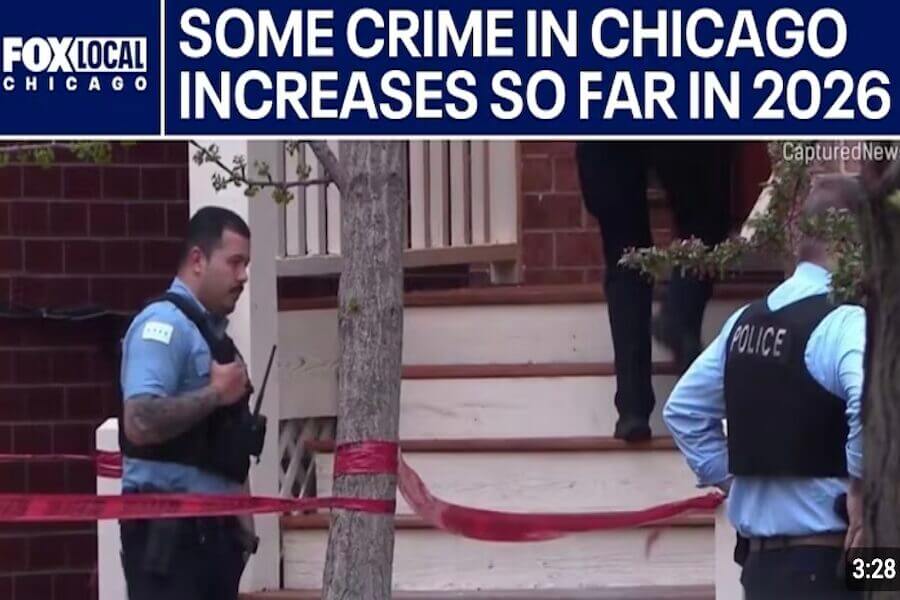
Through May, Chicago Police Department data showed an increase in shootings and shooting victims, with 167 homicides year-to-date (YTD) — up six percent compared with the same period in 2025. The Juneteenth/Father’s Day weekend violent crime rose 105 percent from last year’s total, subsiding after rainy weather moved into the region early Sunday morning.
An independent Chicago crime tracker shows a clearer picture of 181 people shot and killed, 680 shot and wounded, 861 total shot and 207 total homicides YTD — figures that are outpacing 2025’s. That is a public safety problem and not a public relations issue.
Mayor Johnson acknowledged the Juneteenth criminal violence. But acknowledgement is not enough. Residents need to know whether offenders are being arrested, whether prosecutors are bringing meaningful charges, whether repeat violent criminals are being incarcerated and whether city leaders are willing to use every lawful tool available to restore order.
Shuffling Chairs Isn’t a Strategy
Department supporters argue it would coordinate violence prevention, stabilize funding and consolidate programs already scattered across city government. But Chicago already has offices, programs and spending streams devoted to this issue, to the tune of over $3 billion this year. The proposed new department would replace the mayor’s Office of Community Safety, one of several city entities already assigned some role in addressing criminal violence.
The timing only sharpens the question. Mayor Johnson endorsed a $100 million taxpayer-funded proposal while Chicago faces severe budget pressures and a long-running pension crisis. He also renewed his broader political messaging about criminal violence as a “public health” and investment problem, while the city continues debating whether it has the basic enforcement tools it needs.
President Donald Trump responded to Chicago’s weekend violence by renewing his call for Illinois and Chicago officials to seek and accept federal help. Mayor Johnson and Illinois Gov. J.B. Pritzker have repeatedly rejected the prospect of National Guard involvement, with Mayor Johnson previously describing such federal action as a “federalized occupation.”
Washington, D.C., on the other hand, offers a useful comparison. After receiving federal help, official Metropolitan Police Department data show D.C. YTD homicides are down 39 percent, robberies down 21 percent, property crime down 25 percent and total crime down 22 percent.
Independent analysis from the Niskanen Center found the National Guard deployment in D.C. produced a roughly 24 percent reduction in opportunistic property crime. Washington, D.C., Mayor Muriel Bowser even thanked President Trump for the federal resources used to make the city safer.
Chicago should be studying what works, not preemptively ruling out help while residents bury loved ones.
Chicago’s Failed Gun Control
Chicago’s officials have long treated lawful gun ownership and the firearm industry as the problem. The city’s former handgun ban, challenged in the landmark McDonald v. Chicago case, did not make Chicago safe. It denied law-abiding residents the ability to exercise constitutional rights while criminals continued to illegally obtained and criminally misuse firearms.
That is the central failure in Chicago’s gun control narrative. Criminals do not obey firearm bans, purchase restrictions or tearful political speeches. They traffic, steal, illegally possess and criminally misuse firearms. The Department of Justice’s (DOJ) Bureau of Justice Statistics (BJS) reported that among prisoners who possessed a firearm during their offense, 90 percent did not obtain it from a retail source.
Mayor Johnson’s framing burdens the lawful while failing to deter the lawless. It tells Chicagoans that the problem is an object, an industry or a political opponent when the problem is violent criminals who have learned the city’s system too often fails to stop them.
Chicago residents do not need another office designed to make gun control politics look busy. They need cops to do their jobs, prosecutors and judges who are tough on criminals and illegal firearm trafficking cases, accountability for repeat offenders, support for police, cooperation with willing federal partners and respect for the constitutional rights of law-abiding citizens.
The next test for Mayor Johnson is simple. Will he keep choosing bureaucracy and blame, or will he finally choose public safety? Sadly, for Chicago residents the answer is predictable.
Larry Keane is Senior Vice President of Government and Public Affairs and General Counsel for the National Shooting Sports Foundation, the firearms industry trade association.
*** Buy and Sell on GunsAmerica! ***
Read the full article here
