



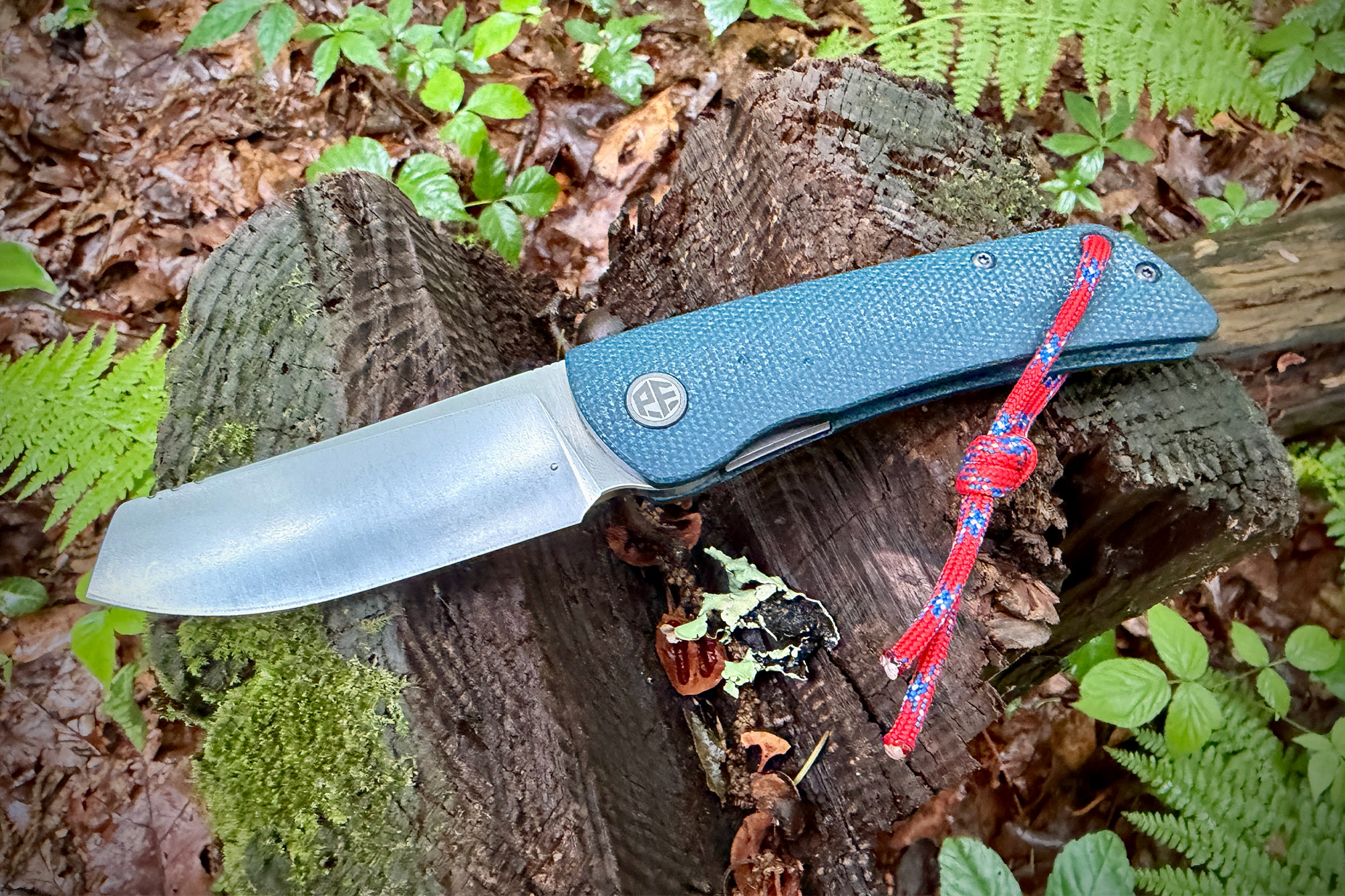

So there I was, minding my own business on Facebook, when I stumbled upon a post in a knife group where one of the other members was unloading a bunch of their knives. I was scrolling through the pictures when one really stood out to me. It was a stout little bugger with blue Micarta handles and a sheepsfoot blade — for $40! I did a quick Google search of the image, and it came up as a Petrified Fish Flavorist.
Who in the what now?
Anyway, I reached out to the guy selling it, and he was happy to send it my way. In the few days it took to arrive, I learned a lot about the Petrified Fish brand.
In all the bits and pieces I found out, the one big thing that stood out to me is that it uses K110 knife steel. K110 is Bohler’s purified version of D2 Tool Steel. It’s a highly sought-after variant of D2 because it is more molecularly consistent than other versions.
D2 being my favorite knife steel, I was stoked to get my hands on this whale. That said, I am not a fan of front flippers — not even a little bit — so I assumed dealing with the Flavorist would be a struggle. I am happy I was wrong.
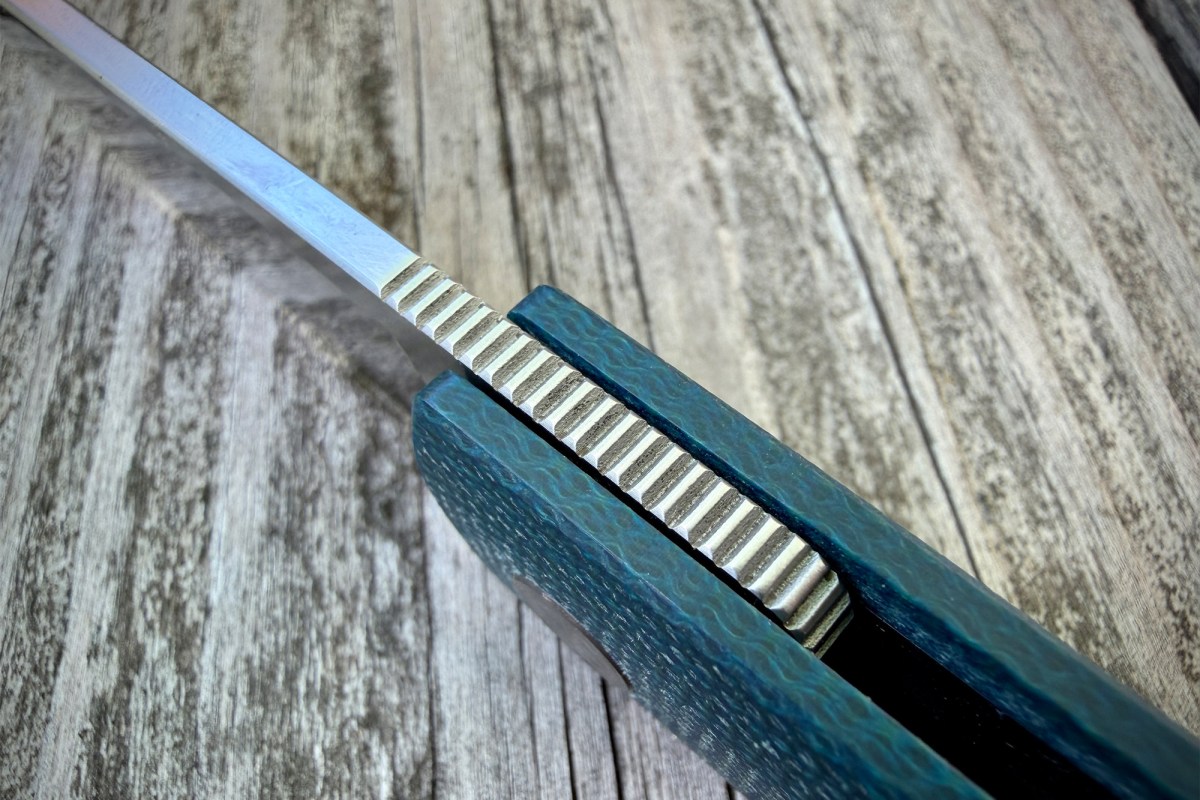
This knife is not only built for hard use and abuse, but it’s also easy to operate and hides a very awesome easter egg in the flipper mechanism that I’ve only seen in custom knives before.
In short: With a knife like the Petrified Fish Flavorist, you get a premium knife experience at a value price. It does really well outdoors and indoors, at work and play. Though its front flipper requires a little practice, its K110 steel sheepsfoot blade and Micarta handles play really well and will benefit the person looking for a long-lasting, reliable EDC knife.
Opening type
Front flipper
Pros
- K110 steel / Micarta combo
- Overall flowing shape
- Sheepsfoot blade
- Price
Cons
- The flipper might be offputting
Petrified Fish Flavorist Review
Design & Materials
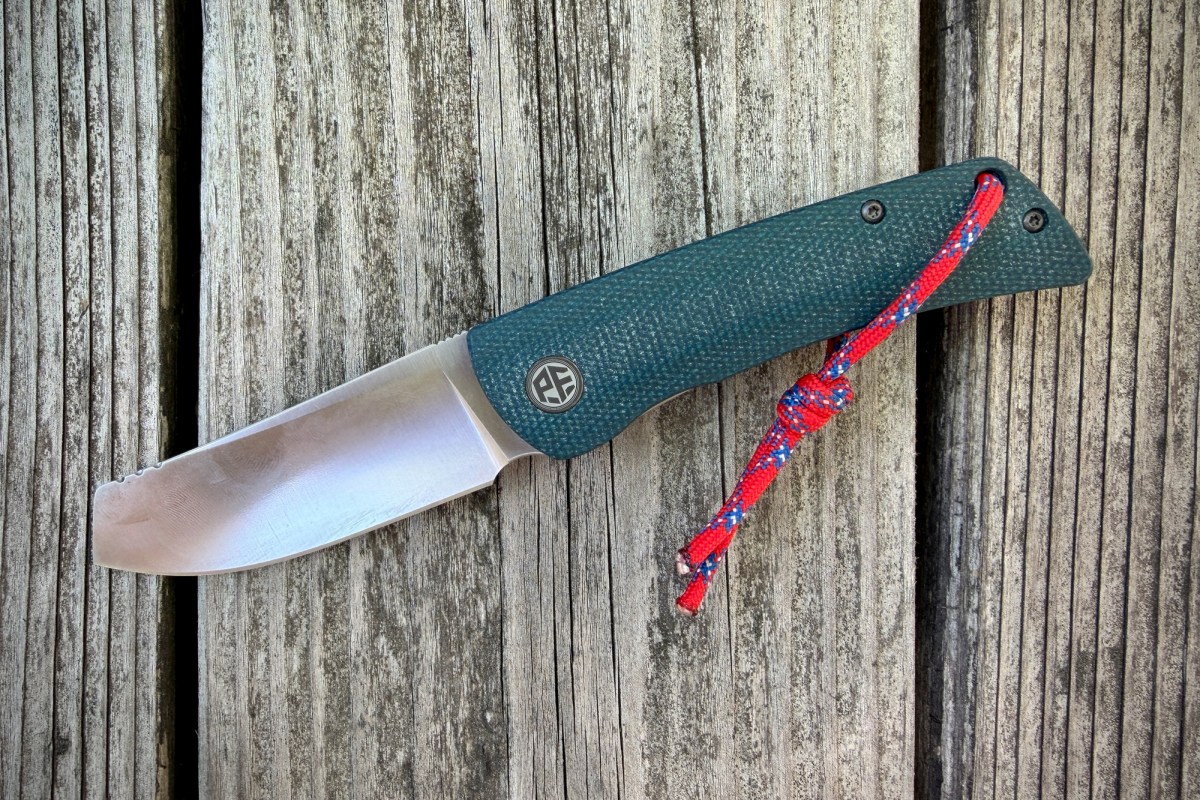
With an overall length of 7.25 inches, the Flavorist is a full, four-fingered knife that falls into the sweet spot for EDC knife size. Available in 10 different configurations, all have Micarta handles, which PF refers to as “flax.” Additionally, all 10 utilize K110 steel, a more stable and desirable version of D2 tool steel.
The brand splits the model down the middle, offering five versions with a spear-point–style blade and five with a sheepsfoot blade, which the brand refers to as a “cleaver” blade. I chose the sheepsfoot blade because I love the utility the shape provides. Where you sacrifice the ability to stab or puncture easily, you gain a larger belly, which creates a better slicing, chopping, drawing, and dividing experience.
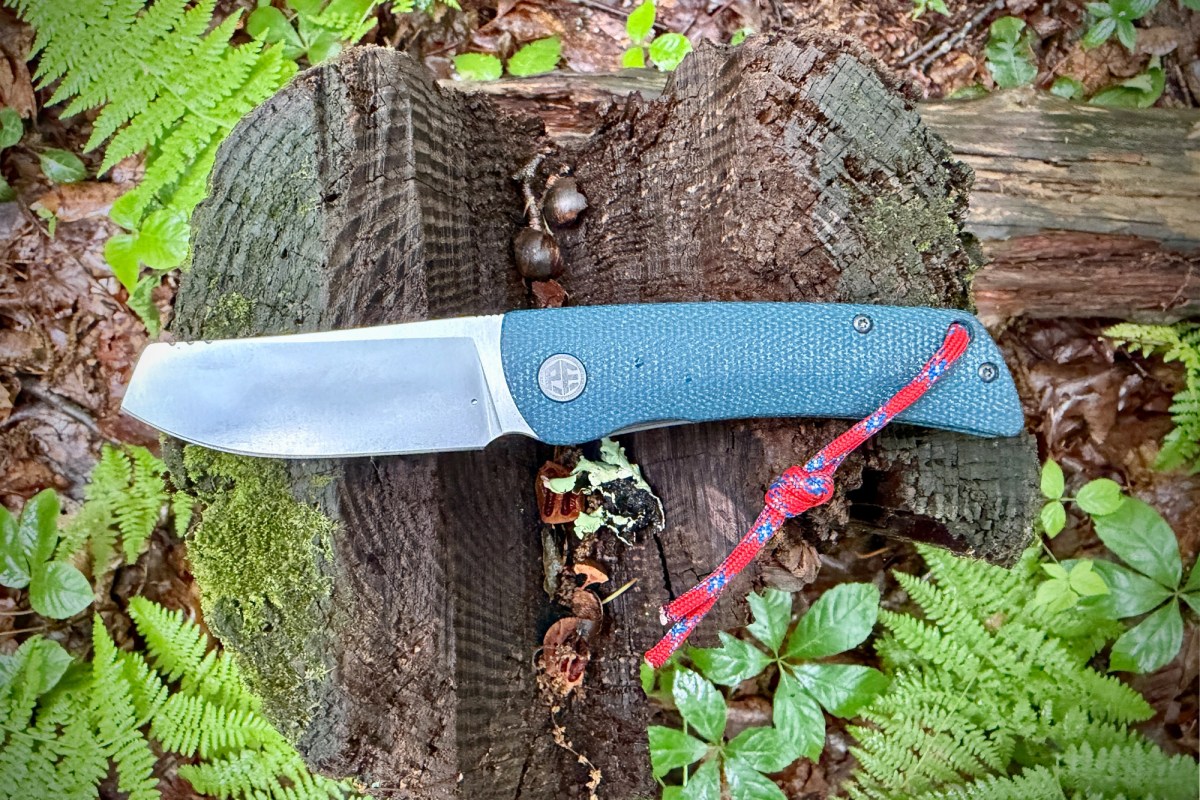
The design of the handle is simple, but it flows smoothly from the butt all the way to the tip of the blade. The peak is at the pivot of the knife, providing a natural feel in regard to where your hand falls on the spine. This makes both tougher tasks and precision tasks more comfortable to complete.
The Flavorist is a front flipper, which is a bit polarizing compared to standard flipper knife types. It requires you to choke up on the handle and use your thumb to flip the blade open. It’s a bit of a forced motion that takes time to get used to. On the Flavorist, it is aided by ceramic bearings around the pivot. Additionally, the flipper tab on the Flavorist is ample.
The Steel: Bohler K110 Steel
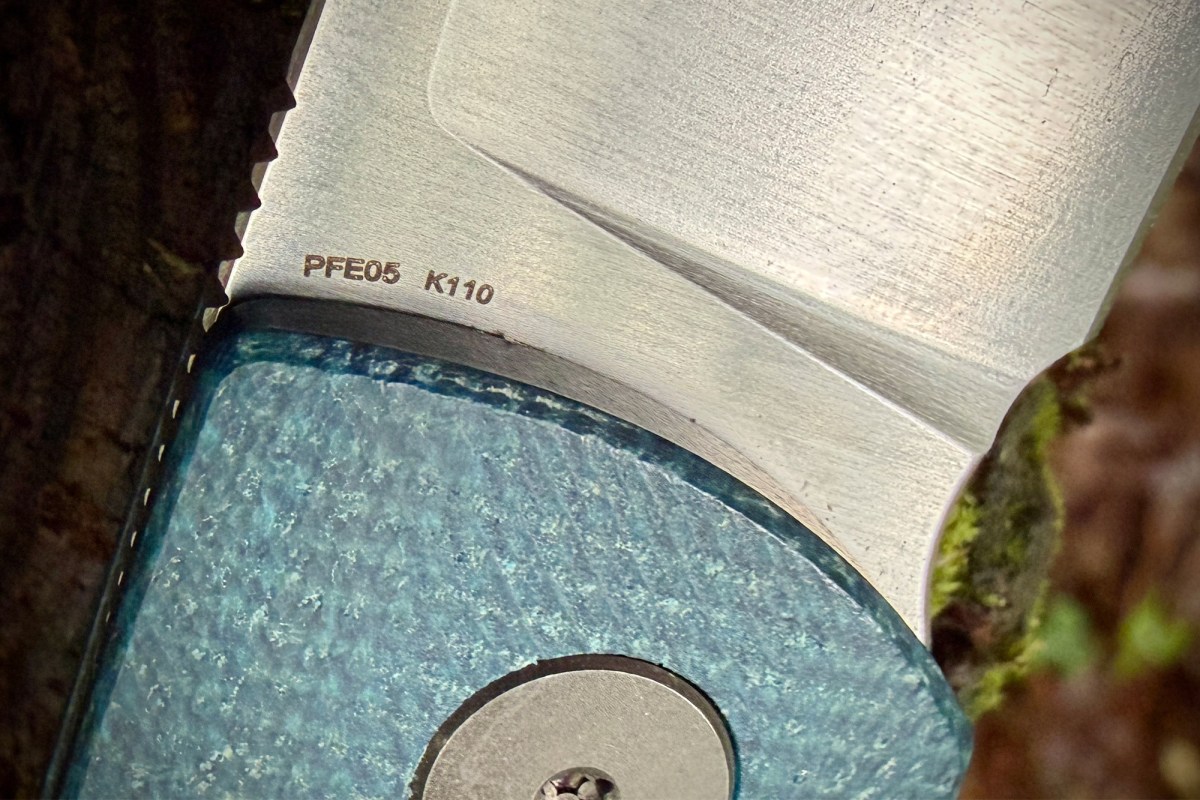
D2 has been an affordable choice for knife steel for as long as I can remember. It gets high marks for durability and toughness. It also holds a good edge, therefore requiring minimal maintenance. However, the one thing D2 isn’t lauded for is its corrosion resistance.
Where I have never had an issue with tarnish or rust on the myriad D2 knives I own and have made, the consensus claims that corrosion is an issue with it.
K110, on the other hand, is more consistent at the molecular level, allowing the carbon in the blade to disperse more evenly. Because there aren’t carbon deposits grouped in certain areas in the steel, K110 has a higher level of corrosion resistance than D2.
First Impressions
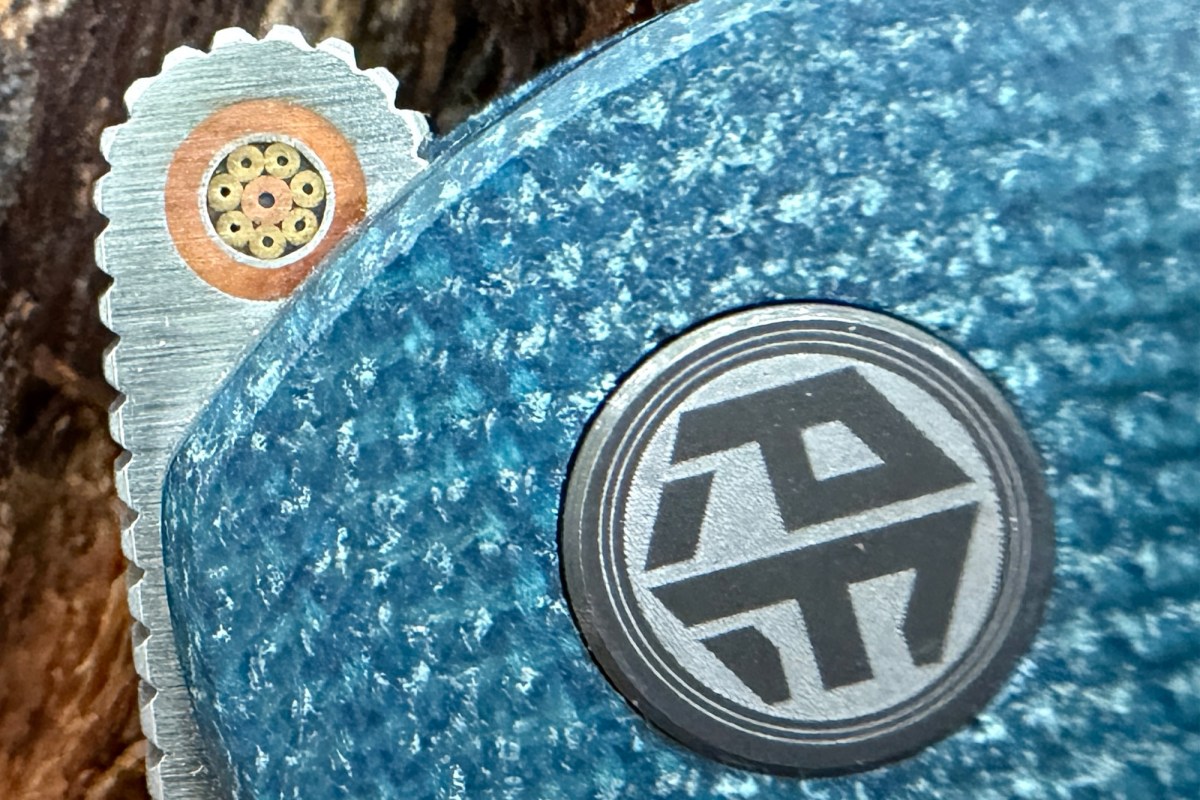
Aside from the weight and overall flowing shape of the Flavorist, it’s the mosaic tube inlay on the flipper tab that sealed the deal for me. I was obviously excited to test out the K110 steel, but part of the appeal of any knife is how it looks. When a company adds details like this — especially one that’s generally reserved for custom knives — I get “kid on Christmas” excited.
The overall feel and grip of the Flavorist reminds me of Spyderco’s legendary Rock Lobster. Both knives move like a wave from tip to tail, which aids in the overall function and experience. This, of course, is another reason why you’ll keep this knife in your pocket for a while.
You don’t want to struggle with any tool, but an EDC knife needs to be just about perfect in your hand. PF nailed it with the Flavorist.
And, again, this knife is only $44.
In the Field
Even though it has a weird name, the Flavorist is a very familiar-feeling knife. From the size and shape to the feel of the Micarta, it’s all common and therefore a very easy knife to stuff in your pocket fresh from the mailbox and get to work with.
That said, the front flipper has a bit of a learning curve, but not one that makes you not want to use the knife. In fact, I found myself working with it any chance I got; out on a hike, talking on the phone, sitting in traffic. Within a couple of days, muscle memory kicked in, and I was over the hump.
Overall, the knife is lightweight and balanced, which pairs really well with the high grind on the blade. This made harvesting and breaking down tinder fungus smooth and easy. The incredible taper of the blade (another advantage of a high grind) lets the Flavorist cut through vegetables, meat, and cordage with precision. No fraying or tearing here. And that extra boost of corrosion resistance gave me a boost of confidence that the blade wouldn’t tarnish.
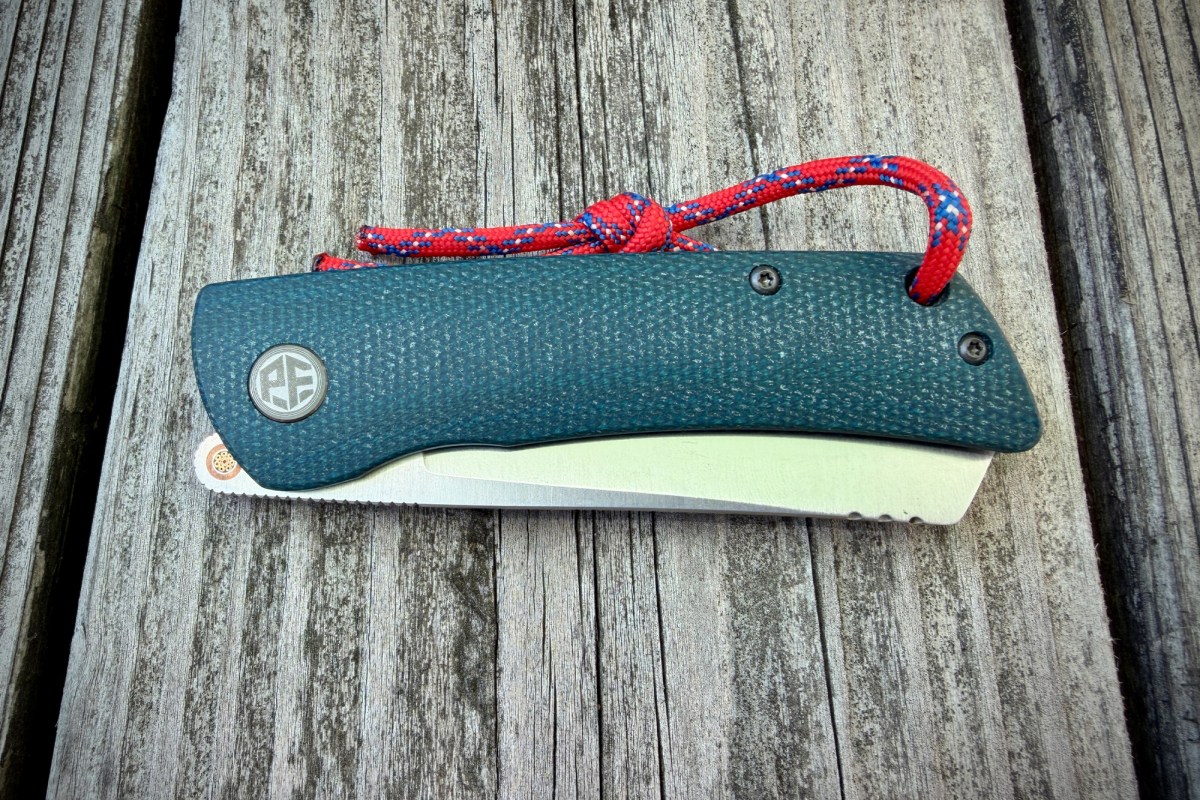
All in all, I used the knife for a couple of very busy weeks. Everything is growing in the yard — apples, blueberries, peaches, wineberries — and everything needs a good trimming. I also like to cut fresh flowers in the morning and bring them inside. For a single guy, that’s not a common thing, but it’s something I enjoy doing. Even if it’s only to impress myself with the bounty the yard has to offer.
The only real negative throughout the entire experience with the Flavorist is the fact that the blade has more of a polished finish. This means that everything sticks to it, and it’s always got a smudge or fingerprint on it.
Most EDC blades benefit from a stonewashed or bead-blasted finish to eliminate these occurrences. But, overall, not a dealbreaker for a high-performing knife that costs less than $50.
In Conclusion
After the test phase was done and I sat down to write this review, I did a little reading and found out that the Petrified Fish, which has only been around since 2022, has a big following. It’s a brand held in high regard, in part because its knives punch above their price category. Most people are befuddled by the fact that knives this cheap look, feel, and act like premium knives. It’s a sign of the times for sure.
There’s something to be said about a little-known knife brand that has a heavy presence on Amazon, but is still selling out its knife models on one of the largest online knife stores — Blade HQ. I know purists who still balk at knives coming out of China and Taiwan, and as far as I see it, that just leaves more for us open-minded folks to purchase and enjoy.
So, that said, buy a Flavorist. If you need a reliable knife but don’t have much money to spend, you’re going to experience something that usually only people who spend a lot of money do.
It is a great knife for the person who wants one knife to do everything outdoors. I enjoyed slicing up vegetables and chicken as much as I did pruning my fruit trees and bushes with it. It’s also a great knife for someone who just wants to carry a no-nonsense knife around with them. I just broke up a ton of cardboard and had to trim down a couple of photos to fit inside a picture frame.
Just set aside some time to learn how to use the flipper, or be prepared to learn on the fly.
Read the full article here
