





When disaster strikes and the water stops flowing, most people are focused on drinking water, food, and safety. But there’s another urgent problem that doesn’t get nearly enough attention: what do you do when you can’t flush your toilet?
Sanitation failures are one of the most dangerous and underestimated consequences of any widespread disaster. When running water is cut off and sewer systems are overwhelmed, human waste has nowhere to go. It piles up fast, and the consequences can be severe.
I’m not just talking about bad smells here. Improper waste disposal is a direct pathway to cholera, typhoid, dysentery, hepatitis A, and a long list of other diseases that have historically killed more people during disasters than the disasters themselves. Floodwaters mixed with sewage can contaminate wells, soil, and food supplies, turning a short-term emergency into a long-term public health crisis.
Most preppers already know the standard fallback: dig a cat hole, set up a camp toilet, or improvise a bucket system. These work, but they come with real drawbacks. They’re uncomfortable, unstable, and can be especially difficult for kids, elderly family members, or anyone with mobility issues. If you’ve got a regular toilet in your bathroom, why not use it?
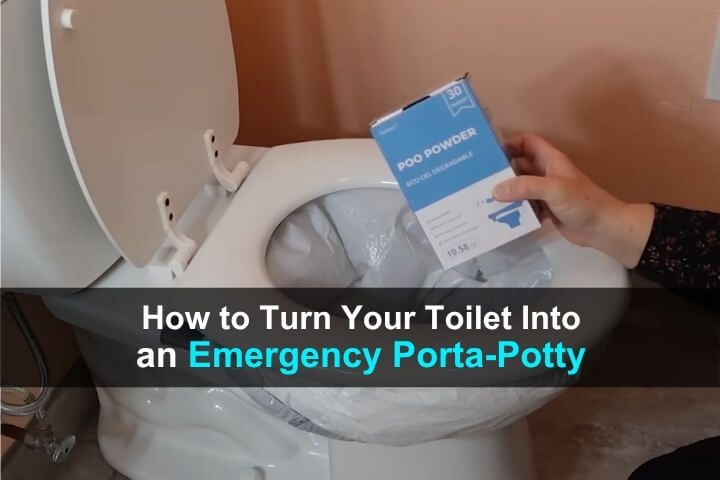
That’s exactly the question Jonathan from the YouTube channel The Provident Prepper answers in his video, How to Turn Your Home Toilet Into an Emergency Porta-Potty. It’s a practical, no-fuss solution that uses gear most people already have at home. You can watch his video and read the instructions below.
Want to save this post for later? Click Here to Pin It On Pinterest!
What You’ll Need
- Kitchen garbage bags (standard drawstring bags work great)
- Duct tape or painter’s tape
- A urine hat (a cheap plastic specimen collection cup used in hospitals)
- Waste-solidifying powder (like Poo Powder), sawdust, soil, or kitty litter
- A bucket with a lid for transport and storage
Step-by-Step Instructions
Step 1: Shut Off the Water Supply
Locate the shut-off valve at the base of your toilet and turn it off. Even if you have no running water, this is an important first step to make sure no water accidentally enters the system.
Step 2: Empty the Bowl
You need a dry bowl to work with. If you still have a little water pressure, flush it down. If not, use a toilet plunger to push the remaining water through, or use a cup to scoop out any standing water and dispose of it. The goal is a completely empty bowl.
Step 3: Line the Bowl With a Garbage Bag
Take a standard kitchen garbage bag and stretch it over the toilet bowl, pulling it snug around the rim. If you have a round bowl this is easy. Elongated bowls are a tighter fit but still workable. Once the bag is positioned, secure it around the rim with duct tape or painter’s tape so it stays firmly in place and won’t shift during use.
Step 4: Separate Liquid and Solid Waste
This is the move that makes the whole system much more manageable. Place a urine hat under the toilet seat. When you need to urinate, lift the lid, lower the hat into position, put the seat back down, and use it normally.
Urine collected this way is relatively harmless and can be diluted with a little gray water and used to fertilize trees or bushes in your yard. Keeping liquids out of the bag dramatically reduces the volume of waste you have to deal with and cuts down on odor and contamination risk.
Step 5: Manage Solid Waste
You don’t need to swap the bag out after every use. To control odor and slow bacterial growth, add a scoop of waste-solidifying powder, kitty litter, sawdust, or plain soil after each use. These materials help absorb moisture, neutralize odor, and reduce pathogens. If you have a disinfectant on hand, that works too, though it’s optional if you’re planning to change the bag frequently.
Step 6: Remove and Seal the Bag
When the bag needs to be changed, have a lidded bucket nearby before you start. Pull the tape free from the rim, then use the drawstring on the kitchen bag to cinch it tight and seal it closed. Place the sealed bag directly into the bucket for transport. Don’t carry it around open.
Step 7: Dispose of Waste Safely
Your options for final disposal will depend on your situation. You can bury bags in a hole at least 6–8 inches deep and well away from any water sources. In some situations, burning may be an option. If you’re sheltering in place for an extended period, keep sealed bags in lidded buckets stored outside and away from living areas until you can dispose of them properly.
Whatever method you use, think about your neighbors and your local environment. Improper disposal doesn’t just affect your household.
Step 8: Control Odor Between Uses
Keep the toilet lid closed as much as possible between uses. For extra odor control, you can drape a large lawn and leaf bag over the entire toilet to act as a cover. Standard bags may not fit elongated bowls perfectly, so it’s worth picking up a bag large enough to cover yours and keeping it in your emergency kit.
Build a Simple Emergency Toilet Kit
Jonathan keeps all his supplies in a small Costco tote stored under the bathroom sink. It includes a urine hat, garbage bags, tape, and a cover bag. That’s it. The whole kit takes up almost no space and costs very little to put together, but it means his family is never caught off guard.
The bottom line is that when water and sewer systems go down, sanitation becomes a life-safety issue almost immediately. Having a plan before a disaster hits is one of the most practical things you can do for your family’s health and well-being.
Like this post? Don’t Forget to Pin It On Pinterest!
You May Also Like:

Read the full article here
