





The sound was abrupt. Rapid chittering shrieked inches away from my head. The small birds, locked in battle, divebombed past me. I looked up from the trail in surprise, and suddenly, the aspens were whirling. My concentration broken, I’d lost my footing and was falling fast toward the trail. I tucked and rolled, bashing my leg into a log on the way.
I came to a rest on my back. Green leaves rustled 50 feet above me. White trunks of the aspens arced toward the cobalt sky. I lay still. My leg, shoulder, and hands ached. But all I could think was, good god, this is so beautiful.
I came to Crested Butte on the invitation of Kiprun, a French “expert brand” under the Decathlon umbrella. Over two days, I’d already run about 15 miles, and was just wrapping up a 10-mile trail run with 1,700 feet of climbing.
I hadn’t been on a big trail run in months, and my body was reminding me that, at 50, you really need to train for this kind of thing. While I can’t blame the fall on anything but inattention due to a couple of fighting songbirds, the impact took more of a toll than it probably would have just a few years ago.
And as I completed a self-assessment — nothing seriously hurt but my pride — and rose to my feet, I had to admit that I really love trail running. I was ready to get back in the saddle, and tentatively continued my descent down the last few hundred yards to the trailhead.
Kiprun Trail Running Shoes: Performance Beyond Value
Mention the brand “Decathlon” to many folks in the U.S., and the reaction will likely be one of curious puzzlement or a head-nodding acknowledgment of a brand with a very strong value proposition. Beloved in much of Europe, Decathlon offers a lot of bang for the buck in camping, backpacking, winter, and other outdoor gear. With more than 1,700 stores in 72 countries, it’s a powerhouse retailer that did $16.8 billion in net sales in 2025.
But I was here to learn about a sub-brand that’s even less understood in the U.S., yet has a strong foothold globally. Launched in 2008, Kiprun only entered the U.S. market in April 2026.
Kiprun (short for “keep running”) now offers trail and road shoes aimed at performance. While prices tend to be slightly lower than those of better-known brands, Kiprun representatives were clear that it didn’t intend to be a “value brand.” Leadership wants it to be a top choice, regardless of price. While they note that Decathlon can keep prices very competitive thanks to its scale, it wants to be measured toe-to-toe against the other big players.
That’s what I intended to do.
So over two runs in Crested Butte, plus four more at home in Denver, I put the Kipsummit Race and Kipsummit Max ($150) through their paces. While both shoes performed well, I personally preferred the fit and feel of the Kipsummit Max, so I’m going to focus on it for the following review. I’ll touch on the Kipsummit Race at the end of the article as well.
Kiprun Kipsummit Max Review
The Kiprun Kipsummit Max is a maximal, highly cushioned shoe. But don’t let the 39mm stack height fool you! The Kipsummit Max is fast, responsive, and capable on rough trails. Just don’t expect it to be the most precise shoe in your quiver.
Pros
- Protective
- Good traction
- Very comfortable
Cons
- Not very precise
- Clunky on pavement
I’d been neglecting this sport lately since some burnout after my last ultra. And here I was, surrounded by an aspen grove in full spring vigor, limping and loving every second. In the time since initially running the Kipsummit Max in Crested Butte, I’ve done several more short trail runs and a little pavement time to get a deeper understanding of the shoe. I really enjoy it as a supremely comfortable, fast, and confidence-inspiring trail running shoe.
Working from the bottom up, the Kiprun Kipsummit Max offers excellent traction thanks to its Vibram Megagrip outsole. In my opinion, Megagrip is hard to beat as an outsole. It works wonderfully on the Kipsummit Max, biting into the generally hard soil on which I’ve tested it. But on everything from dusty rocks to slick, kitty litter gravel, it provides a strong purchase on the trail.
While testing in Crested Butte, I rolled quickly over flowy trails. On both climbs and the rolling descent of the Upper Lower trail, it gave me strong connection with the ground. This shoe is clearly meant for off-trail running, and it shows. On pavement sections, the sole is clunky and relatively slow, much like an all-terrain car tire on slick tarmac. That’s not a ding, just a reality of a purpose-built running shoe.
Midsole
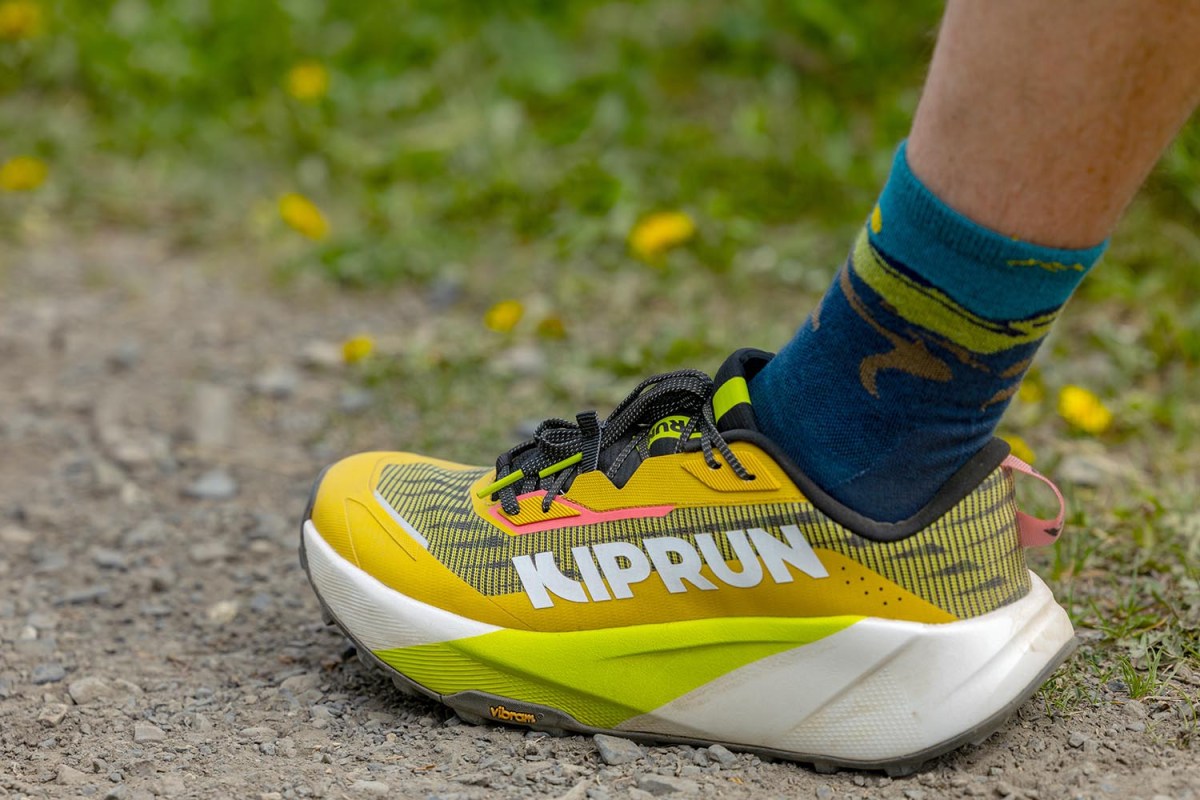
The heart of any running shoe is the midsole, and the Kipsummit Max has one big heart. Standing 39mm at the heel with 6mm of drop, the Kipsummit Max lives up to its name. This is one tall running shoe!
Fortunately, the FASTECH+ cushioning foam is both comfortable and responsive. While pushing fast across flat sections of trail, I noticed that the shoe rewards a good foot strike with efficient forward propulsion, due in part to its rockered shape, and in part to the good energy return of the midsole foam.
The shoe feels pretty fast, especially for its height. No, it’s not anywhere near the fastest shoe on the block, but it’s quite quick when you consider its enormous cushion and protection.
And protection is where it shines. The thick foam blunts the feeling of rough trail, rocky edges, or roots. I still had decent proprioception. I could tell where my feet were in space. But the thunderous impact of big drops just didn’t feel as harsh as with some faster shoes. For those looking for long-distance days or fast recovery from training runs, the Kipsummit Max will give your feet a lot of help and keep them as happy as anything out there, so long as they fit your foot well.
Upper
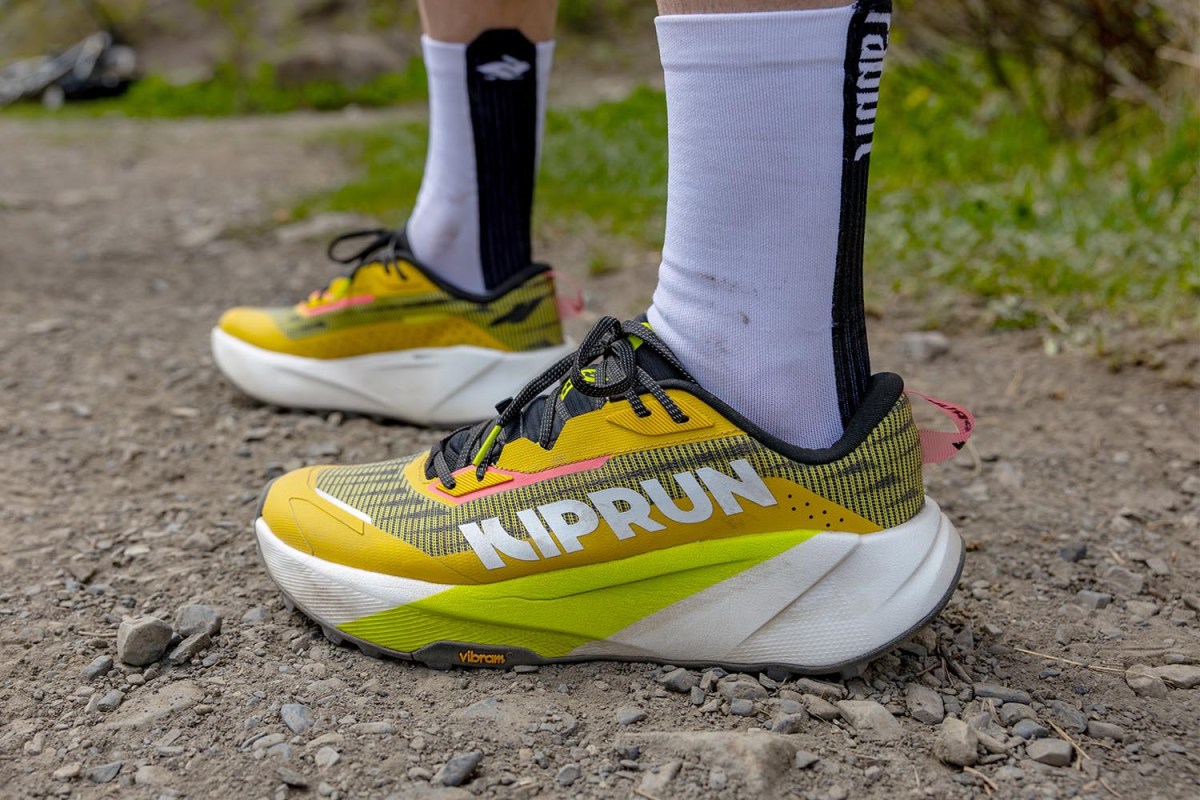
Kiprun notes that the Kipsummit Max has a “plush padded fit” in the collar, tongue, and upper, and I absolutely agree. Slipping into the Kipsummit Max for the first time, and it felt like my foot got a soft, firm embrace. It’s a very comfortable shoe from the get-go, which is nice during the initial miles that break in the shoe. It quickly molded to my feet over the first few runs, and now feels like a pliable, thick second skin every time I put it on.
With that thickness comes some downsides. For one, I think the shoe could become a little sloppier after a couple of hundred miles of running, which I haven’t reached yet. Lacing should compensate for that, but it’s something on my mind.
Secondarily, it holds moisture longer than thinner uppers. That’s not awful, but something to keep in mind if you have a lot of stream crossings or two-a-day workouts.
One final note on the upper: Kiprun is pretty wild with its tags. The Kipsummit Max had a thick stack of tags sewed to the tongue when I got it. I promptly cut them off, but even after removing them, I could feel pressure on the top of my instep where the tags were sewn to the tongue. After tackling them with a garment cutting tool and removing the stitching, it’s great. But it’s something to note. If the tags bother you, plan to spend a few minutes carefully removing all these weird labels. You’ll enjoy the shoe more.
Competition and Who It’s For

It’s impossible to run in the Kiprun Max and not compare it with the iconic HOKA Speedgoat 7. With nearly identical geometry (the Speedgoat is 2mm shorter in the heel, and has 1mm less drop), outsoles (both run Vibram Megagrip), and fit, and profile. They’re similar enough that I strapped one on each foot and went for a short run to see how they felt side by side.
It was an enlightening experience. While very similar on paper, the Kiprun felt softer and more cushioned than the Speedgoat. It also felt slightly narrower. My main takeaway on this short test is that both feel good, but the Speedgoat felt slightly more responsive, more connected to the ground, and wider.
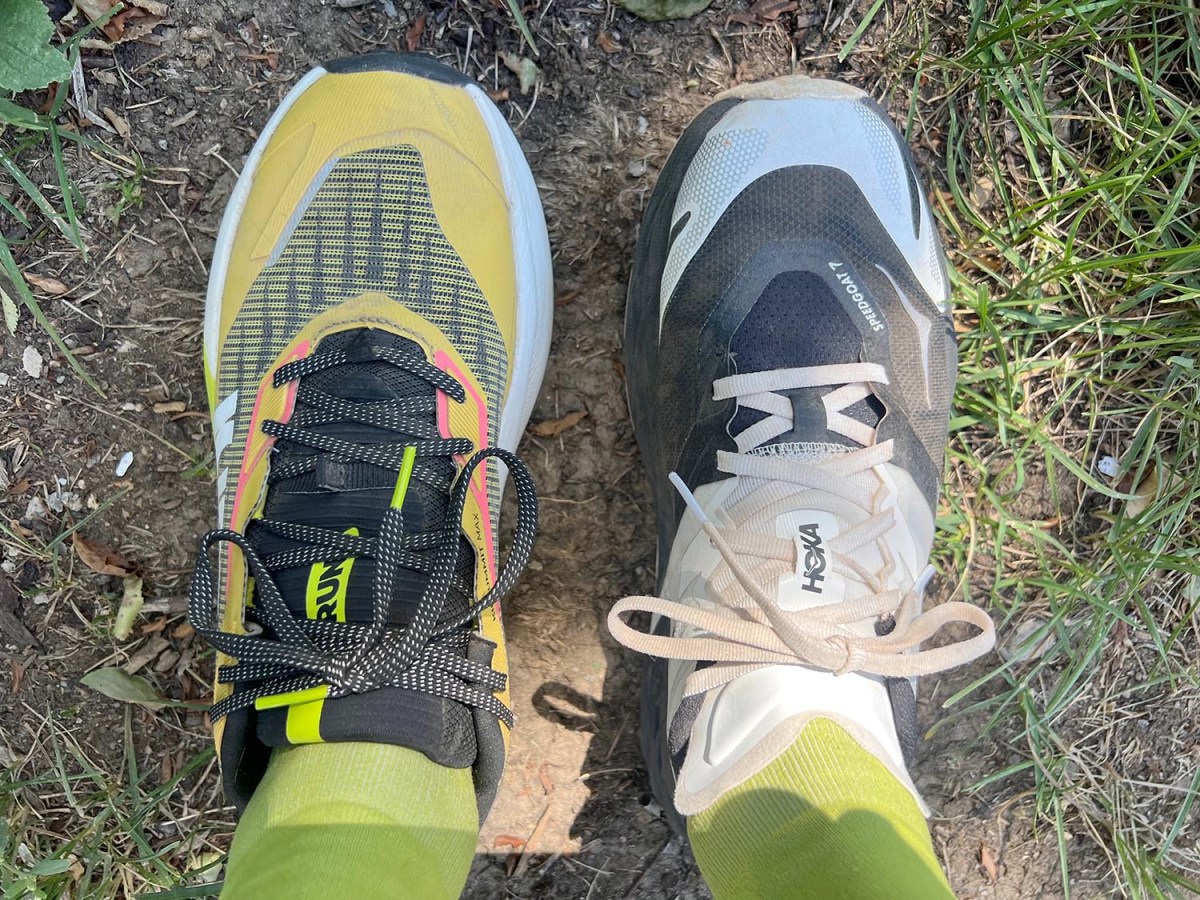
Comparing the Kipsummit Max with the Speedgoat 7 is high praise for a shoe that’s relatively new to the U.S. market. And really, the Kipsummit Max deserves it. It’s no stranger to Europeans, and has earned its spot at the starting line of ultras.
The Kipsummit Max is an ideal shoe for really long days on the trail, whether they be for training or racing. If you’re planning long outings of 15 miles or more, the Kipsummit Max deserves to be on your list for consideration.
And as much as the brand doesn’t want to be considered on its value alone, there’s no question that its excellent price of $150 is worth figuring into your calculations. It offers many of the benefits of the Speedgoat 7, and saves you $15.
Is that enough to make the decision between it and the Speedgoat, or another top-tier shoe? Probably not. But at a fair price and with strong performance for a max-cushion running shoe, the Kiprun Kipsummit Max makes a strong case. If you can find a demo near you, it’s worth lacing up a pair to see how they fit and match your running style.
Read the full article here
