



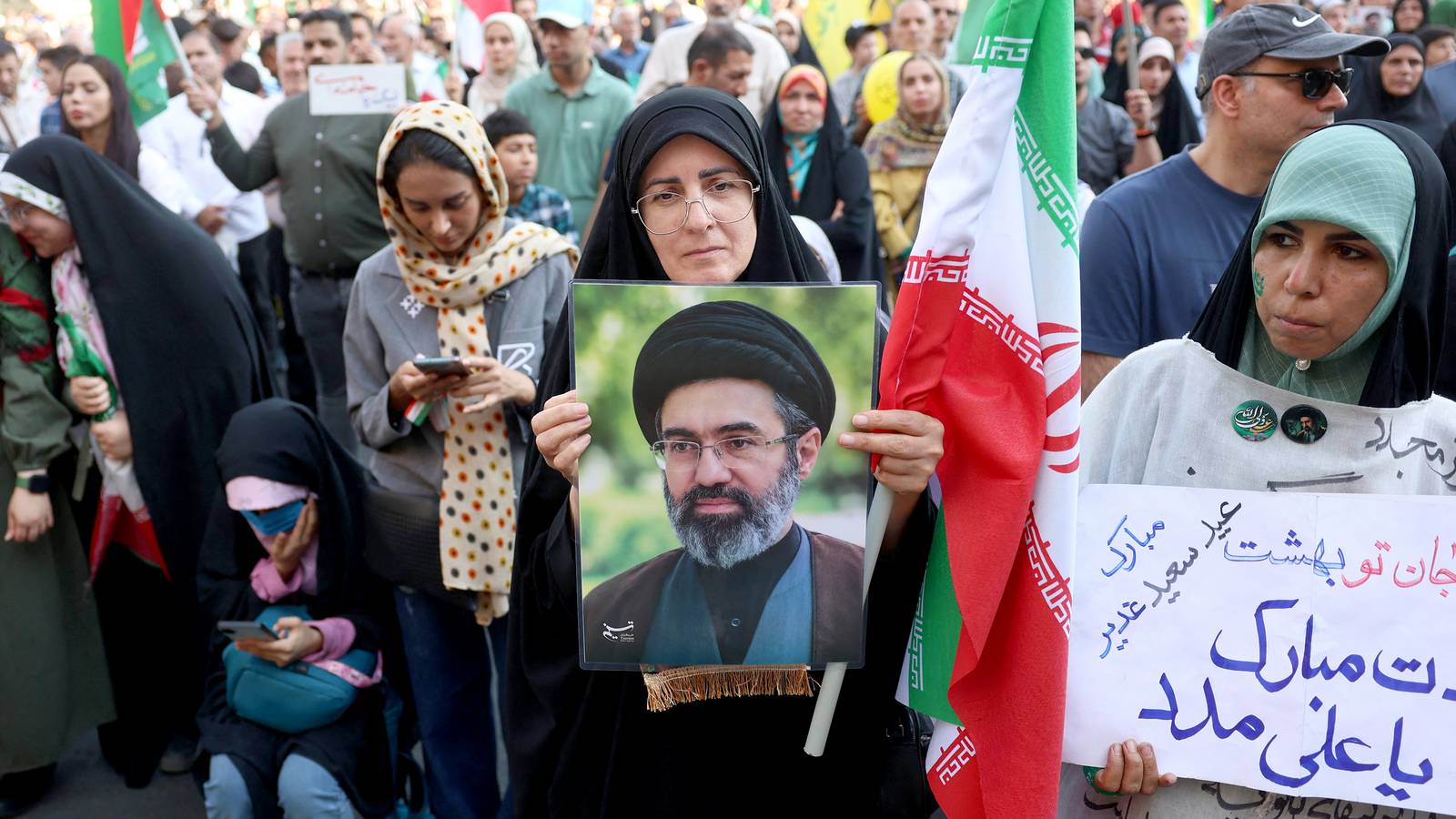

The U.S. and Iran have made little progress in talks over an interim peace deal this week, with the sides seeing their worst clashes since an April ceasefire began and fighting continuing in Lebanon.
Skirmishes continued overnight between Hezbollah and Israel in southern Lebanon after the Iran-backed group rejected a U.S.-brokered proposal aimed at securing a broader truce. Even so, Hezbollah’s attacks on northern Israel have eased, while Israel has held off striking Beirut after threatening to do so earlier this week.
Iran insists on a ceasefire in Lebanon before accepting a deal with the U.S. that’s meant to extend their truce by two months and reopen the Strait of Hormuz.
U.S. President Donald Trump on Thursday said negotiations are in the “final” stages without elaborating. Iran’s Foreign Minister Abbas Araghchi earlier said there had been “no tangible progress” even though the two sides continued to exchange messages via mediators.
On Wednesday, Iran fired missiles and drones at Kuwait and Bahrain, killing one person and injuring dozens at Kuwait’s main airport, after the U.S. struck an oil tanker headed to the Islamic Republic. That was the worst of several flareups since the current ceasefire between the U.S. and Iran took hold on April 8.
In Lebanon, Hezbollah militants said they refused to abide by the conditions of a ceasefire announced by the U.S. State Department only hours earlier. At least eight people were killed in Israeli strikes, according to the Lebanese Health Ministry. And Israel’s military said Hezbollah launched several rockets toward its soldiers, with no injuries reported.
Asked by reporters Thursday in the Oval Office about Hezbollah’s rejection of the truce, Trump said “they didn’t reject me” and claimed “they called us” to discuss a cessation of hostilities.
Brent crude edged up to near $96 a barrel and gold slipped lower in response to the ongoing uncertainty over the status of U.S.- Iran talks.
Trump has repeatedly claimed a deal is close even as Iran refuses to give in to his demands on its nuclear program and the reopening of the Strait of Hormuz. Before the war, the waterway carried about a fifth of global oil supplies, but traffic has been sharply reduced since the U.S. and Israel struck Iran on Feb. 28. Industry officials have warned prices could spike again as inventories are drawn down.
On Thursday, Trump said in a social media post he’s “right in the middle of my final negotiations to end the War with the Islamic Republic of Iran.” He didn’t elaborate on the talks, using the post to blast a vote by the Republican-led House of Representatives to halt the war.
While it won’t end the U.S. military campaign against Iran, the move is a reflection of the increasing unpopularity of the conflict in the U.S. and worries from Trump’s own party about the conflict’s impact on the midterm elections.
Trump’s post came hours after Iran’s semi-official Tasnim news agency cited Araghchi as saying that there had been no real progress in peace talks recently.
Among the conditions Iran has set was an end to Israel’s attacks in Lebanon, where its forces have launched a major drive to oust Hezbollah.
“For Iran, the question is ‘Will Trump restrain Israel?’” said Nate Swanson, a senior fellow at the Atlantic Council and a former U.S. official who worked on Iran at the State Department and White House National Security Council. “If he can’t restrain them in Lebanon, how can he restrain them in Iran?”
On Thursday, Hezbollah chief Naim Qasem dismissed the U.S.-brokered deal between Israel and the Lebanese government as “absurd.” The group, which is not a party to the negotiations, will not accept linking its presence in Lebanon with stopping the war and Israel’s withdrawal, he said in a letter.
Here’s more on the war:
•Iran allowed the United Nations atomic watchdog this week to visit its Bushehr nuclear power plants, while stonewalling inspectors’ demands to verify the condition and location of its enriched uranium stockpile.
•The U.K. and France have finalized plans to lead a multinational mine-clearing mission in the Strait of Hormuz within days of an agreement between the U.S. and Iran to reopen the waterway, according to people familiar with the matter.
•Operations at Oman’s main crude oil export terminal at Mina Al Fahal have resumed after an explosion on Friday halted some loadings, according to traders familiar with the matter.
___
©2026 Bloomberg L.P. Visit bloomberg.com. Distributed by Tribune Content Agency, LLC.
Read the full article here
