



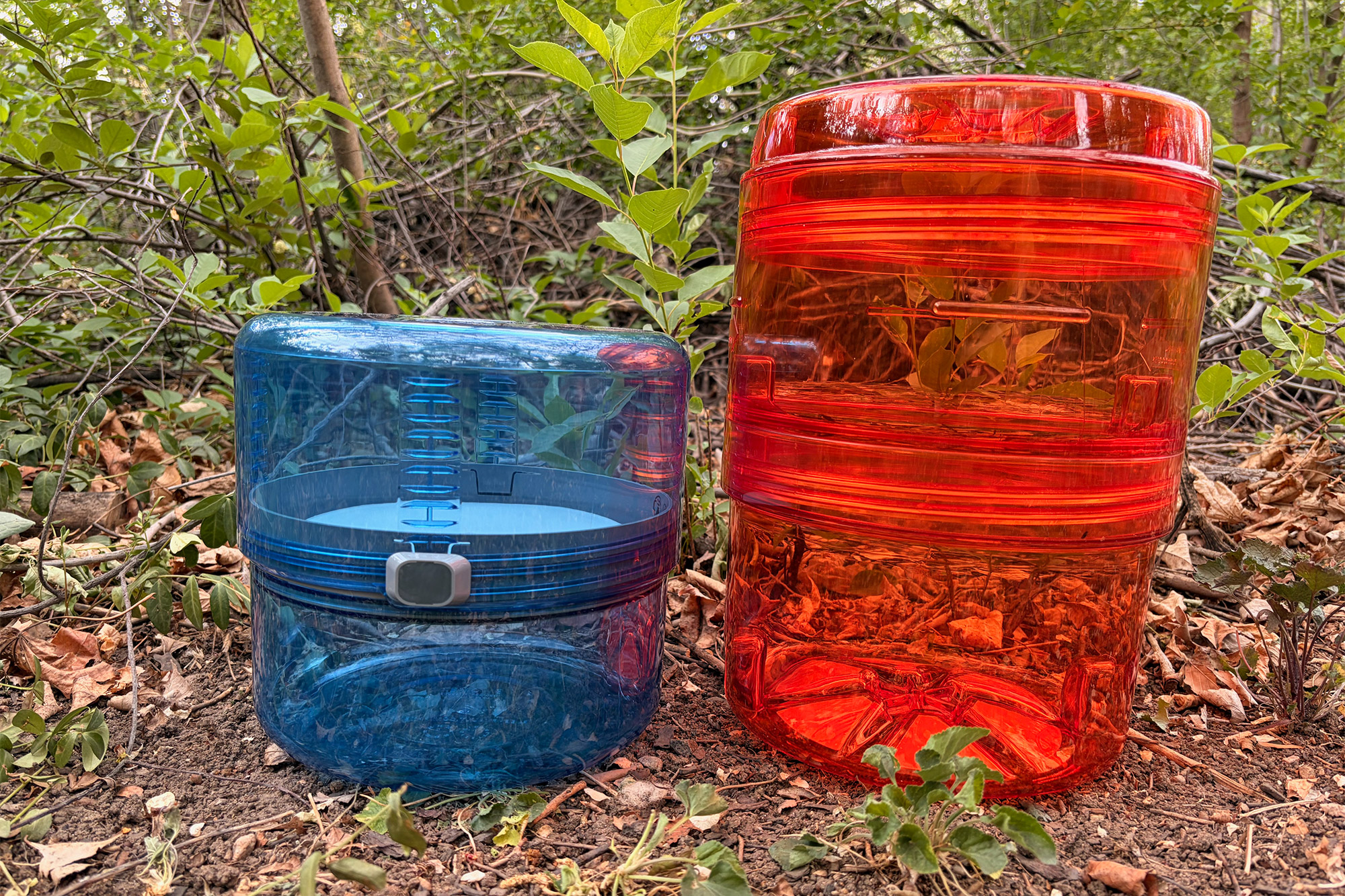

The last 2 years have brought more innovation in the world of bear canisters than we’ve seen in a long time. New shapes, sizes, and materials have been introduced in the past, but now two brands are offering canisters that can change sizes to suit different adventures.
In 2025, REI launched the Traverse, the first modular bear canister. It’s essentially two different-sized bear canisters in one. It’s composed of three sections, the middle of which can be removed and conveniently nests around the bottom section. That way, as you eat through your food supplies, you can significantly reduce the canister’s volume.
You can also leave the extension segment at home for shorter trips, reducing the canister’s weight by nearly a pound. GearJunkie published a full review of the Traverse in 2025.
More recently, in 2026, Bear Vault released its Bear Vault ONE. In short, it’s a micro-adjustable size-to-fit bear canister that expands or contracts to fit around the exact volume of grub. GearJunkie got an early preview in March 2026.
These two innovative bear canister systems came out within a year of each other. They represent the biggest leap in bear canister technology in a decade. So we decided to take them to the field to test them side by side. We wanted to know exactly how they differed, their advantages and disadvantages, and which offered a more efficient way to carry and protect your food in bear country.
In short: The BearVault BV ONE ($120) and REI Traverse ($90) are two modular bear canister systems that allow users to modify the volume of their canister on the go. They both use button locks and threading systems to change the volume, but the approaches are very different.
The Traverse has a removable middle section, which reduces (or expands) the volume by 274 cubic inches. The BV ONE uses a threading system that compresses or expands the volume incrementally, locking in place at its top and bottom volumes. There are distinct advantages and disadvantages to each.
Volume
Adjustable between 8.3–4.65 L
Best use
Shorter trips; couples
Pros
- Lightweight
- Smooth threads
- Wide opening
- Micro size adjustment
- Padded buttons
Cons
- Weight doesn’t reduce with lower volume
- Requires better coordination to operate
- Needs to be stored a certain way when left in the rain
- No external carry tiedown points
Gear capacity (L)
11.25, 6.75
Gear capacity (cu. in.)
686 (large); 412 (small)
Materials
Polycarbonate; carry bag: 100% recycled ripstop nylon
Dimensions (large configuration)
9.1″ x 13″
Dimensions (small configuration)
9.1″ x 8 “
Weight (large configuration, excluding carry bag)
3 lbs., 9.1 oz.
Weight (small configuration, excluding carry bag)
2 lbs., 8 oz.
Pros
- Versatile for different lengths of backpacking trips
- Certified bear-resistant
- Translucent so you can see inside
Cons
- Heavy
- Opening it is challenging with cold fingers
The REI Traverse vs. the BV ONE
These two canisters are similar in many ways: Both are certified bear-resistant. Both are translucent, and both offer adjustable volume. They’re both roughly the same shape and have wider openings than other brands on the market. Also, neither of them has external tie-down points. Yes, a strap or rope could go around them, but it’s best to pack them in your pack.
What makes them different?
Since the BV ONE was released, we have been able to compare the two side-by-side in the field. We took them on an early-season one-night campout with a group of testers who had a chance to open, close, and use both canisters. The BV ONE accompanied GearJunkie on a backpacking trip in Canyonlands. The Traverse came with us on a campout near Bears Ears.
We’ll continue using these canisters this summer and will update this review with any notable future impressions.
By the Numbers
Picking the best of these two canisters for you will boil down to your priorities. If price is your key point, then the $90 REI Traverse is the easy win. The BV ONE is $120.
For max volume, again, the Traverse wins with 11.25 L. The BV One maxes out at 8.3 L. On the other end of the spectrum, you might appreciate that the BV One compresses down to a scant 4.65 L compared to the Traverse’s 6.75 L. The BV ONE will take up less space in your pack for quick one-night getaways.
If absolute weight savings is your jam, BV ONE is the clear choice at just 1 pound, 15 ounces. Even at its smallest, the Traverse weighs 2 pounds, 8 ounces, and the large configuration weighs 3 pounds, 9.1 ounces.
Bits & Pieces

The fact that the BV ONE has no extra pieces to keep track of when not in use gives it an early lead in this category. There are only three pieces that are always in use: the top, the bottom, and the separator. The separator lets you keep two people’s food separate or store trash on one side and food on the other. We also discovered that it doubles as a decent camp Frisbee.
The Traverse also has three canister pieces, plus a storage bag. All three canister pieces are used for the full-size configuration. In the small size configuration, the extension isn’t needed and can be nested around the outside of the lower section, or left at home. The storage sack comes in very handy here. The Traverse has no internal separator.
Opening & Closing

One of the BV One’s biggest advantages is that the buttons are very easy to press. BearVault’s buttons are rubberized, soft, and easy to press. The Traverse, on the other hand, uses metal spring buttons; in testing, we found those harder to press, especially when it was cold out.
Also, when adjusting the size of the Traverse, you end up needing to push the two sets of buttons in more often than on the BV One. Finally, the little metal buttons on the Traverse do need a slight nudge when putting the pieces back together before the threads catch. Advantage: BV One.
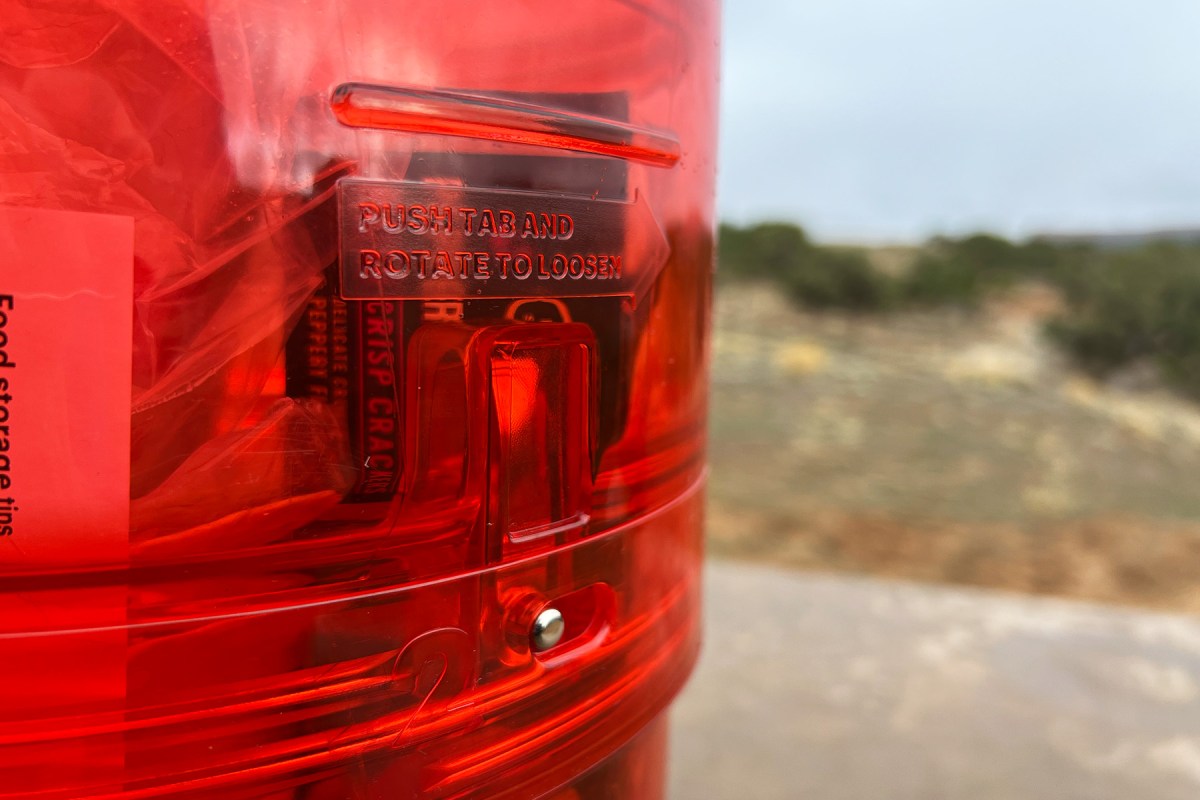
However, REI Co-op Traverse is designed to be a two-step opening system, meaning you only need to push in one of the buttons at a time to unlock and unscrew it. The buttons are labeled “1” and “2” for the correct sequence (though the numbers can be a little hard to see). Because of the two-step process, we found it was easiest to hold the bottom of the Traverse between your feet on the ground and unscrew the top from above.
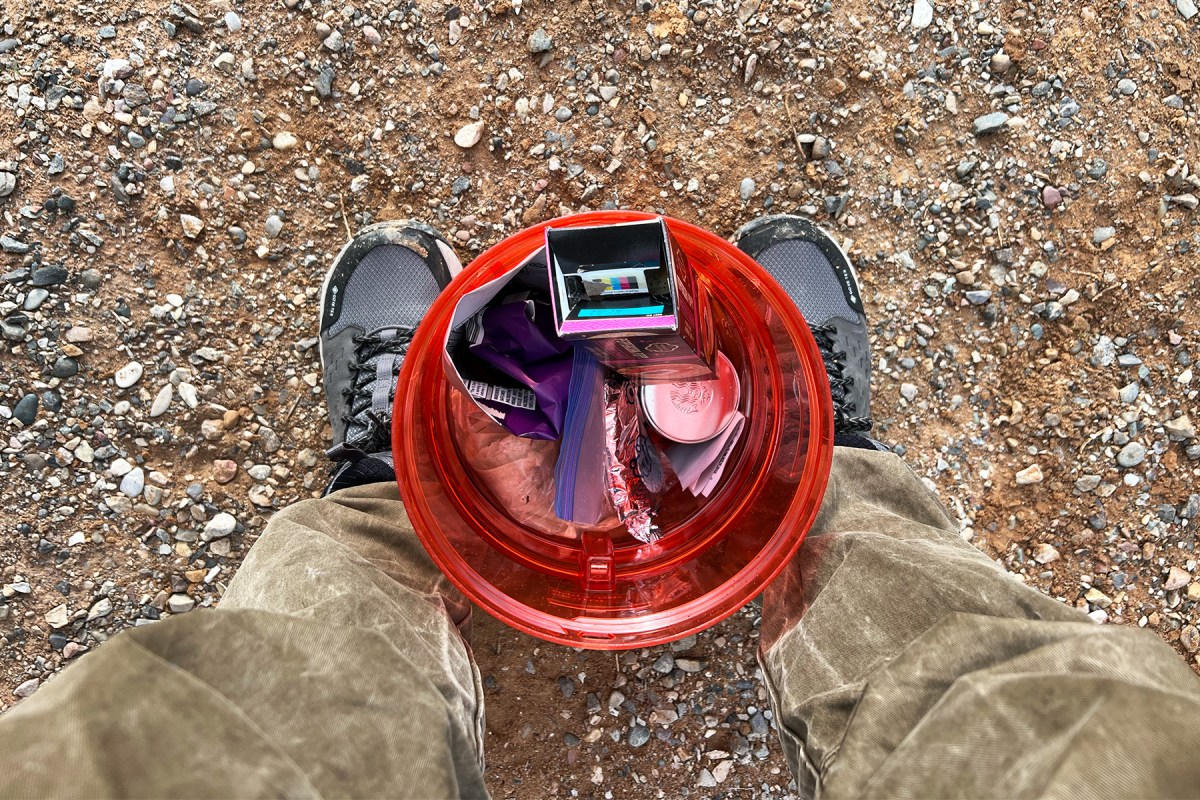
The BV One requires both buttons to be pushed at the same time, and it requires dexterity to press in on the buttons with one finger from each hand while the rest of the fingers or the palm twist the two halves in opposite directions. In the end, the Traverse has more steps, and the BV One required a little more coordination.
One tester with minor arthritis in her thumbs found both styles hard to open and said she’ll stick with the models that require a tool to open (even if they’re heavier).
Finally, the threads of the BV ONE have a much smoother sliding action. The Traverse feels sticky, like the threads are a little too tight. That might change over time with extended use.
Packing

The Traverse gets the nod for packing simplicity. The large opening swallows whatever you want to bring. You can even fill the bottom, the smaller segment first, and then add the extension sleeve segment, and continue packing until closing it up with the lid.
The BV ONE is a bit more nuanced in the packing process. Because it splits in half, you will pack each half separately. The top half is larger with a nice, big opening, much like the Traverse.
However, the opening to the BV One’s bottom half is much smaller since it’s integrated into the male threading component. I found repackaging the food from its shelf packaging into smaller bags greatly reduced packaging bulk. That way, the smaller opening wasn’t an issue.
The top half was great for packing backpacking meals, and the bottom was great for snacks. When all the food could fit in one half, the separator made it easy to dedicate the smaller half to trash, keeping it separate from my food.
While the BV One only locks in two positions, it can be incrementally compressed or expanded as needed to provide more or less volume.
On the Trail

In testing, I found the BV ONE Adjustable Bear Canister was easier to manage on the trail as I ate through my grub. The BV ONE just twists down to the remaining volume of food. Other testers noticed the need for some caution when tightening the BV ONE down to avoid crushing or smashing snacks like crackers.
The REI Co-op Traverse Modular Bear Canister designers, however, very cleverly designed the smaller configuration to nest within the extension sleeve segment. That way, when you’ve eaten through the first half of your food and no longer need the full 8.3 L of storage, you can remove the middle, nest it on the outside, and proceed with a smaller canister.
It does not nest entirely, though. The threading cuff still sticks out, so in this nested mode, the whole thing is just under 1.5 inches bigger than just packing the smaller container by itself.
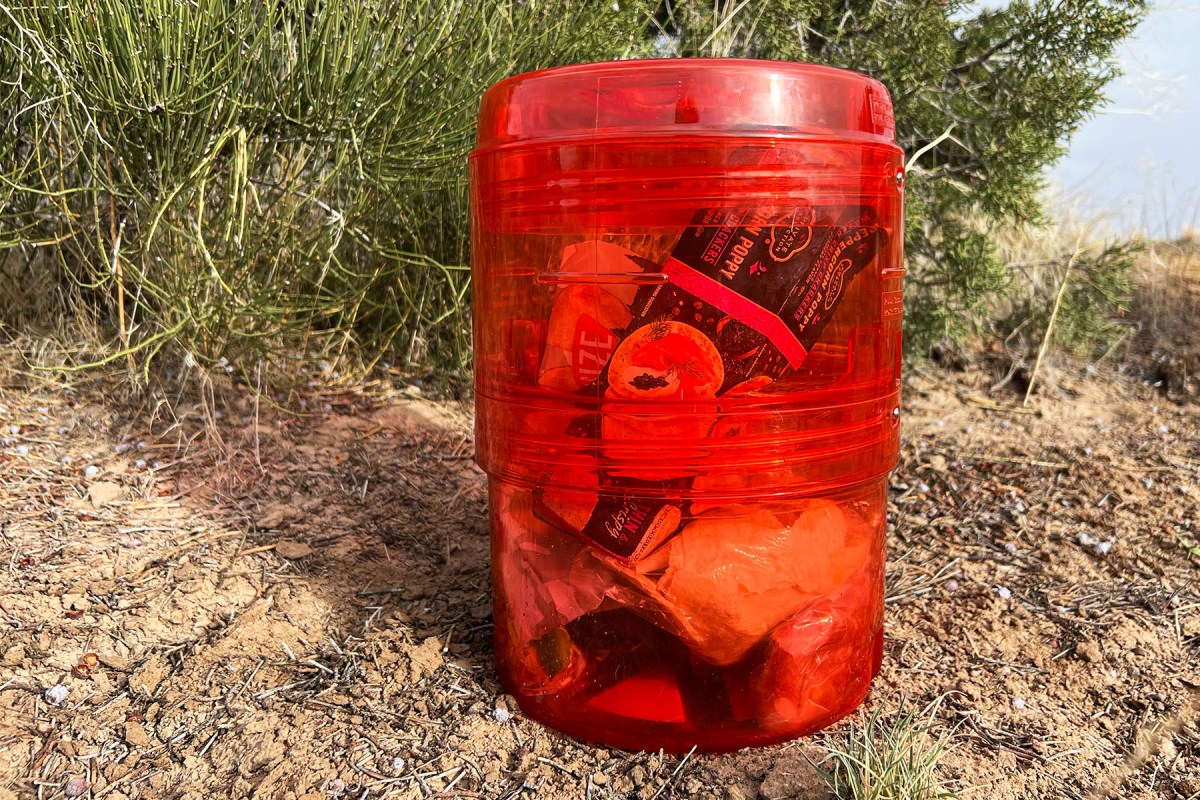
However, the bottom section doesn’t latch securely in this nesting mode. It simply rests inside the extension segment, so it can slip out. This proved to be a minor annoyance during use, but the included storage bag helped keep it all contained.
While at camp, stashing the canisters (100 yards downwind from camp and the kitchen), one strike against the BV One is that it needs to be placed right-side up when it rains. That is, with the larger half on top.
Neither canister is fully waterproof, but if left in the rain upside down, the rainwater could theoretically seep into the BV ONE. The Traverse is pretty impervious to rain, no matter how it’s oriented. Both canisters should go in a dry bag on a boat trip.
Repairs
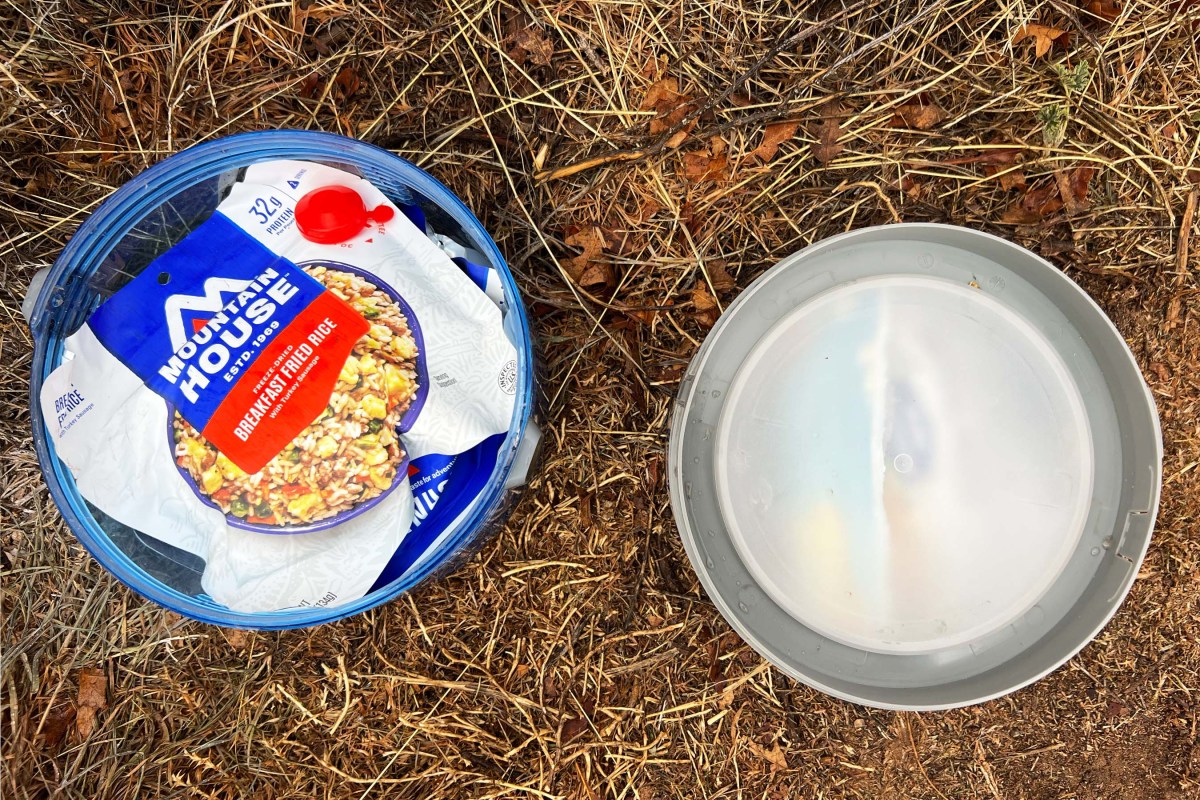
The chance of something breaking on either of these canisters is slim. Nevertheless, the buttons on both canisters can be replaced if damaged. That seems the most likely part to need repair, if any. The metal Traverse buttons can be removed with a piece of paracord, and a new button piece slides right in place.
The BV ONE buttons are plastic and sit in a rubberized housing. However, that can be removed by a small star or Torx bit. From an encounter with a bear, the Traverse buttons would be hard to damage, but the BV ONE buttons protrude and are more susceptible to damage.
Who Should Buy These Canisters?
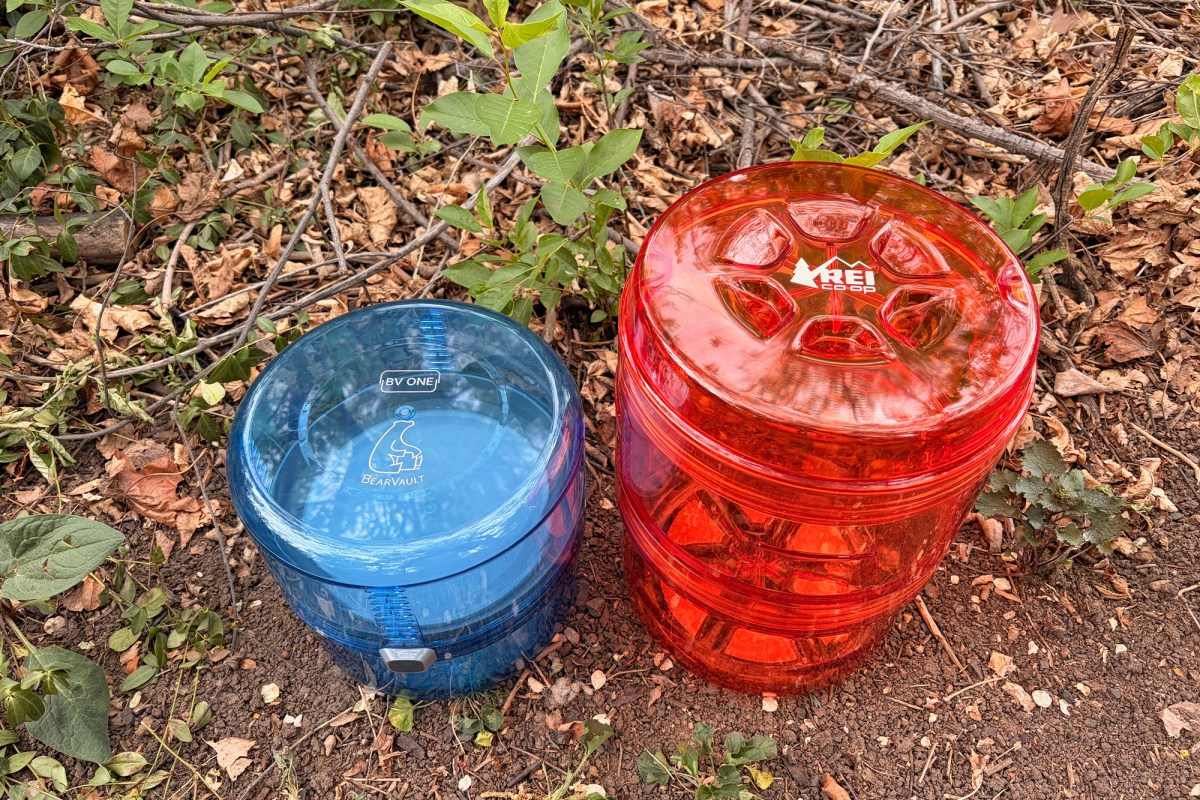
The BV ONE and Traverse Bear Canisters offer different approaches to very similar designs. Depending on how you use them, what kinds of adventures you’re taking them on, and how much volume you need, each offers benefits and drawbacks.
The Traverse is best for anyone who wants more room, is on a tighter budget, and doesn’t mind the extra weight or clunkiness. The BearVault BV ONE offers a simpler overall experience, with smooth-action threads, and is significantly lighter. However, it doesn’t hold as much and costs slightly more.
Read the full article here
