




The Army National Guard is running its first validation of an overhauled Basic Leader Course at Fort Indiantown Gap, Pa., expanding the service’s foundational school for junior noncommissioned officers from 23 days to 29. The Pennsylvania National Guard’s 166th Regiment-Regional Training Institute launched the test course on April 28, which was scheduled to wrap up by May 26.
The training occurred shortly after the active-duty Army ran a separate pilot program at Fort Sill, Okla. The National Guard BLC course is expected to help shape the curriculum before the entire service fields the new program later this year.
Instructors from five other states’ Regional Training Institutes traveled to Pennsylvania to observe, while reviewing lesson plans, training materials and evaluation methods that their own schools will likely adopt. RTI cadre from Nebraska, Colorado, Ohio, Mississippi and Vermont participated.
Eight Days in the Field
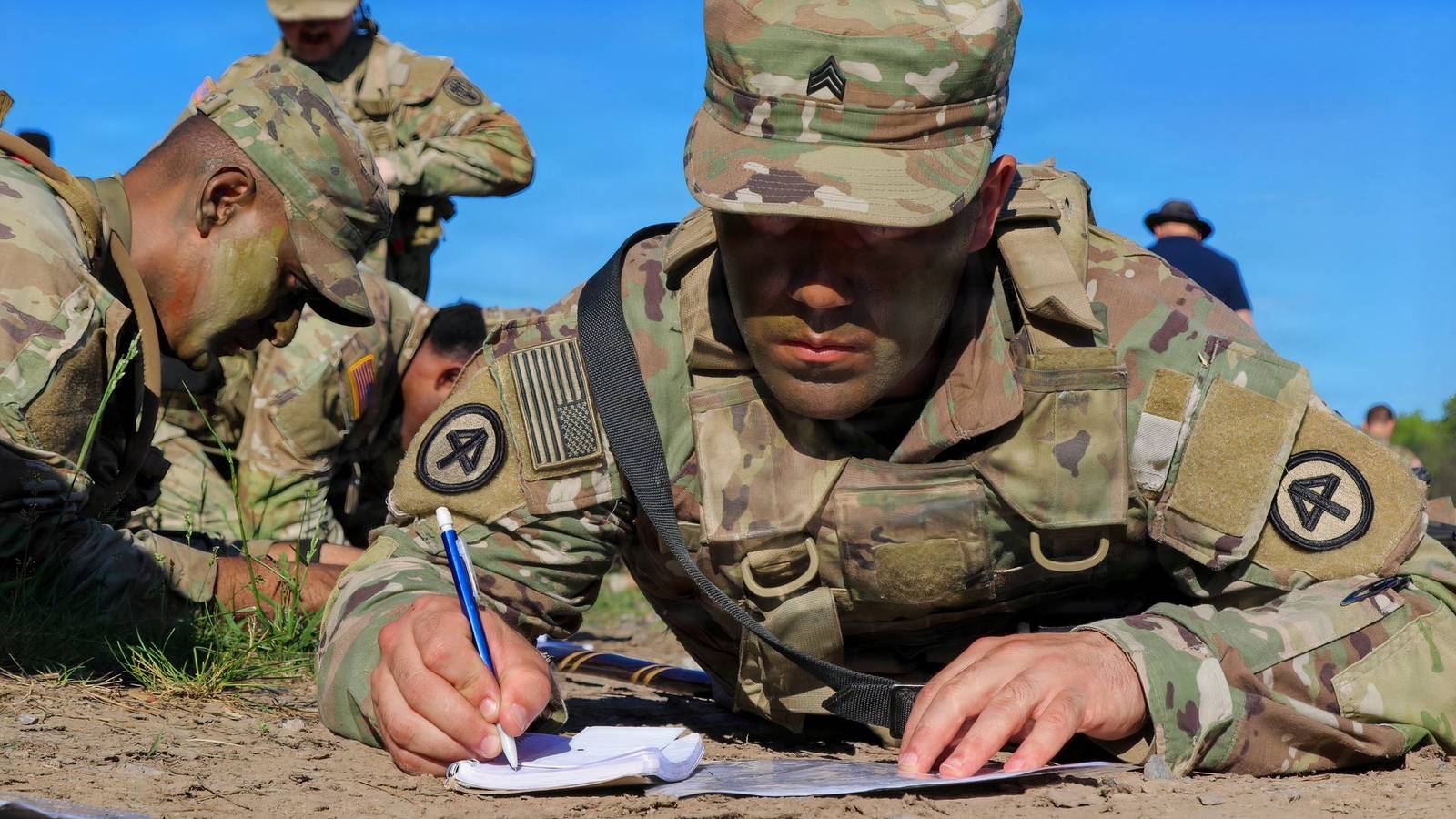
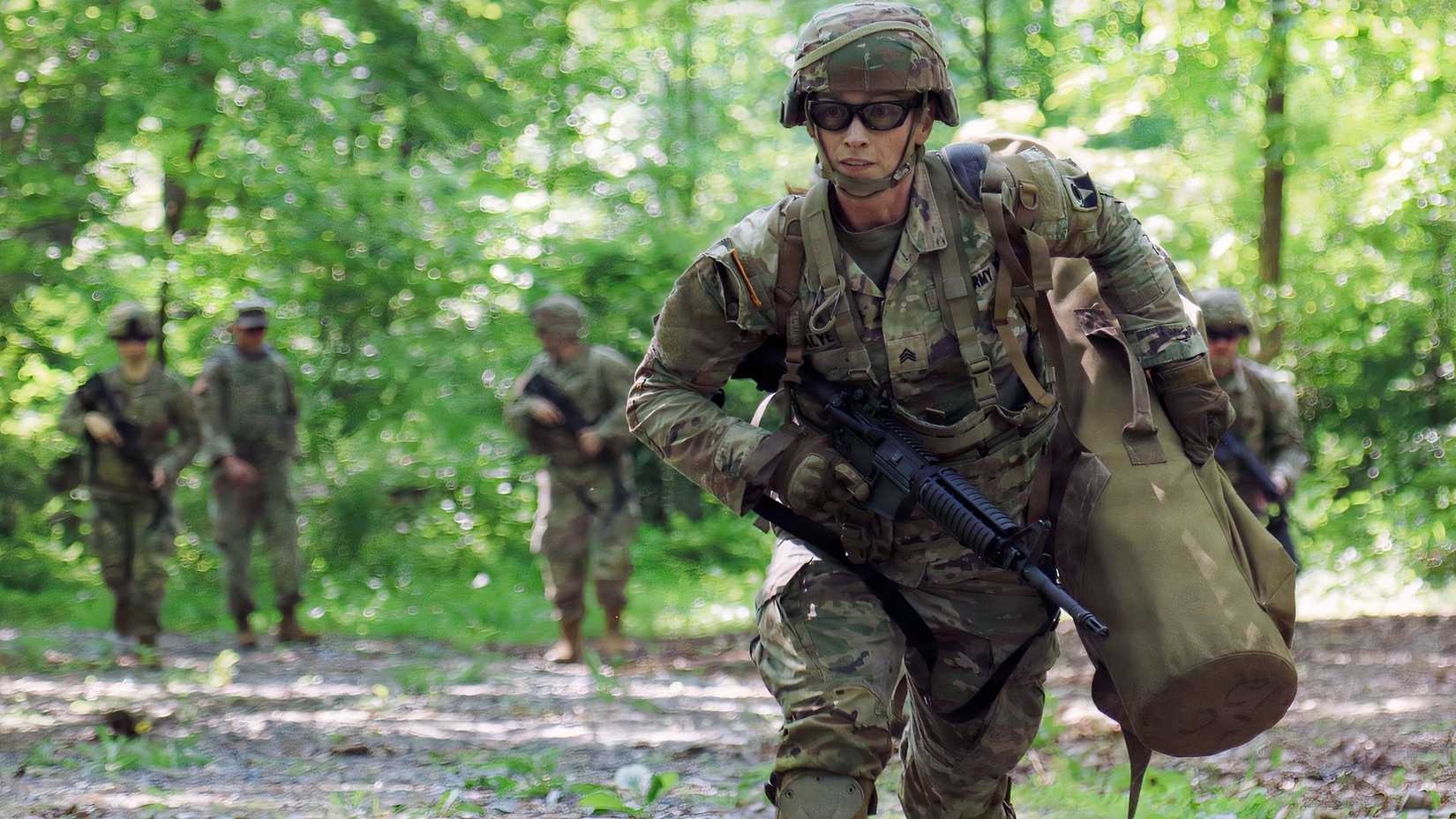
The most significant departure from the previous course is the time spent outside the classroom. The new program puts students in the field for eight days, running leader stakes lanes, land navigation exercises and a multi-day situational training exercise.
During leader stakes, soldiers rotate through a series of lanes targeting foundational combat skills, from treating casualties and qualifying on weapons to executing patrol movements and recovering disabled vehicles.
Other lanes build on those skills with ambush and indirect-fire reaction drills, casualty evacuation procedures, nine-line medevac calls and patrol base operations. The difficulty increases each day.
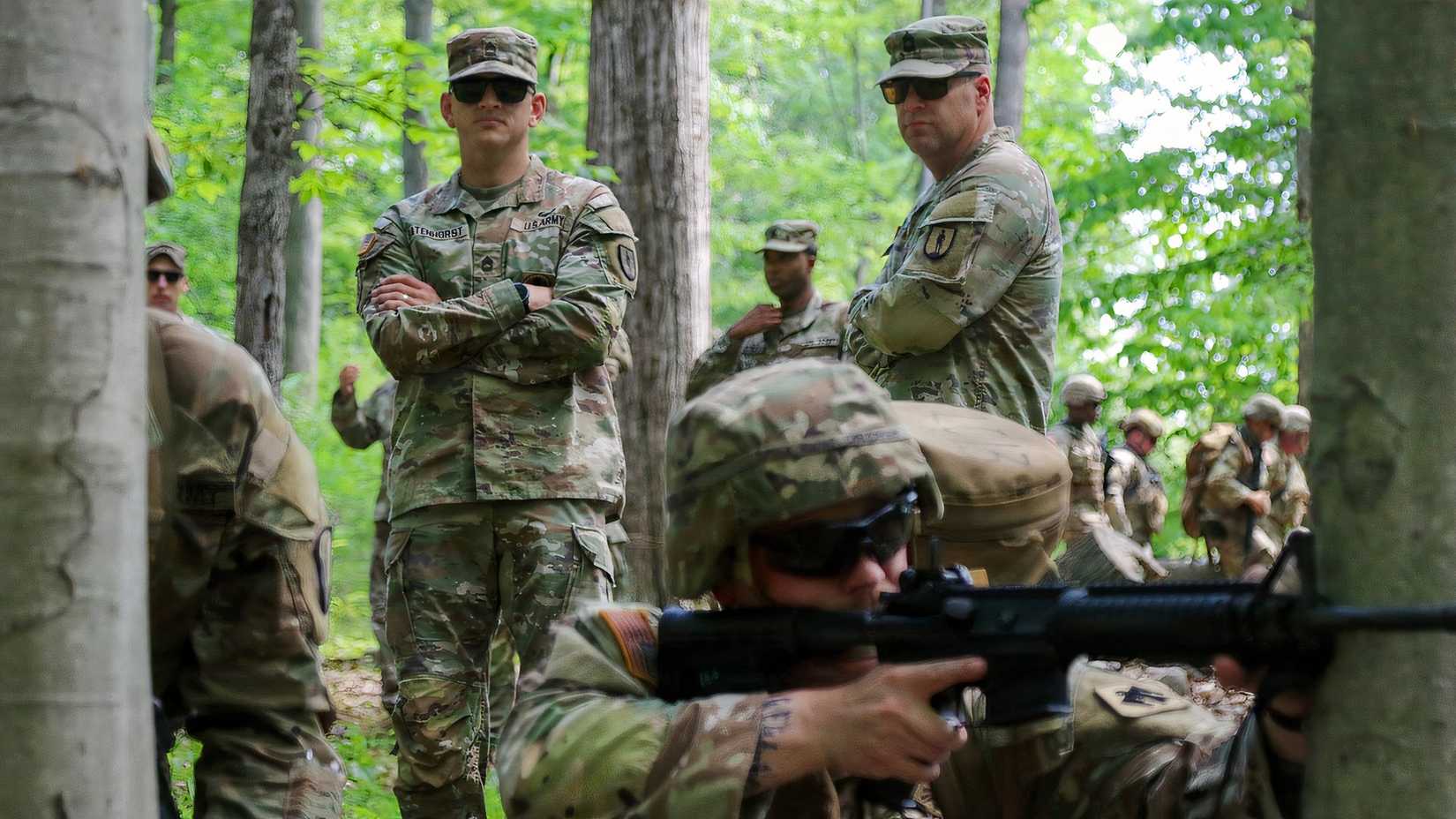
The course ends with a situational training exercise designed to test leadership under pressure. Students take charge of elements, work through the troop-leading process and carry out missions against the clock in simulated combat conditions.
“We’re not grading them on their ability to do battle drills,” said Master Sgt. James Webb, the Basic Leader Course chief of training for the 166th Regiment. “We’re grading them on the ability to make decisions in a stressful environment.”
The New Army Basic Leader Course
The updated BLC retains all content from the 23-day version but adds roughly six to seven days of field training, Webb said.
“Nothing from the 23-day BLC course is being lost,” he said. “But a lot is being added, what we’re calling reps and sets.”
For active-duty soldiers, the revamped course will run five weeks on a six-day training schedule. National Guard and Army Reserve soldiers will complete 27.5 training days. The 166th Regiment’s validation iteration spanned 29 calendar days.
A February planning conference at Fort Indiantown Gap brought together representatives from the National Guard Bureau, the U.S. Army Noncommissioned Officer Academy and 14 Regional Training Institutes to synchronize the rollout. The new program of instruction is expected to be published in late July. The 166th currently runs 11 BLC cycles per year but will drop to eight once the longer format takes effect.
The cadre had a four-day window between the previous BLC class and the validation start to produce all the planning materials, from operations orders to evaluation rubrics, while simultaneously running instruction for existing students.
Sgt. Maj. Elizandro Jimenez traveled to Fort Indiantown Gap during the validation to observe and provide feedback. Jimenez serves as the command sergeant major of the U.S. Army Noncommissioned Officer Academy and manages the active-component BLC program.
“Pennsylvania’s cadre demonstrated exceptional adaptability while implementing this new curriculum,” Jimenez said. “The work being done here is helping shape how the Army develops future noncommissioned officers across the force.”
Part of a Broader NCO Education Overhaul
The expanded BLC is one piece of a sweeping restructuring of the Army’s NCO professional military education system, which touches every level from the Basic Leader Course through the Sergeants Major Academy.
Sergeant Major of the Army Michael Weimer announced the changes in October 2025.
“This isn’t hypothetical, we’re moving out,” Weimer said at an Association of the U.S. Army forum. “These aren’t theories, we’re in execution mode.”
The reform grew out of years of concern that BLC had become almost entirely classroom-focused. Field training and land navigation were stripped from the course in 2018 to make room for instruction on Army policy and administrative tasks. When the service tested bringing land navigation back in a 2022 pilot program, half of the roughly 900 participating soldiers failed, a result Weimer attributed to low use of analog navigation skills during the wars in Iraq and Afghanistan.
Under the broader overhaul, the Master Leader Course is growing from two weeks to three, while the Advanced Leader Course and Senior Leader Course are each being cut by roughly a week. The 640th Regional Training Institute in Utah is separately piloting the revised Master Leader Course through mid-June.
The institution overseeing the training was also rebranded. The NCO Leadership Center of Excellence was officially redesignated as the U.S. Army Noncommissioned Officer Academy on March 6 and realigned under Army University at Carlisle Barracks, Pa.
The changes carry particular weight for the National Guard. Guard Regional Training Institutes teach approximately 73% of all BLC students Army-wide.
Students in the validation course said the additional time made the experience more realistic.
“I think the extra week of training will really help people fully understand their roles as NCOs,” said Sgt. Tyler Kase, a combat engineer with the Pennsylvania National Guard. “It’s changed my perspective as a leader and how I’ll handle things moving forward when I return to my unit.”
Sgt. Drayton Coyle, an infantryman and team leader with the Massachusetts National Guard, said the culminating field exercise addressed the unpredictable nature of modern operations.
“The operational environment and the way we fight is rapidly changing,” Coyle said. “Having that culminating event, that STX at the end of the course, will help us prepare.”
Read the full article here
