



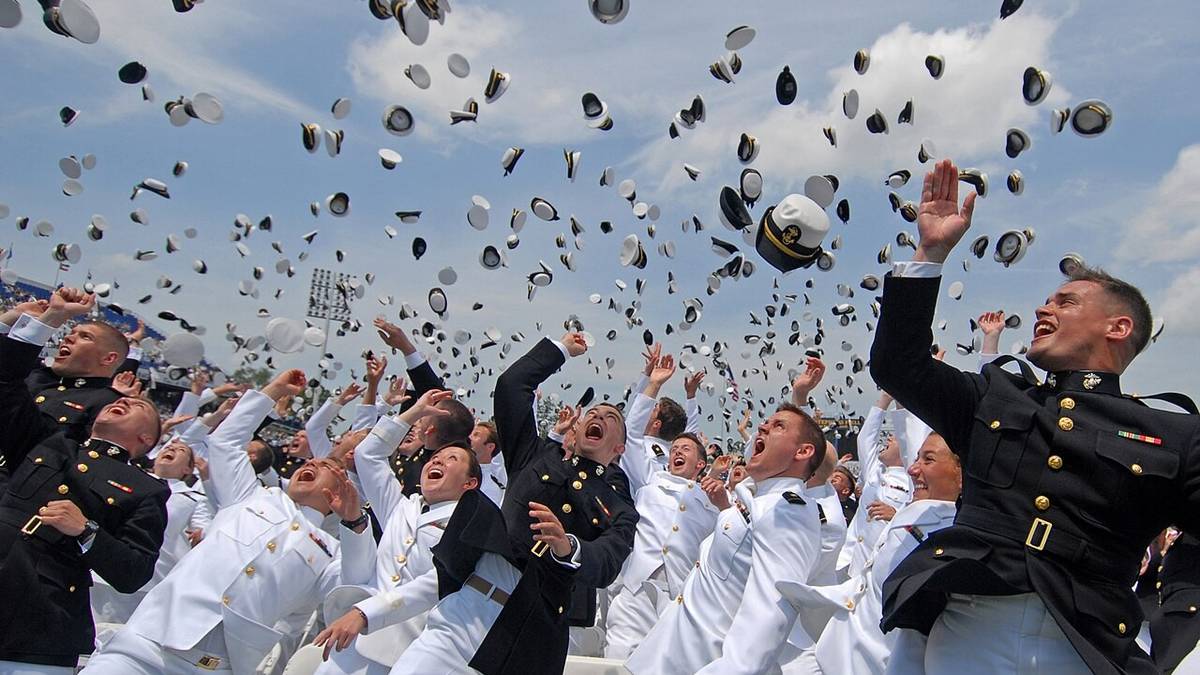

President Donald Trump will not deliver the commencement address for the U.S. Naval Academy’s (USNA) Class of 2026 graduation ceremony, with the USNA telling Military.com it was based on scheduling and availability as opposed to other perceived reasons.
Instead, Gen. Dan Caine, chairman of the Joint Chiefs of Staff and the nation’s highest-ranking military officer, will serve as speaker. The USNA announced Caine as the speaker just days before the ceremony, whereas when Vice President JD Vance delivered the commencement last fall, his commencement was made public roughly three weeks prior to the ceremony.
Trump will serve as speaker for another graduation. He is currently scheduled to deliver the commencement address at the Coast Guard Academy in Connecticut, which the service announced earlier this month.
“Speaker participation at U.S. service academy graduation and commissioning ceremonies has traditionally included senior national leaders such as the United States president, vice president, secretary of war, and the chairman of the Joint Chiefs of Staff,” a USNA spokesperson told Military.com on Tuesday.
While they generally rotate among the academies, these arrangements are not fixed and are routinely adjusted based on official schedules, operational requirements and availability.
That rotation of speakers is not determined by the service academies but rather by the principal offices based on their availability, officials added.
The decision to have Caine rather than Trump marks a shift from the norm.
For decades, the major U.S. service academies have followed an informal but recognizable rotation for commencement speakers at graduation ceremonies. Presidents, vice presidents, secretaries of defense, and service secretaries typically cycle through appearances at the U.S. Naval Academy, West Point, the Air Force Academy, and the Coast Guard Academy.
The system is not codified in law, but it has become a longstanding institutional practice designed to distribute presidential attention and avoid turning any single academy into a recurring political stage.
How the Rotation Usually Works
The rotation is not formally announced by the Pentagon each year, though commencement schedules consistently show a deliberate distribution of senior administration officials among the academies.
In 2024, for example, President Joe Biden delivered the commencement address at West Point, Vice President Kamala Harris spoke at the Air Force Academy, and Defense Secretary Lloyd Austin addressed the Naval Academy.
Longtime academy observers have discussed the existence of this cycle for years. Service Academy Forums, which closely track academy traditions and ceremonies, contain discussions documenting recurring presidential commencement patterns among the academies across multiple administrations.
Under that informal system, many expected Trump to appear at Annapolis this spring.
Why This Year Stands Out
The Naval Academy has historically treated presidential commencement addresses as major ceremonial events.
Trump spoke there in 2018 during his first term. Biden later addressed Naval Academy graduates in 2022.
Presidents frequently use service academy graduations to reinforce themes of civilian control of the military, national service and military professionalism. The events also serve as commissioning ceremonies for future officers, which gives the speaker selection unusual symbolic importance.
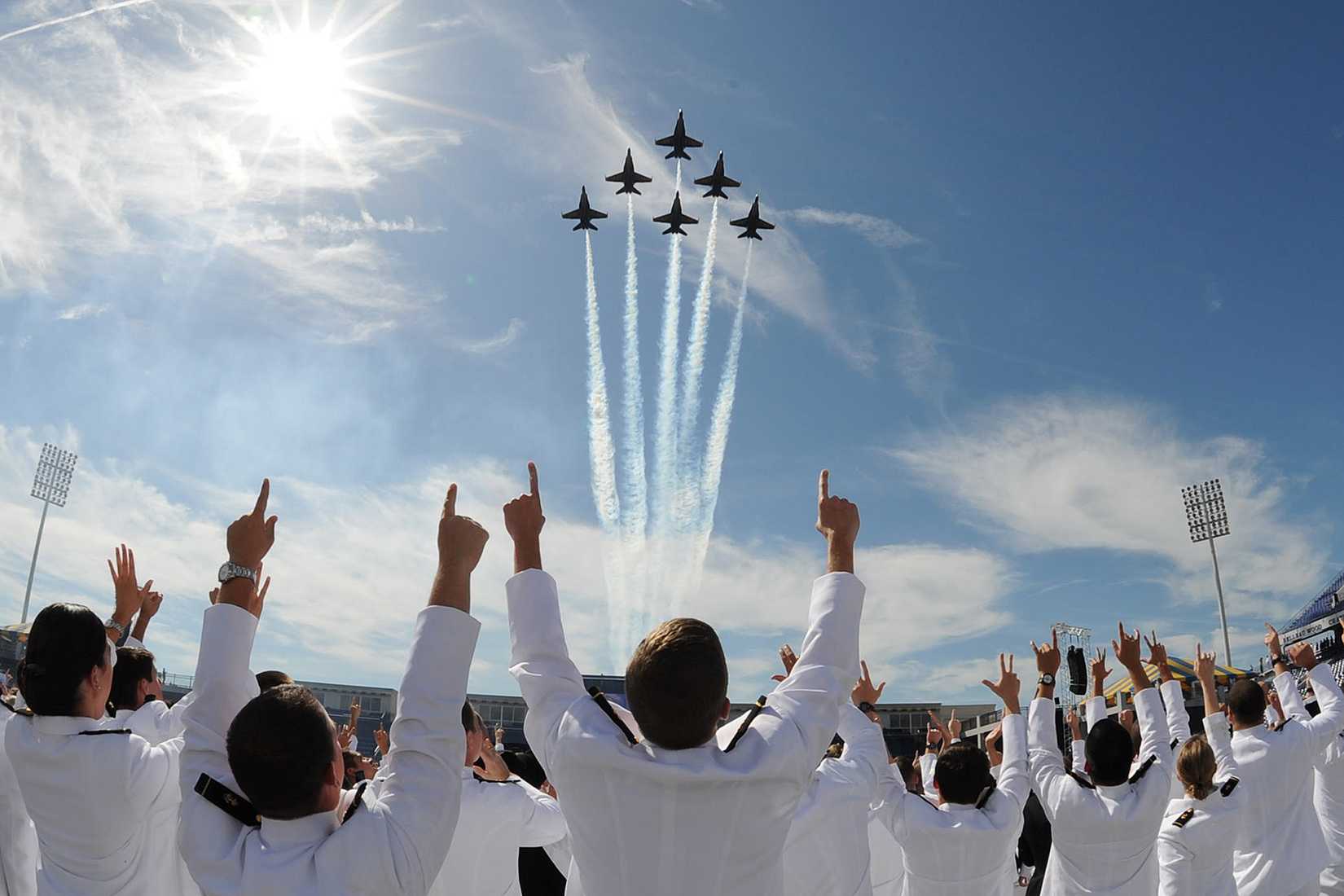
The administration has not publicly identified any scheduling conflict preventing Trump from appearing in Annapolis.
When asked what scheduling conflict led to Caine and not Trump presiding over the ceremony, the White House provided Military.com with no specifics.
“President Trump is incredibly proud of the accomplishments of the men and women of our United States Navy, including the midshipmen of the United States Naval Academy,” White House spokesperson Anna Kelly said. “That is why he joined our sailors for a grand birthday celebration in Norfolk last October and is sending the great Chairman Caine to speak at the Naval Academy’s graduation this week.
“The President looks forward to continuing to honor our brave service members during upcoming events that recognize America’s 250th anniversary and throughout the rest of his term.”
The Last Time the Rotation Broke
The most significant prior deviation from the expected commencement pattern occurred during Trump’s first term.
In 2017, Vice President Mike Pence delivered the Naval Academy commencement address instead of Trump because the president at the time was attending the Group of Seven summit in Sicily. Reporting at the time specifically described Pence’s appearance as a departure from the precedent established during previous administrations.
That earlier break in the rotation came with a clear logistical explanation: the president was overseas conducting official diplomatic business. This year appears different because no equivalent explanation has emerged publicly.
The Naval Academy simply chose a different speaker despite the broader pattern suggesting Trump would ordinarily have appeared there.
Nick Mordowanec contributed to this story.
Read the full article here
