



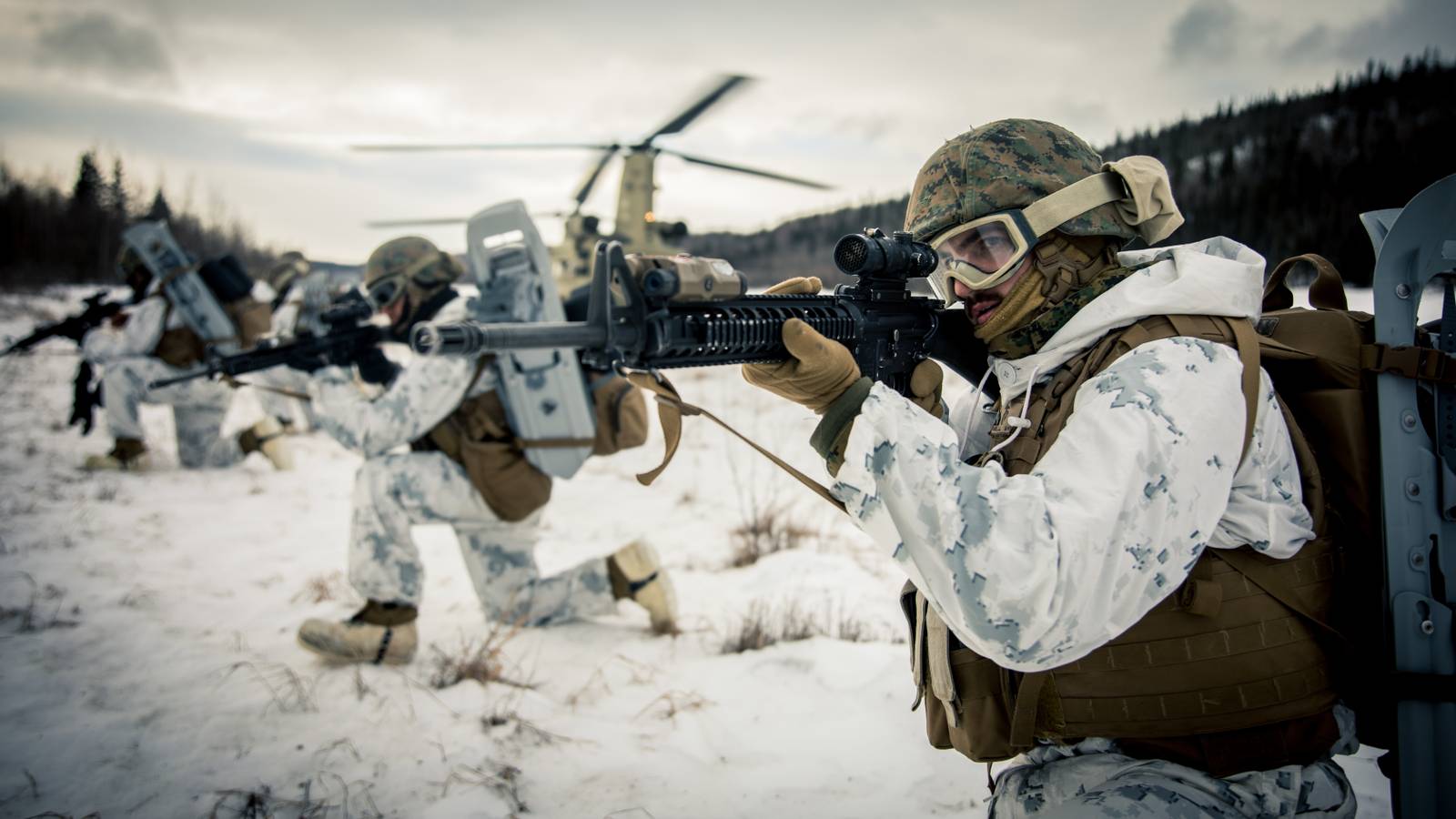

Marines are adding a rotational force to Alaska under the new Campaign Alaska launched May 9. The U.S. Marine Corps is pairing Marine Rotational Force-Alaska (MRF-Alaska) with a permanent Supporting Arms Liaison Team-Alaska (SALT-Alaska) at Joint Base Elmendorf-Richardson to give Marines regular training in extreme cold and complex terrain.
This builds on the service’s prior commitments to Arctic exercises, as covered in earlier Military.com reporting on joint cold-weather training in the region. Service members can expect more opportunities to practice skills that support homeland defense and power projection in the High North.
MRF-Alaska Brings Persistent Training to the High North
Marine Rotational Force-Alaska operates under Marine Forces Northern Command and will conduct ongoing multi-domain expeditionary training and experimentation across the state. Marines will participate in joint exercises such as Arctic Edge and Red Flag, testing equipment and tactics that must work when temperatures plummet and daylight vanishes for extended periods.
The rotations give the Fleet Marine Force a dedicated venue to prepare for arctic conditions without requiring a large permanent footprint.
SALT-Alaska Establishes Permanent Liaison Capability
Marine Corps Forces Reserve is creating the Supporting Arms Liaison Team-Alaska as a detachment of the 6th Air Naval Gunfire Liaison Company. The team will operate from Joint Base Elmendorf-Richardson and reach full persistent presence by fiscal year 2027.
The new SALT-Alaska detachment builds on the Marine Corps Reserve’s long-standing presence in Alaska that dates back to 1985. It will improve coordination of supporting arms with joint forces, allies and local partners while ensuring continuity between rotational units.
Senior Leaders Highlight Arctic Importance
The Commandant of the Marine Corps, General Eric Smith, stated:
“The Arctic is a region of growing strategic importance. The Marine Corps must be prepared to operate and win in its extreme conditions. MRF-Alaska and SALT-Alaska are critical to ensuring our Marines are forward postured, trained and equipped to project power globally, reaffirming our commitment as the Nation’s expeditionary force in readiness.”
Lieutenant General Bobbi Shea, commanding general of Marine Forces Northern Command, added:
“In this era of strategic competition, Alaska is critical to homeland defense and a vital theater for global power projection in the Arctic. The Marine Corps Campaign – Alaska is a deliberate and necessary step to ensure we provide the Joint Force with a combat-credible force to support the National Defense Strategy.”
 Strategic Context and Next Steps for Marines
The 2026 National Defense Strategy identifies the Arctic as key terrain for homeland defense and strategic competition. Marines interested in High North assignments should monitor rotation announcements. The permanent SALT-Alaska team will create ongoing demand for ANGLICO-qualified personnel and supporting arms specialists who can integrate fires quickly in austere environments.
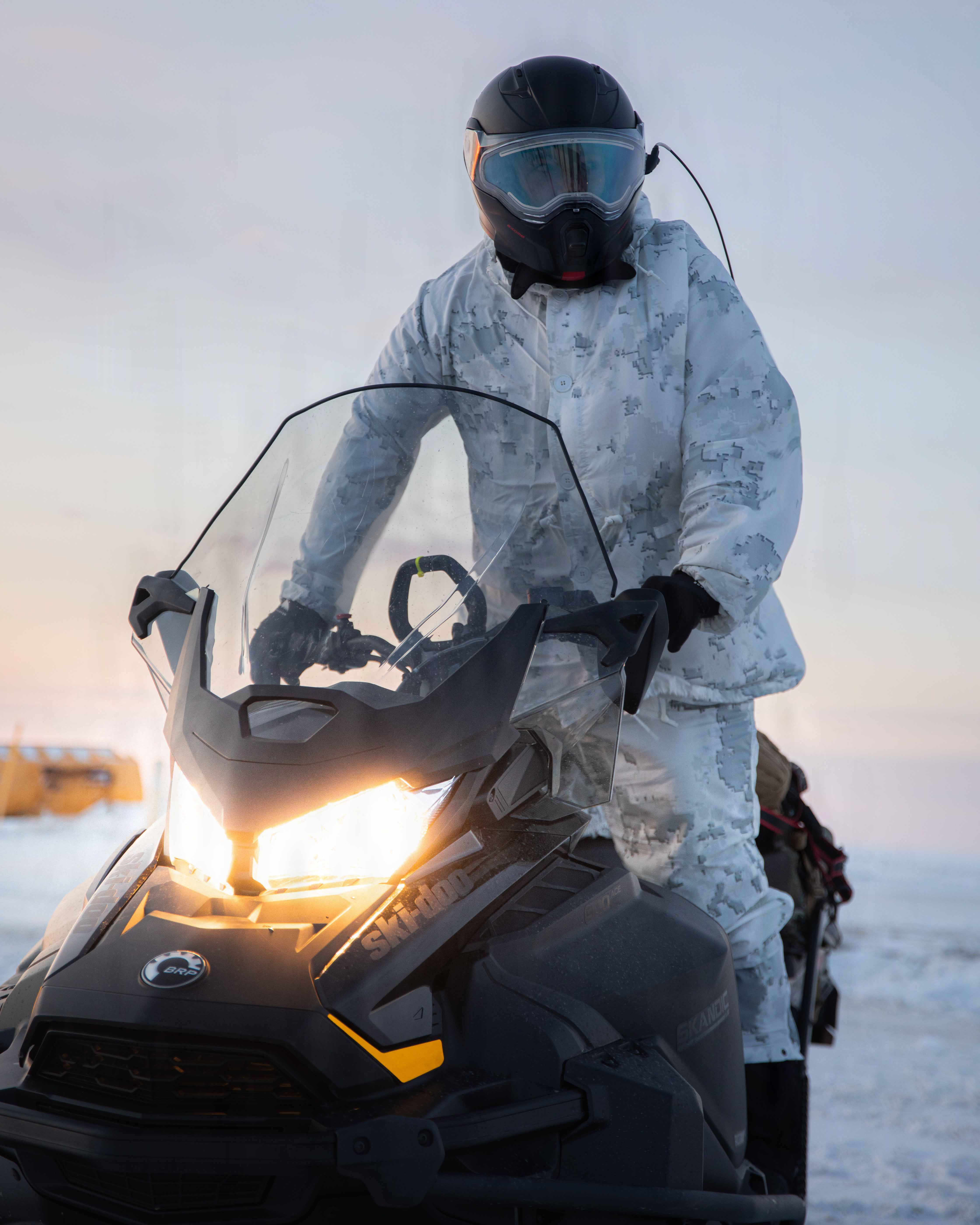
Units preparing for Arctic operations now have a clearer training path that includes live joint exercises rather than classroom instruction alone. Cold-weather vehicle operations, weapons maintenance and long-range coordination will receive more realistic validation under the new campaign.
For the full official announcement, see the U.S. Marine Corps press release. Additional details on Marine Forces Northern Command activities appear on the service’s public site.
Read the full article here
