



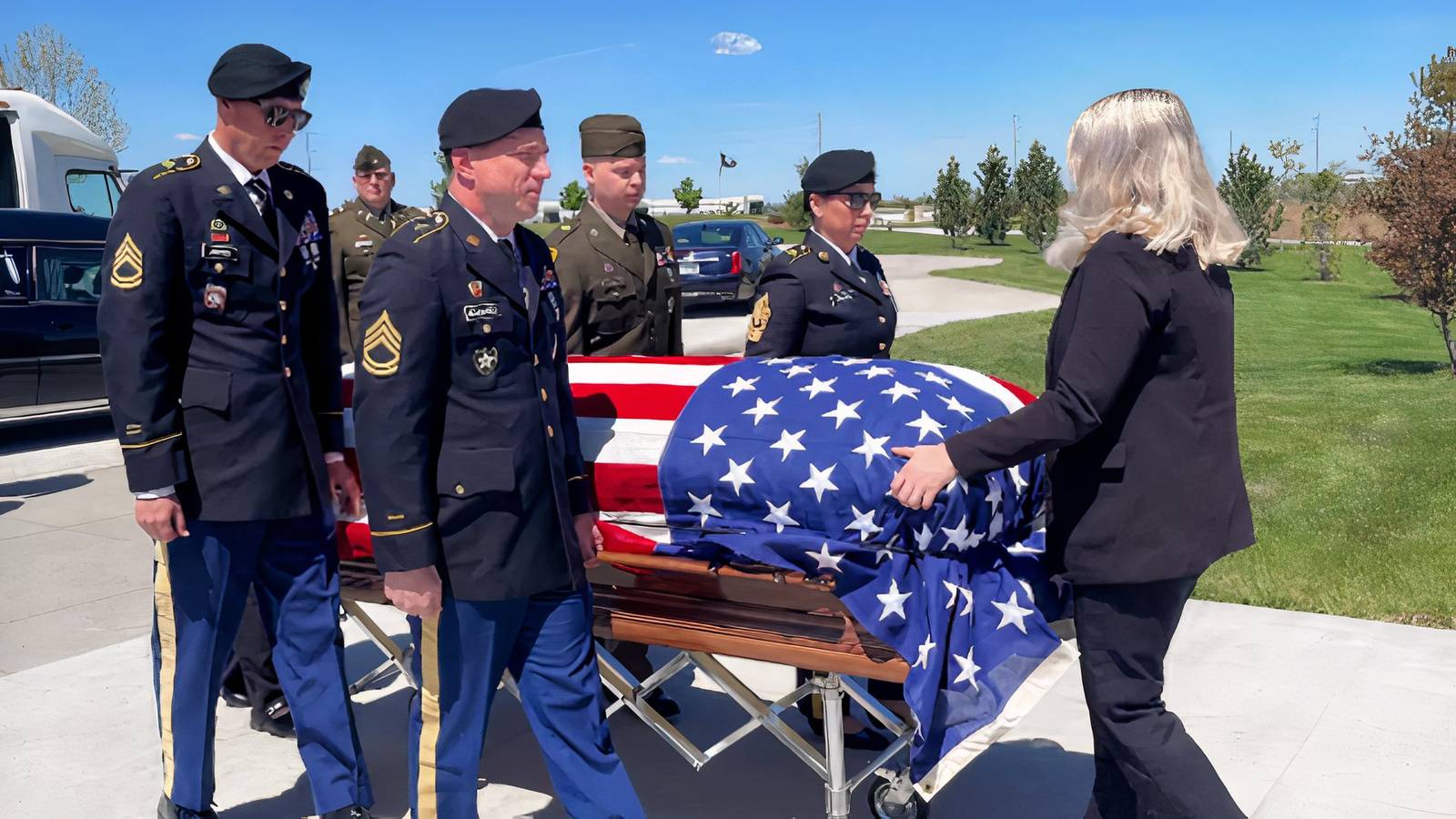

Sixteen American soldiers killed on D-Day were interred in a communal grave at Omaha National Cemetery last week, on May 7, more than 81 years after a mine blast and fire aboard their landing craft kept them from ever reaching the beaches of Normandy.
The soldiers had been aboard Landing Craft, Infantry (Large)-92, a Coast Guard-manned vessel carrying roughly 200 Army troops toward Omaha Beach on the morning of June 6, 1944. Their remains had spent decades buried together as unknowns at the Normandy American Cemetery in France before the Defense POW/MIA Accounting Agency exhumed them in 2021 for forensic analysis.
Mine Strike Off Omaha Beach
LCI(L)-92 was a combat-tested ship before it ever participated in combat in Normandy. Manned by a Coast Guard crew under a wartime agreement between the Coast Guard commandant and the chief of naval operations, the craft had carried troops ashore during the invasion of Sicily in July 1943 and at Salerno that September as part of LCI Flotilla 4.
By the spring of 1944, the flotilla had been redesignated Flotilla 10 and transferred to England to prepare for the invasion of France. On the morning of D-Day, LCI(L)-92 was one of 36 landing craft in the flotilla divided between Omaha and Utah beaches.
It carried soldiers from the Army’s 149th Engineer Combat Battalion, the 60th Medical Battalion and the 500th Medical Collecting Company. The 149th was part of the 6th Engineer Special Brigade, assigned to clear beach obstacles and mines in support of the 116th Regimental Combat Team on Omaha Beach, according to the Army Center of Military History.
The craft navigated three rows of mined obstacles off the Dog White sector and pulled alongside the already-burning LCI(L)-91, using its smoke for concealment. As it drew near, it struck a mine on its port side. The detonation set fire to fuel stored in the forward hold, killing the soldiers trapped inside.
An artillery shell then struck the starboard side as the burning vessel drew additional German fire. Surviving soldiers disembarked under fire, while the crew fought to control the flames for hours before the skipper ordered the ship abandoned at around 2 p.m.
Coast Guard Photographer’s Mate 3rd Class Seth Shepard, who was aboard during the attack, wrote a detailed account of the explosion weeks after D-Day. A survivor described the heat from the blast as comparable to “the midst of a blast furnace,” according to the VA.
Tides later carried the wrecked hull onto the beach, where it came to rest in the sand. LCI(L)-92 was one of four Coast Guard landing craft destroyed at Omaha Beach that day, along with LCI(L)-85, LCI(L)-91 and LCI(L)-93, according to the Coast Guard Historian’s Office.
Twenty-five soldiers died in the explosion and fire. Only one was immediately identified. The damage to the forward hold was so severe that recovering the other 24 proved all but impossible in the days after the landing.
Days after the invasion, soldiers from the 500th Medical Collecting Company inspected the ruined craft and recovered what remains they could from the forward hold, according to DPAA. The American Graves Registration Command later buried those remains at the U.S. Military Cemetery at St. Laurent-sur-Mer.
In 1946, the AGRC separated the commingled remains into four sets of unknowns, designated X-53, X-83, X-83B and X-83C, and interred them at the Normandy American Cemetery in Colleville-sur-Mer, France. The soldiers’ names were inscribed on the cemetery’s Walls of the Missing.
Identification and Burial in Nebraska
In June and August 2021, the Department of Defense and the American Battle Monuments Commission exhumed the four sets of remains and transferred them to the DPAA laboratory at Offutt Air Force Base in Nebraska for modern forensic analysis.
DPAA operates one of its three accredited laboratories at Offutt AFB, where scientists analyze skeletal remains from past conflicts through anthropological examination and dental comparison. DNA analysis is conducted separately by the Armed Forces Medical Examiner System at Dover Air Force Base, Delaware.
From the commingled remains, scientists identified eight of the 24 soldiers. Those eight were returned to their families for individual burial, including Army Sgt. John O. Herrick of Emporia, Kansas, and Pfc. Nicholas Hartman, whose identification DPAA announced last year on May 2, 2025.
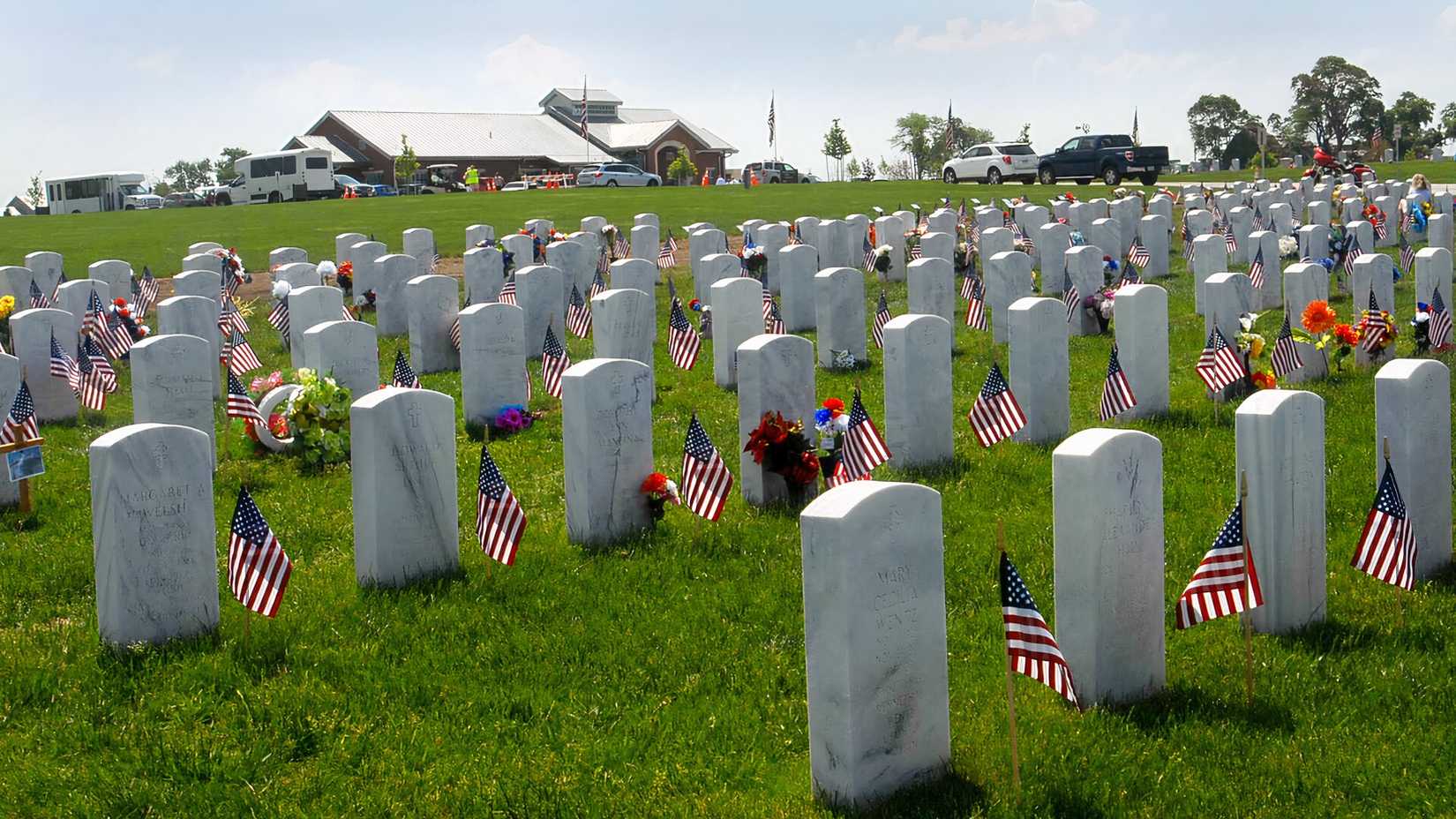
The remaining 16, whose remains could not be individually distinguished, were interred together at Omaha National Cemetery, a 236-acre VA cemetery in Sarpy County, Nebraska, that opened in 2016. The full list of names and ranks is available in the VA’s announcement.
The Normandy American Cemetery will place rosettes next to each soldier’s name on the Walls of the Missing, indicating their remains have been accounted for. Tributes can be left through the VA’s Veterans Legacy Memorial.
Read the full article here
