




People for the Ethical Treatment of Animals, more commonly known as PETA, is calling on the Pentagon and Defense Secretary Pete Hegseth to stop spending millions of U.S. taxpayers dollars on animal experiments in foreign countries.
PETA, in a letter sent to Hegseth on May 6, says that “gruesome and ongoing animal testing involving more than $57 million in public funds” should immediately cease as a means of cutting waste, fraud and abuse at the Pentagon. Of that $57 million, PETA claims that the Department of Defense has funneled more than $21 million into foreign animal laboratories in the last seven years and under two different administrations.
“At a time of intensified scrutiny over the soaring costs of war and growing calls to rein in Pentagon spending, PETA respectfully offers a proposal that would reduce fiscal waste, modernize military science, and advance troop health,” the letter reads.
Military.com reached out to the Pentagon for comment but received no response.
Shalin Gala, vice president of international laboratory methods at PETA for the past 22 years, told Military.com that PETA began following such testing dating back to the 1980s on wound labs.
Gala this primary focus is on non-animal methods and encouraging universities, government agencies and companies to shift away from animal use and laboratories towards non-animal methods.
“We recently uncovered that the Pentagon has been quietly pouring tens of millions of taxpayer dollars into these cruel and wasteful animal experiments that are being conducted in foreign laboratories where public oversight is limited and accountability is weak,” Gala said.
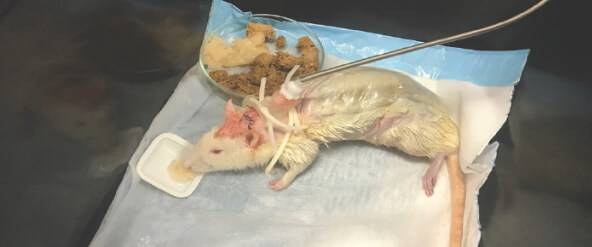
He and PETA cite obtained records, shared with Military.com, showing that more than $21 million has been sent overseas by the Pentagon since 2019 to fund experiments that will burn rats, paralyze pigs, infect animals with bacteria, blind them, damage their brains, and subject them to extreme trauma.
“All of this fails to advance human health or military readiness, which at the end of the day, that’s what any research funded by the Pentagon should be addressing, and these animal experiments are not meeting that goal,” Gala said.
Three Main Areas of Emphasis
PETA’s 24-page letter specifically centers on three main points of interest, calling on the banning of U.S. Navy decompression sickness/illness and oxygen toxicity tests on animals; U.S. Army weapon-wounding tests on dogs, cats, non-human primates, marine mammals and all other animals; and DOD-funded animal experiments at foreign institutions.
It’s requested that DOD initiates a comprehensive audit of all contracts, contract indefinite delivery vehicles (IDVs), grants, direct payments, loans and other awards issued across the entire department.
“As an initial step, we ask that you align the DOD research, development, testing, evaluation (RDT&E) and training programs with the larger federal transition away from the use of animals in experimentation,” the letter states.
Gala said these foreign experiments are being approved by the Defense Health Agency, which has an office called the Animal Care and Use Review Office that oversees all the Pentagon’s animal testing abroad.
However, even with the different levels of oversight coupled with bipartisan support on Capitol Hill to reduce or outright eliminate such testing, “There’s still no prohibition on funding experiments in animals at foreign institutions.”
Animal Testing Goes Back Decades
Gala said wound labs date back to Ronald Reagan’s administration in the 1980s.
Something known as Policy 84 was implemented that explicitly allowed dogs, cats, monkeys, and marine mammals to be inflicted with wounds from weapons. The letter says the U.S. Army Medical Research & Development Command (USAMRDC) removed any mention of Policy 84 from its website. In December 2025, DHA confirmed to PETA that USAMRDC’s Policy 84 had been rescinded.
“The issue that we’re having now is that while they’ve rescinded it, which is a good thing, there’s still no explicit ban on such tests,” Gala said. “So, we’re wanting them to explicitly ban these sorts of experiments going forward.”
Ultimately, Gala said that PETA found numerous experiments that were weapon wounding related that were being conducted, totaling nearly $35 million in taxpayer funds since 2021 stamped by the Pentagon at nine different institutions including McLean Hospital in Belmont, Mass., the University of Colorado Denver, and Johns Hopkins University.
There’s a disconnect between words and action, Gala said, with the Pentagon not expressing any sentiments that they would be ending such testing. Some tests were cut with repeated calls for action by PETA.
One test in the Navy, for example, spent more than $389,000 funding decompression sickness experiments on sheep at the University of Wisconsin-Madison. Another in the Army at Wayne State University in Detroit, costing roughly $750,000, involved brain damaging ferrets with a bombardment of radio waves aimed to study Havana syndrome.
Other tests have included the following:
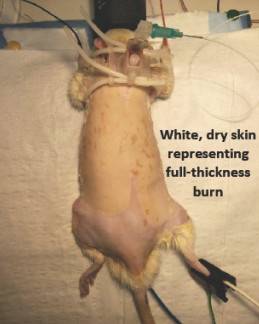
- James Cook University in Australia received $600,000 to burn rats, with experimenters shaving the rats and plunging them into near-boiling water for 8 seconds, inflicting third-degree burns on more than 30% of their bodies before removing half of their livers, causing internal bleeding.
- Ben-Gurion University of the Negev in Israel received $300,000 to mount invasive “computational systems” on the heads of goldfish.
- The Italian Institute of Technology in Italy received $298,000 to slice up the arms of living octopuses.
- The University of Antofagasta in Chile received $173,000 to subject rats to a battery of highly invasive “spaceflight” simulations involving undergoing multiple surgeries to implant internal tracking devices and viral vectors.
- The University of Alberta in Canada received $429,000 to subject dogs to procedures that cause heart disease, repeated injections and muscle deterioration.
‘A Lot More Work to Do’
Asked why tests continue and grants continue to be accepted in such a wide fashion in 2026, Gala called it “the $1 million question.”
He said a lot is likely habit, as there are big dollars involved, it’s what the government has been funding for decades, and this is what experimenters typically write their grants towards.
“If they’ve been using animals for years and decades to study various things, then they’re going to continue to do that unless they’re incentivized otherwise,” he said. “And as technology has been developing and regulations have been shifting, there’s finally a sense that, OK, now there’s maybe a shift in the way that research can and should be conducted.”
More money now is going towards non-animal methods, he added, which translates to experimenters themselves being incentivized to submit grants that are using non-animal methods as opposed to just always just reverting to what they’ve known for all these years, which is using animals.
He likened the continued use as “institutional inertia” while acknowledging that the current “inflection point where the pendulum certainly is shifting, and it’s shifting in a good direction away from animal experiments, but it’s not across the board.”
Ongoing concerns provoked the recent correspondence to Hegseth. However, while the use of animals specifically in the military has been quite widespread, Gala acknowledged that the current administration has been proactive across myriad agencies including the Centers for Disease Control and Prevention, Environmental Protection Agency, Food & Drug Administration, National Institutes of Health, and even the U.S. Navy.
“They’ve pushed forward some important reforms that are getting away from animal testing—not completely, but there are good reforms that are being made,” he said. “The legwork for this has been taking decades to build to this point, and PETA has been an integral part of pushing that forward.
“There’s still a lot more work to do,” Gala said.
Read the full article here
