





Roughly 100 military spouse entrepreneurs traveled to Capitol Hill on May 7 to advocate for the Military Spouse Small Business Recognition Act, legislation supporters believe could significantly expand military spouse access to federal business programs.
The legislation would waive SBA loan guarantee fees on certain loans up to $1 million, reduce equity injection requirements for military spouse borrowers, require the SBA to track military spouse participation in lending programs, and expand access to federal contracting opportunities and mentorship programs.
Advocates emphasized the bill is intended to address barriers created by military service rather than create a special entitlement. The military spouse unemployment rate is around 22%, far exceeding national averages.
The event, occurring during National Small Business Week and just ahead of Military Spouse Appreciation Day, wasorganized by the Military Spouse Chamber of Commerce and the Reserve Organization of America. It focused on a proposal that would allow military spouse-owned businesses to qualify as a disadvantaged category within the Small Business Administration’s 8(a) Business Development Program.
According to the SBA, the 8(a) program helps qualifying small businesses compete for federal contracts and gain access to mentorship, training and business development support.
Supporters argue military spouses face structural economic barriers that justify inclusion in the program. At the Capitol Hill roundtable, speakers repeatedly pointed to frequent permanent change-of-station moves, interrupted careers, state licensing barriers, deployment cycles, and childcare instability as obstacles that make traditional employment difficult to maintain.
Stephanie Brown, CEO of the Military Spouse Chamber of Commerce, said nearly half of military spouses are either self-employed, own businesses, or are interested in entrepreneurship because conventional employment often proves unsustainable during military life.
Advocates Stress Structural Barriers
Throughout the roundtable, speakers returned to the same point: military spouses are not seeking symbolic recognition alone; rather, they want federal policy to reflect the economic realities of military life and provide military spouse-owned businesses access to the same development tools available to other disadvantaged business categories.
Advocates at the event argued the issue increasingly affects military readiness as well.
Former Deputy Assistant Secretary of Defense for Military Community and Family Policy Patricia Barron said spouse employment has evolved from a quality-of-life concern into a retention issue directly tied to whether service members remain in uniform.
She pointed to existing Defense Department initiatives, including the Military Spouse Employment Partnership and My Career Advancement Account scholarship program, while arguing federal policy has not kept pace with the growth of military spouse entrepreneurship.
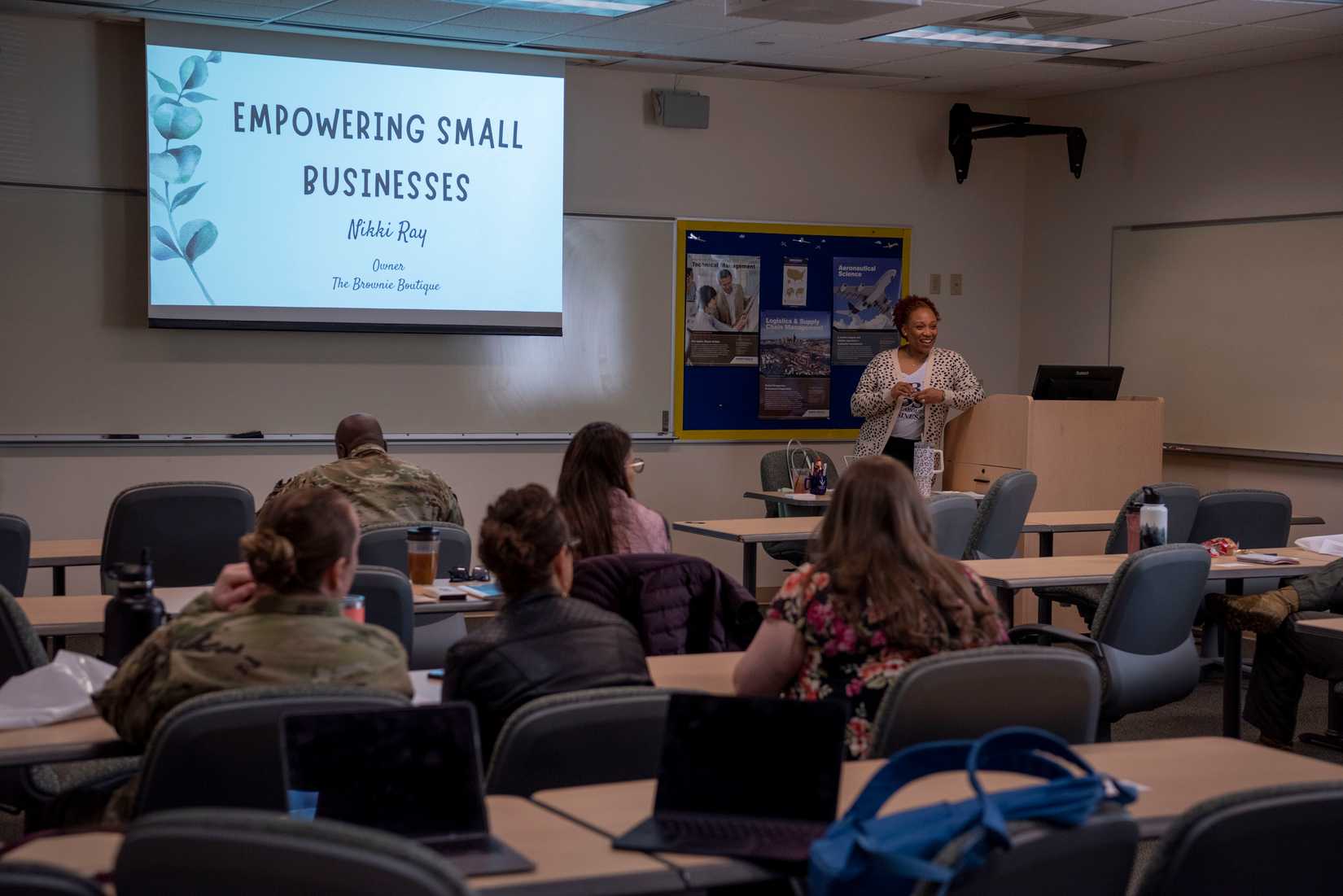
Several entrepreneurs described the financial consequences of repeated relocation.
Michelle Penczak, founder of the remote staffing company Squared Away, told reporters she built her business after struggling to maintain stable employment during deployments and military moves. She said the company eventually employed more than 1,600 military spouses and generated over $30 million in wages while remaining fully bootstrapped without outside investment.
Other speakers focused on how limited access to capital affects business growth. Brittany Westling, founder of Team B Strategy, described trying to scale a federal contracting business while navigating deployments, childcare demands, and cross-country moves.
Another former military spouse recounted shutting down a successful insurance agency after his wife received new military orders because he lacked the capital needed to expand operations remotely.
Data Shows Warranted Concerns
Research outside the event supports many of those concerns.
Hiring Our Heroes estimated that military spouse unemployment and underemployment create significant long-term financial losses for military families. Syracuse University’s Institute for Veterans and Military Families has similarly found that military spouses increasingly pursue entrepreneurship because self-employment offers flexibility unavailable in many traditional careers.
The SBA has also increased outreach to military spouse entrepreneurs in recent years through programs such as the Military Spouse Pathway to Business initiative.
Supporters of the legislation hope the timing of the Capitol Hill push during National Small Business Week will help generate bipartisan support. Organizers said lawmakers are reviewing the proposal and expressed optimism that it could eventually be attached to the National Defense Authorization Act, or NDAA.
Read the full article here
