





Scott Kelly, the Army veteran whose life changed after an unexpected viral moment last November, is developing a new podcast series focused on post-traumatic stress disorder (PTSD) and veterans.
Kelly never expected to be thrust into the limelight, but that all changed when Brandon Bieron, a fellow veteran he served with, was checking out Kelly’s resume on his phone in the middle of a Jonas Brothers concert. Jen Wilson, seated behind Bieron, filmed him on her phone and posted it to TikTok with the caption, “Scott Kelly, your resume was being reviewed at a Jonas Brothers concert tonight. Good luck.”
In less than a week, Wilson’s post had more than 50-million-page views with dozens of comments supporting Kelly. The Jonas Brothers caught wind, poking a little fun at the incident and wishing Kelly good fortune in his job hunt. But Kelly had a job he enjoyed at the time and wasn’t actively looking for work.
However, the viral video led Kelly to reconnect with Bieron, who manages Reimer Home Services, a company in the Buffalo, New York area that hires veterans. Kelly invited Bieron on his podcast, “At the Water’s Edge,” which focuses on national security and geopolitics from an “insider’s perspective.”
Kelly’s resume story was picked up by national publications, including Military.com and, in a surreal twist, the Army veteran was invited on “The Tonight Show Starring Jimmy Fallon” to talk about his newfound fame, alongside, who else? The Jonas Brothers.
Series Dives into Mental Health
Speaking with Military.com on Tuesday, Kelly said his story helped boost interest in “At the Water’s Edge,” and he’s excited to host a three-part series during PTSD Awareness Month in June. The series will explore treatment options for PTSD, including research from Emory University, where Kelly will soon receive an Executive Master of Business Administration degree.
“We’re looking at more topic areas, and one of the topic areas that we’re looking at is PTSD and evolution and treatment models for veterans, changes in the way that they get access, different approaches to using psychedelic drugs, really exploring this issue from the point of view of how do we take new treatments and mainstream them and make them available in a timely and efficient manner?” Kelly said.
Psychedelic treatment for mental health issues has been a hot topic among veterans in recent years. Research and testing into drugs such as ibogaine were accelerated last month when President Trump signed an executive order prompting the U.S. Food and Drug Administration to allow more access to psychedelics.
“Emory University is also participating in that part because they do research on psychedelic drugs and PTSD treatment through the Heroic Hearts Project,” Kelly said. “Which helps veterans receive psychedelic treatments, mostly overseas. So, we’re going to look at the evolution of how the veteran community discovered psychedelics as a treatment for PTSD and then what does it actually look like?
To take this somewhat novel treatment concept and mainstream it, make it accessible, how does that sausage actually get made?”
From World War II veterans to soldiers who served multiple deployments in Iraq and Afghanistan, the devastating effects of PTSD span generations.
“It’s something that is treatable, but it doesn’t go away on its own, so recognizing it and finding efficacious treatment options for it is key,” Kelly said. “And it’s certainly the case that not everyone responds to every treatment option the same way. So, trying to get it to the point where you can look at somebody and figure out what their best treatment pathway is, so they don’t have to try five things and hope one of them works.”
Kelly, who served in the Army from 2012-2022, medically retiring as a captain, said he noticed some of the misconceptions swirling around veterans and PTSD after he left the military and started a job in the corporate world.
“One, people assume that it’s much more prevalent than it is. People assume, because I was in Special Forces and I was in Afghanistan, that I probably had some sort of issues. That can color how your interactions go, especially in a corporate environment,” Kelly said. “But then also misconceptions about what that actually means for the veteran’s behavior day-to-day. Does it make them a violent person? Are they prone to lashing out? There are a bunch of well-meaning people out there who assume the worst.”
Kelly, who resides in Syracuse, N.Y., especially noticed the misconceptions when he moved to an area that doesn’t have a high veteran population.
“The military community is insular by nature. Most people in the military have family in the military. That’s how they got into it. It’s become a family business, unfortunately,” Kelly said.
But that wasn’t the case for Kelly.
“I was one of the first people in my family to join. My parents were not in the military at all. And then when I got out, I moved to an area and got involved in a career field where I was one of the very few veterans and the only veteran from the Global War on Terror who had served in Afghanistan in combat arms,” he said. “And so just walking into that environment and people introduce you as ‘Hey, this is Scott, the ‘Special Forces guy.’ The amount of misconceptions around who I was and what my background meant for my employability was drastic. A lot of it did come from a good place, but it was very poorly informed.”
Kelly said transitioning to post-military life was somewhat jarring, considering he didn’t intend to hang up his Army boots when he did. He planned to have a full career in the military until he was forced into medical retirement.
“Trying to figure out what I was going to do next and who I was going to be was challenging,” Kelly said. “That’s a challenge that most veterans share. That’s all I’ve wanted to be since I was a little kid, was a soldier.”
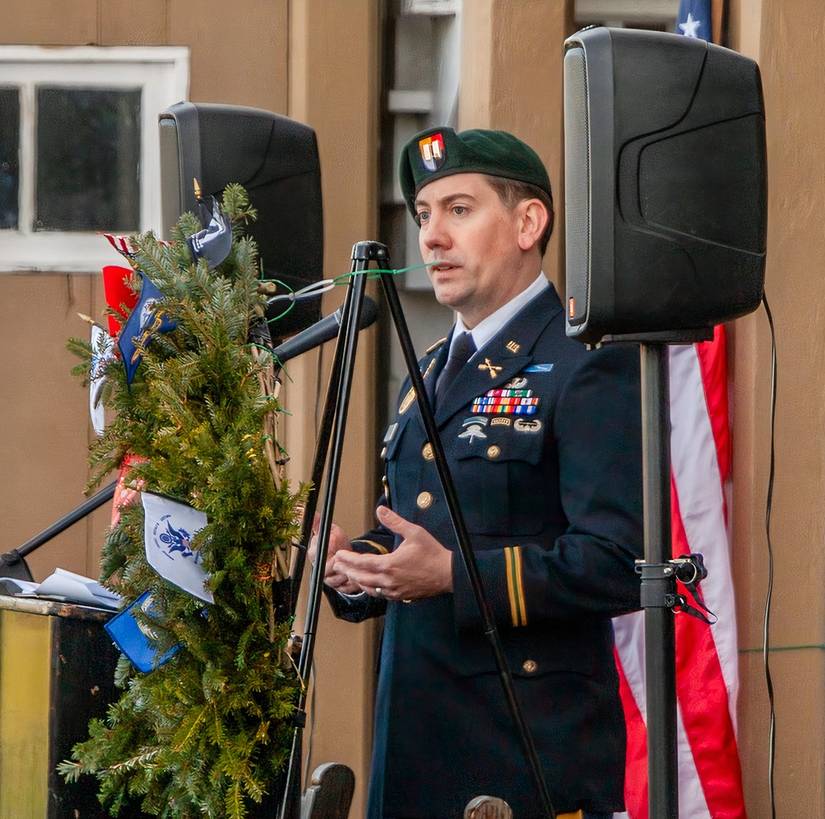
Dismissal Leads to New Opportunities
While seeing his resume go viral and appearing on “The Tonight Show” was certainly unexpected, what happened after Kelly’s brush with fame truly floored him.
He was fired.
JMA Wireless, his employer of almost four years, didn’t take kindly to Kelly’s interview with Fallon. Despite getting approved to take time off for the show and saying nothing disparaging about the company on air, Kelly was released after Christmas.
While the setback was deflating, Kelly didn’t waste much time pondering his next step. He founded Gray Zone Advisory, a firm that provides clients with business growth strategies, helping them anticipate and react to global events.
“One of the coolest things that I’ve realized that I don’t think a lot of veterans appreciate when they leave (the military) is that their experience makes them so valuable in environments that don’t have a lot of veterans in them,” Kelly said. “Things like geopolitical risk consulting, not necessarily something that upstate New York is known for. Not necessarily something that small and medium-sized businesses have a big budget for.
But there’s a need there, and I’m here, and there are a bunch of businesses in the area. We’ve got the border with Canada; we are close to New York City. Those impacts that you see from (global) events do hit mom-and-pop shops here in the area. And so, I was able to find this unique opportunity to serve an unmet market need, and combine my military background, my advanced degree in international relations, and now my advanced degree in business administration, and create my own company.”
Read the full article here
