



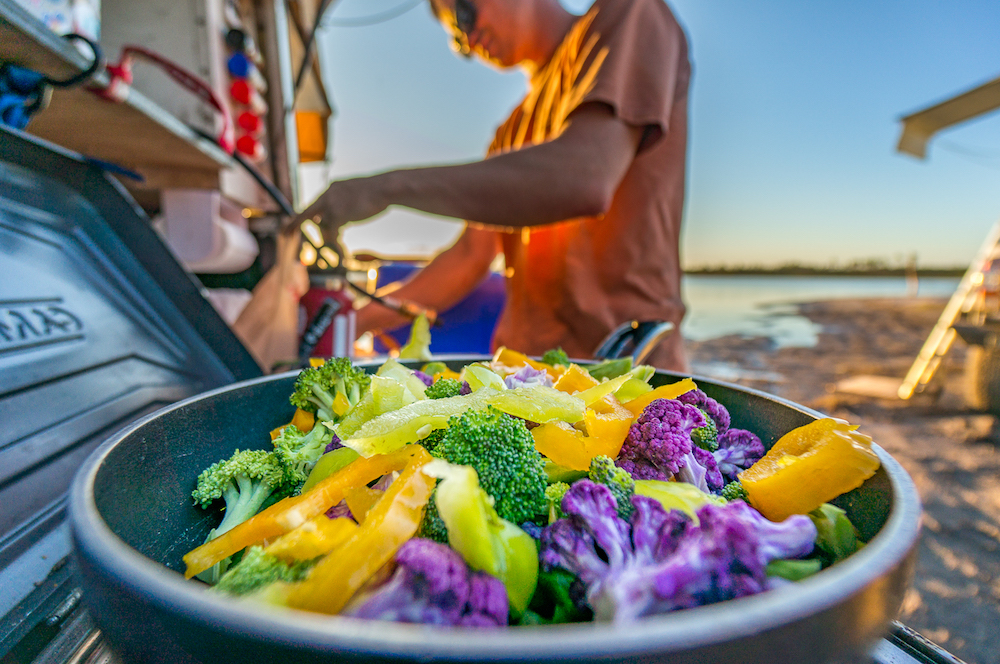

Some of the best meals I’ve ever had have been outside, hanging out around a fire at a campground, or miles into the backcountry. Maybe I was just hungry after a long day in the mountains. Or maybe food tastes better when it’s eaten outside. Either way, having a dialed camp kitchen makes those meals even more enjoyable to cook (and eat).
Over the years, my setup has evolved as I’ve developed new systems and collected new gear. Once upon a time, my camp kitchen was pretty rudimentary. Those days are long gone, though. After years of slowly dialing the camp kitchen, I’ve got my favorite stove, table, utensils, cookware, hot sauces, and even a kitchen sink (that’s not a figure of speech).
Sometimes, I worry I’m more equipped to cook outside than in my home kitchen. But there are worse problems to have.
Building your camp kitchen is almost as fun as using it. So, as you prepare for camping season, here are some things to consider to dial yours in, develop your systems, and delve into the wide world of cooking outdoors. We’ve included discussions of gear, cookbooks, and recipes, tips, tricks, and hacks to refine — and perhaps perfect — your camp kitchen and outdoor cooking game.
Getting the Gear, Building a Kitchen
It’s rare for anyone to buy all their camp cooking and kitchen gear at once. Most of us have cobbled together our camp kitchens over years of camping trips. Some of the gear in mine isn’t even made specifically for camping. A lot of it is, but I also use my camp cooking arsenal as a retirement plan for my actual home kitchenware. When upgrades happen at home, some of the old stuff gets a second life cooking in the great outdoors.
Regardless of where the gear came from, here are the essentials for any camp kitchen.
Tableware

You’ll invariably use the most basic camp cooking gear, so start here: plates, bowls, mugs, and cups should be metal, plastic, rubber, or silicone. Glass and porcelain don’t generally mix well with the outdoors.
You can buy camping tableware from tons of different brands. Mountain Summit Gear, Snow Peak, GSI Outdoors, and many others make tableware sets that are relatively affordable and durable enough for camping.
If you want plates, bowls, or mugs for backpacking, you’ll probably want to look for something light and multi-use. MSR makes titanium-insulated mugs. Snow Peak makes a great titanium bowl for backpacking. Sea to Summit has a lightweight, collapsible tableware set. You can walk into any local outdoor store and find something similar.
Utensils and Silverware

This is where hand-me-downs from the home kitchen come in handy. Plastic and silicone spatulas, ladles, and stir spoons are prime for your camp cookware collection, as are old sets of silverware.
If you’d rather have camp-specific utensils and silverware, plenty of brands make them. You can get plastic, stainless steel, or titanium spoons, forks, and sporks; they come in sets, individually, or in Swiss Army knife–style tools.
Choosing Your Stove(s)

There are so many cool outdoor stoves to choose from. Some are full-on portable grills or smokers that require a car to move. Others are handheld, lightweight jet engines that can boil water in seconds.
The stove you choose should depend on what kind of camping and what kinds of cooking you’re doing with it. But don’t worry — you don’t have to pick just one. Anyone who camps, backpacks, or picnics outdoors will probably have a couple in their collection.
If you’re looking for a tabletop stove with burners and wind protection, check out GearJunkie’s guide to the Best Camping Stoves. If you want something light, packable, and compact, peruse our guide to the Best Backpacking Stoves.
(Pro tip: Some devices like the FlipFuel allow you to consolidate fuel between gas canisters so you don’t have a bunch of partially empty ones. Other devices like the CrunchIt from Jetboil will enable you to punch a hole in any empty isobutane fuel canister to legally recycle it.)
Cookware
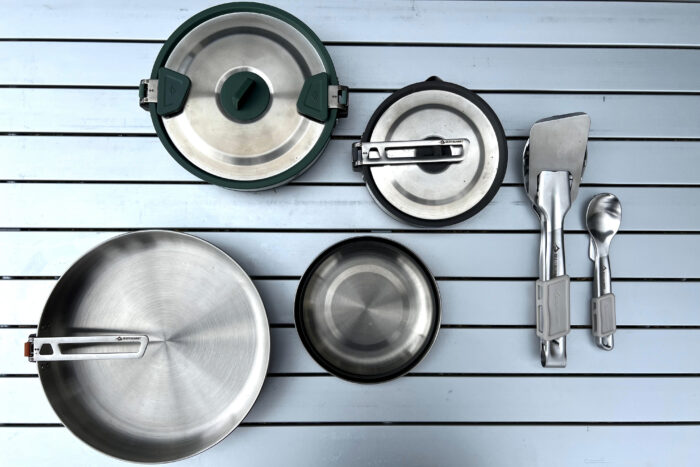
I know plenty of folks who shop for their camp cookware exclusively at thrift stores to great success. Camp cookware, like all camp gear, gets used pretty hard. So, having pots, pans, skillets, and kettles that you don’t mind beating up is advisable. Some people love using cast iron for camping, as it doesn’t require soap to wash, it’s rugged, and it can be used over a fire. However, I tend to prefer lighter cookware at camp.
Regardless, make sure your cookware fits the stove burners you’re using. Otherwise, you might overload yourself or weigh the stove down beyond its capacity. It also doesn’t hurt to shop for compact or nesting cookware. That makes packing up and storage much more efficient.
Camp cookware is not hard to find at places like REI or Backcountry.
Camp Kitchen Furniture
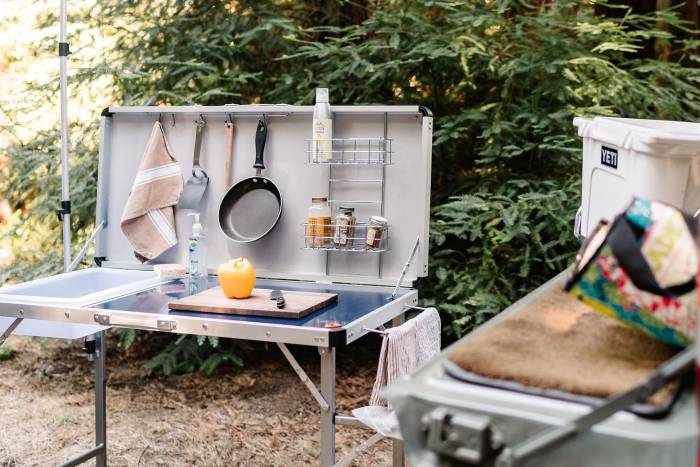
Not every campsite you pull up to will have a picnic table waiting for you. Sometimes, you need to bring your furniture. That’s OK. There are many options out there that span price ranges, form, and function.
You can buy cheap folding tables and chairs at Walmart or on Amazon. Classically, I almost always bring a folding beer pong table when car camping for late-night games and activities, as well as food prep and cooking.
Beyond tables and chairs, Snow Peak makes its IGT Camp Kitchen & Table Set, which has a small sink, butane stove burner, and cutting board area. Kelty has a Chef Roll Bag for storing utensils, spices, and other ingredients. REI makes a pretty standard, medium-sized Roll Table that rolls and folds. Helinox also makes a lightweight folding hardtop Table One Camping Table.
Then you have brands like Pecos, which makes $700 plastic utility tables. There really is something for every budget.
Keeping It Clean, Organized
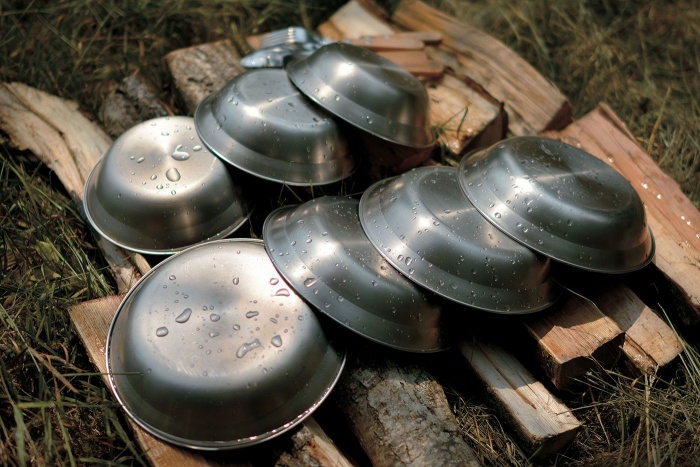
Trust me when I tell you, letting your camp kitchen gear fall into a hellish state of filth and chaos is easy. So many bits and pieces make up a camp kitchen, and by and large, every last one has to be cleaned (on-site or at home) and stored in an organized way.
That becomes more challenging and more extravagant as your setup becomes more complex. It requires equally sophisticated systems to keep it clean and organized.
Cleaning Camp Kitchen Gear

I keep a garbage bag next to the washing station strictly for dirty dishes. In our camp kitchen bag, we keep soap, a sponge, and a rag for on-site dish duty. Pour your water from a jug onto a table and let it trickle out while you scrub. This can be water-intensive, so I try to be as conservative as possible.
Some dishes can’t be cleaned at the campsite, though. Or, more accurately, I put off cleaning them so I can use my home sink. There’s no shame in that. I just keep dirty dishes in a trash bag and ensure that’s one of the first orders of business when I get home.
Organizing Camp Kitchen Gear

The more gear you add to your camp kitchen, the more organized you need to be. I am a big fan of plastic totes for this. They’re durable. They’re relatively cheap. They come in many different sizes and are a piece of cake to clean out. Some people prefer totes designed for camping and outdoor equipment like those made by RUX. However, the cost of those is prohibitive for my budget.
Organizing your kitchen like this also makes it easy to grab and go. When everything is in the same bag, box, or tote, you only have to grab one thing instead of 40. Just chuck it in the car, and you don’t have to worry about what you forgot. It’s all there.
Camp Cookbooks & Recipes
OK! So, you’ve got hundreds, maybe even thousands of dollars in camp cooking gear. You’re outfitted with a sweet outdoor stove, cookware, tableware, utensils, tables, and chairs. Heck, maybe you’re even wearing your Carhartt apron.
Now for the fun part: Actually cooking outdoors. Where to start?
Luckily, there is a wealth of knowledge, recipes, and cookbooks aimed at outdoor cooking. Dirty Gourmet is a book that sprang from a blog where three outdoor-inclined foodies began sharing their passion for backcountry cooking. Dutch Oven & Cast Iron Cooking is a classic camping companion for the cast-iron-inclined. And, of course, there’s Falcon Guide’s Lip Smackin’ Backpackin’ series.
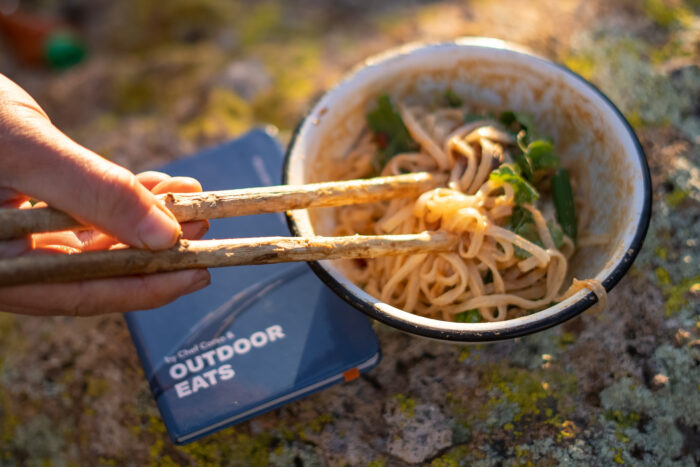
GearJunkie has also covered backcountry chefs, such as Chef Corso of Outdoor Eats. His website has over 300 third-party, taste-tested backpacking meal recipes using common grocery store ingredients. He’s also written seven cookbooks focused on backcountry cuisine.
11 Pieces of Our Favorite Camp Cooking Gear
Whether you’re checking items off your list or shopping for the camp chef in your life, these are some of GearJunkie’s favorite camp cooking products. Adding any (or all) of these to your kitchen arsenal will take your camp cooking game to the next level.
Primus Kinjia Stove: $240
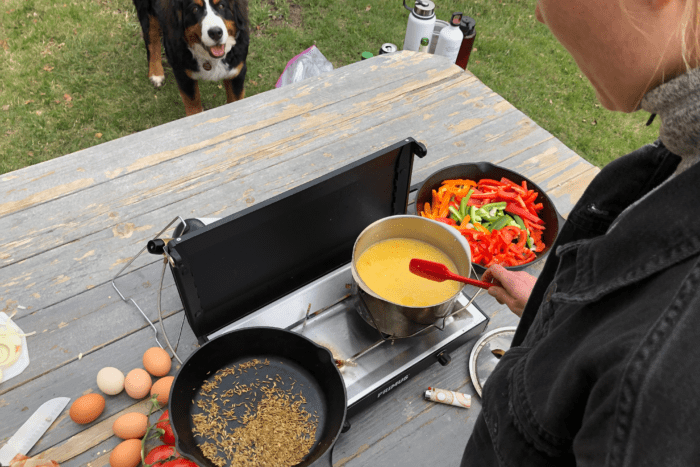
The Primus Kinjia two-burner stove is a compact, lightweight car-camping stove. But that doesn’t mean it’s weak — this stove puts out 10,200 BTUs. It has a wide temperature range and can cook burgers, sauté veggies, scramble eggs, and boil water efficiently. This is a packable piece of equipment at 8.2 pounds and a 19” x 12” base. That is why we named it the Best Compact Camping Stove.
Shop at REI
AeroPress Coffee Maker: $40
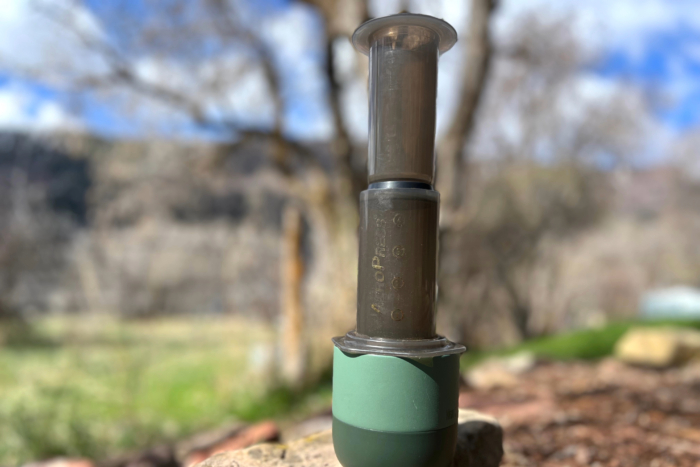
When I wake up at a campsite, I’ve already been looking forward to my first cup of coffee for 30 minutes. And there is no easier way to make a near-perfect cup of coffee than with an AeroPress. You simply scoop your grounds in, pour the hot water over them, and press the plunger. Frothy coffee pours out, and you’re caffeinating before you can even grumble, “Good morning.” I don’t camp without my AeroPress.
Shop at Amazon
Jetboil Flash 1.0 Cooking System: $145

Even when I’m car camping and have a bigger stove to boil water with, I still bring my Jetboil. These things heat so efficiently that it’s like having boiling water on tap. When you want tea, coffee, or a dehydrated meal, that’s a massive convenience. Jetboils are ideal for backpacking, but mine has a permanent place in my camp kitchen setup.
Shop at REI
Sea to Summit Detour Collection Camp Cookset: $150

Collapsible camp kitchen gear is nothing new. But Sea to Summit’s take on collapsible cookware is pretty unique — because unlike most collapsible dishes, this series is compatible with convection and gas stoves. You can boil water and cook food with the Detour pots, skillet, and kettle. GearJunkie gave its impressions on the Detour Collection in this first-look review.
The set also includes collapsible bowls, mugs, stainless steel plates, cooking utensils, and silverware, which are sold separately from the five-piece kit. All handles and tabs are removable and reversible for the most efficient nesting storage.
Shop at REI
Sea to Summit Kitchen Sink: $28-34
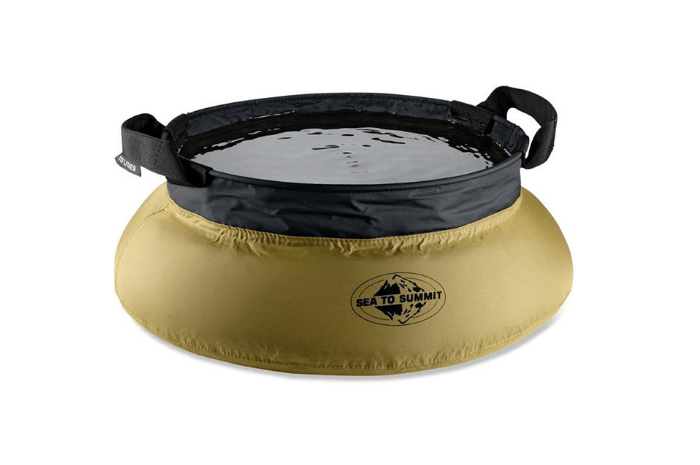
We can all agree that the worst part of any meal is the dirty dishes left over. This is especially true while camping, but this collapsible kitchen sink makes washing up easier.
Folding down into the size of a large deck of cards, it’s equally useful backpacking and at the campground. Soak dirty dishes in warm water, rinse them efficiently, or fill your sink with kibble for a large, impromptu dog bowl. The possibilities are endless.
Shop at Backcountry
Dometic GO Hydration Water Faucet: $100 and Dometic GO Hydration Water Jug: $70

Nothing beats having running water at the campsite. I have used a basic 10-gallon jug for a long time, and it does the job. But it’s nowhere near as luxe as having a touch-activated faucet that runs a consistent stream of illuminated water.
The Dometic GO Hydration Faucet works only with the Dometic GO Hydration jug, so you must buy both if you want this system. I’ll tell you from experience that this makes a camp kitchen feel far less “camp-y.” A working faucet really does take things up a notch. It’s wicked helpful in washing hands and dishes.
Shop Faucet at REI
Shop Jug at REI
BearVault BV475 Food Canister: $90 and Ursack Bear Bag: $125
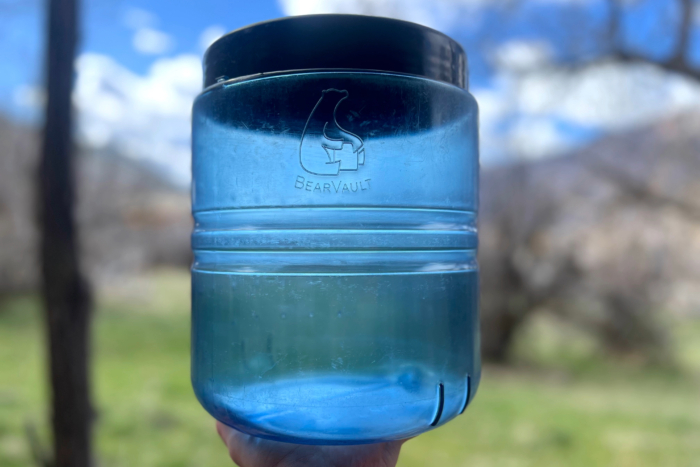
Anyone heading into bear country must take proper precautions with their food — for their safety and the bears’. When done properly, bear bags like the Ursack Bear Bag work well. But sometimes, you go camping where bear canisters are recommended or where trees are sparse.
The BearVault BV475 Food Canister is an excellent piece of bear country kit. It’s see-through, so you can see what you’re trying to reach. The large size (pictured) can be a bit burdensome to pack, but it also comes in two smaller sizes.
Shop BearVault at REI
Shop Ursack at REI
Opinel Nomad Cooking Kit: $88

Chop, peel, slice, dice, and pop open the vino with this handy French-made camping knife set. The kit includes a paring knife with a built-in corkscrew, a serrated knife, and a peeler. Each item folds into its handle for space-saving storage, and the included dish towel doubles as a storage pouch. It is packable, portable, and multifunctional.
Shop at Amazon
Swiss Advance Crono N5 Pocket Knife: $24
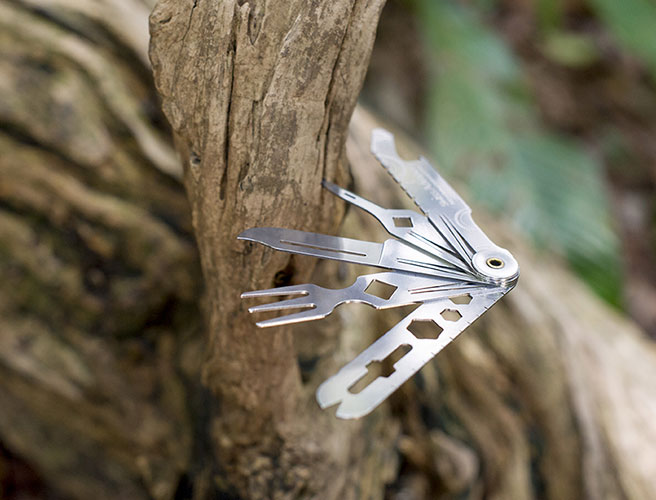
A good multitool is indispensable. And one that weighs in at a scant 41 g is downright amazing. Made of German steel and constructed in Switzerland, this handy pocket tool has a bit of everything, including a fork, screwdriver, fish scaler, square, wire cutter, ruler, hexagon, screw wrench, and more. This is the epitome of an EDC (everyday carry). Get one, give one, and be ready for whatever life throws at you.
Shop at Amazon
Camp Chef Pro 14: $380

You won’t be taking this stove backpacking, but it’s an incredible piece of cooking equipment for car camping or BBQing away from home. It uses a standard 5-gallon propane tank, folds down and fits into a bag for storage and transportation, and opens up to provide shelf space and wind blockers. That’s why it was named our Best Stove for Group Cooking in GearJunkie’s guide to the Best Camp Stoves.
This stove is available in two- and three-burner models. All the burners put out 30,000 BTUs and have matchless ignition. Camp Chef also sells accessories for the Pro 14, including a pizza oven, a griddle, and a BBQ box. When you bring this thing camping, you don’t feel confined by your cooking space or options.
Shop at Camp Chef

If you’re going all-out with your camp cooking setup, you should consider the portable refrigerator from EcoFlow. This electric cooler has a compartment kept at fridge temperature, and it makes ice. You read that correctly — this cooler is also an ice machine.
This porta-fridge has a 40-hour battery life. It can hold up to 60 canned beverages, has dual climate zones, and has a compressor that cools the inside from 86 to 32 degrees Fahrenheit in just 15 minutes.
Shop at EcoFlow
Frequently Asked Questions (FAQ)

When you go camping, many people swear by canned food, dehydrated meals, or high-preservative snacks. But it doesn’t have to be like that! Cooking while camping is an experience unto itself. You’re outside, you typically don’t have anything else to focus on, and you often have to get creative with the flavors and the gear you’re using.
To put it simply, camp cooking is cooking while camping. It can be done on a picnic table, from the back of a truck, or inside an RV or trailer. I’ve even seen hunting camps with full canvas tents dedicated to kitchen space. It’s fun. And maybe it’s because you’re out in nature, but a lot of times, I find the meals taste better than they ever would have at home.
If you’re starting from scratch, get the basics first. You’ll need to shop for the utensils you want: plates, bowls, mugs, and cups. Collapsible camp tableware has become popular, and many brands offer their versions. Then, build on your collection from there.
You’ll want to shop for a camping stove or, depending on where you plan to cook, a backpacking stove. GearJunkie has guides to the Best Backpacking Stoves and the Best Camping Stoves, with lots of options spanning uses and price ranges.
Once you have a stove, you’ll probably want some designated camping pots and pans. By nature, camp kitchenware gets abused as it gets used, so you don’t want to bring your nice home skillet set, pots, or pans. That doesn’t mean your camp kitchenware must be a beater set. You can find high-quality cookware (like the Sea to Summit Detour series mentioned above).
Finally, round out your camp kitchen with a few pieces of furniture. Numerous companies, such as Camp Chef, Mountain Summit, and REI, make camping tables in different sizes that roll and fold for easy packing. If you’re trying to go pro, get a tarp tent or shade structure you can set up to protect your kitchen in rain or shine.
Read the full article here
