



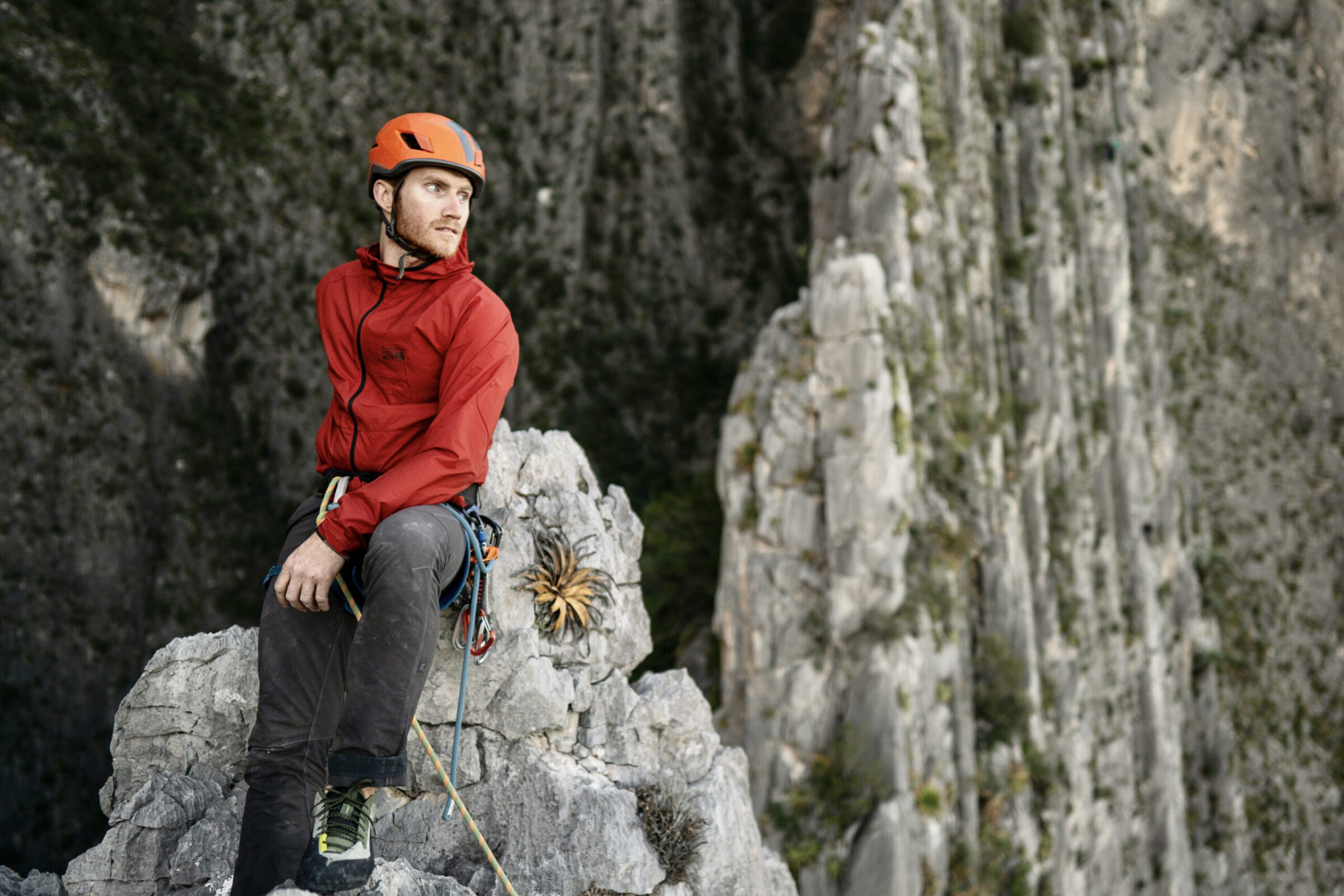

When the wind rips across a ridgeline or funnels through a canyon, the best windbreakers help you keep moving. To finalize this year’s rankings, two expert testers — GearJunkie Editor Chris Kassar and wildlife guide Ryan Kempfer — pushed seven windbreakers through a 12-month testing cycle. From ski tours and hikes to climbs and bike rides in the Tetons and beyond, they tested them on exposed ridgelines, gusty trails, and in fast-changing mountain weather to find the layers truly worth carrying.
We crowned the Patagonia Houdini as our best overall pick for its featherweight packability, dependable weather protection, and all-around versatility. Meanwhile, the Cotopaxi Teca Half-Zip earned our budget award for delivering reliable wind resistance and everyday usefulness at an approachable price.
Over the past four years, our team of five expert testers has vetted 50 windbreakers across hiking, climbing, backpacking, and mountain travel.
Editor’s Note: We updated our Best Windbreakers guide on May 4, 2026, with refreshed reviews and sharpened comparisons. This update also expands the How We Tested section and comparison chart to highlight how each jacket excels.
The Best Windbreaker Jackets of 2026
Best Overall Windbreaker Jacket
9.2/10 RATING
Best Budget Windbreaker Jacket
7.0/10 RATING
Best Ultralight Windbreaker Jacket
8.5/10 RATING
Most Versatile Windbreaker Jacket
8/10 RATING
Best Windbreaker Jacket for Mountaineering
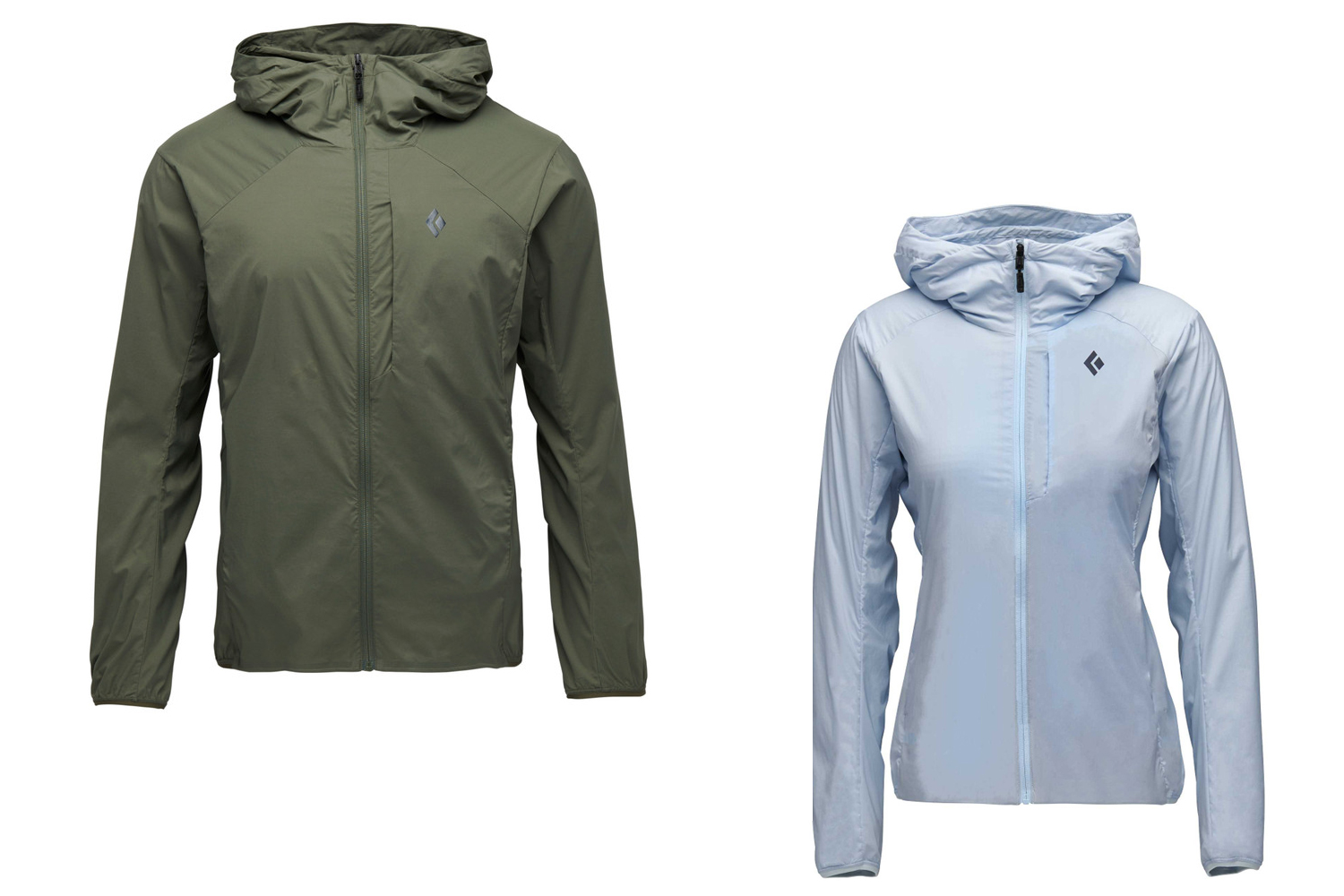
8.3/10 RATING
Best Hybrid Windbreaker Jacket
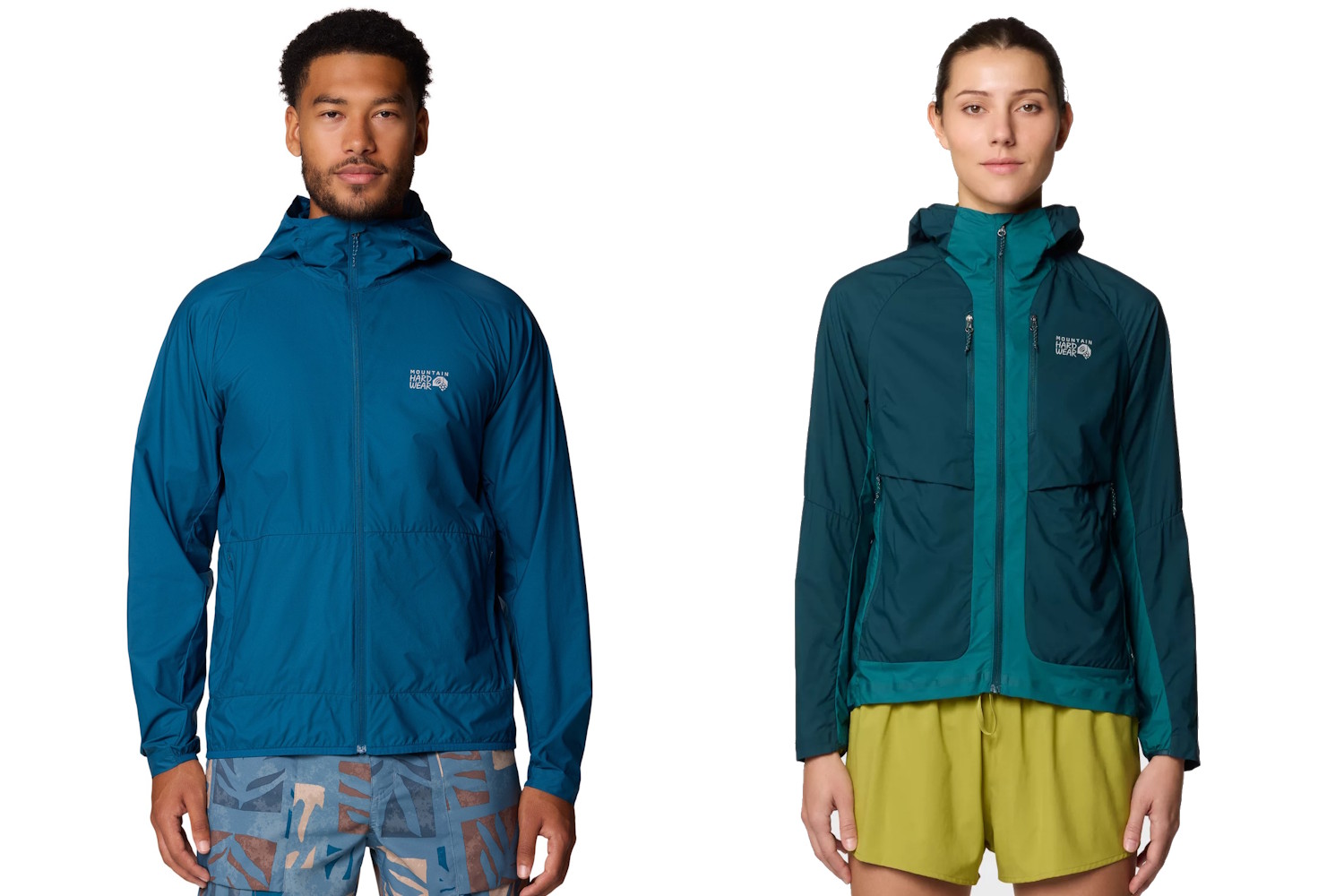
7.9/10 RATING
See more picks
Weight
3.7 oz. (men’s medium)
Materials
100% recycled ripstop nylon with PFC-free DWR coating
Pockets
1 zippered chest pocket (stuff sack)
Pros
- Versatile protection for a range of different conditions
- Affordable but hard-working
- Ultralight and packable
- Stellar wind and weather resistance
Cons
- Not as breathable as other models
- Minimal elasticity
A cult favorite for good reason, the Patagonia Houdini ($109) remains our quiver-of-one windbreaker for hikers, climbers, and travelers who want a simple shell that works almost anywhere. It is not the most technical jacket on this list, but its ultralight build, approachable price, and rugged versatility keep it at the top.
The Tech: At 3.7 ounces in a men’s medium, the Houdini sits firmly in the barely-there category. It uses 100% recycled ripstop nylon with a PFC-free DWR coating, plus a slim cut with a slight drop tail that leaves room for a light layer or two underneath. A single zippered chest pocket doubles as the stuff sack, and elastic cuffs with a drawcord hem keep the design clean and functional.
What We Like: We have been testing this jacket since 2018 on months-long thru-hikes, lofty multipitch climbs, and demanding bushwhacks. It still earns a prominent place on our gear lists. Our original model is somehow still going strong, save for a peeling logo, which says a lot about its longevity. In our shower-simulated downpour, with a thin fleece underneath, the fabric resisted wetting out for an impressive 2 minutes and 45 seconds. On trail, it blocks wind like a champ, packs down to the size of a pear, and disappears in a pack or on a climbing harness. Compared to the Black Diamond Alpine Start Hoody, it is significantly lighter, smaller, and easier to carry every day.
What We Don’t: That featherweight construction comes with distinct tradeoffs. The fabric has minimal stretch, only average breathability, and less next-to-skin comfort than airier options. When the pace spikes, it can feel clammy quickly, and we would reach for the more breathable Black Diamond Alpine Start instead.
Should You Buy It? For light to moderate mountain missions, travel, and everyday trail use, few shells match this blend of packability, durability, and value. The Houdini makes the most sense for people who want one reliable layer they will actually remember to bring every single time.
Materials
100% repurposed polyester taffeta & ripstop with DWR finish & PU backer
Pockets
Kangaroo hand pocket, front zip pocket (stuff sack)
Pros
- Affordable
- Sustainable construction
- Solid weather-resistance
- Durable
Cons
- Not very breathable
- Not as packable as other models
- No cinch cords at hem or hood
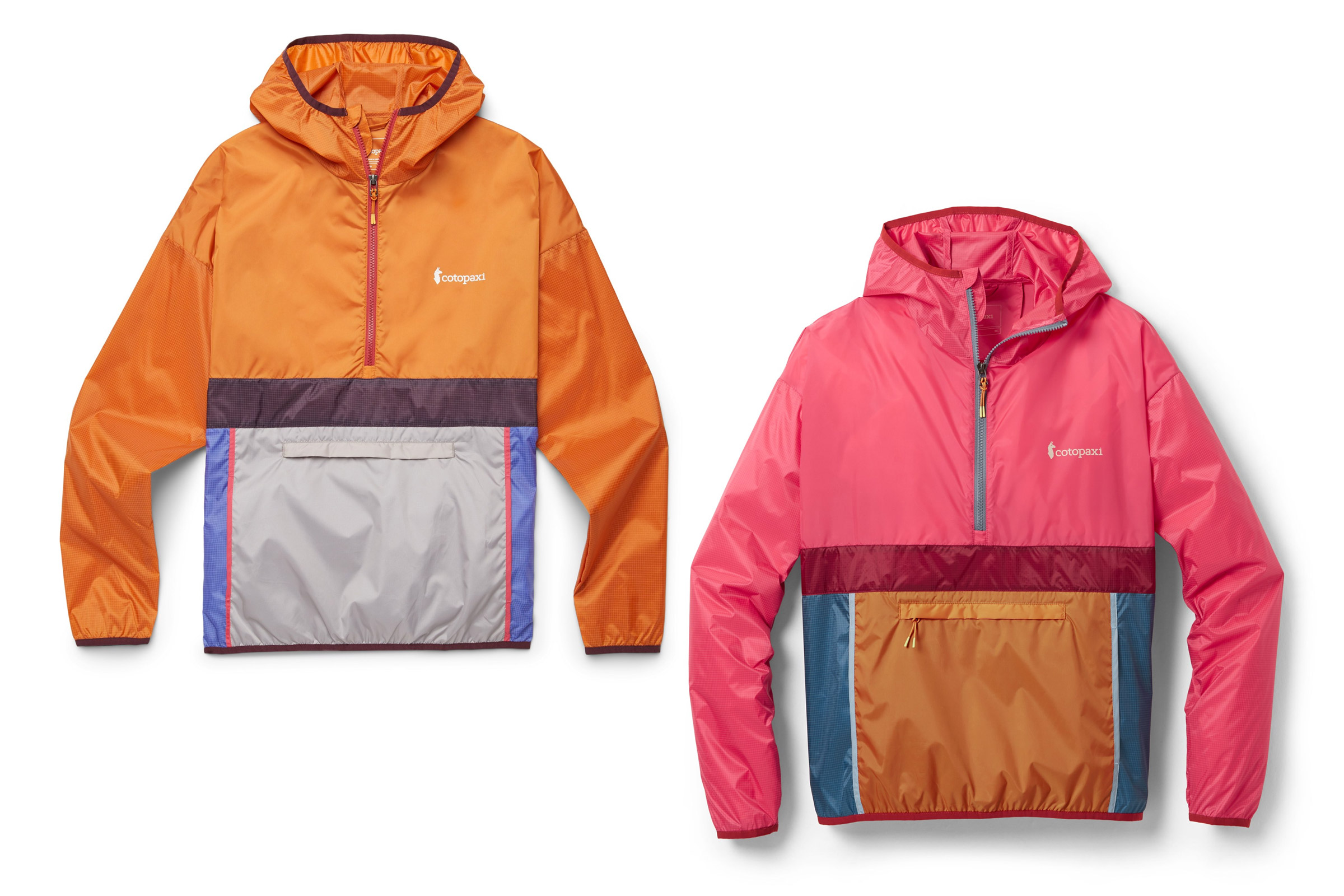
A sustainable windbreaker that actually holds up outside is harder to find than it should be, which is part of why the Cotopaxi Teca Half-Zip Windbreaker ($85) stands out. It is affordable, fun, and surprisingly durable, with enough technical chops for casual hikes and light adventures.
The Tech: Cotopaxi builds the Teca from repurposed polyester taffeta and ripstop with a DWR coating and PU backer. The fabric is on the thicker side, which vastly improves its durability. A deep front zip and subtle rear mesh vent help release heat, while the zippered front pouch doubles as the stuff sack above the kangaroo hand pockets.
What We Like: This jacket won us over with more than just style. During testing, it handled light bushwhacking and miles of backcountry hiking better than expected. The chunky ripstop on the arms and panels also inspired real confidence in thorny terrain. We liked the generous stuff pocket and the fact that the half-zip design still packed down small enough to mash to roughly baseball size at 4.4 ounces. In our shower simulation, it resisted wetting out for about 5 minutes, which is longer than most jackets in this lineup. Compared to the Rab Vital, it feels less technical but more playful, with a stronger sustainability story and similarly approachable value.
What We Don’t: That burly fabric has tradeoffs. It is not especially breathable, and once the pace picks up, the jacket can feel stuffy despite the vents. We also miss having cinch cords at the hem and hood, since strong gusts can sneak in more easily than we’d like. And while it packs down well, it is not as dialed or compact as more technical shells.
Should You Buy It? The Teca is a perfect match for casual hikers, travelers, and anyone who wants a budget-friendly windbreaker with real personality. For front-country use, easy trail days, and moderate climates, it punches above its price.
Materials
15D Light Weight Nylon Rip Stop Woven with GTT Empel PFC-Free DWR
Pockets
Zippered chest pocket is stuff sack
Pros
- Absurdly light
- Surprising water resistance
- Breathable
- Very packable
- Large zippered pocket
Cons
- Not the most stylish
- Durability is uncertain
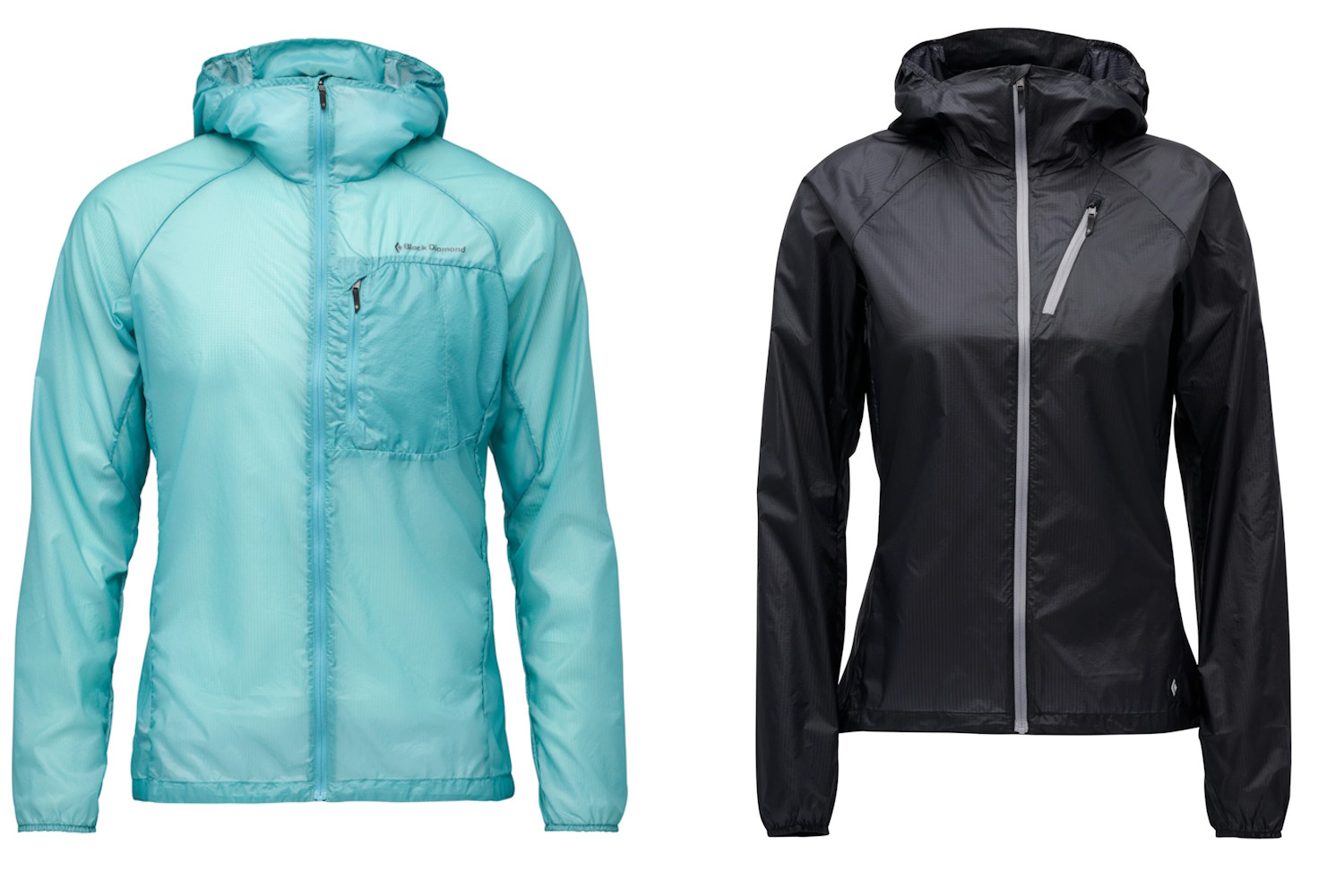
Featherweight shells often feel like emergency layers first and performance pieces second, but the Black Diamond Distance Wind Shell ($199) breaks that pattern. This one is absurdly light, highly breathable, and surprisingly protective when the weather turns ugly.
The Tech: At just 2.5 ounces, the Distance is one of the lightest jackets here. It uses 15D lightweight ripstop nylon, packs into its zippered chest pocket, and includes a loop for clipping to a harness or pack. A cinch cord at the waist and a helmet-compatible hood round out a build that feels unusually complete for something this minimal.
What We Like: Over a five-month testing period, this shell came with us on technical climbs, backcountry ski tours, and hard runs. It quickly proved it was more than backup insurance. On a brutally windy March ski tour up 25 Short in Grand Teton National Park, we threw it on near the top and immediately got the protection we needed to slow down and plan turns into Turkey Chute. A few weeks later, it shrugged off 30 minutes of rain on a long run in early April. It kept us dry and did not cause overheating, which still feels wild given its weight. We also appreciate the generous chest pocket, which can fit snacks or a phone. Compared to the Enlightened Equipment Copperfield, the Distance is heavier, but the extra weather resistance makes it far more versatile.
What We Don’t: Durability remains the main question. The fabric has held up well so far, but we still avoid sharp rocks and brush whenever possible. The partially see-through sleeves are also not our favorite look, especially when this jacket ends up staying on after the mission.
Should You Buy It? When speed, breathability, and tiny packed size matter most, the Distance is one of the most impressive shells here. Runners, climbers, and skiers who want real protection in an almost nonexistent package will get the most out of it.
Materials
Bluesign-approved 90% nylon/10% spandex, 20-denier stretch woven
Pockets
1 zippered chest pocket (stuff sack), 2 zippered hand pockets
Pros
- Very light
- Stretchy, secure wrist cuffs
- Drawcord hem
- Bluesign-approved materials
Cons
- Trim fit not ideal for broader shoulders
- Hood stowage seems excessive
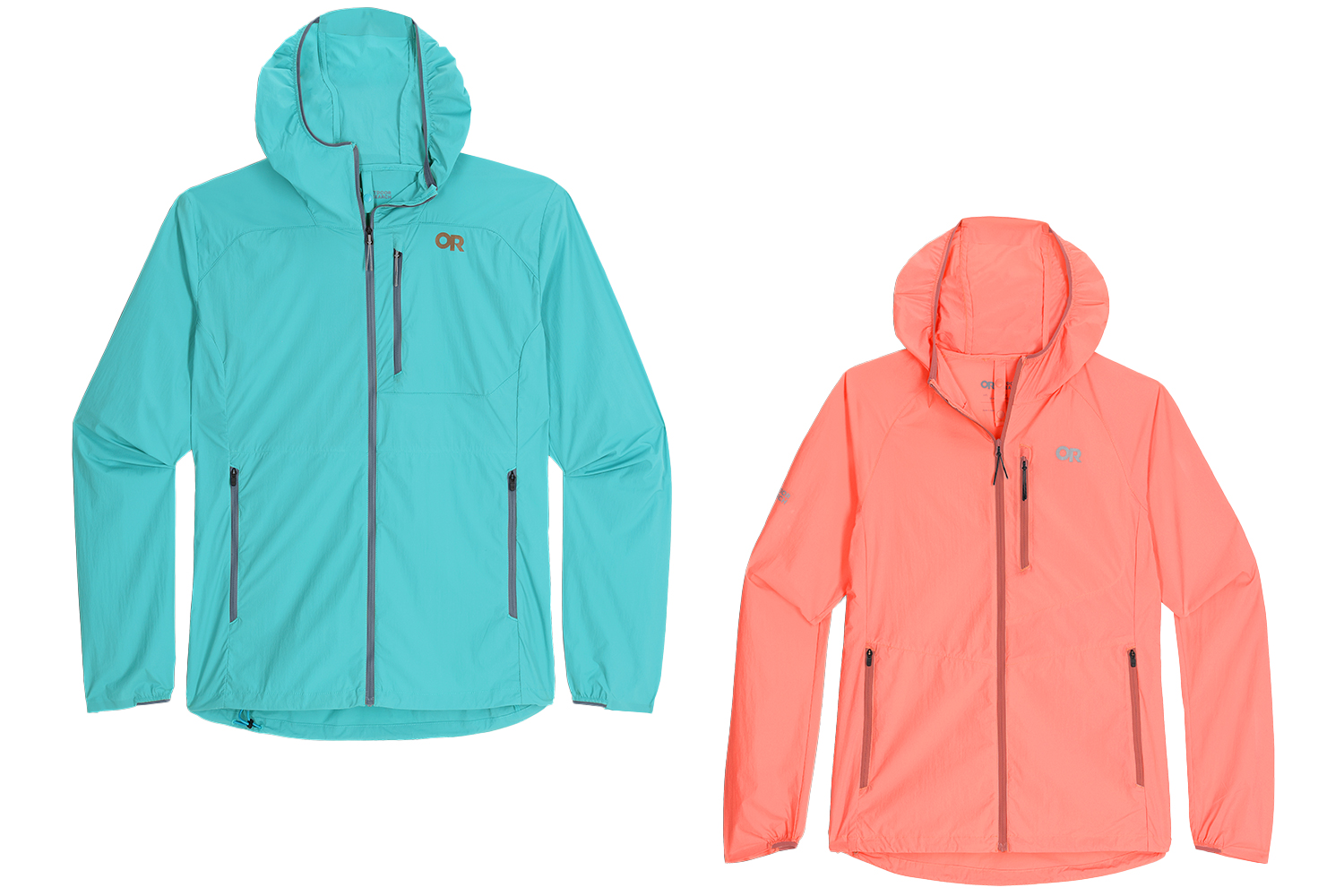
Outdoor Research took what worked in the Helium Wind Hoodie and made it more practical with the Outdoor Research Shadow Wind Hoodie ($140). The result is a light, stretchy shell that feels just as comfortable on trail as it does around town.
The Tech: The Shadow uses a wind- and water-resistant stretch fabric that keeps mobility high and bulk low. At 5 ounces, it stays firmly in the lightweight camp while adding two zippered hand pockets, making it more useful day-to-day than the older Helium. A zippered chest pocket, stretchy cuffs, and a drawcord hem round out the build, and the bluesign-approved materials are a nice bonus.
What We Like: This jacket felt easy to wear right away. We took it bouldering on a brisk fall day in Tuolumne Meadows, where shifting sun, cool gusts, and constant movement created exactly the sort of mixed conditions a good wind shell should handle. The Shadow regulated heat well while climbing, hiking, and hanging around the tailgate, and the stretch fabric never felt restrictive. The two hand pockets are a real upgrade, making it feel more practical than many stripped-down windbreakers. Compared to the Patagonia Houdini, it feels a touch more comfortable and versatile for casual use, while still being light enough to stash in a pack when the weather looks mischievous.
What We Don’t: Fit is the one real snag. The shoulders run trim, and while the stretch helps, broad-shouldered users may want something roomier, like the Houdini or Air Stash. We also think the hood stowage feels a little fussy for a jacket that otherwise keeps things simple.
Should You Buy It? If you want one shell that can cover cool morning runs, shoulder-season hikes, breezy town days, and the occasional climbing session, the Shadow is easy to like. It is a particularly strong pick for people who value comfort and versatility as much as low weight.
Materials
93% nylon, 7% elastane with Schoeller Eco-Repel Bio DWR finish
Pockets
1 zippered chest pocket (stuff sack)
Pros
- Stellar durability
- Great mobility for rock climbing or scrambling
- Comfy fabric
- Adjustable hood
Cons
- New iteration removes cinch cord at hem
- Heavy
Few windbreakers blur the line between technical softshell and wind shell as convincingly as the Black Diamond Alpine Start Hoody ($229). It is one of the heavier technical jackets in this bunch, but it also brings the kind of durability, mobility, and weather protection that lighter shells cannot touch.
The Tech: Black Diamond uses a stretchy nylon and elastane blend with Schoeller Eco-Repel Bio DWR, which gives the Alpine Start a notably more substantial feel than most windbreakers. At 7.3 ounces, it is not ultralight, but the extra bulk buys real performance. A helmet-compatible hood, elastic cuffs, elastic hem, and a low-profile chest pocket that doubles as a stuff sack round out the design.
What We Like: This jacket became our daily driver on lofty limestone multipitch climbs in Mexico, bushy terrain in Africa, and blustery ridgelines in Appalachia. That extensive resume says a lot about its range. The fabric moves beautifully on rock, scrambles, and knife-edge terrain, and the roomy cut makes it easy to layer over insulation on alpine days. It also outperforms most windbreakers once the weather gets messy. In our shower simulation, with a fleece underneath, it wet out in just under a minute. Out in the field, however, it handled all-day drizzles, light snow, and intermittent rain better than almost anything else here. Compared to the Arc’teryx Squamish, it is heavier and bulkier, but it is the tougher, more mountain-ready shell.
What We Don’t: Weight is the obvious tradeoff. This is not the piece we grab when every ounce matters, and the newer version’s loss of the hem drawcord is a real downgrade for windy days in the mountains.
Should You Buy It? Climbers, scramblers, and mountaineers who beat up gear will appreciate what the Alpine Start brings to the table. If you need one windbreaker that can take abuse and still move well on technical terrain, this is the one we keep reaching for.
Weight
6.2 oz. (men’s medium)
Materials
100% Nylon Pertex Quantum Air 20 D
Pockets
4 secure zippered pockets, (2 chest, 2 side (stuff sack))
Pros
- Blends wind protection with mapped insulation
- Breathable panels regulate heat during high-output activity
- Allows full mobility
- Packs small yet offers more warmth than standard windbreakers
- Extremely cool and useful features
Cons
- Heavier than ultralight options
Some days call for more than a simple wind shell but less than a full insulating layer, and that is exactly where the Mountain Hardwear Kor Airshell Hybrid Hoody ($165) shines. It bridges the gap between windbreaker and midlayer with a smart, mountain-focused design.
The Tech: Mountain Hardwear uses Pertex Quantum Air fabric with strategically mapped insulation panels to add warmth without tipping into puffy territory. The hybrid build also includes mesh vents under the chest pockets, four zippered pockets, and a hero snap that helps control flapping while boosting airflow. It is heavier than pure windbreakers, but it still packs small enough to stash in a pack or clip to a harness.
What We Like: This jacket covers a wide range of conditions without forcing constant layer changes. The breathable construction lets heat escape during ski touring, climbing, and fast alpine scrambling. Meanwhile, the insulated sections add just enough warmth for blustery ridges, summit transitions, and cool starts on the skin track. We also like how well it moves. The stretch fabric and trim fit layer cleanly over a base without feeling restrictive, and the extra storage pockets make it more useful than minimalist shells. Compared to the Stio Second Light, it gives up some weight savings but feels warmer, more capable, and more adaptable through shifting weather and activity levels.
What We Don’t: The obvious drawback is mass. It does not disappear into a pocket the way true ultralight windbreakers do, and it is overkill if you only want a just-in-case shell. It is also not a stand-in for a real hardshell or insulated belay piece.
Should You Buy It? The Kor Airshell Hybrid is an ideal tool for mountain athletes who move between different effort levels and want one layer that can keep up. For complex days when efficiency matters, it fills a very useful middle ground.
Other Windbreakers That Blew Us Away
Weight
4.4 oz. (men’s medium)
Materials
100% recycled nylon with PFAS-free DWR finish
Pockets
1 zippered chest pocket (stuff sack)
Pros
- Extremely lightweight and compressible
- Breathable
- Streamlined fit with simple hem and cuff adjustments
- Easy to stash in a pocket or clip to a harness
Cons
- Limited durability for rough terrain
- Lacks extra warmth or features (like pockets)
Built in the Tetons and tested there too, the Stio Second Light Windshell ($129) is a featherweight shell that keeps its priorities straight. It is light, breathable, and easy to stash, making it a natural choice for fast mountain days when every ounce counts.
The Tech: At 4.5 ounces, the Second Light lands between stripped-down ultralight shells and more feature-rich jackets. The nylon ripstop fabric blocks wind effectively while maintaining good breathability, and the overall design stays refreshingly simple. Elastic cuffs, a drawcord hem, and a zippered chest pocket that doubles as the stuff sack keep the essentials covered, and the pocket includes a loop for clipping to a harness or pack.
What We Like: We tested this jacket in the Tetons, where it felt most at home on trail runs, alpine scrambles, and quick summit pushes. It gave us just enough protection from gusts and light moisture while disappearing into its own pocket as soon as the sky cleared. That kind of always-pack-it practicality is the whole point here, and the Stio nails it. The streamlined fit feels athletic without being restrictive, and the easy hem and cuff adjustments help seal out drafts. Compared to the Black Diamond Distance Wind Shell, the Second Light is slightly heavier and less water-resistant, but it offers a more substantial feel at a lower price point.
What We Don’t: The tradeoffs are straightforward. Durability is less robust than burlier shells, especially in rough terrain, and there is little in the way of added warmth or extra storage. This is a simple wind shell, not a do-everything outer layer.
Should You Buy It? Fast hikers, runners, and scramblers who want a shell they can carry on every mission without thinking twice will appreciate the Second Light. It is a streamlined, low-bulk option for people who value speed, simplicity, and stashability over extras.
Weight
1.8 oz. (7D fabric, men’s size medium)
Materials
7, 10, or 20D ultralight nylon with DWR finish
Pros
- Mega ultralight
- Solid feature set
- Super packable
- Highly wind-resistant
Cons
- No pockets or stuff sack
- Quick wet-out time
- Minimal durability
- Long lead times on custom orders
When the goal is radical weight savings above all else, the Enlightened Equipment Copperfield Wind Shirt ($120) lives deep in that ultralight zone. It’s one of the lightest full-zip hooded layers around, and it feels purpose-built for thru-hikers who obsess over what every item in the pack weighs.
The Tech: The lightest version uses 7-denier fabric and weighs a barely believable 1.8 ounces in a men’s medium, though 10- and 20-denier options are also available. The layout is sparse but functional, with a hood, full zipper, and hem adjustment. What it doesn’t have is almost as notable: there are no pockets and no stuff sack.
What We Like: In dry, windy conditions, this jacket makes a compelling case for itself. The paper-thin fabric still does the core job of a wind shell well by cutting convective heat loss and helping manage body temperature in cold, driving gusts. We liked pairing it with an insulating midlayer for long-distance three-season backpacking, where the tiny packed size and nonexistent weight are real advantages. It also provides solid wind protection for something this minimal. Compared to the Patagonia Houdini, the Copperfield goes even further down the ounce-counting path, stripping away the chest pocket and DWR robustness for ultimate weight savings.
What We Don’t: The sacrifices are clear. Water resistance lags well behind the competition, and in our shower simulation it wet out in just 25 seconds, quickly soaking the fleece underneath. Breathability also falls off when we really push the pace, and the delicate fabric raises concerns about durability. The lack of pockets and built-in storage is not for everyone, and custom orders can take time.
Should You Buy It? Ounce-counters, thru-hikers, and die-hard ultralight backpackers are the ones who will really understand this jacket. If that is your world and you mostly travel in dry climates, the Copperfield makes a very strong argument. The custom Copperfield can have some long lead times (2-4 weeks). Ready-to-ship models are also available.
Materials
20D Atmos woven nylon with PFC-free DWR coating
Pockets
2 zippered hand pockets (separate stuff sack)
Pros
- Affordable
- Durable
- Fully featured
- Wire-brimmed hood
- Solid wind resistance
Cons
- Comes with a separate stuff sack to keep track of
- Not the most breathable fabric
- Wets out fast
Rab’s Vital Hooded Jacket ($100) lands just above budget territory, but it feels more complete than many inexpensive windbreakers. Durable, well-equipped, and easy to rely on, it became one of our favorite grab-and-go shells during testing.
The Tech: The Vital uses 20-denier Atmos woven nylon and weighs 4.6 ounces, which is impressive given how much is packed into the design. It has two side hand pockets, a hem cinch, an adjustable wire-brimmed hood, and a chest snap that lets you dump heat while keeping the jacket secured. It also packs surprisingly small, though it relies on a separate stuff sack instead of an integrated storage pocket.
What We Like: We kept bringing this jacket along on wild spring and summer missions because it struck a great balance between price, function, and durability. It came with us on jug hauls up giant multipitch climbs, squally Appalachian trail days, and windy sunset hangouts. Through it all, it consistently gave us dependable wind resistance without making us feel like we had to baby it. The chest snap is genuinely useful for venting, and the overall build feels richer than most jackets at this weight. Compared to the Outdoor Research Shadow, the Vital is less stretchy but offers a more adjustable, weather-ready hood for rougher mountain environments.
What We Don’t: The fabric is not especially breathable compared to airier options like the Dynafit Alpine Wind 2, and it also wets out fast. In our shower simulation, it lasted just under 30 seconds, which is disappointing for a jacket that feels a bit burlier. We also wish one of the hand pockets doubled as a stuff sack, because the separate pouch is easy to misplace.
Should You Buy It? For hikers and climbers who want a durable, affordable shell with a strong feature set, the Vital is a very easy recommendation. It offers a lot of functionality without pushing the price into premium territory.
Materials
1.2-oz 100% recycled nylon ripstop with DWR finish
Pockets
Zippered chest pocket and two velcro hand pockets
Pros
- Ultralight, despite a robust feature set
- Solid ventilation
- Extremely packable
Cons
- No hood
- We wish the hand pockets were zippered
A lot of runners mourned the Houdini Air, so the Patagonia Houdini Stash 1/2 Zip Pullover ($145) had a tricky job from the start. Taken on its own terms, though, it is a light, packable, well-ventilated windbreaker that leans strongly toward high-wind running and fast-moving use.
The Tech: Patagonia keeps the core fabric in the family with recycled nylon ripstop and a DWR finish, then boosts ventilation with overlapping chest slits and a center back slit. The jacket also has two hand pockets, a slight contour to fit, a touch of stretch, elastic cuffs, and a cinch drawcord at the hem. It stuffs into its chest pocket, keeping packability on point despite the more robust layout.
What We Like: This jacket offers noticeable ventilation improvements over the regular Houdini, making it easier to wear during high-output efforts in windy weather. We like the balance it strikes between strong wind blocking and deliberate airflow, especially for runners who tend to overheat in more closed-off shells. It also remains impressively light and packable considering the added utility. Compared to the standard Patagonia Houdini, it feels more purpose-built for active use and breathes better as the pace picks up. Still, both share that dependable Patagonia wind shell DNA.
What We Don’t: The design choices that help it drop weight will not work for everyone. We missed the hood on several blustery days, and while some runners prefer going without one, that omission narrows its versatility. Adding hand pockets was a great idea, but we wish they were zippered. Securing them with just Velcro is not our favorite solution for things we might want to stash while moving. And while the half-zip saves ounces, it is not our preferred format.
Should You Buy It? If your windbreaker spends most of its life on runs, fast hikes, and other high-output days, the Houdini Stash is a smart evolution. It is especially appealing to people who want better ventilation than the standard Houdini without sacrificing lightweight packability.
Materials
20 and 50D flexible Aero60 nylon with PFC-free DWR treatment
Pockets
1 zippered chest pocket (stuff sack)
Pros
- Subtle, thoughtful features
- Durable but lightweight
- Wire-brimmed, packable hood
- Breathable but wind-resistant fabric
Cons
- No cinch cord at hem
- Wets out fast
- Expensive
The Nørrona Falketind Aero60 ($199) is the kind of premium piece that quietly makes its case in the field rather than on the hanger. It is expensive, yes, but it also blends breathability, mobility, and thoughtful design better than most jackets we tested.
The Tech: Nørrona combines 20- and 50-denier nylon in a build that feels both impressively durable and surprisingly light at 4.5 ounces. The Aero60 fabric is the story here, striking a rare balance between wind resistance and ventilation. A wire-brimmed adjustable hood, small underarm mesh vents, articulated arms, and a chest pocket with an internal phone sleeve give the jacket a refined, mountain-ready layout, though there is no hem cinch.
What We Like: This shell earned our respect on high-output trail runs and rock climbs, where its ability to regulate temperature felt unusually good. We were genuinely impressed by how comfortably it shed moisture vapor while we cranked uphill and moved fast. It then still provided solid protection once the wind kicked up. The hood is excellent, the mobility is excellent, and the subtle details all add up, from the snap-away hood to the clever chest closure button. Compared to the Arc’teryx Squamish, the Nørrona offers superior active breathability for moving fast, but falls a bit short at shedding rain.
What We Don’t: Weather resistance is the biggest compromise. In our shower simulation, the fabric wet out in less than 20 seconds, so this is not a piece you want to trust once real precipitation moves in. We also really wish it had a hem cinch, especially at this price, because that missing detail stands out on windy mountain days.
Should You Buy It? The Falketind Aero60 is for people who care deeply about performance during fast, technical movement and are willing to pay for a refined design. If breathability, mobility, and thoughtful alpine detailing matter more than rain readiness, it is a strong premium pick.
Materials
100% Tyono nylon 30-denier shell with DWR coating
Pockets
1 zippered chest pocket (stuff sack)
Pros
- Stellar athletic fit
- Fabric has solid mobility
- Cinch cord at hem and back of hood
- Functional wire-brimmed hood
Cons
- On the heavy end of the spectrum
- Pricey
With one of the best athletic fits in the group, the Arc’teryx Squamish Hoody ($200) feels built for alpine movement from the moment you zip it. It is sleek, well-designed, and highly capable on demanding terrain, even if the significant price hike and relative weight keep it from being a universal recommendation.
The Tech: Arc’teryx uses 30-denier Tyono nylon for the shell, which gives the Squamish a useful mix of mobility, weather resistance, and moderate durability. It packs into its zippered chest pocket and includes a loop for clipping to a harness. The hood gets special attention, too, with a flexible wire brim and rear cinch adjustment, making it one of the better helmet-compatible designs here.
What We Like: This jacket begs to be taken above treeline. The close-cut fit moves exceptionally well on rock and in steep terrain, and the stretch keeps it from ever feeling restrictive while climbing or scrambling. We especially liked the hood, which fit over a climbing helmet better than most others we tried and stayed put in windy conditions. Breathability is solid, if not class-leading, and the jacket feels less clammy than many windshells in this category. Compared to the Outdoor Research Shadow, the Squamish is more climbing-focused and weather-ready, though it comes with a substantially higher price tag.
What We Don’t: The Squamish does not match the Alpine Start’s durability or all-around burly feel, and it lands on the heavier side of the spectrum for a windshell. The updated price point is also hard to ignore, pushing it into a much steeper bracket when there are cheaper jackets that cover more casual use just fine.
Should You Buy It? If your windbreaker is headed for climbing routes, exposed traverses, and alpine ridgelines, the Squamish makes a strong case. It is best suited to mountain users who value fit, mobility, and polished design enough to justify the steep premium.
Materials
54% recycled polyamide/46% organically grown cotton
Pockets
2 zippered hand pockets and 1 zippered chest pocket
Pros
- Warm
- Very wind resistant
- Zippered pockets
- Solid construction
Cons
- Pricey
- A bit stiff feeling for active use
- Heavy
Warmth is not usually the first thing we talk about with windbreakers, but that is exactly where the Fjallraven High Coast Wind Jacket ($185) distinguishes itself. It is heavier, a bit stiffer, and more expensive than many shells here. Yet, it offers a comfortable, surprisingly weather-resistant option for people who want a crossover layer that works on the trail and in town.
The Tech: The High Coast uses Fjallraven’s HC-Lyte fabric, which has a distinctive feel: stretchy under stress but not especially athletic, like many modern windshells. The construction is solid, the pockets are zippered, and the overall build feels more substantial than that of lightweight, mountain-focused competitors. At 12.2 ounces, that extra substance adds warmth and wind resistance, but it also pushes this jacket to the heaviest end of our lineup.
What We Like: We took the High Coast on mild hikes in Yosemite and came away impressed by how well it balanced comfort and casual versatility. It handled piercing rain better than expected, repelled evening showers like a champ, and felt exceptionally breathable for something with this much structure. It also looks good enough that we would gladly keep wearing it after the trail ends, which is not something we say about every shell. Compared to the Cotopaxi Teca, it offers more warmth and a sleeker city aesthetic, though it comes at a noticeable premium.
What We Don’t: That extra warmth and structure make it a less compelling choice for highly active mountain use. The fabric feels a bit stiff, the jacket runs heavy for the category, and the price is steep considering this is not the most technical or packable shell in the lineup.
Should You Buy It? City dwellers, travelers, and casual hikers who want one stylish wind jacket for everyday wear and mellow trail use will get the most from the High Coast. It is not our first choice for high-output missions, but it is a comfortable and capable crossover layer.
Windbreaker Jackets Comparison Chart
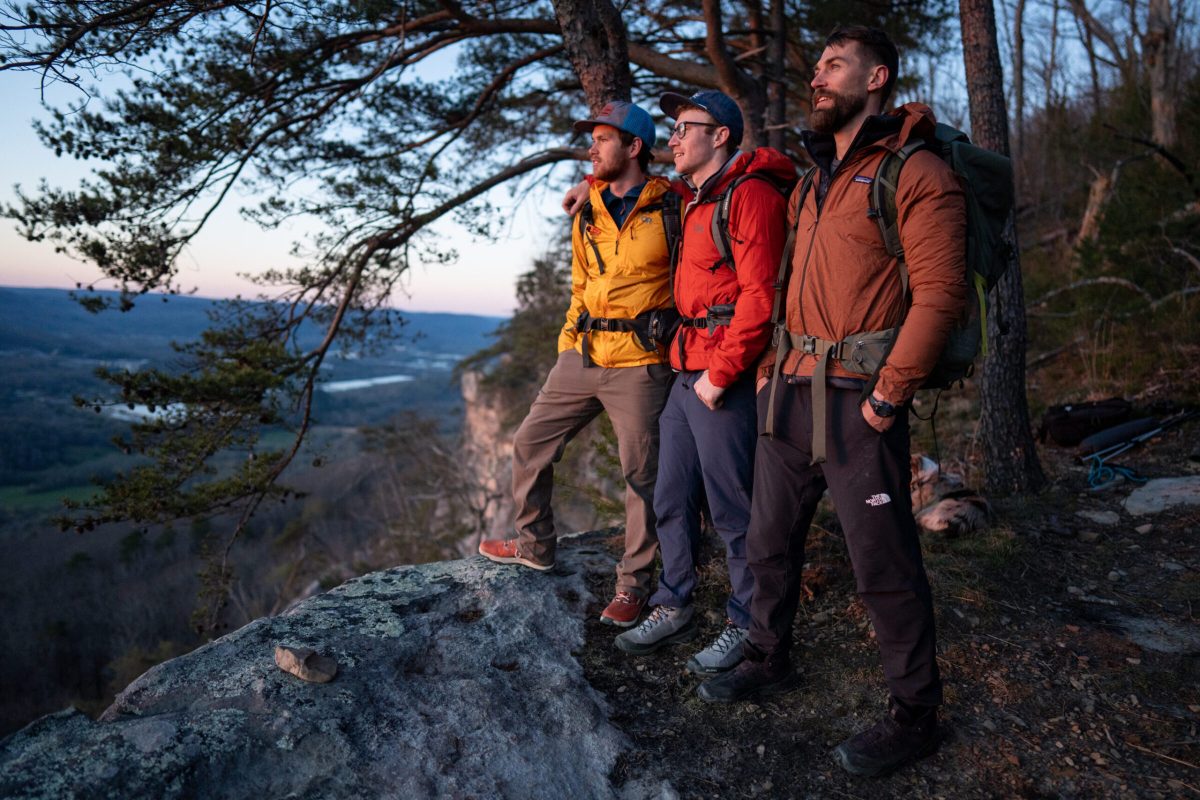
How We Tested Windbreaker Jackets
Our Expert Testers
We take our windbreaker testing seriously — whether it’s a slow plod along a breezy trail or a full-on big-wall assault on a wind-battered cliff.
In addition, Editor Chris Kassar and gear tester Ryan Kempfer put seven models through a 12-month testing cycle in the Tetons and Colorado Rockies. From backcountry ski tours to high-desert bike rides, they tested these shells on windy ridgelines and exposed trail systems where fast-changing weather is the norm. This guide also draws on four years of category testing from our broader editorial team, with a total of 50 windbreakers vetted across hiking, climbing, and backpacking.
Senior Editor Chris Carter established our category benchmark by putting over 25 windbreaker jackets through their paces in demanding locations around the world, from remote tours in Africa to long rock climbs in Mexico.

Testing Grounds & Processes
We test windbreakers where they actually live. In this cycle, that meant shoulder-season ski tours in Wyoming, breezy alpine adventures in the Tetons, and variable spring days in the Colorado Rockies. At minimum, each jacket proves itself over three to five real-world outings in its intended environment before earning a spot in this guide.
We evaluate each jacket in the conditions it was designed for — running-specific shells handle fast-moving efforts, while more protective or alpine-minded layers join us on technical climbs and exposed backcountry days.
During field tests, we monitor how well DWR coatings shed light moisture and how effectively the design blocks wind-chill. For technical shells, we also utilize a shower-simulated downpour test to gauge wet-out times and DWR robustness.
This is an evolving guide, and we update our rankings seasonally as new models arrive and long-term durability notes come in.

Our Windbreaker Rating System
We score windbreakers across four core categories:
Breathability: How well a jacket manages heat and moisture during high-output movement.
Durability: How the fabric and construction hold up to abrasion, repeated use, and pack wear.
Weather Resistance: How well the jacket protects against wind, drizzle, and light snow.
Weight & Packability: How light the jacket feels on the move and how small it stashes when stowed.
The overall score is not a straight average of these numbers. Instead, it reflects our editorial judgment of the full experience in the field. A jacket with lower durability may still rank high if it is exceptionally breathable, while a budget pick might score well on durability but lower overall if performance lags on the move.

Buyer’s Guide: How to Choose the Best Windbreaker Jacket
Why Do You Need a Windbreaker?
It’s easy to question a $150 layer that feels like tissue paper. But spend enough time outside, and that featherweight jacket might become the most-used piece of the kit.
Before taking the famed Patagonia Houdini on a thru-hike of the Pacific Crest Trail in 2018, skepticism was high for tester Chris Carter. It offered little rain protection, took up pack space, and seemed overpriced. Yet after windswept ridges, icy knife edges, and cold dawn starts, that “flimsy” jacket quickly became indispensable.

The appeal of a windbreaker lies in lightweight, packable versatility. It works as a standalone in mild conditions, layers easily over insulation in strong gusts, and compresses down to nothing when not in use. It won’t replace hard shells and rain jackets or provide the insulating power of fleece or down jackets, but it fills a critical gap.
Wind chill accelerates heat loss, making temperatures feel much colder than the air suggests. A thin, tightly woven fabric blocks that airflow, helping regulate body heat without sacrificing breathability or mobility.
From granite cracks to alpine ridges, windbreakers disappear in a pack until needed — and when the wind picks up, nothing else works quite as well.

Categories of Windbreaker Jackets
As we have discussed above, windbreakers vary greatly in the degree of weather protection, durability, breathability, and feature sets they offer. They all serve the core purpose of preventing thermal energy loss by keeping the wind off your skin but are designed to carry out this role to different capacities depending on your preferred activity.
Running Windbreakers
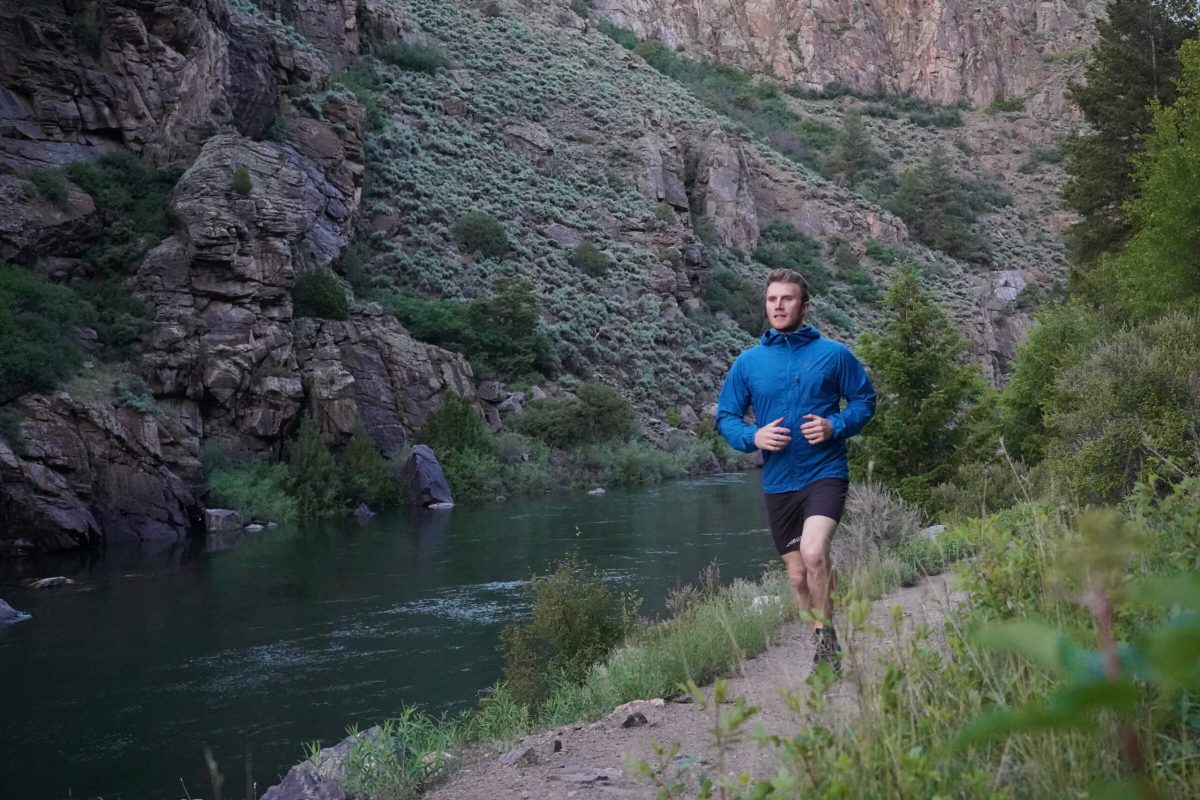
These are the gram-weenie ounce counters of the windbreaker family. Every speck of weight has the potential to hold you back while pounding the pavement on casual jaunts or eating up vert on the Leadville 100, so a dialed kit is paramount for performance.
Windbreakers designed for running axe any superfluous features, pack down small for storage in pockets of running shorts or hydration packs, and maximize breathability so you won’t overheat. They sport extremely thin fabrics for ventilation, and often include mesh panels or open vents for increased airflow. They also tend to have more tapered, form-fitting designs for unencumbered comfort while hitting your tempo.
Some of our favorite windbreakers for serious trail or road running include the Enlightened Equipment Copperfield Wind Shirt, and the Black Diamond Distance Wind Shell. All of these will waft away in a light breeze at under 4 ounces, with the Copperfield taking the cake at a ridiculous 1.8 ounces.
These are key for keeping wind off your skin while regulating moisture buildup on exposed ridgelines or blustery winter mornings. However, if you wander off trail, they won’t last long. Their thin design is perfect for lightweight breathability, but they cower in the face of more brutal adventures.
Mountaineering/Climbing Windbreakers

Jam up granite splitters, battle through ridgeline gusts, or break trail on remote alpine snowfields — these are the shells for the job. If we call any windbreaker a workhorse, these would fit.
With impressively low weights, jackets like Black Diamond’s Alpine Start and Arc’teryx’s Squamish Hoody shrug off significant abuse and provide breathable protection while charging hard in far-flung ranges.
Expect to find a handful of helpful extras on these bad boys, including helmet-compatible hoods (often with wire reinforcements), stretch-woven rip-stop materials, water-resistant coatings, and adjustable hems. They will also often feature sleek stuff sacks with carabiner clips for securing to a harness.
The thicker durable material used in these does nudge them toward the heavier, more bulky fringe of the spectrum, with several models inching as high as — gasp — a dreaded 7 ounces. While it may not seem like much, there’s no shortage of die-hard ultralighters who will turn their nose up at the addition of a few mere grams.
Fully-Featured Hiking Windbreakers
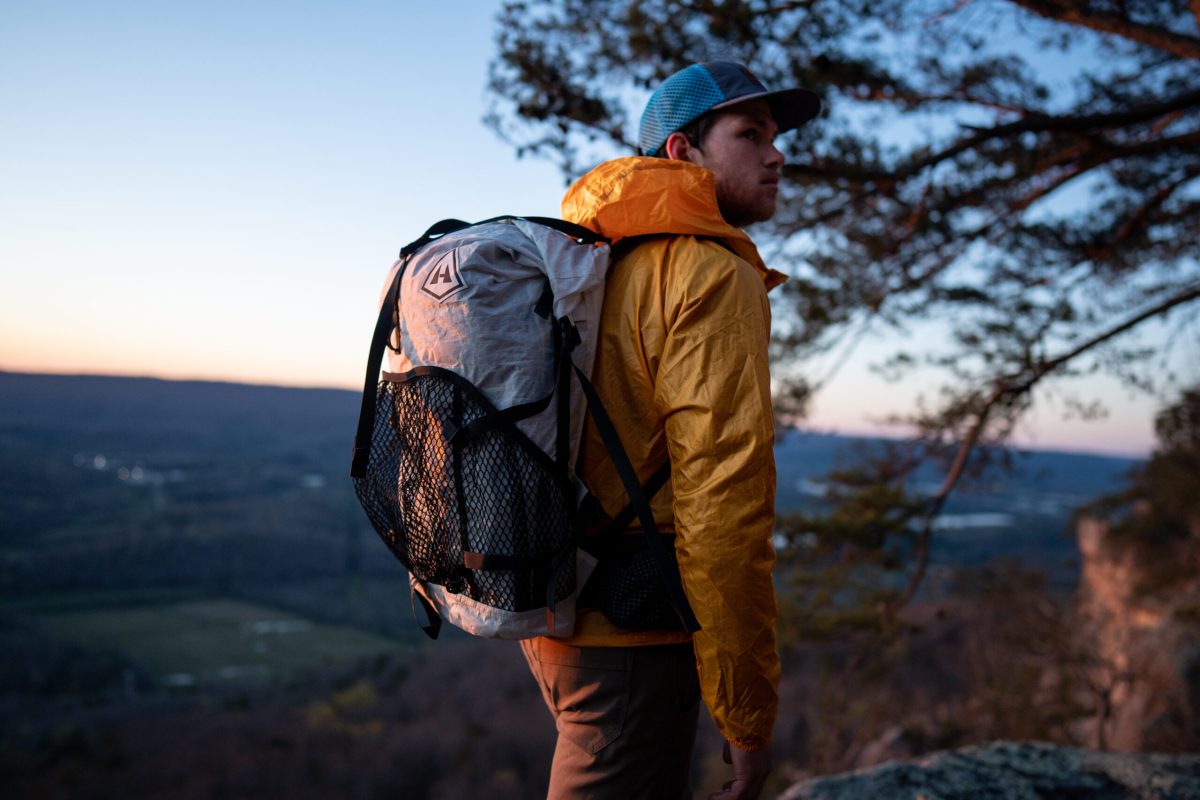
For gear-heavy trips like long approaches, basecamp missions, or extended hunts, a more robust windbreaker is the better choice. Models such as the Outdoor Research Shadow Wind Hoodie or the classic Patagonia Houdini strike a balance between weight, weather protection, and trail-ready features.
These jackets often include multiple pockets, cinch cords, and hoods, and they tend to be cut slightly larger to fit over midlayers. Fabrics are generally more abrasion-resistant to handle pack straps and repeated use. They cost less than alpine shells since they skip high-end stretch fabrics, but the tradeoff is heavier materials and less breathability.
Ultralight Hiking Windbreakers
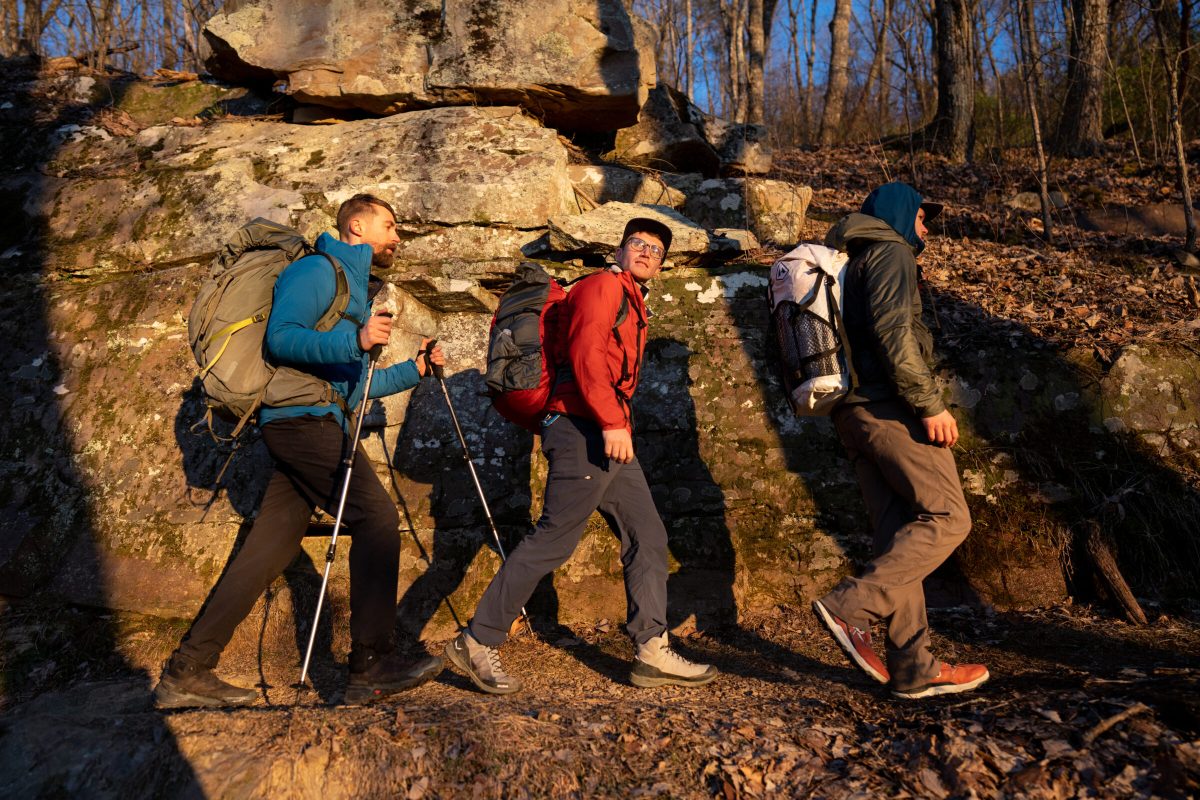
For fast thru-hikes or ultralight missions where every ounce counts, stripped-down designs rule. Jackets like the Black Diamond Distance Wind Shell
or Enlightened Equipment Copperfield Wind Shirt weigh under 2 ounces yet still offer wind protection in a pinch.
These shells provide the bare minimum: a hood, a simple zipper, and perhaps a single pocket that doubles as a stuff sack. They pack down to nothing and preserve a low base weight, but they sacrifice comfort, features, and long-term durability but are best for those who prioritize speed.
Weight
Let’s get down to brass tacks — windbreakers weigh almost nothing. Most come in under 5 ounces, with ultralight options like the Black Diamond Distance Wind Shell, or EE’s Copperfield Wind Shirt dipping as low as 1.6 ounces — about the same as a fancy fountain pen.
For ounce-counters, that weight-to-performance ratio is hard to beat. They provide wind and weather protection far beyond what their size suggests, often allowing cuts in other areas of a kit. From sub-2-ounce shells for fast pushes to more durable options like the Black Diamond Alpine Start Hoody for extended expeditions, there’s a windbreaker tailored to just about any mission.
The bottom line: to earn a place in a fast-and-light kit, a shell needs to be light, packable, and protective — and today’s designs deliver.

Packed Size
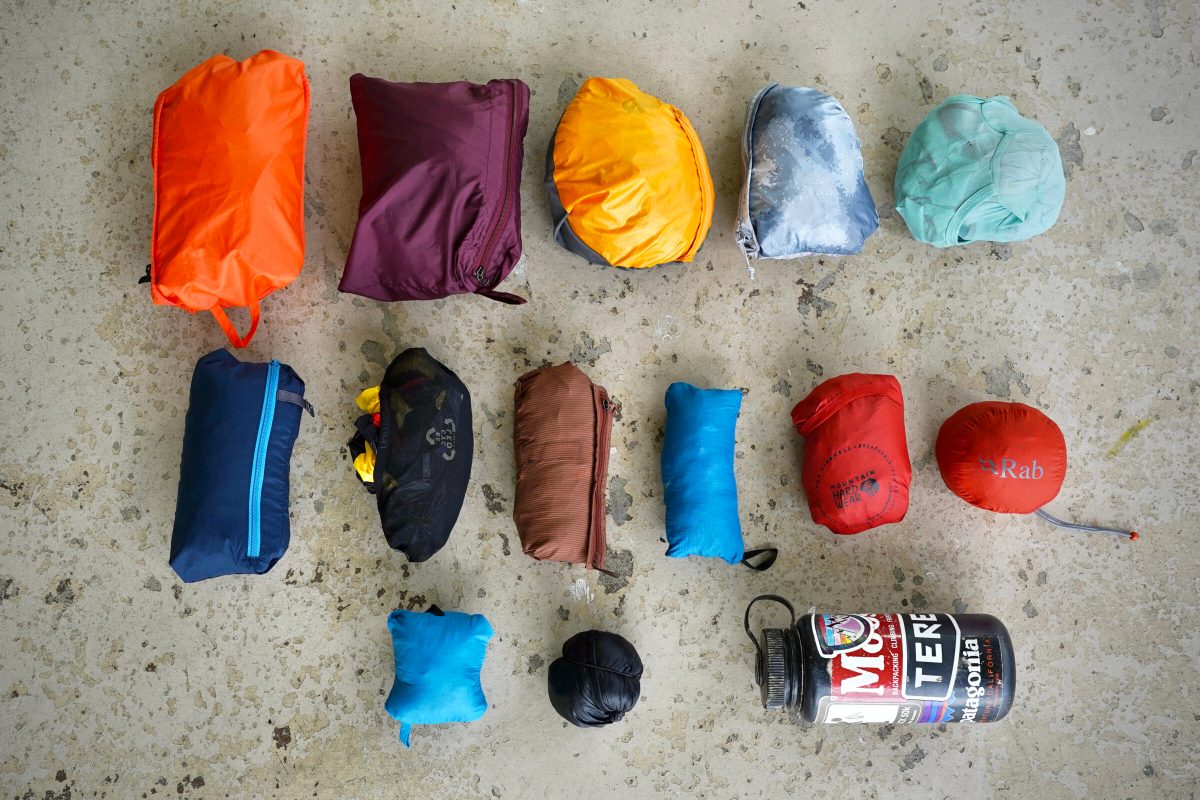
Packed size is where windbreakers truly shine. The best models deploy in seconds from a tiny pocket and stow just as easily when the sun comes back out. Many use an integrated stuff sack — usually a zippered hand or chest pocket with a double-sided zipper — while others, like Rab’s Vital Hooded Jacket, include a separate pouch. We prefer the integrated design, especially when paired with a carabiner loop for clipping to a pack or harness.
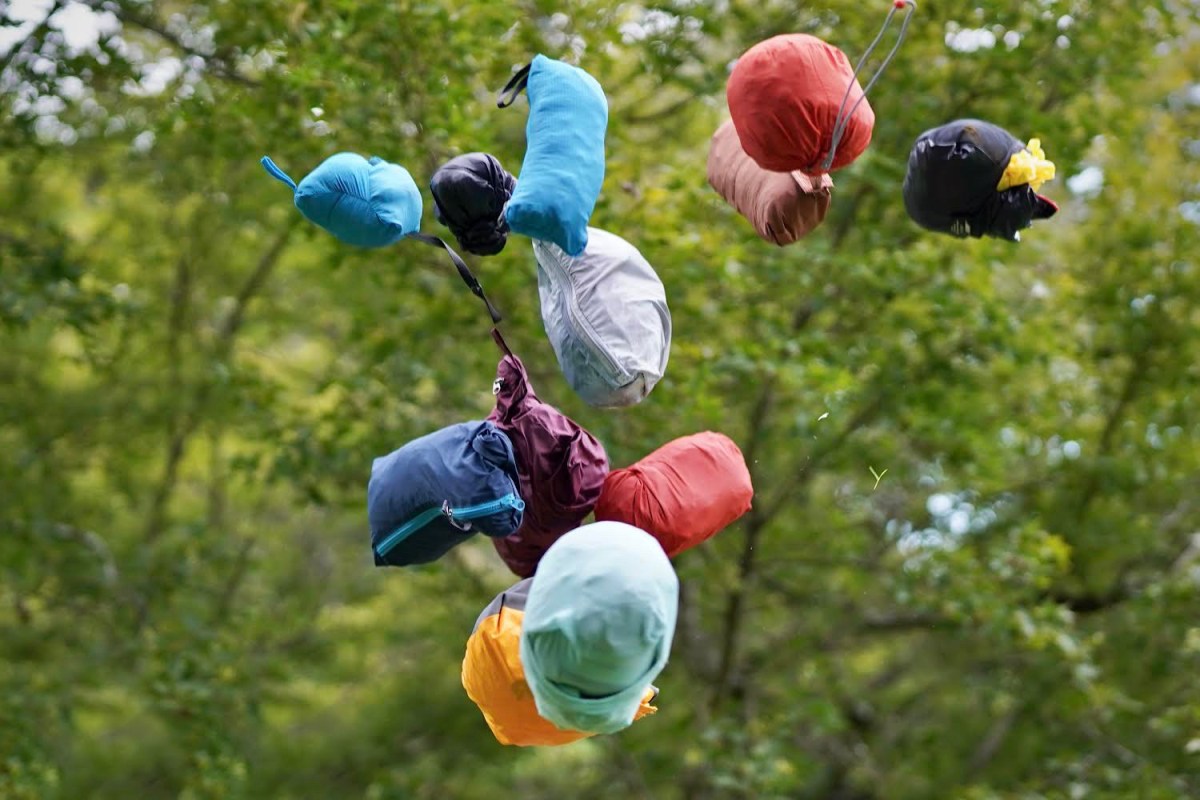
Most windbreakers compress to the size of a grapefruit or smaller, making it easy to justify tossing one in a pocket. The catch? Some brands shrink the stuff sack so much that cramming the jacket inside feels like a workout. Jackets like the Teca Half-Zip or Outdoor Research’s Shadow Wind Hoodie strike a better balance, offering generous stuff pockets that actually make stowing quick and painless.

In general, the more compact the jacket, the lighter and thinner the fabric, and often the less durable. Ultralight shells like the Black Diamond’s Distance Wind Shell are a dream for runners, but for alpine missions where abrasion is inevitable, a burlier option like the Black Diamond Alpine Start Hoody is worth the extra bulk.
Wind Resistance & Breathability
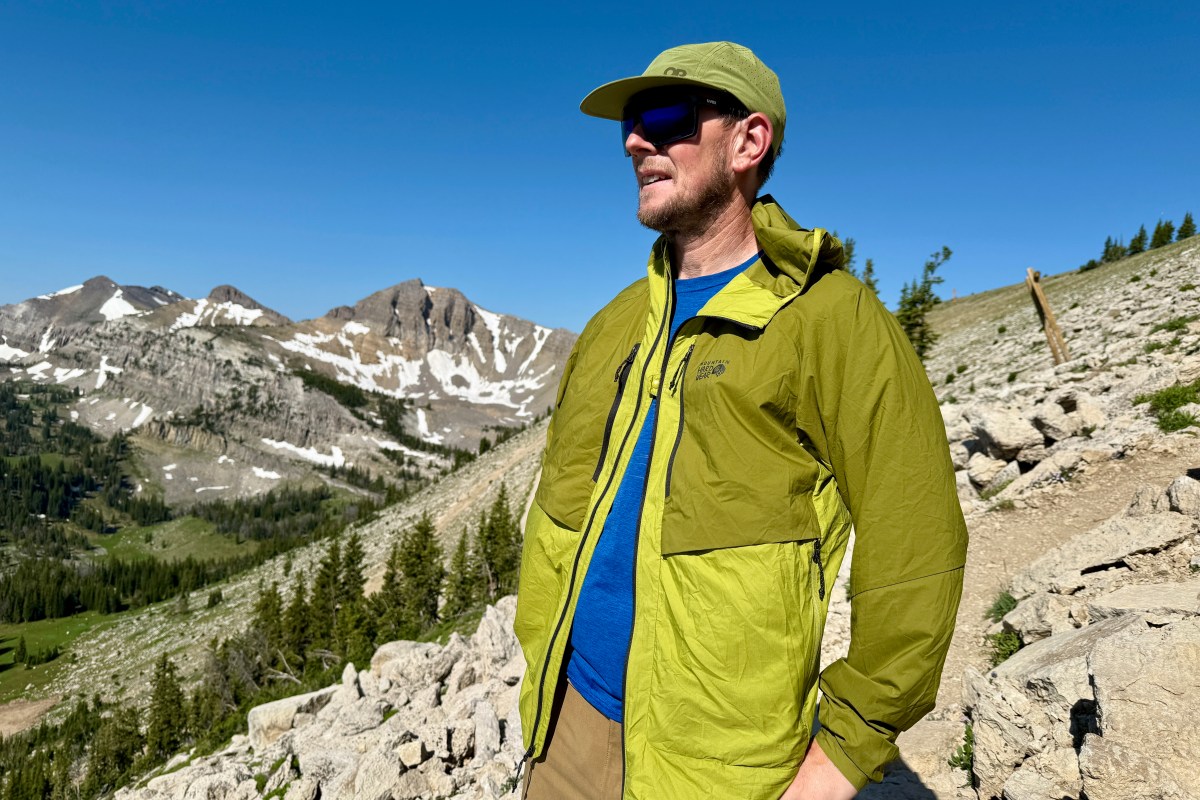
Whoever named “walkie-talkies” may have also coined “windbreakers.” Simple, straightforward, and accurate. If these jackets excel at one thing, it is cutting the wind.
That job is harder than it sounds. A good windbreaker must reduce convective heat loss while still allowing breathability, mobility, and packability. The balance depends on use: alpine and hiking models usually block more wind, while running-focused shells lean toward greater airflow and ventilation.
This tradeoff is measured in CFM, or “cubic feet per minute,” which shows how much air passes through a square foot of fabric at 30 mph. Lower CFM means higher wind resistance. For reference, fleeces sit around 60 CFM, softshells 5 to 10 CFM, and hardshells close to 1 CFM. A true 0 CFM windbreaker would keep all air out, but feel like wearing a trash bag if you are moving fast. Most jackets aim for a middle ground that protects from gusts while still breathing during exertion.
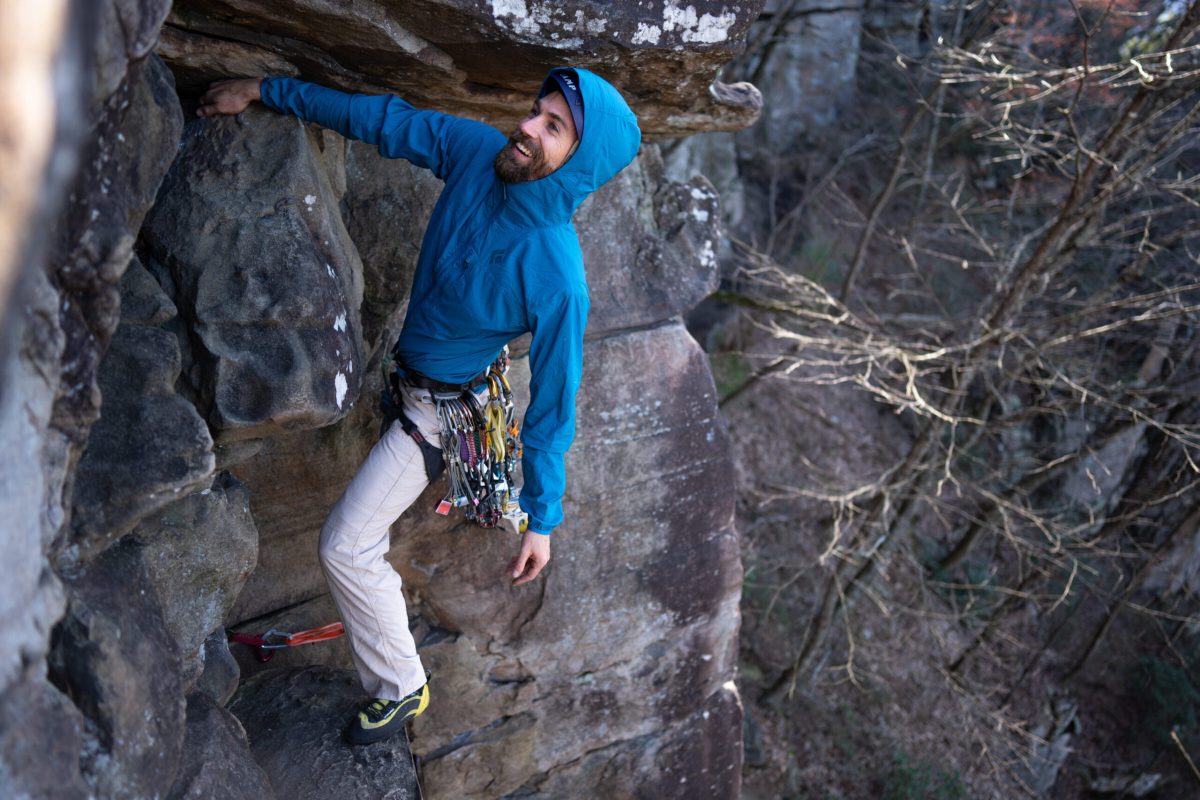
Other features also influence performance. Mesh panels, stretch fabrics, or vents boost airflow, especially in running-specific models like the La Sportiva Blizzard. More protective shells like the Patagonia Houdini sacrifice some breathability for defense in strong winds, while pieces such as the Mountain Hardwear Kor Airshell Hybridbalance airflow and protection for fast, technical missions.
The key is to match your jacket to your activity and environment. Ultralight breathable models shine on hot, high-output days, while sturdier options earn their place in cold, gusty alpine terrain.
Weather & Water Protection
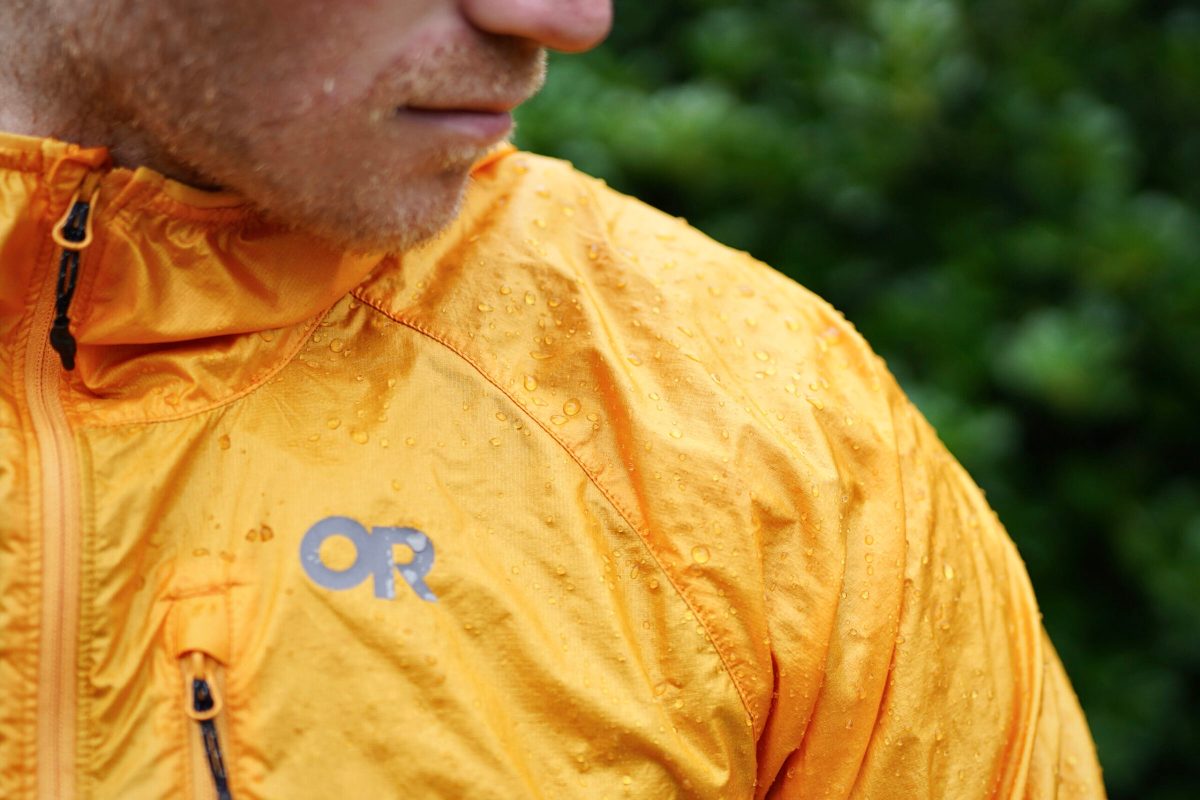
Ultralight minimalism, breathability, and packability always come at a cost, and for windbreakers, that cost is weather and water protection. They are not designed to replace hardshells and rain jackets and will fall short in prolonged storms or variable multi-day conditions.
That said, many models hold their own in light precipitation. Most feature a thin DWR (Durable Water Repellent) coating that beads up small amounts of rain, though this finish wears off over time. A wash or retreatment with products like Nikwax’s TX.Direct can help restore performance. Look for PFC-free DWR whenever possible to avoid harmful perfluorinated chemicals.
Some jackets outperform expectations. The Black Diamond Distance Wind Shell, Outdoor Research’s Shadow Wind Hoodie, and Patagonia’s Houdini have all delayed wet-out during surprise showers on climbs and hikes. While none are a substitute for a full waterproof shell, they offer more protection than their paper-thin feel suggests.

Waterproofness Explained
No matter how strong the DWR coating, a windbreaker will never match the waterproof protection of a rain jacket. When sustained downpours hit, the heavier cousins always come out.
Waterproofness is measured by Hydrostatic Head (HH), which tests how many millimeters of water a fabric can withstand before leaking. To qualify as “waterproof” under the British Standard, a jacket must reach at least 1,500 mm. Technical rain jackets usually range from 5,000 to 10,000 mm, while top-tier hardshells push as high as 30,000 mm. Windbreakers fall well below that threshold.
Still, they are far from useless. For their weight and packability, windbreakers offer meaningful resistance to wind, fend off light moisture, and often prove more durable than they look. They are not built for monsoons, but they punch above their weight when conditions turn harsh on windy ridges or exposed alpine terrain.
Durability In The Real World
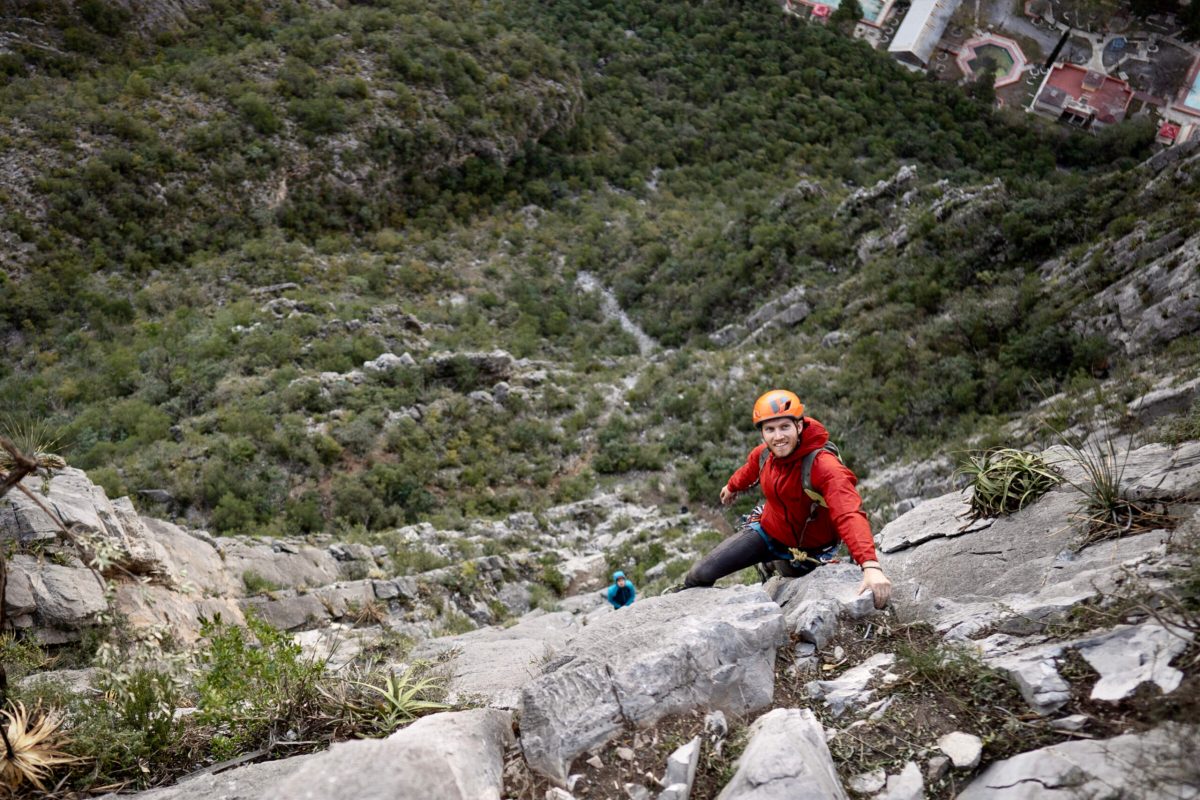
No need to sugarcoat it: windbreakers can shred easily. A few rounds of bushwhacking and you may have more ventilation than you bargained for. Still, for a weather-resistant shell that folds into your pocket, they punch well above their weight. Treat them with a bit more care than a rain jacket, and they can last through years of ultralight use.
If your trip involves off-trail travel or sharp granite scrambles, a burlier shell is a better choice. Yet models like Patagonia’s Houdini and Copperfield Wind Shirt have proven surprisingly resilient on thru-hikes and international climbing trips. Light brush is manageable, but jagged chimneys and brambles will take their toll.
What Makes Windbreakers Last
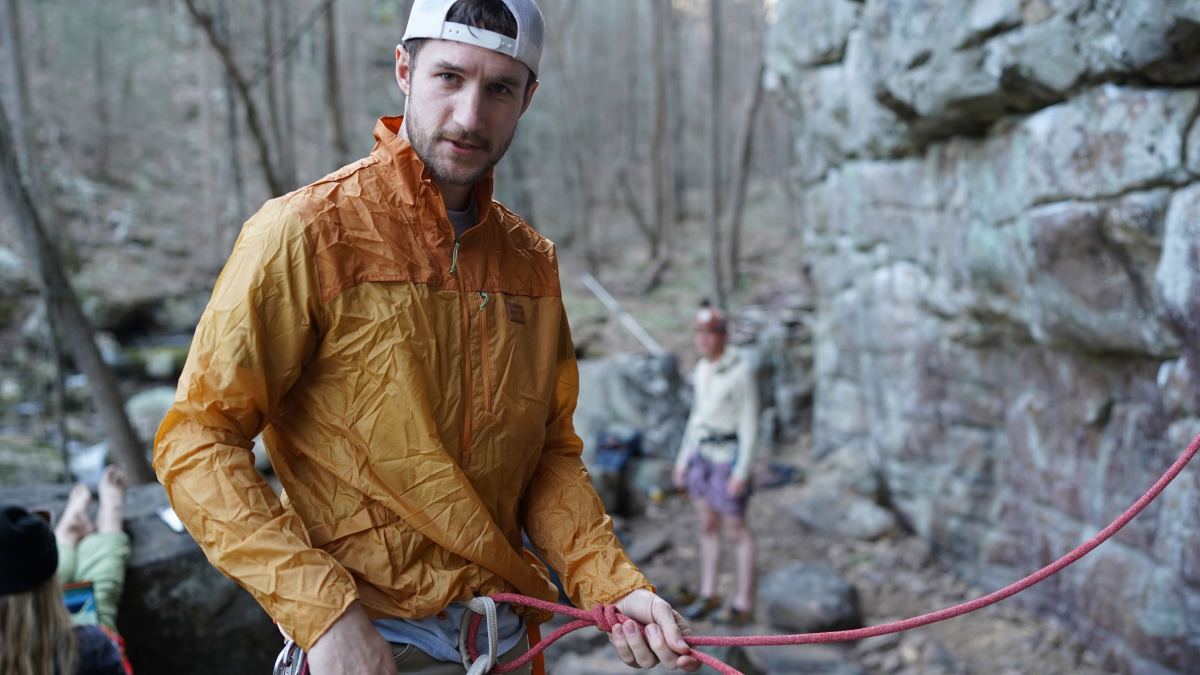
The secret to longevity in sub-5-ounce jackets lies in the fabrics. Most combine nylon, polyester, or elastane with reinforcements such as ripstop grids, stretch-woven panels, and DWR coatings. Higher denier or fabric weight (oz/yd² or gsm) improves durability but sacrifices packability.
Ripstop fabric strengthens light materials by using a grid of thicker threads to prevent small tears from spreading. Stretch-woven blends, like Fjällräven’s HC-Core, flex under pressure rather than puncture, while coatings repel debris and moisture. Together, these features make ultralight shells like the Black Diamond Distance Wind Shell more capable than their weight suggests.
For expeditions in punishing terrain, windbreakers work best as part of a layering system. They can handle moderate abuse but are not substitutes for hard shells when rain or rockfall becomes serious.
Minimalist Design

Windbreakers are built on the principle of minimalism. To stay true to their lightweight, packable roots, designers trim away anything unnecessary, leaving only the essentials. That said, small design tweaks can make a big difference in function, separating streamlined running layers from more versatile hiking and climbing shells.
Key Features
Most windbreakers include at least one zippered chest pocket, sometimes two handwarmer pockets, with one often doubling as a stuff sack. Hoods are common, with technical models such as the BD Alpine Start Hoody using simple back cinches, while jackets like Rab’s Vital Jacket. add Velcro adjustments for a more secure fit.
Hem cinches and elastic cuffs help seal in warmth, and lightweight full-length zippers are standard, though fragile, so they require careful handling. Some ultralight models skip the full zipper entirely in favor of a pullover design with a short half- or three-quarter zip to shave grams.
Feature sets often reflect intended use. Hiking-oriented jackets may provide more pockets and adjustability, while running models prioritize breathability and stripped-down designs for speed.
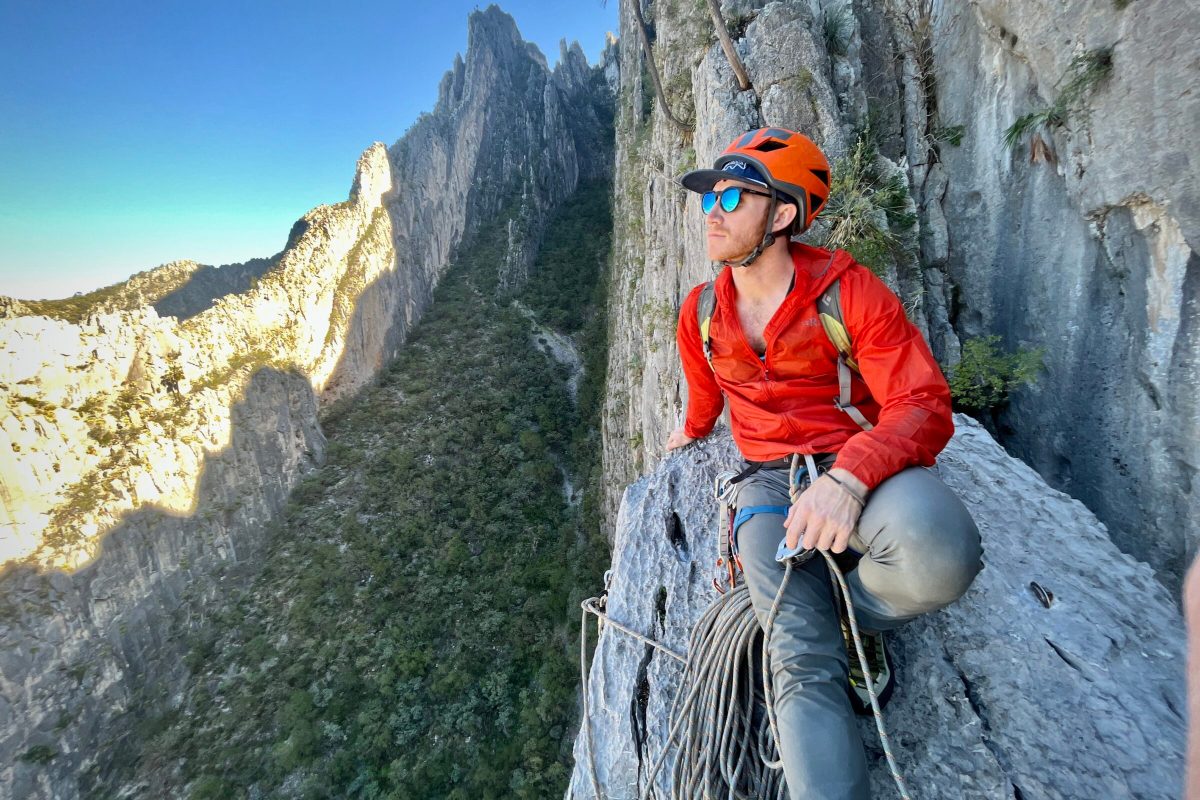
Cinches at the hem are also common, which play a substantial role in sealing in warmth and thwarting the wind, and elasticated cuffs serve the same purpose. Most windbreaker jackets have a lightweight, full-length zipper, which we have found to be a potential weakness of these thin shells — so close with care.
Some feature a pullover design with a tiny, ½- or ¾-length front zipper to truly cut weight. For the ultralight backpacking or running crowd, these check all the boxes of a minimalist setup.
The type of adventure you plan to bring your jacket on will help to dictate the feature set you need. Windbreakers for hiking will generally offer more pockets and adjustability, while a streamlined running jacket may prioritize lightweight ventilation over function.
Layering With Windbreaker Jackets
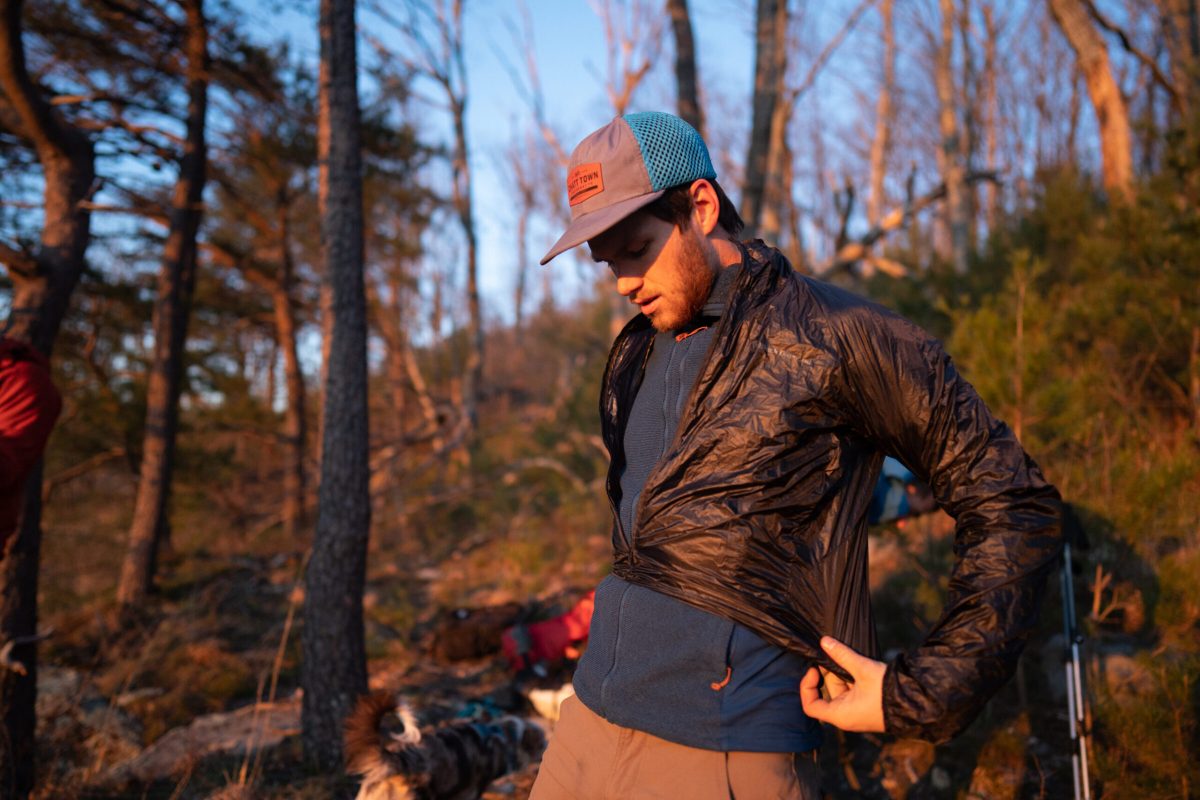
A windbreaker jacket truly begins to shine when paired with other compatible layers of your kit. While windbreakers work hard as standalone shells in mild temps, in cold, gusty conditions a breathable fleece or synthetic jacket becomes a much more formidable shield with a windbreaker over top, at the cost of barely any weight.
Many windbreaker jackets, particularly in the hiking or mountaineering categories, fit a bit larger to accommodate additional layers underneath, while others have a slim cut that hugs your core and arms more. If you plan on coupling your windbreaker with a few other pieces of insulation, make sure it has the space for the job.
Sleeves that closely hug your arms won’t get in the way or flap around while running or climbing but can quickly become stiff, restricting tubes with too many additional jackets underneath. If you plan on rocking your windbreaker jacket in particularly chilly weather, consider how much room they have underneath for when the mercury plummets.
As is the case with rain jackets, the addition of a light fleece or long-sleeve synthetic shirt underneath will greatly increase the time before your windbreaker wets out in prolonged rain. No windbreaker is fully waterproof, but they can fend off a good deal of moisture if layered correctly. While this combo offers marginal protection, if the heavens really open up and you’re fleeing Thor’s hammer, whip out the hardshell or rain jacket.
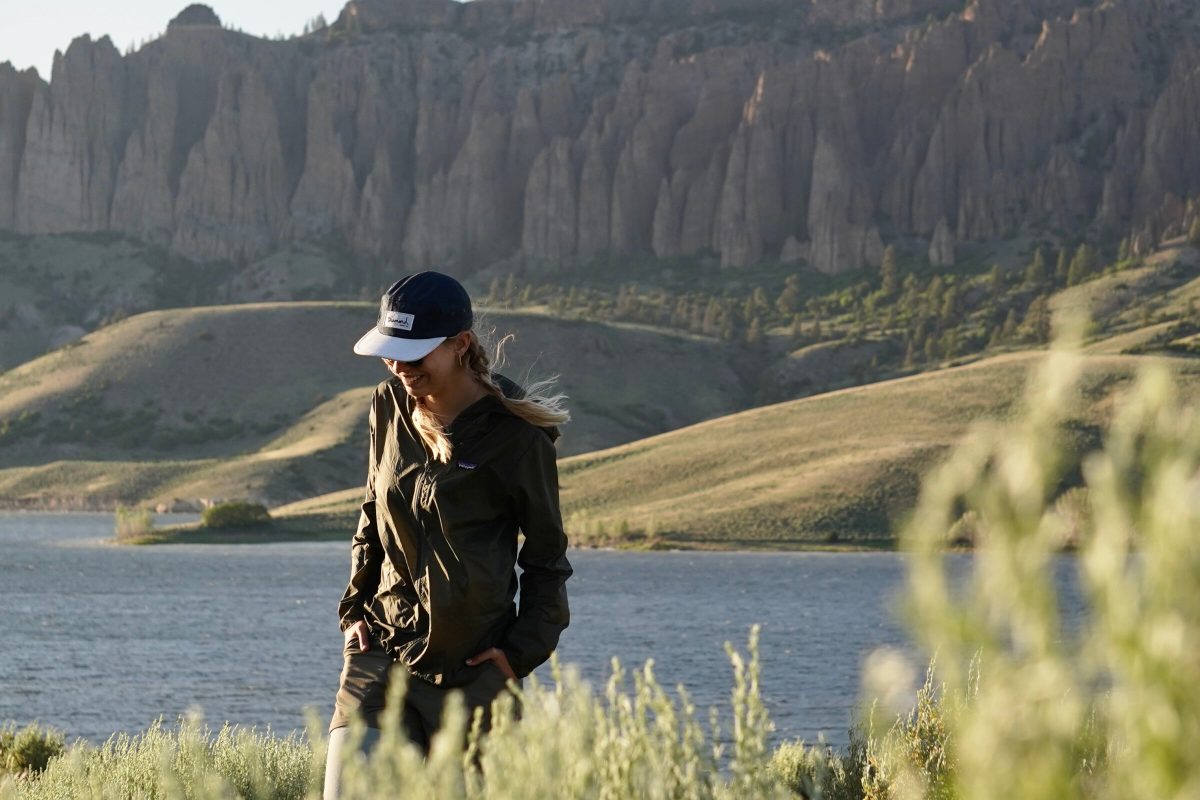
Price & Value
Windbreakers look simple, but price still shapes what you get. As cost goes up, jackets tend to get lighter, more breathable, more packable, and more specialized for high-output mountain use.
Budget
The most affordable windbreakers usually land between $80 and $100. At this price, you can still get dependable wind protection for casual hikes, breezy trail days, and everyday use, but you will usually give up some breathability, adjustability, and refinement. The Cotopaxi Teca Half-Zip ($85) is a fun, approachable option for light adventures, while the Rab Vital Hooded Jacket ($100) feels more technical and mountain-ready for not much more money.
Mid-Tier
For most people, this is the sweet spot. From roughly $109 to $165, jackets get more dialed, more packable, and better balanced for real mountain use. The Patagonia Houdini ($119) remains our favorite all-around value for its versatility and tiny packed size, while the Mountain Hardwear Kor Airshell Hybrid ($165) adds warmth and a broader range for cooler, more aerobic objectives.
Premium
Once prices reach $199 and beyond, you are paying for specialized performance. These jackets often use more refined fabrics and more purpose-built designs for alpine terrain, fast movement, and bigger objectives. The Nørrona Falketind Aero60 ($199) stands out for breathability and mobility, while the Arc’teryx Squamish Hoody ($200) delivers a polished fit and strong mountain performance.
For many people, a mid-tier windbreaker is the best buy. But if your days are faster, rougher, or more technical, the extra cost of a premium shell can make sense in a hurry.
Frequently Asked Questions
The best windbreaker depends on the activity. The Black Diamond’s Alpine Start Hoody excels on demanding alpine expeditions, the Enlightened Equipment Copperfield suits ultralight thru-hikes, and La Sportiva’s Blizzard is built for fast trail races.
For all-around use, the Patagonia Houdiii remains the most versatile choice. It is lightweight, durable, packable, and technical enough to handle almost any adventure.

Windbreakers excel in breathability, packability, and mobility, but they cannot match the waterproof protection of rain jackets or hardshells. Each has its role, so the best choice depends on expected conditions and layering needs.
No windbreaker is fully waterproof, but thicker fabrics and DWR coatings can buy you time in a surprise storm. In our testing, wet-out times ranged from 25 seconds to over 20 minutes. Since DWR coatings wear off with use, reapplying a treatment like Nikwax TX.Direct can help restore water resistance. Always carry a rain jacket or hardshell for true protection.

A windbreaker’s weight and packability hinge on its features, fabrics, and breathability. Th eFjallraven High Coast Wind Jacket
comes in at 12.2 ounces with pockets, zippers, and cinches, while the Black Diamond’s Distance Wind Shell trims everything down to just 1.6 ounces.
Overall, windbreakers are the lightest, most packable shells available, offering impressive protection for their size and often making the difference between staying warm in gusts or struggling against the cold.
Read the full article here
